Latest Stories
Most recently published stories in Horror.
The Whispers of Black Hollow Forest – A Nightmare That Never Ends
Deep in the heart of Oregon lies Black Hollow Forest—a place so cursed, locals refuse to utter its name after dark. It’s not just a tale to scare tourists; even experienced hikers won’t step near it. What makes Black Hollow terrifying isn’t what you see… it’s what you hear.
By Manisha Jamesabout a year ago in Horror
The Insanity Eater: Beware the Eye That Feeds
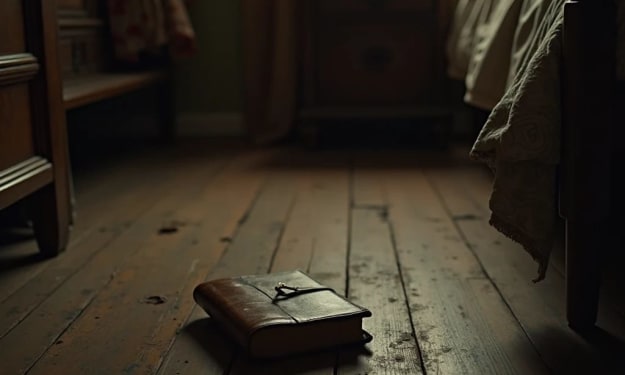
Beware, beware the creature’s eye She feeds from fear deep in your mind The words carved into the cover of the disfigured leather journal. Remnants of arson gnawed on the edges of its half-burnt spine, and traces of murder stained the once freshly cut birch pages; to the stench of rotting flesh. The inspector closely examined the warning on the cover under fading light of his candle. Too hard to be penetrated by quill, yet the engraving lacked the precision of a blade. The madman had dug his own nails into the book, as if the warning was for himself.
By Muhammad Sabeelabout a year ago in Horror
The Diary That Shattered My Childhood
When my mother died, the silence in her room was deafening. She had been the kind of woman who filled a space even in stillness—lavender lotion on the nightstand, quiet humming in the kitchen, soft prayers whispered at dusk. Now, it was just dust and an unmade bed. My sister, Anne, couldn’t bring herself to step inside. So it fell to me to sort through her things, to pack a lifetime into boxes and bags.
By Muhammad Sabeelabout a year ago in Horror
The 25 Best Horror Books of the Last Decade - Vulture
Over the course of the past ten years, horror literature has experienced a renaissance, with authors pushing boundaries, fusing genres, and delivering fresh nightmares that last long after the final page. The last ten years have provided readers with some of the most chilling and original works in the genre, including psychological terrors, supernatural hauntings, and visceral body horror. Whether you're a longtime horror fan or a newcomer looking for a scare, this list compiles the 25 best horror books of the last decade—each one a standout in its own right.
By Silas Blackwoodabout a year ago in Horror
Spring-heeled Jack: The Mysterious Phantom of Victorian England (1837-1904)
Introduction Spring-heeled Jack is one of the most bizarre and enduring mysteries of Victorian England. This enigmatic figure terrorized London and the surrounding areas for decades. He was described as a terrifying supernatural being with glowing eyes, clawed hands, and the ability to leap incredible heights. Spring-heeled Jack's place in folklore has been established by eyewitness accounts, newspaper reports, and urban legends, blurring the lines between myth, widespread panic, and possible reality. This article explores the origins, reported sightings, theories, and cultural impact of Spring-heeled Jack, delving into why this strange figure continues to captivate the public imagination over a century after his last alleged appearance.
By Silas Blackwoodabout a year ago in Horror
Things You Can't Say six. Content Warning.
Vet visits. When it comes right down to it, I never realized just how humiliating they can be. For the pet at least. I’ve never thought that a routine physical could be so invasive. The way that he’s groping makes me shudder. Despite how hard that I tried not to I do. Which he tries to soothe by giving soft little hums and strokes my side. But there is no way in Hell that I’m allowing him to calm me down as he touches me. It just makes me tremble harder as I stand on the exam table. Keeping my hands steady as I can when he looks down at me like I’m some scared child. Soft pats on my hips as he tries to keep me from doing something stupid.
By Raphael Fontenelleabout a year ago in Horror
The Reflection Room
The first rule of Holloway Institute was: never speak of the Reflection Room. However, every student whispered about it. A locked chamber in the basement, door painted pitch black, no handle—just a keyhole that never seemed to rust. No one knew what was inside, only that strange things happened after someone went near it. People talked of headaches, missing time, even seeing their own faces smile back at them—when they weren’t smiling.
By Suborna Paulabout a year ago in Horror
Devil’s Pool: Australia’s Haunted Heart and the Legend of Oolana’s Eternal Sorrow
The Spooky Past and Ghost Stories of Queensland's Devil's Pool Hidden deep within Far North Queensland's dense rainforests, Devil's Pool at the Babinda Boulders is a location where nature is united with evil folklore and tragic history. Referred to as Australia's most haunted location, its beginning tale begins with an old Aboriginal myth and continues with a set of unexplained deaths.
By Kyrol Mojikalabout a year ago in Horror
The Princes in the Tower: A Historical Mystery of Medieval England
Introduction The fate of the Princes in the Tower—Edward V and his younger brother, Richard, Duke of York—is one of the most enduring and tragic mysteries in English history. These two boys, the sons of King Edward IV, disappeared in the summer of 1483 while under the protection of their uncle, Richard, Duke of Gloucester, who later became King Richard III. Their disappearance has fueled centuries of speculation, debate, and historical investigation. Were they murdered? By whom, if so? Did they escape and live in secret? The lack of definitive evidence has turned this case into one of history’s greatest unsolved crimes. This article explores the events leading up to their disappearance, the key suspects, and the various theories that historians have proposed over the centuries.
By Silas Blackwoodabout a year ago in Horror
Frankenstein by Mary Shelley (1818): A Gothic Masterpiece of Science, Morality, and Humanity
Introduction One of the most influential pieces of Gothic literature and science fiction is Frankenstein: Or, The Modern Prometheus (1818), written by Mary Shelley. Written when Shelley was just 18 years old, the novel explores profound themes such as the dangers of unchecked scientific ambition, the nature of humanity, and the consequences of isolation. Through the tragic story of Victor Frankenstein and his monstrous creation, Shelley raises enduring ethical questions about creation, responsibility, and societal rejection. This article delves into the novel’s plot, themes, characters, historical context, and its lasting legacy in literature and popular culture. Summary of the plot
By Silas Blackwoodabout a year ago in Horror
Dracula by Bram Stoker (1897): A Gothic Masterpiece of Horror and Victorian Anxiety
Introduction Published in 1897, Dracula by Bram Stoker is one of the most influential Gothic horror novels ever written. The novel introduced the archetypal vampire Count Dracula, who has since become a cultural icon and the subject of numerous literary, film, and popular culture adaptations. Beyond its surface-level horror, Dracula explores deep-seated Victorian anxieties about sexuality, colonialism, technology, and the clash between modernity and superstition. This article examines the novel’s plot, themes, characters, and enduring legacy. Plot Summary of the plot The novel's realism comes from its use of journal entries, letters, newspaper clippings, ship logs, and other forms of epistolary writing. The story unfolds through multiple perspectives, primarily those of Jonathan Harker, Mina Murray, Dr. John Seward, Lucy Westenra, and Abraham Van Helsing. Jonathan Harker’s Journey to Transylvania Jonathan Harker, an English solicitor, travels to Transylvania to assist Count Dracula in an England-based real estate transaction. Harker soon realizes that he is a prisoner in Dracula’s castle, where he encounters the Count’s supernatural abilities—scaling walls like a lizard, commanding wolves, and lacking a reflection. He also meets three vampiric women who attempt to seduce and feed on him before Dracula intervenes. The arrival of Dracula in England After escaping the castle, Harker falls ill and is hospitalized. Meanwhile, Dracula boarded the Demeter to travel to England, where he killed the crew. He arrives in Whitby, where he begins preying on Lucy Westenra, a beautiful and innocent young woman. Lucy’s health deteriorates mysteriously, and despite blood transfusions from her suitors—Dr. She dies and transforms into a vampire, joining Quincey Morris, Seward, and Arthur Holmwood. The Hunt for Dracula The group, which includes Harker, his fiancée Mina, Seward, Holmwood, and Morris, is led by Dutch doctor and vampire expert Professor Abraham Van Helsing. They discover Lucy's undead state and are forced to stake her heart and behead her to bring her peace. They then turn their attention to Dracula, who has been feeding on Mina, slowly turning her into a vampire. Using a combination of modern technology (such as phonographs and typewriters) and ancient folklore (garlic, crucifixes, holy wafers), the group tracks Dracula back to Transylvania. In a final confrontation, they ambush him just as the sun sets. Quincey Morris is mortally wounded, but Jonathan and Arthur manage to stab Dracula in the heart and behead him, ending his reign of terror. Themes in Dracula 1. Fear of the "Other" from abroad Dracula embodies Victorian fears of foreign invasion and racial degeneration. He represents the "other," someone who corrupts English purity, as an Eastern European aristocrat infiltrating England. His physical appearance (pale, with sharp features and red lips) reinforces stereotypes of Eastern Europeans as exotic yet dangerous. 2. Sexuality and Repression The novel is steeped in sexual undertones. Vampirism is a metaphor for forbidden desire—Lucy and Mina’s transformations involve seductive, predatory behavior that contrasts with Victorian ideals of female chastity. The vampire brides in Dracula’s castle and Lucy’s undead seduction of children and Arthur highlight fears of female sexuality unleashed. 3. Science vs. Superstition Dracula is defeated by the characters using modern science (blood transfusions, phonographs), but folklore (garlic, holy symbols) is ultimately used. Van Helsing represents the balance between rational thought and belief in the supernatural, suggesting that modernity alone cannot defeat ancient evil. 4. Colonialism and Reverse Invasion Dracula’s move from Transylvania to England reverses colonial dynamics—instead of the British Empire expanding outward, a foreign force invades England. His ability to buy property and blend into society reflects anxieties about immigrants gaining power. 5. Religion and Salvation Christian symbols (crucifixes, holy water) are weapons against Dracula, reinforcing the idea of divine good versus satanic evil. The characters’ moral purity (especially Mina’s) is crucial in defeating the Count, suggesting that faith and virtue triumph over corruption. Key Characters Count Dracula Dracula, the name of the vampire, is aristocratic, intelligent, and ruthless predator. Unlike later romanticized versions, Stoker’s Dracula is a monstrous figure who represents decay, contagion, and unchecked desire. Jonathan Harker A rational Englishman whose experience in Transylvania alters his perspective on the world. His survival and later participation in Dracula’s destruction symbolize resilience against evil. Mina Murray (later Harker) Mina is one of the most intelligent and capable characters, organizing the group’s records and assisting in the hunt. She is saved by her purity and love for Jonathan, despite Dracula's corruption. Lucy Westenra Lucy’s transformation into a vampire serves as a cautionary tale about female sexuality. Her death and subsequent staking highlight Victorian fears of women who defy social norms. Abraham Van Helsing A Dutch professor and vampire hunter, Van Helsing combines scientific knowledge with folklore expertise. He is the moral and intellectual leader of the group. Dr. John Seward, Arthur Holmwood, and Quincey Morris These men represent different aspects of Victorian masculinity—Seward the rational scientist, Holmwood the noble aristocrat, and Morris the adventurous American. Their unity against Dracula underscores the novel’s theme of solidarity against evil. Literary and Cultural Impact Dracula was not an immediate bestseller but grew in popularity through stage adaptations, most notably the 1924 play that inspired Bela Lugosi’s iconic 1931 film portrayal. Since then, Dracula has appeared in countless films, TV shows, and novels, ranging from faithful adaptations (Bram Stoker’s Dracula, 1992) to modern reimaginings (Castlevania, Dracula Untold). The novel also established many vampire tropes: Vulnerability to sunlight, garlic, and holy objects Shape-shifting abilities (bat, wolf, mist) The need for an invitation to enter a home Immortality and blood-drinking Beyond horror, Dracula has been analyzed through feminist, postcolonial, and psychoanalytic lenses, proving its depth and adaptability.
By Silas Blackwoodabout a year ago in Horror