Latest Stories
Most recently published stories in Horror.
The Ghost in the Old Digital Camera
📸 The Ghost in the Old Digital Camera A digital whisper from the past… that should have stayed silent. --- The scent of dust and forgotten dreams hung heavy in Curio’s Attic, a junk shop Liam frequented more out of habit than hope. He was a struggling freelance photographer, obsessed with capturing the unseen—the fleeting moments that whispered of deeper stories. His phone, his sleek digital camera—they all felt too sterile. He longed for something with character, something that held a past. Deep within a dusty box of discarded electronics, he found it: a Kodak Easyshare CX7300, a clunky, silver relic from the early 2000s. Its plastic body was scuffed, its screen cracked, and the battery compartment corroded. It looked utterly dead. Yet something about its forgotten simplicity called to him. He bought it for a few dollars—a whimsical purchase. Back in his studio, fueled by cheap coffee, Liam tinkered. He cleaned the corrosion, replaced the batteries, and to his astonishment, the tiny LCD screen flickered to life, displaying a low battery icon. He charged it, skeptical. This old dinosaur surely wouldn't capture anything usable. The next morning, armed with his working modern camera, he decided to take the old Kodak on a casual stroll through the deserted morning streets, just for kicks. He pointed it at a picturesque, empty alleyway bathed in soft light and pressed the shutter. The mechanical whir of the lens, so alien to his modern gear, brought a nostalgic smile to his face. He downloaded the new batch of photos, scrolling through the crisp, vibrant shots from his main camera. Then he opened the file from the old Kodak. The first few images were grainy, pixelated blurs, as expected. But on the fifth image—the one of the empty alleyway—something was wrong. Standing faintly in the middle of the alley, almost translucent, was the figure of a young woman. Her posture was hunched, her head bowed, as if in despair or deep thought. Her clothes looked dated, from another era. Liam zoomed in, his breath catching. It wasn't a trick of the light. It wasn't a smudge on the lens. It was a clear, albeit ghostly, apparition. The alley had been completely empty when he took the shot. Fear warred with an overwhelming sense of fascination. He took another picture, this time of his own empty living room. Again, the image, once developed, showed the same faint figure—sitting on his couch, her head in her hands. She was always there, a spectral visitor in his photos, her presence subtle but undeniable. Driven by a surge of unnerving curiosity, Liam started a frantic online search. He scoured forums for paranormal photography, vintage camera malfunctions—anything that could explain this phenomenon. He found nothing. Then, on a whim, he uploaded one of the photos to a niche online community dedicated to unsolved disappearances, asking if anyone recognized the woman. Within hours, his post exploded. The woman was identified as Sarah Wells, a local university student who had vanished without a trace exactly 15 years ago to the day, just a few blocks from where he’d bought the camera. Her disappearance had baffled the police—no body, no leads, just a chilling void. Liam was thrust into the center of a burgeoning online mystery. His photos, with their undeniable, ghostly addition, went viral. People were captivated, terrified, and intrigued. Was it a hoax? A digital manipulation? But Liam’s reputation as a meticulous photographer and the undeniable analog nature of the old Kodak's raw files lent credibility to his claims. He returned to the empty alleyway, the old Kodak clutched in his trembling hand. He snapped photos, hundreds of them, from every angle. Sarah's ghostly image appeared in each one, her posture slowly shifting, her head lifting incrementally with each shot—as if struggling to look up. It was like watching a flipbook of a forgotten memory, a digital echo awakening. He started noticing patterns. The light in the photos, the shadows—they weren't always consistent with the real-time conditions. It was as if the camera was capturing the light and shadows from Sarah's last moments, replaying them, bleeding them into the present. The camera wasn’t just taking pictures; it was projecting visual memories from a past that had never truly died. Through painstaking cross-referencing of Sarah's known last movements, old missing person reports, and the subtle clues in the evolving photographic echoes, Liam pieced together a horrifying narrative. Sarah wasn’t just walking away when she disappeared. She was photographing something. Her last known location was a hidden art gallery, famed for its experimental, dark art—now long closed and forgotten. The images from the Kodak hinted at a flash of blinding light, a sense of immense pressure, and a distorted face in the background of one of her final, ghostly shots. Then, a new element began to appear in the images—not just Sarah, but a subtle, almost invisible distortion in the background of her photos: a shimmering ripple, like heat haze, around a specific, dark sculpture that used to be in that gallery. It was a piece known as “The Observer,” a terrifying, abstract metal sculpture that reportedly had an unsettling effect on viewers. --- The Climax Liam, guided by the camera’s increasingly vivid echoes, entered the derelict, forgotten art gallery. The air was cold, stagnant. He raised the old Kodak, pointing it into the darkness. On the cracked screen, a terrifying image formed: Sarah, clearly visible, her eyes wide with terror, staring directly into the lens. Behind her stood the "Observer" sculpture—its metallic form twisting, no longer abstract, but revealing something chillingly organic, a monstrous, shadowed face emerging from its cold metal. Suddenly, the screen of the Kodak flashed violently—a searing white light that momentarily blinded Liam. When his vision cleared, the camera was dead. Its screen: black. Its battery: instantly drained. But the final image, transferred to his laptop moments before, was burned into his mind. It showed Sarah, her face contorted in a final, silent scream, as a dark, grasping tendril, seemingly made of shadow and twisted metal, reached out from the sculpture, consuming her. The image was raw, terrifying—a direct window into her last, horrifying moments. --- The Truth The camera hadn’t just been capturing echoes—it had been replaying a murder. A sentient piece of art that had come to life and consumed its victims, leaving no physical trace. Sarah hadn’t vanished. She had been absorbed. Liam understood then. The camera had been Sarah’s, its digital memory imprinted with her final, desperate visual cries. It was trying to warn him, trying to show the world what truly happened. And the creature—The Observer—was still there. Dormant in the darkness. Waiting for another unsuspecting soul to wander into its web. --- Epilogue Liam never showed that final image to anyone. Who would believe that a metal sculpture could consume a human? That a digital camera could act as a spectral witness? The story of the "Ghost Camera" continued to circulate online, generating millions of views and endless theories—a modern-day paranormal legend. But Liam, now wiser and infinitely more cautious, understood the truth. He locked the old Kodak away, a chilling memento of a digital haunting. He knew that some horrors don’t leave a physical trace… But linger in the echoes of data, Waiting for the right frequency, The right medium, To reveal their deadly secrets. --- Sometimes, the most terrifying truths aren’t captured by the newest technology… But by the forgotten relics of a digital past.
By Noman Afridiabout a year ago in Horror
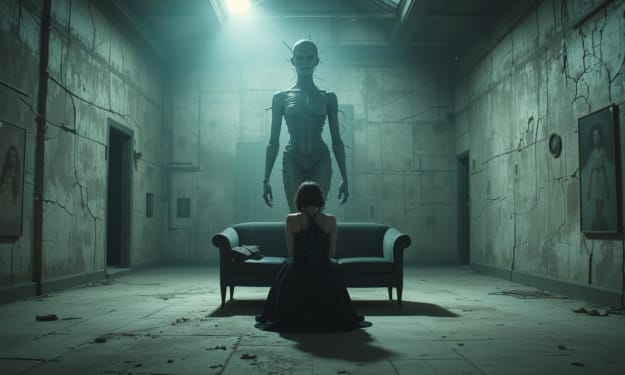
The Sinister Secrets of Ravenmoor Lake: A Haunting That Refuses to Die
Introduction: In the heart of Oregon lies a seemingly peaceful body of water—Ravenmoor Lake. Locals warn travelers to steer clear of its misty shores after sunset. Why? Because Ravenmoor is no ordinary lake—it’s a graveyard of secrets, drenched in centuries-old curses, mysterious disappearances, and ghostly apparitions.
By Manisha Jamesabout a year ago in Horror
From the Past to the Present
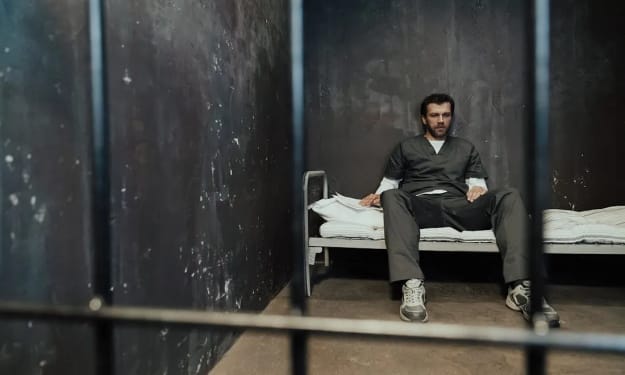
I imagine the first thing you think of as you gaze through this archway overlooking the fields below is what a beautiful view. Those were my thoughts as well the day I was locked in this room four-hundred years ago. After all, there are worse places to be held prisoner in this castle, the dungeon where many of my compatriots were held is first on my list. I’d love to share my story, but I know you can’t hear me. No one has ever heard my cries for help, not since that wicked wench cast her spell on me.
By Mark Gagnonabout a year ago in Horror
EchoFace It doesn't show who you are. It shows who's watching you.
It started as a dare. Nora had always been the skeptic in her friend group—the one who rolled her eyes at ghost stories and laughed at conspiracy videos. So when her roommate Lexie told her about the app going viral on dark web forums, Nora just shrugged.
By Mian Nazir Shahabout a year ago in Horror
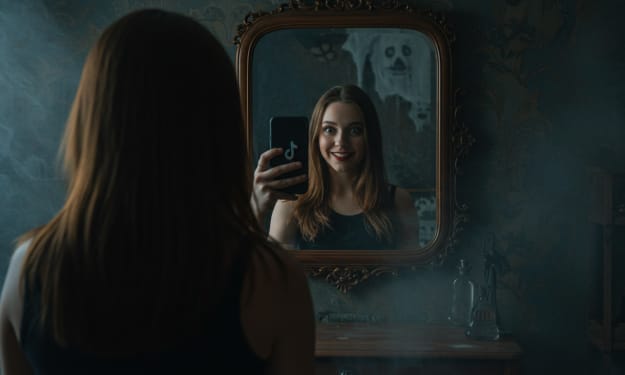
The Chilling TikTok Trend That’s Haunting Users: The “Mirror Reflection Challenge” Gone Wrong
Introduction TikTok has seen countless trends come and go — dance routines, pranks, and even bizarre food combinations. But the latest viral sensation, known as the “Mirror Reflection Challenge,” is taking an unexpectedly dark turn. What started as a playful experiment with camera angles has allegedly led to unexplained reflections, paranormal encounters, and deeply unsettling footage.
By Manisha Jamesabout a year ago in Horror
"The Village Where No One Die: A Country-Old Mystery"
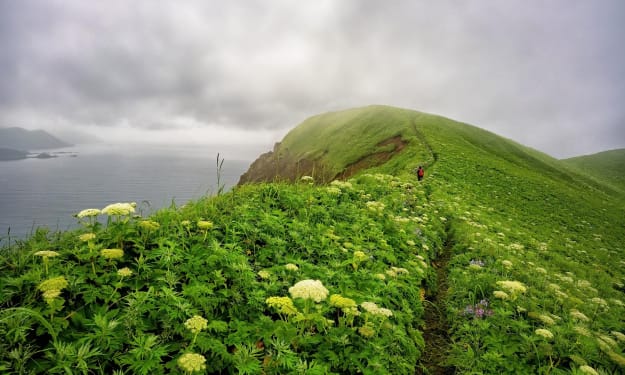
The story was accidentally discovered in a family travel journal passed down through the generations. The journal spoke of a place nestled between lush hills, untouched by modernity, where time seemed to stand still. The fact that the village had not seen a single natural death in more than a century is truly astonishing. Curious and skeptical, I set out to find this mysterious place. I finally arrived at a small village known locally as "Amargram," which literally translates to "the immortal village," after days of traveling and detours through narrow forest paths. The first thing I noticed was the silence—not the eerie kind, but a peaceful, harmonious quietude. Under ancient banyan trees, children played. Elders sat on wooden benches, eyes bright and faces lined with the soft etchings of time—but surprisingly vibrant. No illness symptoms. No graveyards. I saw people living fully, deeply, and gently.
By Md. Saiful Islam Shaon about a year ago in Horror