Latest Stories
Most recently published stories in Horror.
Pixie Dust: Part Three
I didn’t even check if she was breathing. My legs moved before my brain could catch up, stumbling back from her collapsed body as the echo of her voice still hung in the air. The ancient darkness awakens… Her words pounded behind my eyes, turning my stomach inside out.
By Stephanie Wrightabout a year ago in Horror
The Knock That Shouldn't Have Happened
It was 2:13 AM when I heard the knock. Three soft taps. But I live alone. And no one should have known where I was. I moved to this cabin in the woods to find peace. Far from the noise, far from the city, far from people. It was supposed to be a retreat — a place where I could write, reflect, and heal. No distractions, no interruptions. Just me, the trees, and silence. And for the first week, it was exactly that. Until that night.
By Mahmood Afridiabout a year ago in Horror
The Horror of Knowing
They always say, “Don’t open that door.” Girls like me open it anyway. We always do. We ask too many questions. About the dead, about God, about what lives behind the silence. We’re punished for it in horror movies. We’re punished for it in real life.
By Kayla Buttonabout a year ago in Horror
The Girl in the Drain
Hi. I want to tell you about something that happened to me last month. I haven’t told many people, because I know it sounds crazy. But it’s real. I swear. It started with the smell. You know that sharp, dirty smell drains have sometimes? Like old water and metal? I started noticing it everywhere. Not just in the bathroom or kitchen sink—but in my bedroom, in the hallway, even near the fridge. It didn’t make sense. I cleaned everything. I even poured bleach down the pipes. But it stayed. And then, it started whispering. The First Voice It was late. Around 2 a.m. I had just gotten into bed when I heard it. A soft voice, like a girl, calling from the bathroom: “Hey… can you hear me?” I froze. At first I thought it was the TV in the other room, or a neighbor. But the TV was off. And I live alone. I crept to the bathroom. The lights were off, but the sink was dripping. “I’m still here…” the voice whispered again. “Help me.” I slammed the door shut and didn’t sleep. The Town Legend I asked my neighbor, Miss Darlene, an older woman who’s lived on this street since the 80s, if she had ever heard anything strange. She looked at me for a moment, then nodded slowly. “You don’t know about Emily, do you?” I shook my head. “Years ago,” she said, “a girl named Emily drowned. She was playing near the storm drain with some other kids. Slipped, hit her head, and the water pulled her under.” She leaned closer. “They say the drain never let her go.” I thought it was just an old story. A ghost tale to scare kids. But that night, when I took a shower… the mirror fogged up. And when I wiped it, I saw something written on the glass, even though I hadn’t touched it. "Don’t forget me."
By Silas Blackwoodabout a year ago in Horror
THE BLOOD ORCHARD OF MONTE SILENZIO
CHAPTER 1: THE INHERITANCE Italy's Most Haunted Vineyard ...The Truth Behind Monte Silenzio The letter arrived precisely at 3:33 PM, though Luca would swear later the post had already come that morning. The parchment was unnaturally thick between his fingers, its fibers pulsing faintly like slow-beating veins. When he turned it over, the wax seal cracked open with a sound like a dying man's last breath, releasing the scent of Merlot and something far older - the iron-rich stench of blood long dried but never forgotten.
By Tales That Breathe at Nightabout a year ago in Horror
From Vodou to Viral Outbreaks: How 28 Days Later Reinvented Zombies
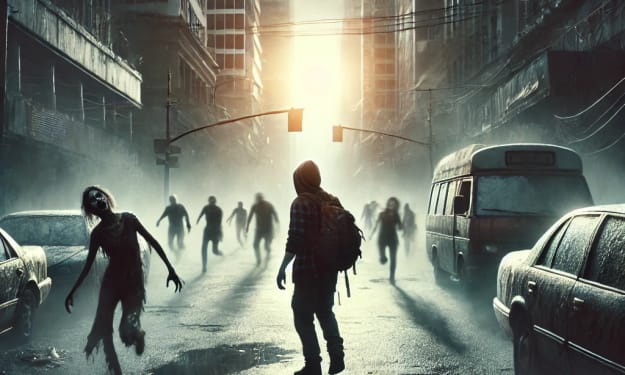
Start writing...The Dawn of a New Zombie Era When 28 Days Later premiered in 2002, it didn’t just scare audiences—it redefined what we thought zombies could be. Directed by Danny Boyle and written by Alex Garland, the film replaced the classic slow-moving corpses with something far more terrifying: fast, rage-fueled humans infected by a mysterious virus. Set in a desolate, post-apocalyptic Britain, the movie follows Jim, a bicycle courier who wakes from a coma to find society has collapsed. The infected sprint, scream, and swarm—behaviors more akin to wild animals than the shambling undead. It was fresh. It was brutal. And it changed the zombie genre forever. But while 28 Days Later may have modernized the zombie for a new generation, the idea of the undead has existed for centuries. Zombies didn’t start in Hollywood—they came from spiritual beliefs, folklore, and fear. --- Zombies Before the Movies The word "zombie" has roots in Haitian Vodou, a spiritual practice deeply tied to the history of slavery and colonialism. In these traditions, a zombie isn’t a flesh-eating monster, but a corpse reanimated by a bokor (sorcerer) to serve as a slave—symbolizing loss of autonomy and humanity. These stories entered Western consciousness in the early 20th century through sensationalized accounts and fiction. The first zombie movie ever made, White Zombie (1932), leaned into these exoticized portrayals. But the version of zombies most people recognize today didn’t emerge until the 1960s. --- Romero's Undead Revolution In 1968, George A. Romero changed horror forever with Night of the Living Dead. His creatures weren’t Vodou zombies—they were modern monsters. Flesh-eating, mindless, and rising from the grave for reasons unknown. Romero never used the word “zombie” in the film, but audiences knew something had changed. His follow-ups, Dawn of the Dead (1978) and Day of the Dead (1985), went deeper—using zombies as metaphors for capitalism, scientific overreach, and social decay. Romero made it clear: the real monsters weren’t always the undead. Sometimes, they were us. By the 1990s, however, the zombie genre began to feel tired. Enter: 28 Days Later. --- A Faster, Deadlier Threat What made 28 Days Later so groundbreaking was its realism. These weren’t supernatural zombies—they were victims of a virus. The "Rage" infection turned people into violent maniacs within seconds of exposure. They weren’t dead, just changed. And they could run. Fast. That one detail—the speed—breathed new life into zombie horror. Gone were the days of escaping zombies by walking briskly. Now, survival meant sprinting. Fighting. Hiding. Dying. The film’s sequel, 28 Weeks Later (2007), expanded the scale and chaos. It showed what happened when governments intervened, families were torn apart, and trust crumbled in the face of infection. Both films struck a nerve in a post-9/11, pre-pandemic world, tapping into fears of terrorism, government failure, and global disease. --- The Zombie Renaissance After 28 Days Later, zombies exploded in popularity. Films like World War Z (2013), Train to Busan (2016), and I Am Legend (2007) borrowed the idea of fast, infected hordes. The virus-as-monster trope became a staple of modern horror. On TV, The Walking Dead (2010–2022) dominated pop culture for over a decade. In video games, titles like The Last of Us and Resident Evil let players survive apocalyptic worlds filled with infected terrors. Zombies were everywhere—but they weren’t just scary. They were symbolic. Zombies became metaphors for everything: consumerism, climate change, social collapse, even loneliness. And that’s part of their power—they evolve with our fears. --- A History Still Alive What makes the zombie genre so compelling is its flexibility. From Haitian spiritualism to Hollywood spectacle, from Romero’s political metaphors to Boyle’s virus-ravaged landscapes, zombies have always been more than just monsters. They reflect our anxieties—about death, disease, society, and ourselves. 28 Days Later didn’t invent zombies. But it reminded us why they matter. It gave them speed, ferocity, and realism—traits that mirrored a new millennium’s chaotic energy. And it asked a terrifying question: what happens when the biggest threat is not the undead, but the rage within us? --- Final Thoughts Zombies aren't going away anytime soon. They’re constantly evolving—just like our fears. Whether they're slow or sprinting, magical or viral, they serve one timeless purpose: to hold up a mirror to our world and force us to look. So the next time you watch a zombie movie, remember: the undead may not be real—but what they represent absolutely is.
By Qaseem Ahmadzaiabout a year ago in Horror