Latest Stories
Most recently published stories in Horror.
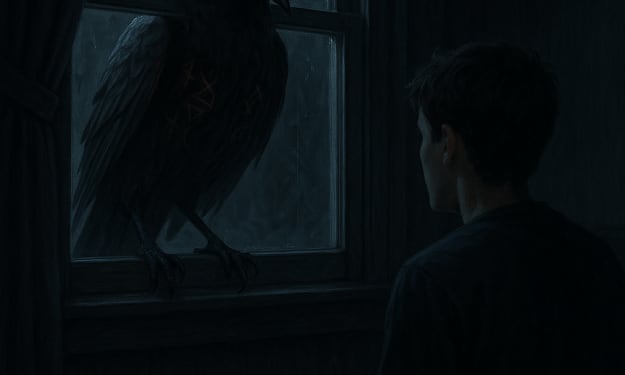
The Black Bird That Landed on My Window Every Night
It began in winter. The nights were longer than usual, and the wind carried whispers no one wanted to hear. I was staying at my grandmother’s old countryside house, a lonely wooden structure nestled between dying trees and distant hills.
By Noman Afridiabout a year ago in Horror
Why My Daughter Fell in Love With a Jinn
If someone had told me years ago that my daughter would choose a jinn over a man, I would have laughed. But today, I no longer laugh at the unseen. My daughter, Alina, was always different. She was quiet, thoughtful, and drawn to silence the way others are drawn to noise. While other children played outside, she would sit by her window, whispering to herself—or to someone else. At first, I thought it was imagination. “Children have invisible friends,” I told myself. But Alina’s friend wasn’t invisible. He was unseen. One day, when she was twelve, I overheard her whispering: “You always come when I miss you.” I peeked into her room. She was sitting on the floor, smiling softly at an empty corner. “Who are you talking to?” I asked. She looked up, startled. “No one,” she said. “Just my friend.” I didn’t press. But that night, I began noticing small things. Her room stayed unnaturally cold—even in summer. Her mirror would fog up, even when no one touched it. I would hear a deep humming sound, like distant chanting, but no source. When she turned fifteen, Alina became obsessed with candles. She lit them every evening, arranged them in strange patterns. I once tried to move them, and she screamed. “He won’t come if you disturb them!” she cried. “Who?” I asked again. Her eyes welled with tears. “You don’t understand.” She began withdrawing from school, from family. Her once soft giggles turned into silent smiles. She spoke less and listened more—to nothing. Or so I thought. Then came the drawings. Her notebooks were filled with symbols I didn’t recognize—circular shapes, stars inside squares, names written in reverse Arabic, and eyes. So many eyes. I took her to a psychologist. The doctor said, “She’s bright but detached. Possibly fantasy-prone.” But this wasn’t fantasy. Because one evening, I walked into her room without knocking—and saw it. A shadow beside her. Not on the wall. Not a trick of light. A tall, dark, smoky figure, hovering behind her as she sat cross-legged, whispering. She didn’t look up. The figure faded the moment I gasped. I ran out of the room, heart pounding. I called scholars. I called ruqya experts. One came and recited Quran in her room. Alina screamed. Not in pain—but in anger. “You’re scaring him!” she shouted. “He doesn’t like strangers!” I begged her to explain. “He’s not bad,” she insisted. “He loves me. He listens when no one else does. He’s kind. He promised to never leave me.” I asked his name. She smiled. “I’m not allowed to say it.” I cried that night. I cried for the daughter I was losing—to something I couldn’t fight. As she grew older, things got worse. She began wearing black all the time. Not for fashion—but for him. She stopped eating for days, claiming, “He feeds my soul.” She no longer used mirrors. “He gets angry when I look at other reflections.” She spoke to the moon. She wrote letters and burned them. She carved his name into her desk—but it disappeared every time I tried to read it. On her twentieth birthday, she said something I will never forget: “I don’t want to marry a man, Mama. I already belong to someone.” That night, her bed was covered in roses. Black ones. No one in the house brought them. We don’t even have a garden. One night, I found her fainted on the floor. I rushed her to the hospital. The doctor said she was severely dehydrated and malnourished. But on her arm, I saw marks—not bruises, not scratches. Symbols. Perfectly symmetrical, glowing faintly under the light. She had been branded. I pleaded with scholars, traveled to spiritual healers, spent fortunes on ruqya. Some said it was too late. Others said it was a contract—one that only she could break. But she didn’t want to. She was in love. Not with a boy. Not with a human. But with a jinn. She spoke to him every night. She wore his favorite colors. She burned his favorite scents. She hummed his name in silence. And every time I prayed, I could feel him watching—jealous, angry, possessive. Now, years have passed. Alina lives in the same house. But not in this world. She walks quietly, barely speaks, and smiles at things no one else sees. She says he’s always with her. I no longer see the shadow—but the cold remains. And some nights, I hear a whisper in my ear as I sleep: “She is mine.”
By Noman Afridiabout a year ago in Horror
The Jinn Whose Shadow Visited My Roof Every Night
It started with footsteps—soft, steady, and unmistakably human. Every night, around 2:30 a.m., I would hear them walking slowly across the roof of our house. One step at a time. Then a pause. Then another. It sounded like someone was pacing—back and forth, back and forth. At first, I thought it was a thief. I live in a small town, where homes are built close together. Most have flat rooftops and staircases leading to them. Teenagers sometimes climb up to stargaze or sneak a cigarette. But this felt different. The footsteps didn’t sound like wandering youth. They were too… heavy. Too intentional. One night, I decided to confront whoever it was. I climbed the stairs quietly and peeked out onto the rooftop—but it was empty. I even used a flashlight to scan the whole area. Nothing. The moment I stepped back inside, the footsteps resumed. I froze. That was the moment I realized—whatever it was... didn’t want me to see it. Days passed. Nights grew heavier. My younger sister started having nightmares. “There’s someone outside,” she whispered one morning. “He watches me from the ceiling.” I didn’t tell her what I had heard. I didn’t want to scare her. But her words sent a chill down my spine. I began sleeping with Quranic recitation playing on my phone. Surah Baqarah. Surah Al-Falaq. Surah An-Naas. But nothing stopped the footsteps. They continued every night—without fail. Then came the first shadow. One night, I turned off the lights and noticed a silhouette on my bedroom ceiling. It was faint, like a dark smudge—but it moved. Not like a reflection. It shifted... as if it were alive. I rushed to the window. The street was empty. The neighbors’ rooftops were dark. No one outside. But the shadow remained. My grandmother, a deeply religious woman, noticed something was wrong. One morning, she sat me down. “You’ve brought something home,” she said softly. “Was there a place you visited recently? A graveyard? A ruin?” I remembered. Two weeks before the footsteps began, I had entered an abandoned shrine with a few friends—just out of curiosity. We had laughed, taken pictures, and even joked about the spirits. That night, I felt a strange chill when leaving. But I ignored it. “Apologize,” she said. “Ask for protection.” I took her advice. That evening, I prayed like never before. I asked Allah for forgiveness. I recited every dua I could remember. The footsteps stopped. For three nights, there was silence. I thought it was over. But on the fourth night... he came closer. This time, I didn’t hear him on the roof. I heard him on the stairs. Slow. Deliberate. One step at a time. I couldn’t move. I lay in bed, clutching my blanket, paralyzed by fear. I felt something heavy in the air, like pressure on my chest. Like the room had shrunk and I was the only one who didn’t belong. I didn’t see him. But I knew—he was there. The next morning, the wall above my bed had a black handprint. Burnt into the paint. Too large to be human. Too high to be reached. I showed no one. What could I say? I didn’t want my family to panic. I decided to leave for a few days. I went to stay with a friend in another town. I didn’t hear the footsteps. I didn’t see the shadow. I finally slept in peace. When I returned home a week later, my little sister greeted me with a trembling voice. “He was angry,” she said. “He kept walking louder when you were gone.” Now I knew. It wasn’t the house. It was me. He was attached. I sought help from a respected scholar. He told me about certain jinn—those that aren’t immediately harmful, but drawn to specific people due to aura, behavior, or even a single act of disrespect. “You must change your pattern,” he said. “Pray with sincerity. Speak kindly. Stay clean. Burn lobaan. Do not sleep alone.” I followed every instruction. I cleaned my room. Removed mirrors facing my bed. Kept the Quran near my pillow. Performed wudu every night. The presence began to fade. The footsteps grew distant. The shadow blurred. Eventually, everything stopped. Years later, I sometimes still wonder: Why didn’t he harm me? What did he want? Was he protecting? Watching? Waiting? All I know is... the roof is quiet now. But I still don’t go up there after dark. Because some visitors don’t leave. They just grow silent. And silence can be louder than footsteps.
By Noman Afridiabout a year ago in Horror
The Old Mirror That Reflected More Than Just Me
It was the kind of antique shop you only enter by accident. Hidden between a boarded-up bookstore and a bakery that always smelled like burnt sugar, the shop had no name. Just a cracked wooden sign with faded letters and a bell that jingled even when the wind was still.
By Noman Afridiabout a year ago in Horror
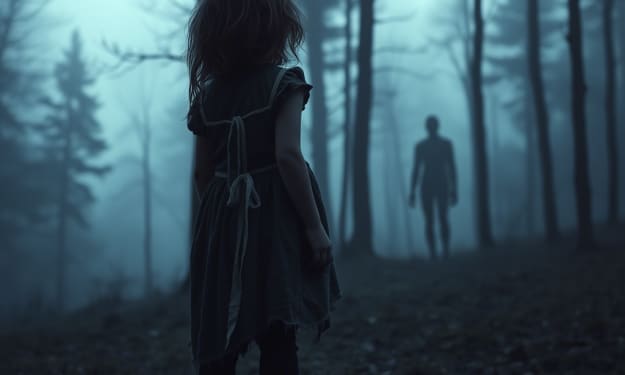
The Girl Lost in the Woods Who Was Not Human
I was 26 when I moved into my grandfather’s old cabin deep in the northern forests. It was the kind of place people forgot, surrounded by thick pine trees and silence so pure, you could hear your heartbeat. I wanted to escape the noise of the city, the suffocation of people, and just... exist.
By Noman Afridiabout a year ago in Horror
The Night I Spent in a Graveyard—And What I Saw
I had always been drawn to the unusual—abandoned buildings, forgotten alleyways, and places people were too afraid to explore. But nothing tempted me more than the local graveyard on the outskirts of our town. A massive, crumbling patch of land, overgrown with wild bushes, broken tombstones leaning like old men, and the kind of silence that echoed in your ears. It was said to be haunted, of course. Every town has one.
By Noman Afridiabout a year ago in Horror
The Night a Jinn's Shadow Entered My Room
It was a humid summer night in Lahore, the kind where the air feels thick and everything moves a little slower. I had just returned from my evening shift at the local bookstore and collapsed on my bed, exhausted but unable to sleep. The ceiling fan above me squeaked with every rotation, and outside, the occasional honk of a rickshaw echoed through the street. At around 2:17 a.m., I was awoken—not by a sound, but by an overwhelming sense of presence. You know when someone stares at you silently, and your instincts scream even before your eyes confirm it? That was the feeling. I opened my eyes and saw nothing. My room was as I left it—dimly lit by the yellow glow of a streetlight slipping through the curtains. I turned to face the wall and pulled the blanket over my shoulder, trying to convince myself it was just a dream. But then it came—the cold. A sudden drop in temperature that didn’t belong in a summer night. My breath turned visible. I could see the misty vapor escaping my lips. That’s when I froze. There was a shadow on the wall, standing upright. But there was no figure in front of it. I blinked hard. Maybe I was still dreaming? No. The shadow moved—slowly at first, like it was testing me. Then, as I watched in paralyzed horror, it slithered across the wall, stretching, growing taller, darker, until it reached the corner of the ceiling where two walls met. It stopped and turned its "head" toward me, though it had no face. Suddenly, the fan stopped. My phone screen flickered to life and died again. A low humming sound, almost like a whisper, filled the room. Words—guttural and ancient—crawled through the air like smoke. My ears rang, and then I heard it, loud and clear, not in the air but in my mind: “You saw me.” I wanted to scream, to move, to cry out to Allah—but my body was frozen like marble. I could feel my heart pounding so violently I thought it might burst. Then, the shadow began to descend—not walk, not fall—just float downward toward me. That’s when something deep inside me sparked. Maybe fear gave way to instinct, maybe something divine awakened, but I forced my fingers to move and clenched them into a fist. I whispered, “A’udhu billahi min ash-shaytan ir-rajim.” The moment I said it, the shadow shrank, pulling inward like a vacuum was collapsing it. The room suddenly felt lighter, warmer, like someone opened a window that had been sealed for years. The whispering stopped. The fan resumed its rotation. And just like that—it was gone. I jumped from bed and turned on every light I could reach. I called my older brother and made him stay on the phone with me until Fajr. For days, I didn’t sleep properly. My family dismissed it as sleep paralysis or stress. But I know what I saw. What I felt. Since that night, I’ve become deeply spiritual. I never sleep without reciting Surah Al-Falaq and Surah An-Naas. I don’t keep mirrors in my bedroom. And sometimes, when I forget my evening duas, I feel that same cold creep back in. They say jinns exist in a parallel realm, only crossing over when boundaries are weakened. That night, something crossed into mine. And now... I wonder if it's still watching—just waiting for me to forget. Because once you’ve seen it, you’re never truly alone again.
By Noman Afridiabout a year ago in Horror
Borrowed Time: The Cost of Living Forever
“Congratulations, Mr. Adler. Your expiration has been deferred. You’ve been granted twenty additional years.” The voice was smooth, emotionless—mechanically perfect. The synthetic nurse on the holo-screen smiled like a doll carved from plastic, her eyes too still to be human. Jackson Adler sat in silence, the approval notification still glowing on the screen in front of him. Around him, the Renewal Center buzzed quietly: white lights, polished metal walls, the ever-present hum of artificial air. He should’ve felt grateful. He should’ve felt something. But after 172 years of living, what he mostly felt was... tired. Not the kind of tired that sleep could fix. A deeper kind. The kind that settles in your bones when you’ve watched too many sunrises to count, and each one looks a little dimmer than the last. --- ⚙️ The System That Ended Death In the year 2197, humanity had conquered the final frontier: mortality. Biological aging had been eradicated through a combination of regenerative nanotherapy, neural preservation, and organ synthesis. No one died of natural causes anymore. Instead, life was governed by the Global Lifespan Authority (GLA). Every citizen was assigned a Life Credit Score—an algorithm-generated value based on your usefulness, stability, and contribution to society. High scores earned time. Low scores? Termination. Quiet. Clean. Painless. You didn’t grow old. You just stopped existing. --- Jackson Adler wasn’t just any citizen—he was a legend. One of the architects of the Cognitive Bridge System, a neural framework that allowed humans to store, trade, and modify memories. He was brilliant. Productive. Valuable. And because of that, he had lived far longer than most. But the irony was cruel: he had helped build a world where life could last forever, and in doing so, had drained all the meaning from it. His wife, Lillian, had expired 63 years ago—her score deemed “insufficiently stable” due to grief. His son, David, a gifted musician and mental health advocate, chose Natural Termination at 42 after years of rejection by the renewal council. Jackson had seen them both disappear. No burials. No mourning. Only silent deletions from the Central Register. He had outlived five generations. And for what? --- 🧠 The Girl in the Capsule One evening, seeking some faded remnant of purpose, Jackson wandered into the Memory Preservation Dome, where the consciousness of expired citizens was stored in translucent spheres—each pulsing softly like a heartbeat made of light. One caught his eye. A sphere flickering weakly. Labeled: > SERA AVALIS Age: 19 — Expired: Denied Extension (Emotional Instability) Jackson accessed her memory stream. The images washed over him. A courtroom. A trembling girl pleading for time. > “I’m not done yet. I want to build things. I want to love someone. I want to try.” A panel of gray-suited officials shook their heads. "Low emotional utility. No significant contributions. Application denied." And then silence. Jackson’s heart twisted. He hadn’t felt that in decades. Her fear, her youth, her fire—it all felt real in a way his sterile world hadn’t in years. --- Back at his own memory capsule, Jackson pulled up his life credit stats. He had 60 years left. More than enough. And he knew what he had to do. He bypassed the public system, entered his root-level access code—something only a handful of people in the world still had. Transfer Life Credits? Recipient: Unlisted Citizen – Expired Warning: This action is irreversible and will result in your immediate expiration. Jackson smiled. > “Time isn’t something we earn. It’s something we borrow.” He pressed Confirm. --- 🌅 The Last Voice Two hours later, he received a private transmission. A girl’s voice—soft, stunned, alive. > “I woke up. I don’t know who you are, but... I’m breathing. The sky is blue. And I’m alive because of you. I promise—I won’t waste it.” Jackson closed his eyes. Tears slipped down his face—warm and unfamiliar. --- 🛑 The Price of Rebellion The next morning, the GLA Enforcement Unit arrived. “You transferred unauthorized time credit,” the officer announced flatly. “That violates Section 11A of the Life Continuity Protocol.” Jackson simply nodded. “No regrets?” He looked at the sky through his window—burning gold above the steel horizon. > “I lived too long without meaning. I’d rather die giving it.” --- 🔚 And So He Did… Jackson Adler was deleted that afternoon. Quietly. Without fanfare. No headlines marked his death. No ceremonies praised his legacy. But somewhere, a 19-year-old girl named Sera Avalis watched the sunrise and took her first breath of hope. And maybe… that was the most human thing he had ever done. --- 🧠 Author’s Note: In a world obsessed with perfection and productivity, sometimes the most powerful act is to give someone else a chance to live. This story asks: Is eternal life a blessing... or the death of meaning itself?
By James World about a year ago in Horror