Latest Stories
Most recently published stories in Horror.
The Girl in the Window
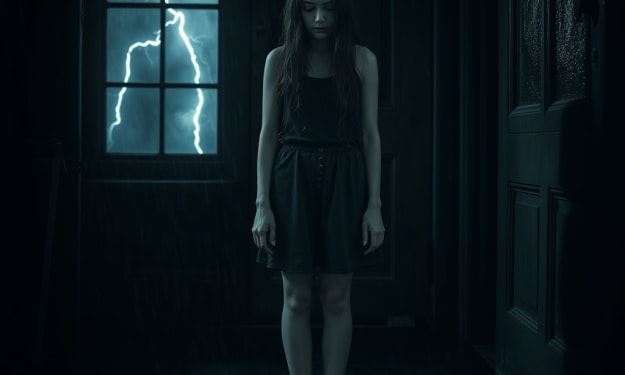
It all started with a boy named Ravi. He was 12, quiet, loved drawing, and had just moved into a very old house with his parents in a small village. The house had peeling wallpaper, creaky wooden floors, and—this is important—a single narrow window in his bedroom, facing the woods behind the house. From the moment he moved in, Ravi felt something strange about that window. In the day, it was just trees and sky. But at night, it was different. He said the shadows outside seemed too still. Like they were... waiting. On the very first night, at exactly 3:33 a.m., Ravi woke up with a shiver. It wasn’t cold. It was something else. His skin felt like it remembered something before his mind did. You know that feeling, right? Like your body’s scared before you even know why? He turned to face the window. And that’s when he saw her. A pale girl. Maybe about his age. Long, messy black hair covering most of her face. But he could tell—she was looking right at him. She didn’t move. She just stood there, outside his window, eyes wide, head slightly tilted. And the weirdest part? There were no footprints in the snow beneath her. Ravi sat frozen for minutes, his heartbeat thundering in his ears. Then, like she’d heard it, the girl slowly lifted one hand… and tapped on the window. Three times. Tap. Tap. Tap. He screamed. His parents came running, but when they looked, there was nothing there. No girl. No marks. Just the silent woods. Of course, they told him it was a bad dream. Just nerves about the new house. But Ravi knew what he saw. And the next night, it happened again. Same time: 3:33 a.m. Same girl. Same tap-tap-tap. But this time, when she tapped, the glass cracked slightly. Just a hairline fracture, like a tiny lightning bolt. Ravi stopped sleeping. He kept lights on. Curtains closed. But no matter what he did, she still came. And every night, the crack in the glass grew just a little longer. One night, Ravi tried to draw her, thinking maybe it would help him process what was happening. But when he started sketching her face, his hand wouldn’t move right. It was like someone else was guiding the pencil. When he finished, he stared at the drawing—and realized— She was standing inside the room in the picture. Not outside. He tore it up. Burned it in the fireplace. But the next night, she was closer to the window. Her eyes were clearer now. They weren’t just looking. They were hungry. At school, Ravi’s friends noticed he looked worse every day. Pale. Tired. Twitchy. He told one friend—Amira—what was happening. She was brave, curious, and a little reckless. She said she’d spend the night at his house and see for herself. Ravi didn’t want to. But he also didn’t want to be alone anymore. So that Friday, Amira came over. They stayed up with flashlights and waited. The clock hit 3:33 a.m. Nothing. Amira turned to Ravi. “Maybe she’s shy.” Then came the tap. tap. tap. Both of them turned toward the window. She was there. But now—she was smiling. Amira gasped. “She’s real—Ravi—she’s real—” The girl raised her hand again, but instead of tapping, she pressed her palm flat against the window. The glass shattered. But instead of falling inward, the shards stayed floating in the air—like time itself paused—and the girl stepped through them. Not into the room. Into the mirror beside the bed. Ravi and Amira screamed, but no sound came out. It was like their voices were sucked out of the air. The girl turned in the mirror, looked back at them—and whispered something neither of them could hear, but somehow understood: "Let me in... or I'll take your place." They ran. Their screams returned only after they reached the hallway. His parents woke up. But again—when they checked—there was nothing there. Except... The mirror in Ravi’s room now showed a reflection that wasn’t his. The next day, Amira did some digging. She found out something creepy: over a hundred years ago, a girl named Elsbeth lived in the same house. She went missing after her parents locked her in her room for “talking to things in the mirror.” Her body was never found. But the rumor was she made a deal—with something evil—that if she could trap another soul in her place, she could walk free. And since then, there have been whispers about kids seeing a girl in the window. Always at 3:33 a.m. Ravi and Amira tried everything to get rid of her. Salt around the window. Breaking the mirror (it only came back, whole, the next morning). Even moving rooms—didn’t matter. She always came to that window. One night, Ravi didn’t wake up at 3:33. He woke up at 7. The window was wide open. And in the reflection of the mirror— He was gone. Instead, the girl was there. Smiling. Wearing his pajamas. Amira never saw Ravi again. His parents said he ran away. But every night, she checks her own window. Just in case. Because sometimes, she swears, she sees him now. But he's the one tapping.
By Silas Blackwoodabout a year ago in Horror
The City That Appears Only on Rainy Nights
I. The Rainfall and the Fork It was supposed to be a regular drive home. Rain had started falling like glass beads on the windshield. The highway stretched endlessly ahead, empty, grey, and soaked. I was coming from a cancelled business meeting — stressed, tired, emotionally numb.
By Muhammad Kaleemullahabout a year ago in Horror
When the Walls Start Whispering
I. Introduction Elena sat alone in the car, engine idling, staring at the cottage as rain misted the windshield. The GPS had stopped working ten miles back, and her phone clung to its last bar of reception. But she was here. At the edge of town. Far enough from memory, from noise, from the version of herself she no longer recognized.
By Muhammad Sabeelabout a year ago in Horror
The House That Breathed in the Dark: A Psychological Horror Story You Won’t Forget
I. The Return Samantha never believed in ghosts. As a child, she’d spent summers in her grandmother’s Victorian on Morley Street—where pipes groaned, floorboards shifted, and mirrors sometimes fogged with no heat at all. But she never truly believed. Not in the stories whispered by older cousins. Not in the way her grandmother always locked the crawlspace hatch at night. And certainly not in the tales of people who disappeared and were never found.
By Muhammad Sabeelabout a year ago in Horror
The Phone That Rang After My Death
I. The Funeral I watched my own funeral from the corner of the room. It was strange, surreal. My body lay still in the casket, pale and unfamiliar. My mother wept silently, my brother clutched the prayer book too tightly. Friends spoke in whispers. The room was heavy, but no one could see me.
By Muhammad Kaleemullahabout a year ago in Horror
The Town That Forgot It Had a Name
No one remembered the name of the town. Not the children chasing kites across sunbaked fields, nor the elders sipping bitter tea under fig trees. Even the schoolteacher, who kept a record of everything from harvest dates to the height of every student, left the space for the town's name blank.
By Hamza khanabout a year ago in Horror
The room beyond the door
--- The Room Beyond the Door Subtitle: Whispers from the Other Side The first time Ethan heard the voice, he was alone in the hallway outside Room 6B of the Blackridge Boarding House. It was a whisper, barely audible over the groan of old pipes and the ticking radiator. Faint and wet-sounding, like someone exhaling directly into his ear. He’d just moved in two days earlier. The house was ancient—creaking floorboards, sagging wallpaper, and a landlord who looked like he’d stepped out of a forgotten century. Rent was cheap, which suited Ethan fine. After everything with the accident—the drinking, the breakup, the job loss—he just wanted somewhere to disappear. Blackridge was perfect for that. Except for Room 6B. It was at the end of the third-floor hallway. The door had no knob, no peephole, just a tarnished brass plaque that read “6B.” The landlord, Mr. Hensley, had told him flatly: “That room’s locked and stays that way.” Ethan had nodded. He didn't care. But now, he was starting to care. Because the whispers didn’t stop. At first, he thought it was the plumbing or maybe the wind. But every night, just after midnight, he'd hear them—wet, whispering voices, like a crowd murmuring through cracked teeth. He pressed his ear to the wall beside 6B and heard something shift inside. Furniture scraping. Footsteps. Then silence. On the fourth night, Ethan stayed up with a bottle of scotch and a flashlight. At 12:13 a.m., the doorknob that wasn’t there appeared. It simply… faded into view. A bronze knob, old-fashioned, stained black around the edges. Ethan blinked, rubbed his eyes, but it stayed. His heart pounded, but he reached for it anyway, and the cold metal met his hand like it had been waiting for him. He turned it. The door opened with a breath, not a creak. Inside, the room was wrong. It was vast—far larger than the house should allow. Walls stretched upward into darkness. The floor was covered in a carpet of dusty red velvet that looked wet. An antique chandelier hung crooked from the ceiling, its candles burning though he smelled no wax, no fire. The air smelled like rot and iron. And in the center of the room was a chair. In it sat a figure. At first, Ethan thought it was a man. But as he stepped closer, he saw its head was wrong—elongated, as though stretched by hands pulling at both ends. The face was smooth, featureless… until Ethan blinked and saw his own face staring back. He stumbled backward. The chair was now empty. The whispers rose. “You opened the door…” “It sees you now…” “It wears you…” He turned to run—but the door was gone. The room was shifting. The velvet beneath his feet pulled like quicksand. Walls contracted, expanded. Shadows slid across the walls like oil. Then: a sharp pain in his chest, like a hook dragging through his lungs. He fell. --- Ethan woke up in his room. Sweating, gasping. It was dawn. His door was locked. No sign of Room 6B. Just the hallway, as drab and silent as ever. He convinced himself it was a dream. A nightmare. Maybe hallucination. But that day, he noticed things. His reflection didn’t follow his movements exactly. When he blinked, it stared. When he turned his head, it smiled. That night, the whispers came again—from inside his room. By the end of the week, Ethan no longer remembered why he’d come to Blackridge. His thoughts were cluttered, looping fragments. He began to see the door in reflections—mirrors, windows, the blank face of his turned-off TV. He saw the chair. He saw the figure. And then, finally, he became it. --- Weeks later, a new tenant moved into the boarding house. A quiet girl named Tara, looking to escape her own demons. On her third night, she heard voices coming from the end of the hallway. When she looked, there was no Room 6B. Just a wall. But late that night, the whispers began. And the knob appeared. --- 🩸 The Room Beyond the Door Whispers from the Other Side. It sees you now.
By Dawood khanabout a year ago in Horror
The shining
--- 🩸 The Shining – Full Horror Story Summary (Novel by Stephen King) PART ONE: The Job Jack Torrance, a struggling writer and recovering alcoholic, accepts a job as the winter caretaker of the Overlook Hotel, a secluded resort in the Colorado Rockies. His wife, Wendy, and his five-year-old son, Danny, will accompany him. The hotel has a dark history: suicides, murders, and mob connections. The manager warns Jack about a previous caretaker, Delbert Grady, who went insane and murdered his family with an axe. Jack brushes it off, thinking the isolation might help him focus on writing and rebuilding his life. Danny is no ordinary child. He possesses a supernatural ability called "the shining"—a psychic power that allows him to see past events (called "the residue"), read minds, and sense danger. Danny has terrifying visions of the hotel before they even arrive: blood-filled hallways, screaming voices, and something evil lurking inside. PART TWO: The Overlook Hotel The family moves into the hotel in late fall. As winter storms roll in, they become completely isolated. Only one staff member, the kind-hearted cook Dick Hallorann, seems to understand Danny’s powers. He also "shines" and warns Danny to stay out of Room 217 and to be careful of the things he might see. Hallorann leaves for Florida, promising Danny he can call for help "in his mind" if he ever needs to. As the weeks pass, Jack begins to change. He becomes withdrawn, irritable, and obsessive. The hotel begins influencing him—subtly at first. He starts seeing ghosts, especially a mysterious bartender named Lloyd, who offers him drinks even though Jack is sober. Danny, meanwhile, begins experiencing horrifying visions. He explores the forbidden Room 217 and encounters the rotting corpse of a dead woman in the bathtub. He’s attacked but survives. His injuries make Wendy think Jack has started abusing Danny again. PART THREE: Descent into Madness Jack discovers a scrapbook detailing the hotel’s dark past—mob executions, suicides, orgies. He becomes obsessed with writing about it. But it’s not his own thoughts anymore—it’s the hotel whispering to him, feeding his anger and resentment. Danny continues to see more ghosts: masked partygoers, dead children, and the twins of the previous caretaker. The hotel wants Danny’s power—his "shine" is like a battery it can feed on. Jack spirals deeper into madness. The ghost of Grady tells him that he must "correct" his wife and child. The Overlook takes full control, and Jack becomes its puppet. PART FOUR: Violence Unleashed Jack sabotages the hotel’s CB radio and snowmobile, cutting off all contact with the outside world. He finds a roque mallet (a heavy club used in a lawn game) and begins stalking his family. Danny psychically calls out to Hallorann, who feels the boy's terror all the way in Florida. He immediately returns, battling a fierce snowstorm to get to the hotel. Meanwhile, Jack attacks Wendy, but she fights him off, stabbing him and locking him in the pantry. But the hotel unlocks the door for him. Jack, now fully possessed and raving, goes after Danny with the mallet. Danny, cornered, does something unexpected—he talks to Jack, calling him “Daddy” and confronting the last bit of humanity inside him. Jack resists for a brief moment, telling Danny to run… and then he’s gone, replaced again by the Overlook. But Jack forgot something: the boiler. Earlier, it had to be released manually every day or it would explode. Caught up in his madness, he ignored it. The pressure builds. As Hallorann arrives and finds Wendy and Danny, the hotel explodes in a fiery blast, killing Jack and destroying the Overlook. EPILOGUE: Aftermath Months later, Wendy, Danny, and Hallorann are recovering in Maine. Danny is quiet but safe. Hallorann tells him that his powers will fade with age, and reassures him that, no matter what, he is not alone. --- 🕯️ Key Themes in The Shining Addiction and abuse: Jack’s alcoholism and rage are real-world horrors that are amplified by the hotel’s influence. Isolation: The physical and emotional isolation drives Jack toward madness. Psychic trauma: Danny’s "shining" exposes him to things no child should witness. Evil as a place: The Overlook itself is the villain—a malevolent, conscious force feeding on suffering.
By Dawood khanabout a year ago in Horror
When I Discovered My Father’s Grave Was Empty
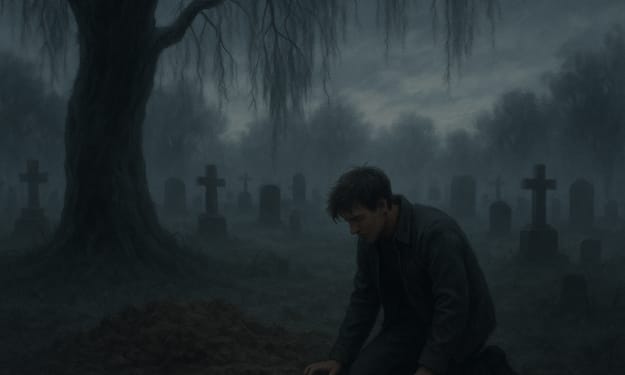
I was seventeen when my father died. A sudden heart attack. A closed casket. A quiet funeral on a cold November morning. They buried him in our family plot, beneath an old willow tree. I stood there, numb, watching as the earth swallowed the man I loved more than anything. Life moved on. I didn’t. Three years passed. On the third anniversary of his death, I returned to his grave alone. My mother couldn’t come—too painful, she said. I brought flowers. His favorite—white lilies. As I approached, I noticed something odd. The soil looked… disturbed. It wasn’t fresh, but it wasn’t settled either. Like someone had tampered with it recently. I brushed it off. Maybe animals. Maybe wind. Graveyards are lonely places. I laid the flowers and knelt. “I miss you, Dad.” The air grew colder. A sudden gust bent the trees, sending shivers down my spine. Then I noticed something else. His nameplate. It was slightly crooked. I reached out to fix it—and my fingers felt something underneath the loose stone. A crack. A gap. Curiosity overtook me. I pulled harder, lifting the stone. Beneath it—bare dirt. No concrete seal. No vault. Just soil. I stared, heart pounding. I ran to the caretaker’s office. “Something’s wrong with my father’s grave,” I told him. He frowned, came with me. He examined the site, then said, “Only one way to know.” I expected paperwork, delay—anything but what came next. He called two workers and said, “Dig six feet.” I protested, shaking. “Wait—are you allowed to do this?” He looked at me with eyes that had seen too much. “Son, sometimes graves lie.” The digging began. It took over an hour. As the final shovels lifted, we all leaned forward. Empty. No coffin. No bones. No clothes. No sign of burial. Just… nothing. I felt the world tilt. My legs gave out. “He was buried here,” I said. “I was here. I watched.” The caretaker nodded grimly. “I believe you.” I demanded answers. Was there a mistake? Had the wrong plot been used? He showed me the cemetery records. My father was buried exactly here. But there was one thing that didn’t make sense. No casket delivery was ever signed. No burial photo. No coffin ID. The funeral home had gone out of business a year after my father's death. Something was very wrong. That night, I told my mother. Her face turned pale. She whispered: “I didn’t want to tell you.” “What?” “I saw your father. A month after we buried him.” I stared. “What do you mean?” She trembled. “I was in the kitchen. He stood outside the window. Same clothes. Same look. But... he didn’t blink.” “Why didn’t you say anything?!” “Because he smiled and disappeared.” That night, I couldn’t sleep. I kept seeing the empty grave. Dreamed of it. In the dream, I was standing beside it. A voice whispered, “I never rested.” I woke up with dirt under my nails. I hadn’t left my bed. The next day, I went to our old storage room. I pulled out my father’s things—his coat, his journals. In the inside pocket of his jacket, I found a letter. Sealed. Addressed to me. “Open only if something doesn’t feel right.” My hands shook. I opened it. The letter read: > “If you’re reading this, then my death was not natural. I’ve been hunted. Watched. Followed. Don’t trust what you saw. I made plans to disappear, to protect you. If the grave is empty, it means I succeeded. Or… something else found me first.” That was the last line. No signature. No explanation. Just… silence. Now I return to the grave every year. Sometimes the flowers stay. Sometimes they vanish overnight. But the dirt is always disturbed. And the whisper in the wind always says: “I never rested.”
By Noman Afridiabout a year ago in Horror
When My Sister Told Me She Was No Longer Alive
Two years ago, my sister Mariam vanished. One moment, she was walking home from college—the next, gone. No signs of struggle. No witnesses. Her phone was found near a quiet road, screen cracked, music still playing. We searched endlessly. Posters. Police. Social media campaigns. But nothing. Eventually, the world let her go. But I didn’t. Every night, I’d leave her bedroom untouched. Her books, her clothes, even the faint scent of jasmine she wore—preserved. Until last night. It was raining. I was home alone. Power flickered. Silence pressed against the walls. Then— Three knocks. Soft. Deliberate. At the front door. I opened it. There she stood. Mariam. Soaked, barefoot, shivering—but smiling. Her hair was longer. Her face paler. But it was her. I gasped. “Mariam…?” She nodded. “I came back.” I pulled her inside, wrapped her in a blanket, touched her face. She was cold. Not cold like winter—cold like stone. “Where were you?” I whispered. She looked at me. Eyes blank. Soft. Hollow. “I was in between.” “In between what?” “Life and memory.” I stared. She sat down slowly, like gravity worked differently on her. Her movements were... delayed. As if the world responded to her slower than it should. “I don’t have much time,” she said. “Time for what?” She looked toward her old room. “To say goodbye.” I followed her in. The room lit up the moment she entered. I hadn’t turned on the light. She walked to her old mirror and stared into it. But her reflection wasn’t there. I watched—trembling. She touched the mirror’s surface and said: “He let me return. Just once.” “Who?” I asked. “The one who keeps the forgotten.” I shivered. She turned to me. “I didn’t want to leave. But my soul was... misplaced. Torn from my body before its time.” She began to cry. Tears that evaporated before touching her skin. I stepped closer. “You’re here now. We can fix this. Call someone—pray—something—” She shook her head. “I’m not real anymore. Just a borrowed echo. The body you see—it’s not mine.” I wanted to believe she was lying. That this was a cruel trick. A trauma dream. But the clock had stopped ticking. The windows fogged over without a cause. And shadows bent away from her. She walked to her closet and pulled out her old diary. “I wrote things in here—before I vanished. Things I never told anyone.” She opened it. Blank pages. “All gone,” she said softly. “Even my memories are fading.” Then she looked at me—smiling that same gentle smile I had missed for years. “You were the only one who didn’t forget me.” I broke down. “I never will.” She leaned in, hugged me. It felt like fog holding fog. Then she whispered: “You’ll see me again. Just not here.” The lights blinked. She stepped back. “I have to go before the boundary seals.” “No!” I grabbed her hand. Her fingers passed through mine. “I’m already gone,” she whispered. Then she vanished. Not with a flash. Not with drama. She just… dissolved. Like steam. I fell to my knees. Sobbing. At sunrise, I found her diary on the floor—open. One line had reappeared. “I remember being loved.”
By Noman Afridiabout a year ago in Horror