Latest Stories
Most recently published stories in Horror.
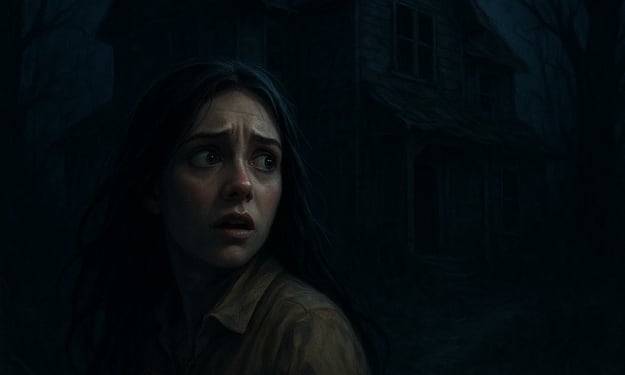
The Whispers Beneath the Floorboards
The village of Darenhill had always been quiet, surrounded by thick forests and old farmland that had long been abandoned. Its narrow streets twisted between cottages that leaned inward like tired old men, whispering secrets through the cracks of their walls. But one house stood apart—the old Marlowe House—its windows shattered and roof sagging as though the earth itself had given up trying to hold it up.
By Iazaz hussain11 months ago in Horror
The Black Phone 2 Finally Fixed the First Film's 2023 Stealth Sequel. Content Warning.
Now that The Black Phone 2 has been in theaters for a few weeks, it feels like the right time to do a spoiler-heavy deep dive into the film. Or rather, one very specific moment in the film that not only changes everything we know about the overarching narrative so far, but also dramatically alters what we already know is bound to happen thanks to the sleeper sequel that The Black Phone received back in 2023.
By John Dodge11 months ago in Horror
The Bermuda Triangle: The Atlantic’s Greatest Mystery. Content Warning.
Hidden in the vast blue expanse of the Atlantic Ocean lies one of the most mysterious regions on Earth — the Bermuda Triangle. This area, often called the “Devil’s Triangle,” has fascinated scientists, sailors, and conspiracy theorists for decades. Stretching between Miami (Florida), Bermuda, and San Juan (Puerto Rico), the Bermuda Triangle covers roughly 500,000 square miles of ocean where countless ships and aircraft have reportedly vanished without a trace. The Origins of the Legend The mystery of the Bermuda Triangle began to attract global attention in the mid-20th century. One of the earliest and most famous incidents occurred in 1945, when Flight 19 — a squadron of five U.S. Navy bombers — disappeared during a training mission. The pilots radioed in, reporting that their compasses were malfunctioning and that they were lost over the ocean. The rescue plane sent to find them also vanished, leaving behind no wreckage or survivors. Stories like these spread rapidly through the media, sparking the legend of a haunted oceanic zone where navigation fails, time distorts, and strange forces drag vessels into the deep. The term “Bermuda Triangle” itself was popularized in 1964 by journalist Vincent Gaddis, who wrote about the mysterious disappearances for Argosy Magazine. Unexplained Phenomena and Theories What makes the Bermuda Triangle so terrifying — and fascinating — is that no single explanation can fully account for all the reported events. Over the years, researchers and enthusiasts have proposed a variety of theories, ranging from scientific to supernatural. 1. Magnetic Anomalies: Some scientists believe the Triangle lies on a region where Earth’s magnetic field behaves unusually. This could cause compass readings to become unreliable, leading ships and aircraft dangerously off course. 2. Methane Gas Hydrates: Another popular theory suggests that methane gas bubbles trapped under the ocean floor could occasionally erupt, reducing water density and causing ships to sink suddenly without warning. 3. Human Error and Weather: Skeptics argue that most accidents are caused by human mistakes, storms, and rapid weather changes common in the region. The area is part of a major hurricane corridor, which could easily explain some of the mysterious disappearances. 4. Aliens and Time Portals: For believers in the paranormal, the Bermuda Triangle is more than a physical place — it’s a gateway to another dimension. Some claim UFOs use it as an entry point to Earth, while others believe it’s a portal in time and space that swallows anything unlucky enough to pass through. Famous Disappearances Over the decades, dozens of high-profile cases have been linked to the Triangle. Among them are: USS Cyclops (1918): A massive U.S. Navy cargo ship carrying 309 crew members vanished without a distress call. No wreckage was ever found. Star Tiger and Star Ariel (1948–1949): Two British airliners disappeared while flying near Bermuda in clear weather conditions. The Witchcraft (1967): A luxury yacht owned by Dan Burack disappeared just one mile off the coast of Miami. Burack had called the Coast Guard to report a minor issue, but by the time rescuers arrived, the yacht had completely vanished. Each of these cases adds to the Triangle’s dark reputation — a place where logic and science seem to fail. Scientific Investigations In recent decades, scientists have tried to demystify the Bermuda Triangle. Satellite data, modern GPS systems, and oceanic studies have found no consistent pattern of disappearances beyond statistical averages. The U.S. Coast Guard officially states that there is nothing supernatural about the region, and the number of incidents is proportionate to the amount of traffic passing through one of the world’s busiest shipping lanes. Yet, despite scientific explanations, the myth refuses to die. The Bermuda Triangle has been the subject of documentaries, books, movies, and endless online debates, fueling public fascination and fear. Cultural Legacy and Modern Mystery The Bermuda Triangle isn’t just an oceanic region — it’s a symbol of the unknown. It represents humanity’s enduring curiosity about what lies beyond our understanding. From Hollywood thrillers to YouTube conspiracy channels, the Triangle continues to inspire storytellers and investigators alike. Even with modern navigation and satellite tracking, strange incidents are still reported. Ships vanish, planes lose contact, and eerie lights are sighted dancing across the waves. Whether these are coincidences, natural phenomena, or something truly otherworldly, the legend of the Bermuda Triangle remains alive. Conclusion The Bermuda Triangle endures as one of the great unsolved mysteries of the modern world. Whether viewed through the lens of science or superstition, it captures our collective imagination — a place where the ocean guards its secrets fiercely. Beneath its shimmering surface, something ancient and unexplained seems to whisper: “Enter, if you dare.
By Haunted Secrets11 months ago in Horror
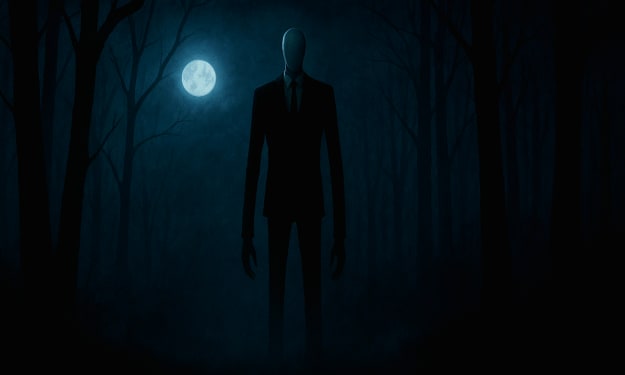
Slender Man: The Digital Legend That Haunts the Internet. Content Warning.
In the shadowy corners of the internet, where fiction and fear often blur, one figure has come to symbolize the dark side of digital folklore — Slender Man. Tall, faceless, and impossibly thin, dressed in a black suit and tie, he is a creation born not from ancient myth, but from the imagination of the internet age. Yet, despite his fictional origins, Slender Man has transcended screens and stories, embedding himself into modern culture — and even inspiring real-world tragedy. This is the story of how an image on a message board became one of the most chilling and influential urban legends in American history. The Birth of a Digital Monster Slender Man first appeared in June 2009 on the online forum Something Awful, during a contest where users were challenged to create creepy, photoshopped images. A user named Eric Knudsen, under the pseudonym Victor Surge, submitted two haunting black-and-white photos depicting a tall, thin man standing in the background behind children. Accompanying the images were eerie captions suggesting that the mysterious figure was responsible for the disappearance of several children. The combination of the photos and the story sparked the imagination of thousands. Within days, users across the internet began adding their own details — eyewitness accounts, supposed newspaper clippings, and diary entries — turning Slender Man into a collaborative myth. The Anatomy of Fear What made Slender Man so terrifying was not what was known about him — but what wasn’t. Described as an unnaturally tall humanoid, often said to have tentacle-like appendages, a featureless white face, and the ability to cause paranoia and hallucinations, Slender Man quickly became an icon of modern horror. He was said to stalk children, manipulate their minds, and lure them into the woods where they were never seen again. Some stories claimed he could appear anywhere, often near forests, abandoned buildings, or even through digital screens. His presence was marked by static interference, lost time, and an overwhelming sense of dread. This open-ended mythology allowed internet users to expand the story endlessly. Blogs, YouTube channels, and online forums filled with alleged sightings and survivor accounts — blurring the line between reality and fiction. The Slenderverse and Cultural Explosion As the legend grew, Slender Man became a cornerstone of what fans dubbed the “Slenderverse” — a collection of online horror stories, videos, and games inspired by the character. The most famous of these is the YouTube series Marble Hornets, launched in 2009. Presented as found footage, it follows a filmmaker who begins documenting strange occurrences after meeting a mysterious figure known as “The Operator” — clearly inspired by Slender Man. The series’ slow-burn tension, grainy aesthetic, and viral nature helped establish the creepypasta genre as a new form of digital storytelling. Soon after, video games like Slender: The Eight Pages (2012) brought the terror to players directly. The simple premise — collect eight pages scattered through a dark forest while avoiding Slender Man — proved terrifyingly effective. The game’s sound design, visual distortion, and sudden jump scares made it an internet sensation, turning Slender Man into a pop culture phenomenon. The Real-World Tragedy However, the Slender Man myth took a dark turn in 2014 when two 12-year-old girls from Wisconsin lured their friend into the woods and stabbed her nineteen times, claiming they did it to “please Slender Man.” The victim miraculously survived, but the case shocked the world. The incident highlighted the powerful influence of online myths on young minds and sparked national debates about the impact of internet horror on children, the line between fiction and obsession, and the responsibility of digital communities. Following the event, websites like Creepypasta Wiki issued statements reminding readers that Slender Man was entirely fictional — yet the damage had been done. The legend had stepped beyond the realm of imagination into the real world. The Psychology Behind the Legend Experts believe Slender Man’s enduring terror lies in psychological archetypes. His facelessness triggers a deep-seated fear of the unknown, while his impossible proportions evoke unease and helplessness. He embodies the fear of being watched, followed, or controlled — anxieties that mirror our own relationship with the digital world. Moreover, the collaborative nature of his story reflects how modern myths are created and spread. Instead of oral tradition, today’s legends evolve through memes, social media, and shared creativity, proving that the internet has become the new campfire around which we tell our scariest stories. Slender Man in Pop Culture Slender Man’s influence spread far beyond internet forums. He has inspired books, documentaries, and Hollywood films, including the 2018 movie Slender Man, as well as countless fan-made projects. His image has become a symbol of digital-age horror — clean, minimalist, yet deeply disturbing. Even after more than a decade, new stories, games, and art continue to explore his myth, ensuring that the Slender Man phenomenon remains alive in online culture. The Modern Boogeyman Slender Man represents a new kind of monster — one born not from folklore or superstition, but from pixels and imagination. He is the boogeyman of the internet generation, thriving on anonymity, viral storytelling, and our collective fear of what hides in the digital dark. His legacy is a reminder that myths evolve with technology. Where once we feared the dark forests, now we fear the shadows lurking behind our screens. Slender Man is not just a story — he’s a reflection of how the internet can create, shape, and sustain fear on a global scale. Conclusion More than a decade after his creation, Slender Man continues to haunt the imagination of millions. Though fictional, his legend serves as a cautionary tale about the power of the internet — to connect us, to entertain us, and sometimes, to terrify us. In a world where stories spread faster than truth, Slender Man stands as the perfect ghost of the digital age — a faceless symbol of fear, obsession, and the unknown.
By Haunted Secrets11 months ago in Horror