Latest Stories
Most recently published stories in Horror.
Haunting True Crime Stories
The seeds for this unsettling tale were planted on February 27, 1859, when New York State Representative Daniel Sickles shot and killed his sworn enemy and romantic rival, United States District Attorney Philip Barton Key, in front of a crowd of stunned onlookers.
By Tales from the Shadowlands10 months ago in Horror
The Walls of Silence.. AI-Generated.
The cramped, smoke-filled office of the Whitechapel police squad was a fragile refuge from the chaos outside. Files piled high on the table: victim records, witness statements, yellowed photographs. Sergeant Fielding scanned the notes with tired eyes while Harrow examined a map of the neighborhood, where several red dots marked the crime scenes.
By Horror story 10 months ago in Horror
The Walls of Silence.. AI-Generated.
In the silent office, the flickering light of an oil lamp cast dancing shadows on the walls. Sergeant Fielding leaned against his desk, his features drawn from fatigue and sleepless nights. His gaze wandered for a moment over the documents spread out before him.
By Horror story 10 months ago in Horror
The Walls of Silence.. AI-Generated.
In the early morning, life resumed its chaotic course in the streets of Whitechapel. The cries of street vendors mingled with the clatter of hooves on the cobblestones, while residents tried to forget the bitter cold of the night. Yet a whisper was already circulating, in hushed tones, from door to door.
By Horror story 10 months ago in Horror
Healing Beyond Walls
The hospital had always been seen as a place for the sick — a space where pain and anxiety lingered in the air. But over the years, that perception began to change. What was once a sterile building filled with hurried footsteps and silent waiting rooms was now becoming a place of hope, innovation, and compassion. Sunrise Hospital stood as a shining example of this transformation. Located in the heart of the city, it wasn’t just a center for treating illness — it was a hub of healing and humanity. Its gleaming glass exterior reflected the morning sun, but it was the warmth inside that truly set it apart. Every morning, as the automatic doors slid open, a soft melody played in the lobby. The air smelled faintly of fresh flowers placed near the reception desk. Patients who once feared hospital visits now found comfort in the gentle smiles of nurses and the encouraging words of volunteers. Dr. Ayesha, a senior physician who had served for nearly two decades, remembered the old days vividly. “Hospitals used to focus only on curing diseases,” she said, standing by the pediatric ward’s window. “Now, we focus on healing lives.” Her words reflected a powerful truth. Modern hospitals like Sunrise had shifted from being centers of treatment to centers of transformation. Beyond medicines and machines, the focus was now on emotional support, mental health, and patient empowerment. One such example was young Ali, a 10-year-old boy battling leukemia. When he first arrived, he was withdrawn and afraid of every needle and test. But the hospital had recently launched a “Healing Through Art” program, where children could paint, draw, and express their feelings. Every afternoon, a volunteer named Mr. Rahim would bring in boxes of colorful paints and paper. Slowly, Ali began to open up. He painted bright suns, blue skies, and trees full of life. Within weeks, the change was visible not just in his artwork but in his attitude. He smiled more, talked freely, and even encouraged other young patients to join. “It’s not just medicine that heals,” Mr. Rahim often said, “it’s love, laughter, and little acts of kindness.” The hospital also focused heavily on community outreach. Every month, a team of doctors and nurses would visit nearby villages to conduct free health camps. They screened for common diseases, taught mothers about nutrition, and spread awareness about hygiene. For many people, it was the first time they had ever received proper medical advice. One such visit changed the life of Fatima, a mother of three. She had been suffering from untreated diabetes for years, unaware of the risks. The hospital’s mobile clinic detected her condition and provided her with care and education. “They didn’t just give me medicine,” she said later, tears in her eyes. “They gave me another chance at life.” Behind all these efforts was the hospital’s director, Dr. Kamal. He believed that hospitals should not be islands of recovery, but bridges that connect health to humanity. Under his leadership, Sunrise Hospital introduced green spaces, meditation rooms, and patient-support groups. “A healthy environment is part of healing,” he often said. The hospital’s emergency department, once a place of chaos, was now a model of calm efficiency. With trained trauma teams, advanced technology, and compassionate care, lives were saved every single day. But what truly made a difference was the culture — every staff member treated patients as family, not as files. By evening, as the golden light faded and the hospital corridors grew quieter, a deep sense of peace filled the air. Visitors walked out with smiles, doctors shared lighthearted conversations, and nurses hummed softly as they checked on resting patients. Sunrise Hospital was no longer just a building of walls and wards — it had become a living symbol of hope. It showed that true healing isn’t only about curing the body, but also about touching the heart, lifting the spirit, and restoring faith in humanity. And in that gentle harmony of science and compassion, the hospital continued to stand — a beacon of light, healing far beyond its walls.
By Muhammad Saad 10 months ago in Horror
The Dyatlov Pass Mystery. Content Warning.
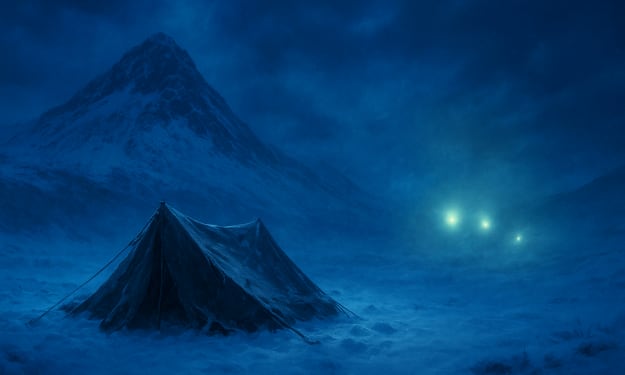
High in the icy wilderness of Russia’s Ural Mountains lies one of the most haunting mysteries of the 20th century — the Dyatlov Pass Incident. This case has baffled investigators, scientists, and conspiracy theorists for over six decades. It’s a story of courage, horror, and the unknown — a chilling reminder that even in our modern age, nature and mystery can still defeat logic. The Journey Begins In January 1959, a group of nine experienced hikers from the Ural Polytechnic Institute set out on a skiing expedition led by Igor Dyatlov, a 23-year-old engineering student. Their goal was to reach Otorten Mountain, a challenging but achievable route for seasoned adventurers. The team included seven men and two women, all skilled mountaineers. They carried journals, cameras, and supplies — documenting every step of their journey. But none of them would return alive. Days later, when they failed to make radio contact or return as scheduled, a rescue team was sent into the frozen wilderness. What they found still sends chills down the spine of anyone who hears the story. The Discovery of the Camp Searchers found the group’s tent abandoned and torn open from the inside on the snowy slope of Kholat Syakhl — a name that chillingly translates to “Dead Mountain” in the local Mansi language. Inside the tent were their belongings, boots, and warm clothing — everything they would have needed to survive in temperatures below -25°C. Yet, the hikers had fled barefoot or wearing only socks and light clothing into the snow. The first two bodies were discovered near a forest line under a cedar tree, barefoot and half-naked, as if they had been trying to start a fire. Three more bodies, including Dyatlov himself, were found between the tree and the tent — their positions suggesting they had been crawling back to camp. But the true horror lay ahead. A Scene of Unimaginable Horror It took two more months to find the remaining four hikers, buried under snow in a ravine deeper in the forest. Their deaths were far stranger than the others. One had a fractured skull, Another had severe chest injuries comparable to a car crash, A woman was missing her tongue and eyes, and Traces of radiation were found on some of their clothing. There were no signs of struggle or footprints from outsiders, and their injuries couldn’t be easily explained by an avalanche or animal attack. Investigators were left with more questions than answers. Theories That Shook the World Since 1959, dozens of theories have emerged — from the scientific to the supernatural — in an attempt to explain what really happened on that freezing night. 1. Avalanche Theory: In 2019, Russian authorities reopened the case and suggested that a small slab avalanche could have struck the tent, forcing the hikers to flee. However, the slope’s angle and the group’s experience made this explanation controversial. 2. Katabatic Wind: Some scientists propose that fierce, low-level winds (katabatic winds) may have caused panic and disorientation, forcing the group to abandon their tent in terror. 3. Soviet Military Experiments: Many believe the hikers stumbled upon secret Soviet weapons tests, such as parachute mines or radiological experiments, which could explain both the injuries and the radiation. 4. Infrasound Panic Theory: Another theory claims that infrasound — low-frequency sound waves generated by wind — caused intense fear, nausea, and irrational behavior, driving the group into a fatal frenzy. 5. Paranormal and Extraterrestrial Explanations: Others point to reports of orange orbs in the sky seen by witnesses that night. Could UFOs have been involved? Some believe so, arguing the hikers were victims of an encounter beyond human understanding. Why the Case Remains Unsolved Despite modern technology and countless investigations, no single theory perfectly explains every detail — the missing tongue, the radiation, the tent ripped from within, and the differing levels of trauma. The official Soviet investigation in 1959 concluded vaguely that the hikers died from “a compelling natural force.” This phrase only deepened the mystery and fueled global fascination. In recent years, forensic research and computer simulations have revisited the avalanche theory, suggesting that snow slabs could indeed cause blunt-force trauma similar to what was found. Yet even with these modern insights, many inconsistencies remain — leaving room for endless speculation. Legacy and Cultural Impact The Dyatlov Pass Incident has become a cornerstone of true mystery and horror storytelling. It has inspired books, documentaries, and films, including The Dyatlov Pass Incident (2013) and the Dead Mountain TV series. To this day, curious travelers trek to the remote site, where a memorial stone marks the final resting place of the nine victims. The pass itself was officially renamed Dyatlov Pass in honor of the group’s leader. But more than a memorial, it stands as a symbol of humanity’s eternal confrontation with the unknown — a place where bravery met something far beyond human comprehension. Conclusion The Dyatlov Pass Mystery endures as one of the most haunting unsolved enigmas of modern history. Whether it was a natural disaster, a secret experiment, or something supernatural, the truth remains buried beneath the snow. Over sixty years later, the icy winds of the Ural Mountains still whisper the same question — what really happened that night? Until someone finds the missing piece of the puzzle, the Dyatlov Pass will remain a frozen monument to fear, mystery, and the unexplainable power of nature.
By Haunted Secrets10 months ago in Horror
"Don't Go Into the Woods"
‘Don’t go into the woods.’ That was something my mother always said, offering no explanation except for the promise of closure when I ‘got older’. I’d followed her words diligently, never venturing past the run-down picket fence with the chipping white paint. Instead, I stayed within the confines of my backyard, kicking stones, picking daisies, and making mud pies, like any other nine-year-old.
By Max Chapman10 months ago in Horror
The Walls of Silence.. AI-Generated.
The icy night air bit into London's skin, creeping under clothing like a silent snake. In the narrow alleys of Whitechapel, gas lamps cast a flickering light on the damp cobblestones, splashing dirty yellow light on the dilapidated facades of the buildings. The thick, stubborn fog swallowed sounds and shapes, blurring the line between reality and shadow.
By Horror story 10 months ago in Horror