
Year 1958: Fun Facts, Trivia, and History
This quick read presents a collection of fun facts, trivia, and history events from the year 1958.
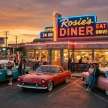

This quick read presents a collection of fun facts, trivia, and history events from the year 1958. Discover the year’s top news stories, most influential people, sports facts, historic firsts, entertainment trivia, and much more.
Take a journey through history in just minutes.
- In 1958, Dwight D. Eisenhower was the president of the United States, and Richard M. Nixon was the nation’s vice president.
- The average annual household income in the U.S. was $4,650.
- You could buy a three-bedroom house in the suburbs for about $12,000.
- The average monthly rent was $92, up from $90 a year earlier.
- The federal minimum wage was $1.00, the average retail price for a gallon of gas was 25 cents, and a ride on the New York subway cost 15 cents.
- Consumer products launched in 1958 included Cocoa Krispies, Cocoa Puffs, Friskies dry cat food, Jif creamy peanut butter, Mr. Clean, Pledge cleaning products, Rice-A-Roni, and Sweet’N Low.
- On January 1, the European Economic Community (EEC), also known as the Common Market, went into operation. Its members were Belgium, France, Italy, Luxembourg, the Netherlands, and West Germany.
- On January 30, the first two-way moving sidewalk at an airport went into service at Love Field, Dallas’ new municipal airport.
- On February 11, Ruth Carol Taylor became the first African American flight attendant in the United States.
- Between March 18 and 21, a nor’easter that struck the Mid-Atlantic region dumped 50 inches of snow on Morgantown, Pennsylvania, which is located about 70 miles west of Philadelphia.
- On March 24, Elvis Presley joined the United States Army in Memphis, Tennessee.
- At the 30th Academy Awards on March 26, The Bridge on the River Kwai won an Oscar for Best Picture, and David Lean (The Bridge on the River Kwai) won an Oscar for Best Director. Alec Guinness (The Bridge on the River Kwai) won an Oscar for Best Actor, and Joanne Woodward (The Three Faces of Eve) won an Oscar for Best Actress.
- On March 27, Nikita Khrushchev became the Soviet premier as well as the first secretary of the Ukrainian Communist Party.
- On May 24, United Press (UP) and the International News Service (INS) merged to become United Press International (UPI).
- On May 26, Union Square—a 2.6-acre public plaza in downtown San Francisco—became a state historical landmark.
- On July 29, President Eisenhower signed the National Aeronautics and Space Act of 1958 into law. The bill “provided for research into the problems of flight within and outside the earth’s atmosphere” and also “established the National Aeronautics and Space Administration (NASA).”
- On August 1, the price of a first-class stamp increased from three to four cents. (The price had been three cents for 26 years.)
- On September 2, President Eisenhower signed the National Defense Education Act (NDEA) into law. Senate.gov points out that the NDEA “made substantial funds available for low-cost student loans, boosting public and private colleges and universities.”
- On September 12, the U.S. Supreme Court ordered the all-white Central High School in Little Rock, Arkansas, to integrate.
- On October 8, Dr. Ake Senning, a Swedish cardiac surgeon, implanted the first pacemaker in Stockholm.
- On October 14, the District of Columbia Bar Association voted to accept African Americans as members.
- On October 26, Pan Am began daily transatlantic jet service from New York to Paris.
- On October 28, Pope John XXIII succeeded Pope Pius XII as the 261st Roman Catholic pope.
- On November 4, a midterm revolution took place in the U.S. Senate. According to Senate.gov, “Senate Democrats beat all predictions, gaining 13 seats—the largest transfer from one party to another in Senate history. With the admission of Alaska in January 1959, the party balance stood at 64 Democrats to 34 Republicans.”
- On December 1, a fire at the Our Lady of Angels School in Chicago claimed the lives of three nuns and ninety-two students.
- Encyclopedia.com tells us that “Television was introduced to Americans in 1939 and began to gain a foothold after World War II (1939–45). In the 1950s, the sale of TV sets and the boom in programming made TV America’s favorite source of entertainment. Consider the numbers: In 1946, 7,000 TV sets were sold; in 1948, 172,000 sets were sold; and in 1950, 5 million sets were sold. In 1950, just under 20 percent of American homes contained a TV set. Ten years later, nearly 90 percent of homes contained a TV—and some even had color TVs.”
- In 1958, there were 4,063 drive-in movie screens in the United States.
- McDonald’s sold their 100,000,000th hamburger.
- The first IHOP (International House of Pancakes) restaurant opened in Los Angeles.
- Royal Crown Cola began test marketing Diet Rite Cola—the world’s first diet soda.
- Best-selling book: Doctor Zhivago by Boris Pasternak
- Highest-grossing films: South Pacific, Auntie Mame, and Cat on a Hot Tin Roof
- Most popular TV programs: Gunsmoke (CBS), Wagon Train (NBC), and Have Gun Will Travel (CBS)
- Favorite radio programs: Don McNeill’s Breakfast Club, Ma Perkins, and Midwestern Hayride
- Beloved music artists and groups included Buddy Holly, the Chipmunks, Chuck Berry, the Coasters, the Diamonds, the Drifters, Elvis Presley, the Everly Brothers, Fats Domino, Frank Sinatra, Frankie Avalon, and Johnny Cash.
- Popular songs: Pat Boone (April Love), Danny & the Juniors (At the Hop), and Elvis Presley (Don't/I Beg Of You).
- Madonna, Michael Jackson, Mark Cuban, Ellen DeGeneres, and Prince were all born in 1958.
- Here are some sports facts for the year: The Baltimore Colts were the NFL champs, the New York Yankees won the World Series, and the Montreal Canadiens clinched the Stanley Cup. In addition, the University of Pittsburgh agreed to buy Forbes Field from the Pirates MLB team.
- In 1958 as well, the words “alternative minimum tax,” “beatnik,” “blaze orange,” “breakeven,” “cancer stick,” “comfort food,” “empty nester,” “frozen yogurt,” “game show,” “hot metal,” “Lou Gehrig’s disease,” “melatonin,” “panic attack,” “software,” “tailgate party,” and “think tank” all appeared in print for the first time.
- Bacon: 75 cents for a one-pound package
- Baked beans (B&M): 49 cents for two 18-ounce cans
- Beef (Swiss steak): 75 cents a pound
- Bisquick: 43 cents for a 40-ounce box
- Blueberries: 29 cents per pint
- Bologna: 53 cents for a one-pound package
- Cake mixes (Betty Crocker, assorted flavors): 31 cents for a 20-ounce box
- Candy (M&M’s): 25 cents for a six-ounce cello bag
- Chef Boyardee canned spaghetti and meatballs: 19 cents for a 15½ ounce can
- Coffee (Eight O’Clock): 73 cents for a one-pound bag
- Ice cream: 79 cents for a half-gallon carton
- Lemons: Six for 25 cents
- Milk: $1.01 a gallon
- Soda (Coca-Cola): 33 cents for six six-ounce bottles
- Sugar: Five pounds for 49 cents
References:
- https://en.wikipedia.org/wiki/1958_in_the_United_States
- https://www.merriam-webster.com/time-traveler/1958
- https://www.onthisday.com/events/date/1958
- https://www.the-numbers.com/market/1958/top-grossing-movies
- https://www.foodreference.com/html/html/food-timeline-1956.html
- https://www.famousbirthdays.com/year/1958.html
- https://www.onthisday.com/deaths/date/1958
Disclaimer: In writing and editing this article, Gregory DeVictor has made every effort to ensure historical accuracy and not to mislead his audience. In addition, the contents of this article, including text, graphics, and captions, are for general informational purposes only.
© 2026 Gregory DeVictor
About the Creator
Gregory DeVictor
Gregory DeVictor is a trivia enthusiast who likes to write articles about American history and nostalgia. Each of his articles presents a mix of fun facts, trivia, and historic events about a specific calendar year, decade, or century.
Enjoyed the story? Support the Creator.
Subscribe for free to receive all their stories in your feed.
Comments