
Year 1921: Fun Facts, Trivia, and History
This quick read presents a mix of fun facts, trivia, and history events from the year 1921.
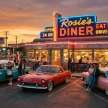

This quick read presents a mix of fun facts, trivia, and history events from the year 1921. Discover the year’s top news stories, most influential people, sports facts, retail prices, entertainment trivia, and much more.
Take a journey through history in just minutes.
President of the United States: Woodrow Wilson (D-New Jersey) was in office until March 4, when Warren G. Harding (R-Ohio) was inaugurated as the 29th president of the United States.
Vice President: Thomas R. Marshall (D-Indiana) was in office until March 4, when Calvin Coolidge (R-Massachusetts) became the 30th vice president of the United States.
Chief Justice of the Supreme Court: Edward Douglass White was in office until May 19, when he passed away. On July 11, William Howard Taft became the chief justice.
Speaker of the House of Representatives: Frederick H. Gillett (R-Massachusetts)
Senate Majority Leader: Henry Cabot Lodge (R-Massachusetts)
The 66th U.S. Congress was in session until March 4, when the 67th U.S. Congress convened.
United States population: 108,538,000
Homicide rate per 100,000 people: 8.1
Federal spending: $5.06 billion
Consumer Price Index: $17.9
Federal debt: The Coolidge Foundation tells us that by 1919—the year after World War I ended—outstanding federal debt “had ballooned to $27.4 billion from $14.6 billion in 1918. When Warren Harding and Calvin Coolidge began their term as president and vice president in 1921, the debt level was down to $23.9 billion."
Inflation rate: 10.50 percent
Unemployment rate: 11.70 percent
Average cost of a new home: About $6,296
Average monthly rent: About $15
Average cost of a new car: About $525
Average annual income: About $2,160
Average retail price for a gallon of gas: 33 cents
Cost of a first-class stamp: Two cents
Minimum wage: 33 cents per hour
Dow Jones Industrial Average: The market bottomed on August 24, 1921, at 63.9. However, the DJIA grew from 63.9 in August 1921 to 381 by September 1929, an increase of almost 600 percent. (It’s worth noting that between September 1929 and July 8, 1932, the Dow lost 89 percent of its value, which ushered in the Great Depression.)
Price of gold: $20.67 per troy ounce
January 2: KDKA radio in Pittsburgh became the first radio station in the United States to broadcast a religious service over the airwaves. The program featured a Sunday morning service from the Calvary Episcopal Church in Pittsburgh's Shadyside neighborhood. Eventually, the Calvary service became a regular Sunday program on KDKA until 1962. (It’s worth noting that KDKA 1020 AM was the first commercial radio station in the U.S. It began broadcasting during the evening of November 2, 1920, just in time for a newscast about the Harding-Cox presidential election.)
January 3: 9XM (now WHA) at the University of Wisconsin at Madison became the first radio station to broadcast a weather forecast.
February 5: The New York Yankees purchased 20 acres of land in the Bronx to build Yankee Stadium.
February 18: Warren G. Harding became the first U.S. president-elect to be heard on the radio when he spoke on KDKA radio in Pittsburgh.
February 23: The first "transcontinental air mail flight" took place between New York City and San Francisco.
March 4: Warren Harding was inaugurated as the 29th president of the United States.
March 4: KDKA radio in Pittsburgh became the first radio station in the U.S. to broadcast a presidential inauguration.
March 4: Hot Springs National Park was created in Hot Springs, Arkansas. TodayInConservation.com remarks that Hot Springs is the smallest national park in the United States, covering about 5,500 acres. It is also the only national park located within a city and comprises a great deal of Hot Springs' historical district. Finally, Hot Springs is the oldest national park in the U.S. and predates Yellowstone by 40 years.
March 10: KDKA radio in Pittsburgh became the first radio station in the U.S. to broadcast a live theater performance.
March 25: The first Lowe's home improvement store opened in North Wilkesboro, North Carolina.
April 11: Iowa Governor Nathan Kendall signed a bill into law "that permitted the lawful sale of cigarettes in Iowa, along with a two-cent-per-pack tax." It was the nation's first cigarette tax. (Today, all 50 states have imposed cigarette taxes, ranging from 17 cents per pack in Missouri to $4.35 per pack in New York.)
April 11: KDKA radio in Pittsburgh became the first radio station in the U.S. to broadcast a live sports event over the airwaves. The program featured a boxing match between Johnny Ray and Johnny Dundee at the Motor Square Garden in Pittsburgh's East Liberty neighborhood.
April 18: Frank Zuna of New York City won the 25th Boston Marathon.
May 3: West Virginia imposed the first state sales tax.
May 5: French fashion designer Gabrielle "Coco" Chanel introduced Chanel No. 5 perfume. The French-Russian chemist Ernest Beaux compounded the scent formula for the fragrance.
May 12: The first National Hospital Day was observed in the United States.
On May 19, Congress abruptly curbed immigration. According to ImmigrationHistory.org, "Fears of increased immigration after the end of World War I . . . propelled Congress to enact the Emergency Quota Act." Under the Act's provisions, there would be "a drastic reduction in immigration" from other countries, particularly from southern and eastern Europe.
May 23: The first hit Broadway show with an all-Black cast, Shuffle Along, opened at the Cort 63rd Street Theater in New York City. The musical ran for 504 performances.
From May 31 to June 1, the Tulsa Race Massacre unfolded. History.com tells us that "thousands of white citizens in Tulsa, Oklahoma, descended on the city’s predominantly Black Greenwood District, burning homes and businesses to the ground and killing hundreds of people." The attackers burned and destroyed over 35 square blocks of the neighborhood, once regarded as one of the wealthiest Black communities in the United States.
June 20: 11.5 inches of rain fell in Circle, Montana, setting a state record.
July 2: President Harding signed a "joint congressional resolution" that declared an official end to the war with Germany.
July 24: Leon Scieur of Belgium won the 15th Tour de France.
July 27: At the University of Toronto in Canada, scientists Frederick Banting and Charles Best co-discovered insulin and its "therapeutic potential."
August 5: The Treaty of Berlin, a peace treaty between the United States and Germany, was signed in Berlin in the aftermath of World War I.
August 5: KDKA radio in Pittsburgh became the first radio station in the United States to broadcast an MLB game. At Forbes Field in Pittsburgh's Oakland neighborhood, the Pittsburgh Pirates defeated the Philadelphia Phillies, 8-5.
August 23: J. Edgar Hoover became the assistant director of the FBI.
September 7: At the first Miss America pageant in Atlantic City, 16-year-old Margaret Gorman of Washington, DC, was crowned Miss America.
September 20: KDKA radio in Pittsburgh became the first radio station in the United States to broadcast the news. (The newscast was a joint venture between KDKA radio and the Pittsburgh Post newspaper.)
October 5: KDKA (Pittsburgh, PA), WBZ (Boston, MA), and WJZ (Newark, NJ) became the first three radio stations in the U.S. to broadcast the World Series. (In the first game of the 18th World Series, the New York Yankees beat the New York Giants, 3-0, at the Polo Grounds in upper Manhattan.)
October 8: KDKA radio in Pittsburgh became the first radio station in the U.S. to broadcast a live football game. (In college football, the University of Pittsburgh Panthers defeated the West Virginia University Mountaineers at Forbes Field in Pittsburgh's Oakland neighborhood.)
October 13: The New York Giants won the 18th World Series by defeating the New York Yankees, 5 games to 3. For the first time in MLB history, all eight games of the Series were broadcast on the radio.
October 18: Charles Strite was granted a patent for his invention—the automatic pop-up toaster.
October 28: In America's first gubernatorial recall election, Governor Lynn Frazier of North Dakota became the first U.S. governor to be successfully recalled from office. There would not be another successful recall of a governor until California Governor Gray Davis was recalled in 2003.
November 11: President Harding dedicated the Tomb of the Unknown Soldier in Arlington National Cemetery.
November 27: U.S. bandleader Vincent Lopez and his band began making "a series of weekly 90-minute music broadcasts on Westinghouse-owned station WJZ in Newark, New Jersey."
December 24: The first public radio broadcast in France was made from the Eiffel Tower in Paris.
In 1921, nationwide Prohibition was in effect.
In 1921, there were no TVs, PCs, or DVDs. There were no Google Maps, Google News, or Google Chromebooks. Facebook, Twitter/X, YouTube, TikTok, and Instagram weren't around yet either. However, there were baseball cards, jigsaw puzzles, and roller skating. There were poker games, ping-pong, and pedal cars. Baseball was the national pastime, and many Americans went to baseball games, followed baseball, and played baseball. People also listened to music, read books, danced the Charleston, went to the movies, and even took a "Sunday drive" in their Model T Ford.
Popular baby names in 1921 were John, Robert, William, James, Charles, Mary, Dorothy, Helen, Margaret, and Ruth.
The average lifespan for men was 53.6 years. For women, it was 54.6 years.
In 1921, Guccio Gucci founded the House of Gucci in Florence, Italy, as "a small family-owned leather shop." He began to sell saddles and leather bags, as well as accessories to horsemen.
The Taggart Baking Company in Indianapolis, Indiana, introduced Wonder Bread with its famous red, yellow, and blue logo.
Lt. John A. Macready successfully performed the first aerial crop dusting in Ohio.
President Harding signed the Willis Campbell Act, which restricted doctors from prescribing "medicinal alcohol" to patients.
Harry MacElhone of Harry's Bar in Paris created the Bloody Mary.
E. W. "Billy" Ingram founded the White Castle fast-food hamburger chain in Wichita, Kansas. White Tower is credited for being "the world's first fast-food hamburger chain."
Other consumer products introduced in 1921 include Baby Ruth candy bars, Cheese-It baked crackers, Chuckles candy, the Eskimo Pie, NuGrape soda, and Parker fountain pens.
Lindy's and Sardi's restaurants both opened in New York City.
In 1921, a radio cost about $200.00, which is around $3,750.00 in purchasing power today. However, by the end of the decade, you could purchase a new radio for a more affordable $35.
Christmas tree lights (eight-light strand): $1.95 per box
Coffee maker (Hot Point brand, six-cup): $12.75
Electric dishwasher: $125.00
Electric toaster: $3.75
Electric vacuum cleaner: $39.00
Flashlight: 59 cents
Ironing board: $2.75
Mason jars: 89 cents a dozen
Movie ticket: 15 cents
Toilet paper (Blue Ribbon brand): 30 rolls for $1.00
Vinyl records: 85 cents to $1.25 apiece
Washing machine: $81.50
Wedding: $400
In 1921 as well, the words "arms race," "beach ball," "blind date," "capital gain," "cold front," "junk mail," "sales tax," "vitamin D," "warm front," and "whipping cream" all appeared in print for the first time.
References:
https://popculturemadness.com/1921-fun-facts-trivia-and-history/
https://www.countryliving.com/life/g33398396/what-things-cost-100-years-ago/
https://www.imdb.com/search/title/?title_type=feature&release_date=1921-01-01,1921-12-31
https://www.foodreference.com/html/html/food-timeline-1921.html
Disclaimer: In writing and editing this article, Gregory DeVictor has made every effort to ensure historical accuracy and not to mislead his audience. In addition, the contents of this article, including text, graphics, and captions, are for general informational purposes only.
© 2026 Gregory DeVictor
About the Creator
Gregory DeVictor
Gregory DeVictor is a trivia enthusiast who likes to write articles about American history and nostalgia. Each of his articles presents a mix of fun facts, trivia, and historic events about a specific calendar year, decade, or century.
Enjoyed the story? Support the Creator.
Subscribe for free to receive all their stories in your feed.
Comments