
Year 1900 Fun Facts, Trivia, and History
This quick read presents a collection of fun facts, trivia, and history events from the year 1900.
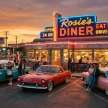

This quick read presents a collection of fun facts, trivia, and history events from the year 1900. Discover the year’s top news stories, most influential people, sports facts, historic firsts, entertainment trivia, and much more.
Take a journey through history in just minutes.
In 1900, William McKinley (R-Ohio) was the 25th president of the United States, and the vice president’s office was vacant.
The U.S. unemployment rate was 5.0%, the nation’s inflation rate was 1.20%, and the average American worker earned $500 a year.
Butter cost 25 cents a pound, maple syrup was 90 cents a gallon, and lemons were 15 cents a dozen. Coal for home heating cost $1.00 a ton, floor wax was 75 cents a gallon, and a pancake griddle cost 35 cents.
The U.S. population was 76,212,168, a 25% increase from 1890. About 67 million people in the U.S. were white, and most of the remaining nine million people were African American. The 1900 U.S. Census surveyed all 45 states, the District of Columbia, and the territories of Alaska, Arizona, Hawaii, New Mexico, and Oklahoma.
America’s 10 most populated states were New York, Pennsylvania, Illinois, Ohio, Missouri, Texas, Massachusetts, Indiana, Michigan, and Iowa.
The 10 largest cities in the U.S. were New York, Chicago, Philadelphia, St. Louis, Boston, Baltimore, Cleveland, Buffalo, San Francisco, and Cincinnati.
America’s largest industries were agriculture, oil, steel, railroads, and textiles.
An estimated 38% of Americans worked in the agricultural industry. There were 5,740,000 farms across the U.S., averaging about 147 acres apiece. (In 1800, about 90% of Americans were involved in agriculture. Back then, most farms had enough land to feed one family, and the average farm was about 10 acres.)
American companies and brands launched in 1900 included the Coleman Company, the Firestone Tire and Rubber Company, the Hanes clothing brand, the Lionel Corporation, and Mack Trucks.
On March 8, the National League (NL) Baseball Club voted to reduce the number of franchises from twelve to eight. The surviving teams were the Boston Beaneaters, Brooklyn Superbas, Chicago Orphans, Cincinnati Reds, New York Giants, Philadelphia Phillies, Pittsburgh Pirates, and St. Louis Cardinals. (To reduce the number of franchises from twelve to eight, the Baltimore Orioles, Cleveland Spiders, Louisville Colonels, and Washington Senators were eliminated.)
On March 15, President McKinley signed the Gold Standard Act into law. The new system “established the gold standard for the United States, which meant that the dollar's value was directly linked to the price of gold.”
March 16: At a meeting in Chicago, Ban Johnson, the founder of the American League (AL) Baseball Club, announced that the AL members for the 1900 season would be the Baltimore Orioles, Boston Americans, Chicago White Stockings, Detroit Tigers, Milwaukee Brewers, Philadelphia Athletics, and Washington Senators.
On March 24, New York City Mayor Robert Anderson Van Wyck “ceremoniously” broke ground for the new underground "Rapid Transit Railroad" (aka subway) that would connect Manhattan and Brooklyn.
On March 27, American businessman Joseph A. Campbell died. In 1869, he partnered with icebox maker Abraham Anderson to form a canning company that later became the Campbell’s Soup Company.
Between April 14 and November 12, the 1900 World’s Fair took place in Paris, France. Numerous technological advancements were displayed at the fair, including diesel engines, dry cell batteries, electric cars and fire engines, escalators, a Ferris wheel, the first magnetic audio recorder, moving sidewalks, the first-ever passenger trolleybus, and talking films. An estimated 48 million visitors attended the Paris Exposition.
On April 16, the U.S. Post Office issued the first stamp books, containing 12, 24, or 48 two-cent stamps. According to the USPS, “waxed paper was placed between sheets of stamps to keep them from sticking together. The books, which carried a one-cent premium until 1963, had light cardboard covers printed with information about postage rates.”
April 30: Through the Hawaiian Organic Act, Hawaii became an official U.S. territory, and Sanford B. Dole became its governor. The U.S. State Department points out that “Racial attitudes and party politics in the United States deferred statehood until a bipartisan compromise linked Hawaii's status to Alaska, and both became states in 1959.”
On April 30, John Luther “Casey” Jones—an Illinois Central Railroad engineer who became an American folk hero—died in a train wreck in Vaughan, Mississippi, while attempting to save his passengers and crew after his train collided with a stalled freight train. History.com tells us that “According to legend, Jones died with one hand on the train’s whistle and the other hand on its brake.”
May 17: L. Frank Baum’s book, The Wonderful Wizard of Oz, was published by the George M. Hill Company. The first edition of 10,000 copies quickly sold out.
In June, American temperance advocate Carry Nation—aka Hatchet Granny—raided six different bars in Kiowa, Kansas, in her ongoing campaign against alcohol consumption. (Nelson was known throughout the U.S. for attacking “alcohol-serving establishments” with a hatchet.)
June 3: In New York City, seven local unions representing thousands of immigrant women who worked in the garment industry formed the International Ladies' Garment Workers' Union.
On August 1, Édouard and André Michelin published the first Michelin Guide—a hotel and restaurant guide for French motorists to boost road travel.
On October 3, the Wright brothers began their first manned glider flights in Kitty Hawk, North Carolina.
On November 3, the first automobile show in U.S. history opened at Madison Square Garden in New York City.
November 6: In the 1900 U.S. presidential election, incumbent Republican President William McKinley defeated William Jennings Bryan, the Democratic candidate.
In 1900, electrical engineer Guglielmo Marconi received a British patent for the wireless radio.
American inventor Robert Montgomery invented the fly swatter.
Louis Lassen of Connecticut created the first hamburger-style sandwich.
The Eastman Kodak Company of Rochester, New York, launched the Brownie camera for $1.00, thus “making photography accessible to the masses. The Brownie was a simple box camera that used roll film and had a slogan of ‘You press the button, we do the rest.’”
The Radio Corporation of America (RCA) registered the trademark for Nipper—the RCA Victor dog—who became a well-known advertising icon.
Automobiles introduced in 1900 included the Adami (Italy), Fiat 6 HP (Italy), Kent’s Pacemaker (USA), Lancaster 10 (UK), Lane (USA), Lozier (USA), Peugeot Type 30 (France), and the Rambler (USA).
Other consumer products launched in 1900 were the Hershey's milk chocolate bar, Chiclets chewing gum, Gauloises and Gitanes (two French cigarette brands), the milkshake machine, Murphy’s oil soap, and the Triscuit whole wheat snack cracker.
Albert Campbell, Arthur Collins, George Gaskin, the Haydn Quartet, Harry Macdonough, Steve Porter, Dan Quinn, and Len Spencer were popular music artists and groups in 1900.
America’s most beloved songs included Ma Tiger Lily (Arthur Collins), Ma Blushin’ Rosie (Albert Campbell), When Cloe Sings a Song (George Gaskin), Because (the Haydn Quartet), and When You Were Sweet Sixteen (George Gaskin).
Popular movies for the year were As Seen Through a Telescope, The Clown and the Alchemist, Davy Jones’ Locker, The Enchanted Drawing, and Let Me Dream Again.
In 1900, the words "American dream," "body wave," "briefcase," "cookie sheet," "dodgeball," "dorm," "Easter bunny," "escalator," "free lunch," "gift certificate," "milk chocolate," "never-never land," "nuthouse," "panic button," "sorority," "television," "tote bag," "unionized," and "wage scale" all appeared in print for the first time.
References:
https://popculturemadness.com/1900-history-trivia-fun-facts/
https://www.foodreference.com/html/html/yearonlytimeline1900-1950.html
https://www.imdb.com/search/name/?death_date=1900-01-01,1900-12-31
https://m.imdb.com/search/title/?release_date=1900-01-01,1900-12-31
https://southcentralpa.momcollective.com/lifestyle/dinner-through-the-decades-1900-1910/
https://www.alphadictionary.com/slang/?term=&beginEra=1900&endEra=1915&clean=false&submitsend=Search
Disclaimer: In writing and editing this article, Gregory DeVictor has made every effort to ensure historical accuracy and not to mislead his audience. In addition, the contents of this article, including text, graphics, and captions, are for general informational purposes only.
© 2026 Gregory DeVictor
About the Creator
Gregory DeVictor
Gregory DeVictor is a trivia enthusiast who likes to write articles about American history and nostalgia. Each of his articles presents a mix of fun facts, trivia, and historic events about a specific calendar year, decade, or century.
Enjoyed the story? Support the Creator.
Subscribe for free to receive all their stories in your feed.
Comments