
Why no one can visit this Dangerous Island ?
Dangerous Island

National Geographic’s team was going to make a documentary on a remote island for the first time — an island from which no outsider had ever returned alive.
As they approached the shore, strange naked tribesmen emerged from the forests of the island and started raining arrows on the National Geographic ship. During the attack, the director was injured in the leg, and the team was forced to flee immediately.
Which island was this? And despite all our modern technology, why are humans still unable to go there?
Welcome once again to .
About 1,400 kilometers east of India lie the Andaman Islands. This territory is part of India and contains many small and large islands. On the map, the most populated city in the Andamans is Port Blair, which also has an airport. This airport plays an important role in connecting the Andaman Islands to the rest of the world. Planes from around the globe land here every day.
But surprisingly, only 50 kilometers away from this busy modern city lies an island where a civilization has built its own isolated world.
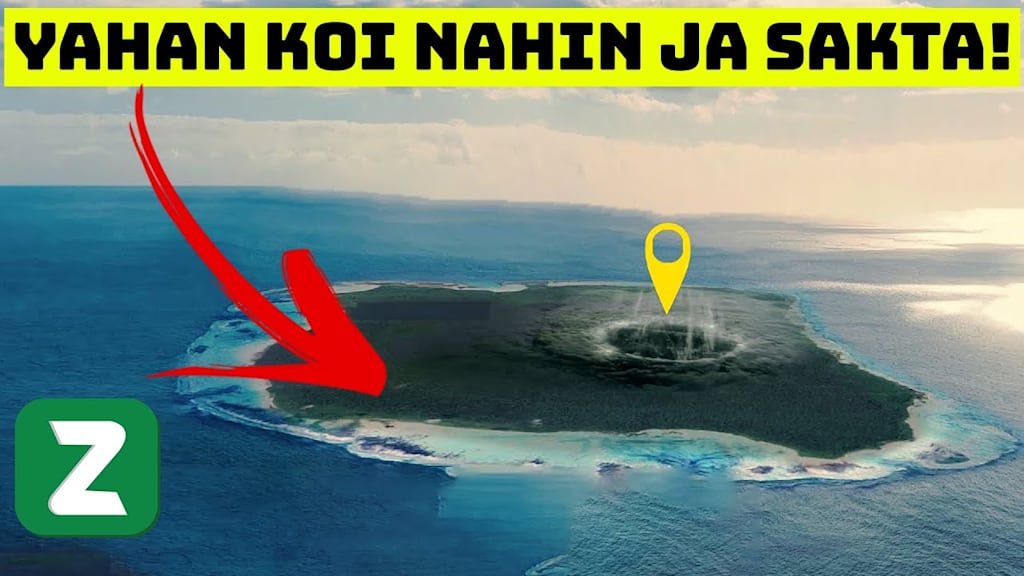
Known as North Sentinel Island, this island is only about 50 square kilometers in size and is completely covered by dense forests. Because of this, neither satellites nor drones can properly see what lies inside.
No one truly knows what tribe lives there or what secrets the island hides. Many attempts have been made throughout history to visit it, but the tribe cannot tolerate outsiders. They become aggressive, shoot arrows, and killing intruders means nothing to them.
It is believed that these people have created a world within our world, living there for thousands of years.
Just 50 kilometers from the modern city of Port Blair, it seems as if the Stone Age is still alive on this island.
But why do these people refuse all contact with the outside world?
To understand that, we must look into the history of North Sentinel Island.
For centuries, it has been believed that the tribe living on North Sentinel Island is a group of humans who became separated from the rest of civilization long ago.
Around 26,000 years ago, sea levels were much lower. At that time, these islands were connected to the Asian continent. As global warming gradually raised sea levels, the Andaman and Sentinel Islands became isolated from the rest of the world.
Human civilization continued advancing, but for the people living on these islands, this remained their entire world.
The outside world first learned about them in 1789 when a British ship reached the Andaman Islands. However, they ignored North Sentinel Island because it was small and seemed to have no strategic value.
Nearly 78 years later, in 1867, during British rule in India, a ship traveling toward the Andamans became stranded near North Sentinel Island. On board were 106 British and Indian passengers.
They assumed the island was deserted and took shelter there while waiting for rescue.
But on the third day, hidden tribesmen attacked them with arrows. Several people were killed before the Royal Navy managed to rescue the survivors.
This became the first known contact between the outside world and the Sentinelese tribe — and it ended in bloodshed.
For the next 13 years, nobody dared return.
Then in 1880, a British administrator named Maurice Vidal Portman was sent to govern the Andaman Islands. Curious about the island, he decided to visit North Sentinel Island.
Portman planned to kidnap a few tribe members, bring them to the Andamans, treat them kindly, and then return them with gifts in hopes of establishing friendly relations.
After hiding on the island for several days, Portman found a family consisting of a couple and four children. He kidnapped them and brought them to the Andamans.
This was the first time the Sentinelese had direct contact with the outside world.
Unfortunately, diseases common in the outside world were completely new to them. The elderly couple became sick and died.
Realizing his mistake, Portman returned the four children to the island with gifts.
Later, he wrote in his diary that the mission had failed and that they had likely increased the tribe’s fear and hatred toward outsiders.
It is also possible that the children carried diseases back to the island, killing more tribe members.
From that day onward, the Sentinelese became even more hostile toward outsiders.
For decades, anyone who accidentally reached the island was killed, and their bodies were displayed on the shore as a warning to stay away.
In 1947, after India gained independence, the Andaman Islands officially became part of India. The Sentinelese also technically became Indian citizens, though they had no idea what India even was.
The Indian government later decided to attempt peaceful contact.
In 1967, Indian anthropologist Triloknath Pandit took on this mission. He would circle the island in a boat and leave gifts for the tribe, hoping to earn their trust.
In 1974, National Geographic attempted to film a documentary called “Man in Search of Man.”
Their team arrived on a large boat carrying security guards, film crew members, and Triloknath Pandit himself.
The plan was to leave gifts close to shore and slowly gain the tribe’s trust before filming.
For three days they left gifts, but when they moved closer to the shore, the plan failed badly.
The Sentinelese warriors destroyed the gifts and launched a volley of arrows. One arrow struck the documentary director in the leg.
The National Geographic team canceled the mission and fled.
The footage they managed to capture from a distance remains the first and last video footage ever recorded of North Sentinel Island.
Even after this incident, Pandit continued visiting occasionally and leaving gifts from a safe distance.
Eventually, after many years, he managed to establish somewhat friendly contact. Some photographs even showed tribe members accepting gifts peacefully.
Pandit later involved his junior anthropologist, Madhumala Chattopadhyay, who was also seen interacting peacefully with the tribe.
Things remained relatively calm for several years.
Then, in 1981, a Panama-registered ship called MV Primrose became stranded near the island. Thirty crew members waited desperately for rescue.
After several days, they noticed more than 50 islanders approaching with bows and arrows.
The crew sent emergency messages and were eventually airlifted to safety by helicopter.
The wreck of the MV Primrose can still be seen today near North Sentinel Island on satellite images.
One thing became clear: if the Sentinelese showed any tolerance toward outsiders, it was mainly toward Triloknath Pandit and Madhumala.
After Pandit retired, the Indian government canceled all future visits and sealed off the island completely.
Since then, Indian Navy ships patrol the surrounding waters, and nobody is allowed near the island.
But the story did not end there.
In 2006, two fishermen accidentally drifted onto the island. Other fishermen nearby witnessed the tribe killing them and hanging their bodies on the beach.
For the next 12 years, nobody dared approach the island again.
Then, in 2018, a 26-year-old American named John Allen Chau secretly decided to go there.
He arrived in the Andamans, bribed fishermen to take him close to the island, and attempted to contact the tribe.
His mission was to spread Christianity among them.
But unfortunately, he too was killed.
To this day, nobody knows how many bodies remain on North Sentinel Island, never to be recovered.
The Indian government has given the Sentinelese complete freedom over their island and strictly banned outsiders from entering even within a 10-kilometer radius.
North Sentinel Island is perhaps the only place on Earth where visiting is almost certain death.
Do the people living there truly just want to remain alone?
Or are they protecting some great secret hidden on their island?
That mystery remains unsolved to this day.
About the Creator
Imran Ali Shah
🌍 Vical Midea | Imran
🎥 Turning ideas into viral content
✨ Watch • Share • Enjoy
Enjoyed the story? Support the Creator.
Subscribe for free to receive all their stories in your feed.
Comments
There are no comments for this story
Be the first to respond and start the conversation.