
Why Germany Lost in 1914: The Schlieffen Plan Explained
Understanding Germany's Schlieffen Plan in World War I
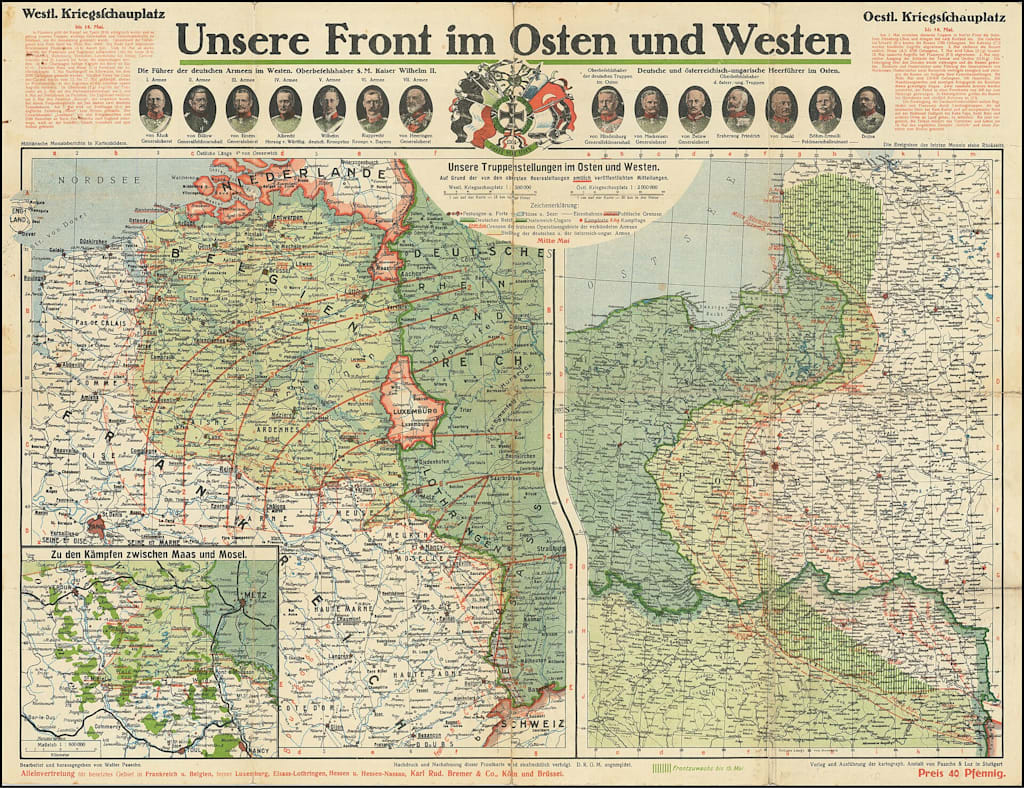
The Schlieffen Plan was Germany's primary military plan in the event of war in Europe for the First World War. Drafted in the early 20th century by Alfred Von Schlieffen, it became the cornerstone for German military planning.
At the beginning of the 20th century, Britain and France formed a closer alliance with the Entente Cordiale in 1904. Historically, the French were considered the most likely wartime enemies for Germany. However, as German relations with Russia in the east began to deteriorate, the potential for a war on two fronts with Russia and France was becoming more evident for the Germans.
As such, the first drafts of the Schlieffen Plan were circulated in 1905. Essentially, the Schlieffen Plan aimed to defeat France quickly in the west. Then, with the French defeated, the Germans could move all their troops to the eastern front and defeat the Russian Empire.

In 1907, the Russians joined the Triple Entente with Britain and France. All of a sudden, the Russians were now in a much more formal alliance with Western Europe. For Germany, this made the chances of war with both the French and Russians all the more likely. As such, the Schlieffen Plan became all the more important to Germany.
By 1914, war in Europe did indeed emerge. Germany’s commitments to Austria-Hungary made war with the Russians likely. The mobilization of Russian troops in Eastern Europe resulted in a German declaration of war. Given the Triple Entente, Germany remained suspicious that the French would join their Russian allies in the war. As such, Germany was not prepared to wait, and a declaration of war with France was made.
With Germany now at war with France and Russia, the war on two fronts had begun. The Schlieffen Plan was now ready to be put into action in World War I. As such, German troops moved into France (violating Belgium's neutrality also), and the German advance pushed the French back. The British also joined the war after German troops passed through Belgium, and they began to provide reinforcements for the French. At the Battle of the Marne, the German advance was halted, and they pulled back. Further German advances in 1914 also failed to break the Entente lines in the west.

As such, the Schlieffen Plan was now in some disarray, even if the Russians had been halted on the eastern front. A quick defeat of France had not emerged, so the war continued a good deal longer than expected. Germany could not defeat France, even though they were able to defeat the Russians in Eastern Europe. The war ended in 1918 as Germany accepted the Entente terms for an armistice.
In relation to the Second War, the Schlieffen Plan was less relevant. However, Germany's defeat in the First World War could be put down to having two simultaneous fronts. In this respect, with the Russians neutral in 1939, Germany had their full army at hand to defeat France in 1940. The Nazi-Soviet Pact lacked any substance, and with the French defeated by 1941, the German army was then mobilized in Eastern Europe to defeat the USSR. In accordance with the original Schlieffen Plan, Germany had defeated France and was now poised to defeat the Russians. However, in this war, the USSR could not be defeated, and Germany lost the war in Eastern Europe.
As such, the Schlieffen Plan failed in both wars. In World War I, the political implications of the plan resulted in war with Britain as well as France, and so the British reinforced their French allies. The plan had failed to take potential British support into account, which beefed up France's defenses in the west. Then, in the second war, the plan was more effective in western Europe, but again failed to take into account the potential of British involvement, and was less effective in eastern Europe.
About the Creator
Matthew A
Matthew is the author of Battles of the Pacific War 1941-1945. Battles of the Pacific War is available on Amazon and Lulu in e-book and paperback formats. Check out the book’s blog at battlesofthepacificwar.blogspot.co.uk.
Enjoyed the story? Support the Creator.
Subscribe for free to receive all their stories in your feed.
Comments
There are no comments for this story
Be the first to respond and start the conversation.