
What were the different types of beggars in ancient China, and what was their living situation like?
Interesting discussions on Chinese topics

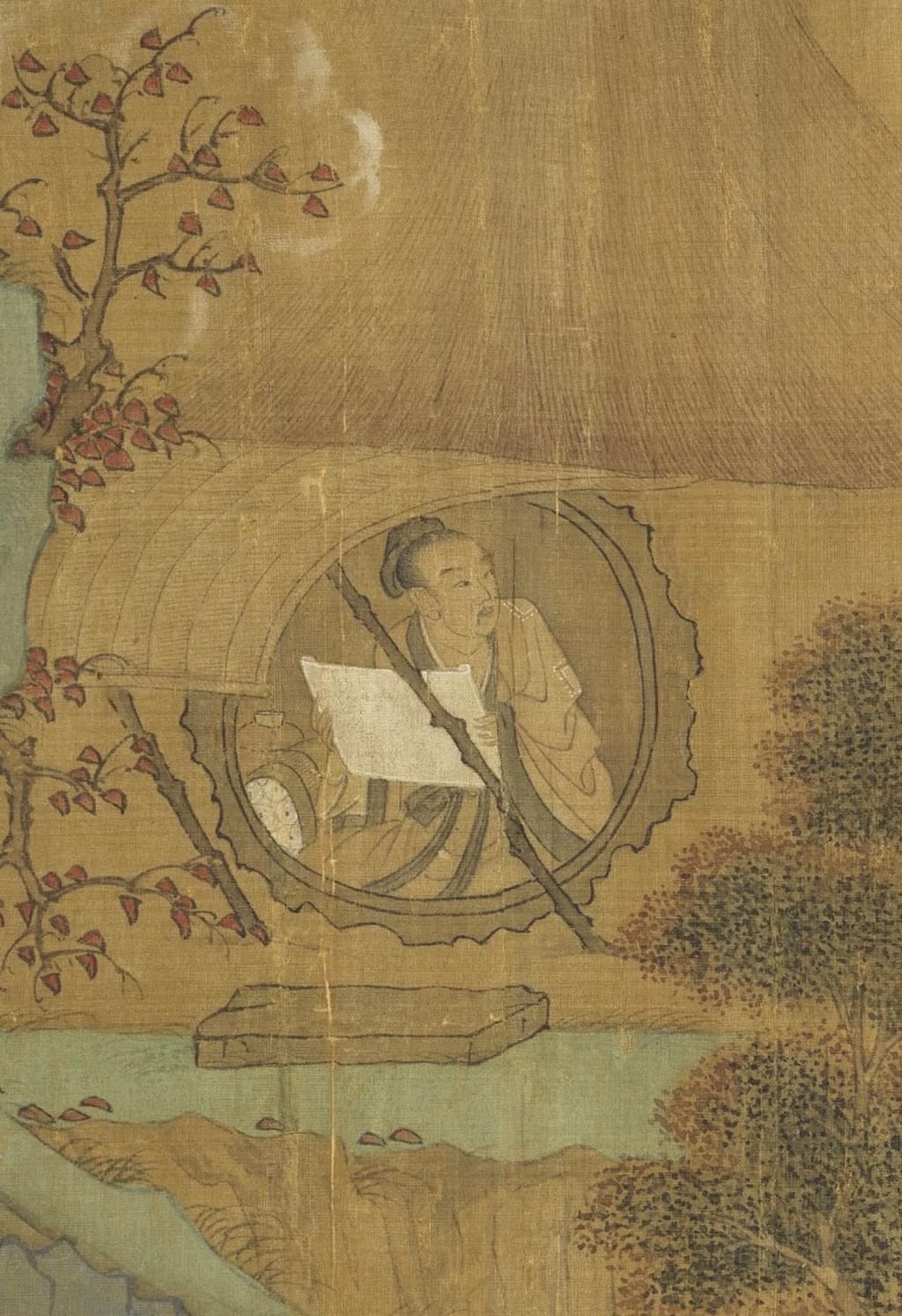
In ancient China, during the Han Dynasty, beggars were referred to as "qi gai" (乞丐), but at that time, beggars were not merely those seeking basic necessities such as food. Some also relied on unique personal skills to obtain various resources. Before the Song Dynasty, beggars were commonly known by different terms such as "qi ren" (乞人), and "gai ren" (丐人). It was only after the Song Dynasty that the term "qi ge" began to refer specifically to individuals who sought only survival resources.
Now, let's discuss why people would resort to begging. When social or individual circumstances leave a person or group without basic means of livelihood and face a crisis of survival, human nature compels them to beg for food and clothing from others. Academically, beggars are generally categorized into two types: "original-type" beggars and "professional-type" beggars.
1. Original-type beggars are those whose basic living conditions are lost due to external forces beyond their control—such as natural disasters, epidemics, wars, etc. When they can no longer afford to eat or wear warm clothes, and their survival needs remain unmet, they naturally turn to begging to avoid starvation and death. These beggars emerged early in human history, even before the advent of civilization. Once survival needs are restored, however, people often abandon begging and choose new ways of life. This process further divides into two categories:
First, there are refugees, displaced people, and beggars affected by natural disasters or human calamities. Although China is one of the world's oldest and most advanced agricultural regions, it frequently experiences natural disasters, epidemics, and famines at certain critical times. Over the more than 3,000 years from the Shang and Zhou dynasties to the Republic of China, records document tens of thousands of instances of floods, droughts, locust plagues, earthquakes, frost and hailstorms, wind disasters, poor harvests (due to pests or disease), and epidemics—along with frequent outbreaks of plague. These events dealt a fatal blow to the fragile ancient socio-economic systems; once they occurred, large numbers of people were left homeless and without food. Thus, when agricultural communities faced famine, they first had to "move" outward, seeking sustenance in remote mountainous areas, forests, or grasslands rich in natural resources, or traveling to unaffected regions hoping to earn a living through manual labor. When large numbers of disaster-stricken refugees appeared in a region, most people were forced to live on begging. These wandering beggars, though stranded in unfamiliar lands, surviving on the fringes of nature, constantly hungry and exposed, sometimes even sold their children as hired laborers for other families—so that their own children could survive, they themselves could also obtain food. Once the famine ended, many returned to their original homes.
They undoubtedly represented a destabilizing factor, potentially triggering popular uprisings. However, rulers generally tolerated and assisted them: first, ancient China was indeed unable to prevent the movement of disaster survivors; second, most traditional Chinese rulers, guided by moral principles, showed compassion and sought to help those suffering, often relying on state reserves of grain, depending on prior accumulations; third, if they survived, they provided some labor force or military support for the government; fourth, in cases of mass deaths, they could also trigger epidemics and even lead to national collapse.
Second, there are nobles and scholars who, facing temporary hardships, choose to live as beggars or refuse to serve others as slaves or laborers. They wish to preserve their freedom and independence, maintaining their unique will, and thus prefer a life of poverty and begging. These individuals have left behind numerous legendary stories. A typical example often appearing in literary works is Wu Zixu, a military strategist and advisor from the state of Chu during the late Spring and Autumn period. His story of being forced into begging after a political disaster is recorded in the official historical text "Shiji." It says that he fled to Wu after a political upheaval, narrowly escaped the "Zhao Pass" (a military checkpoint), and was later rescued by a fisherman who helped him cross the great river of Chu. According to "Shiji," "He fell ill before reaching Wu, stopped halfway, and begged for food." Because he constantly hid and hurried along his journey, he became seriously ill before arriving in Wu, eventually stopping mid-trip, completely out of money, and surviving only on alms. Later, Wu Zixu arrived in Wu, met the king, rose to high office, and achieved great success!
Another famous figure is Confucius. While traveling through the states of Chen and Cai, he suffered from a severe shortage of food and went seven days without eating. Only after Yan Hui managed to obtain some rice did he cook it and eat a meal. Even such a highly virtuous sage could face such a difficult situation!
Some emperors, facing hardships in their early years, resorted to begging for survival, which allowed them to gain profound insights and laid the foundation for their later achievements. Jin Wen Gong (Zhong Er), one of the Five Hegemons during the Spring and Autumn period, after losing his throne through a coup, spent 19 years in exile abroad, where he was often met with disdain by various nations and sometimes had to beg for food. The "Zuo Zhuan" records his story of asking peasants for alms, and eventually, with assistance from Qin, he returned home and regained the throne.
Moreover, from the Han Dynasty to the Qing Dynasty, many scholars turned into hermits due to dissatisfaction with society or politics. Among the diverse lifestyles of these hermits, begging was undoubtedly the most difficult, naturally stemming from extreme financial hardship. These scholarly beggars were not ordinary people—some were passionate about reading, others excelled in poetry and prose, some were skilled in calligraphy and painting, and others specialized in divination. Most of them were far removed from the secular world.
2. Professional beggars represent a distinct group who, though not necessarily dependent on begging for their livelihood and could meet basic needs through normal labor, actively choose begging as a means to secure personal survival and pursue material gain. They treat begging as a way of making a living, a stable profession, and an essential mode of existence. This group emerged relatively late, with historical records suggesting they were first documented around the Tang Dynasty.
During the Tang Dynasty and earlier periods, most professional beggars were generally simple and law-abiding. However, society is complex, and there are always individuals with malicious intentions who join their ranks. In the mid-to-late Tang period, social unrest led some professional beggars to engage in criminal activities such as forced begging, theft, robbery, and other acts that harmed society, eventually turning into bandits. Nevertheless, the majority of these beggars were not actual robbers or outlaws. The formation of organized groups—what we now call "beggar gangs"—originated simply from the fact that beggars were considered lowly and frequently oppressed. Thus, people united to survive.
During the Tang Dynasty, there is a notable account of a literary figure named Yuan Jie. While traveling through Chang'an, he befriended local beggars—those who had long lived by begging. Some questioned him for associating with such lowly individuals, but Yuan Jie argued that these beggars were "true gentlemen" worthy of friendship, whereas those in high positions were "false gentlemen" and unworthy. He quoted one of the beggars: "In this world, why should one feel ashamed to beg? Seeking food and shelter isn't something most people do? These beggars are merely asking for the bare necessities of life." In his view, compared to them, these were truly the exemplars of a gentleman.
About the Creator
Enjoyed the story? Support the Creator.
Subscribe for free to receive all their stories in your feed.
Comments
There are no comments for this story
Be the first to respond and start the conversation.