
What Happened to Letters That Could Not Be Delivered
How the Dead Letter Office turned undeliverable mail into a system of postal detective work, lost objects, and last chances.
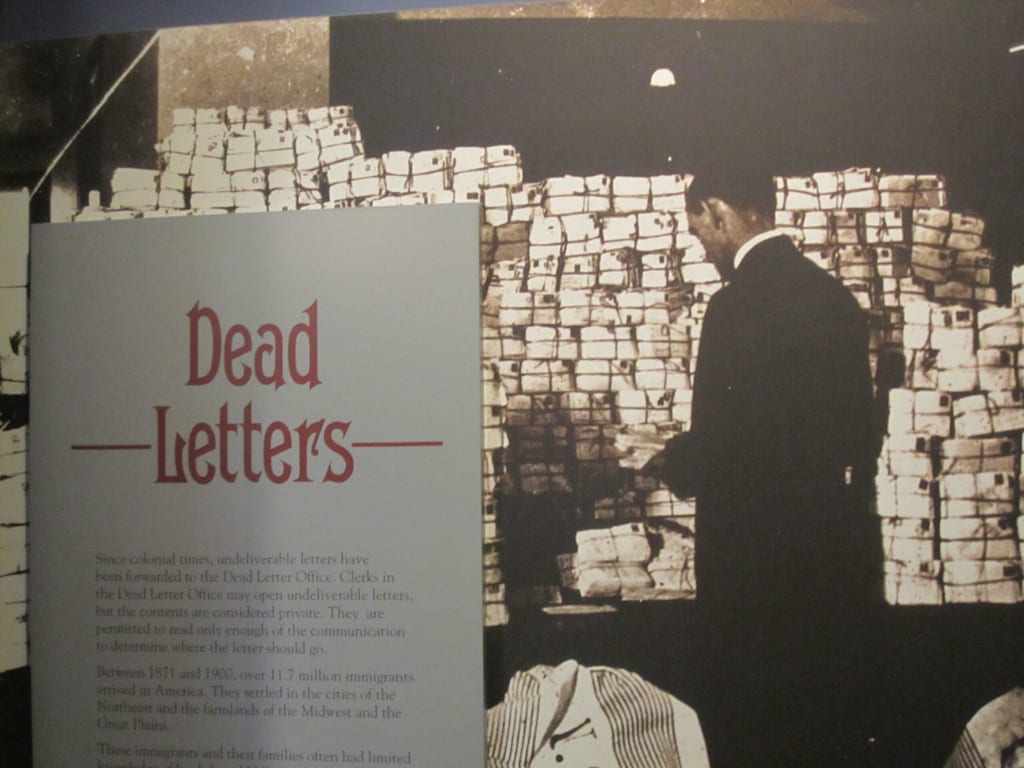
Today it seems as if a letter will almost always reach its recipient. The address will be checked, the ZIP code recognized, and a parcel can be tracked by number. And if something goes wrong, the letter is usually returned to the sender. In the nineteenth century, everything was much more complicated. The postal system was growing rapidly, but there was still no convenient address system. People wrote addresses as best they could: without ZIP codes, with mistakes, abbreviations, and illegible surnames. Sometimes they forgot to include the city or a return address. Someone moved away, someone died, and someone simply never came to collect the letter.
That is how letters appeared that could neither be delivered nor returned. In the United States, they were called dead letters. A special department was created for them: the Dead Letter Office.
Letters with wrong, incomplete, or unclear addresses ended up there. Employees of the office opened such envelopes and searched inside for any clue: a name, a city, a workplace, the name of a school, a church, a bank, or a relative.
They did this not out of curiosity. Their task was simple: to understand who the letter was meant for and try to put it back on the right path. In effect, they were postal detectives. They saved letters that the ordinary postal system already considered lost.
How a letter became “dead”
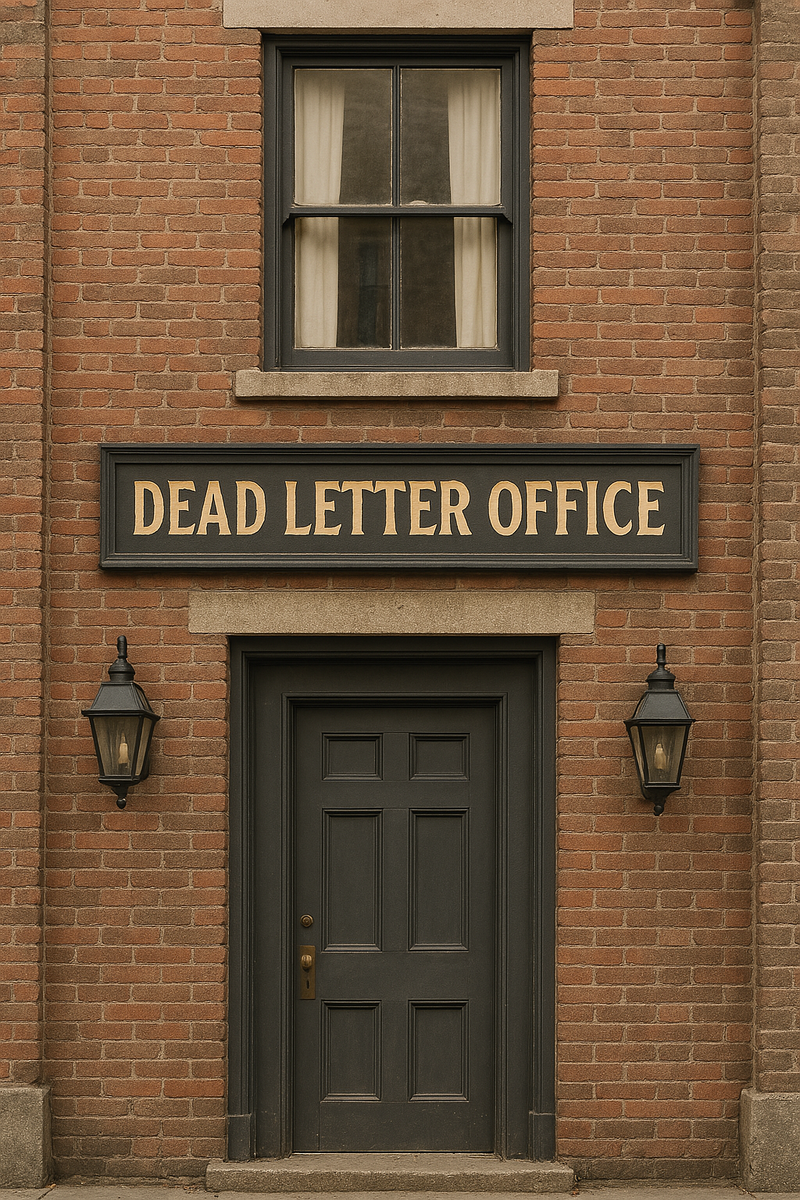
A letter arrived at the Dead Letter Office when ordinary postal workers could no longer do anything with it. The reasons varied widely. The address was written so badly that no sorter could understand it. The street did not exist. The recipient had moved to another state. A person had changed their surname, died, or simply failed to pick up the letter.
Sometimes there was not enough postage on the envelope. Sometimes there was no return address. Sometimes the address said only something like: “Mr. Johnson, near the mill, Ohio.” For modern mail, this is almost absurd. For the nineteenth century, it was a normal problem. The very idea of dealing with undeliverable letters appeared in the American postal system very early. Benjamin Franklin, who became postmaster of Philadelphia in 1737, was already dealing with letters that no one came to collect.
The rules then were different from today’s. Often, it was not the sender who paid for a letter, but the recipient. If a person did not want or could not afford to claim a letter, it remained stuck in the system. The official Dead Letter Office in the United States opened in 1825. By the end of the nineteenth century, the volume had become enormous. By 1893, more than 20,000 undeliverable letters and parcels were passing through the office every day.
For the employees, this was not a rare mystery, but a daily stream of other people’s mistakes, haste, poverty, hopes, and forgetfulness. Some letters could be “brought back to life”: the recipient was found, the sender was identified, or the letter was forwarded further. But many were hopeless. If there was no name, no place, no hint at all inside, the letter died for good — it was destroyed or sent away as waste paper.
Who had the right to open other people’s envelopes
An ordinary postal clerk could not simply open a letter and see what was inside. The secrecy of correspondence was considered a serious matter. Only employees of the Dead Letter Office had the right to open undeliverable letters. And even they were not supposed to read everything indiscriminately.
Their task was narrow: find a clue. A name. A city. An organization. A relative. A workplace. A school. A church. A bank. A military unit. Any detail that could return the letter to its route.
This work was called blind reading. An employee looked at an almost useless address and tried to reconstruct its meaning. Sometimes they had to identify a city from a single abbreviation. Sometimes they had to decipher a surname from handwriting. Sometimes they had to realize that the sender had confused the state, the country, or the name of an institution.
This kind of work required memory, attention, knowledge of geography, and languages. Employees used maps, city directories, guidebooks, lists of institutions, newspaper notices, and their own experience. The more strange addresses a person had seen, the better they understood other people’s mistakes.
Women in the Dead Letter Office
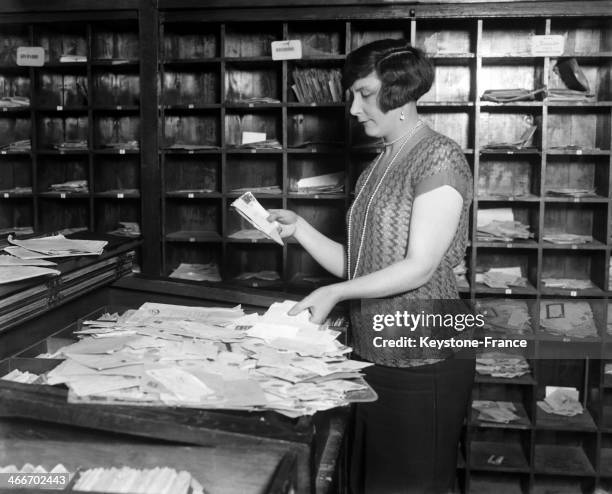
During the American Civil War, the postal system became overloaded. Men went to the front, the volume of mail grew, and in 1862 women began to be hired at the Dead Letter Office.
For the nineteenth century, this was a notable event. There were few women in federal institutions, and work with “dead letters” required not mechanical sorting, but attention, education, and independent judgment.
By 1865, the office employed 38 women and only 7 men. But that did not mean equality. Women were paid less: 600 dollars a year compared with 900 dollars for men. The work was complex and the responsibility high, but women’s labor was still valued lower. One of the well-known employees was Clara M. Richter, a German immigrant. She worked in the Dead Letter Office for more than 30 years and handled foreign mail.
Letters from all over the world passed through her hands: in different languages, with mistakes, fragmentary addresses, and names of cities that American sorters might not even recognize.
People like this turned the office from a warehouse of undelivered paper into a place where a letter received one last chance.
What they looked for inside letters
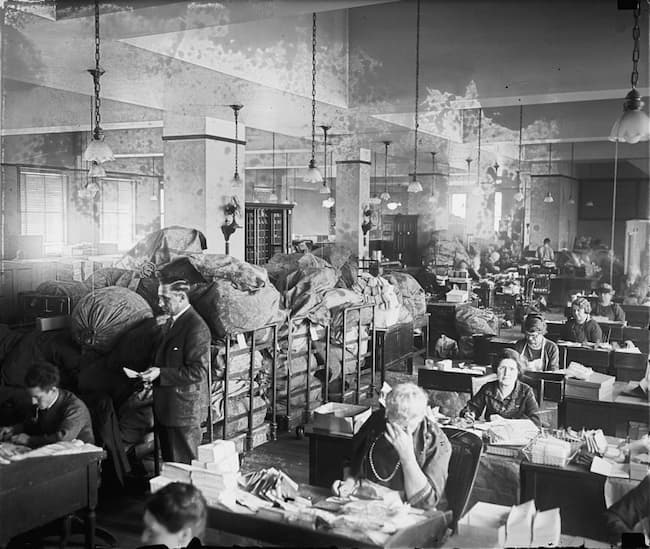
When a letter was opened, employees looked for a useful detail. A signature at the end. The name of a farm. A factory. A college. A military unit. A hotel. A mention of a relative: “give my regards to Aunt Mary in Boston,” “write to my brother in Chicago,” “I am still working for Mr. Henderson.” Even one such phrase could save a letter.
The envelopes contained not only words. People sent money, checks, documents, photographs, locks of hair, rings, medallions, keys, and small gifts.
For the post office, these were items that had to be recorded and returned. For people, they were sometimes the last memory of a loved one, or the only money a family had been waiting for over many weeks.
There is a revealing case involving a letter addressed to “Dr. Washburn, Robert College.” There was no city and no country on the envelope.
For ordinary sorting, this was a dead end. But an employee of the Dead Letter Office knew that Robert College was not in America, but in Istanbul. The letter was sent on. It reached its addressee. Inside was a check for 1,000 dollars — an enormous sum at the time.
Money, objects, and strange finds
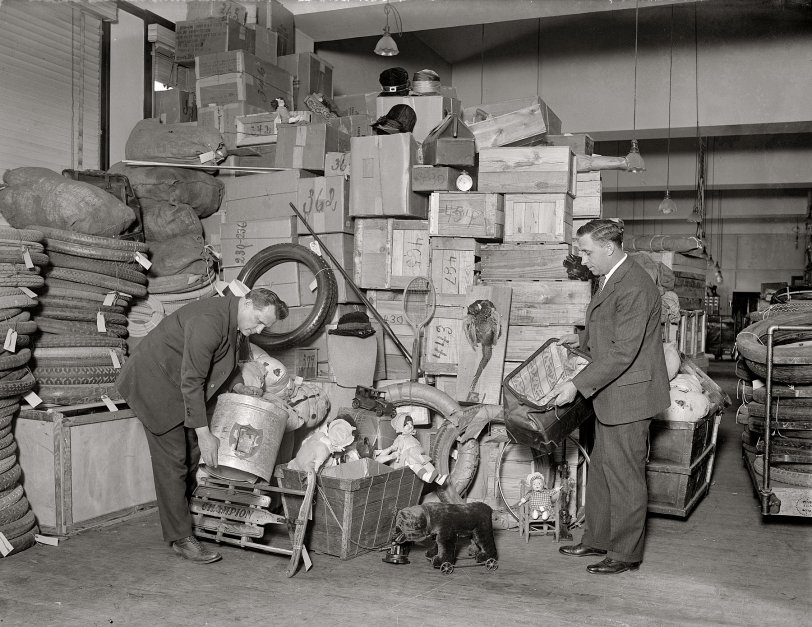
Over time, the Dead Letter Office became a place where not only letters, but also lost objects accumulated. If a parcel could not be delivered, it was sent there as well. Inside could be clothing, books, watches, jewelry, tools, souvenirs, documents, coins — everything people entrusted to the mail.
Employees described the contents, searched for the owner, and checked whether the item could be returned. If the person could not be found, the object was kept for a while and then sold at auction or destroyed. Money was recorded separately and transferred to the government.
Sometimes the finds were so unusual that they became museum exhibits. The Dead Letter Office collected objects that had ended up in undeliverable mail. In 1911, part of this collection was transferred to the Smithsonian Institution.
Today, such objects are connected with the history of the American postal system and are kept at the National Postal Museum in Washington.
Similar stories still happen in modern times. In January 2002, a stolen painting by Marc Chagall was discovered at a postal center in Topeka, Kansas. It had been sent in a parcel with no return address.
This was not an ordinary “dead” trifle, but the case shows the same thing clearly: the postal system sometimes swallows objects whose value cannot be guessed from the box.
When postal workers were looking not for an address, but for a person
The Dead Letter Office dealt not only with bad addresses. Over time, its employees came to be seen as people who could find lost addressees better than ordinary officials. Relatives who had long lost contact with loved ones turned to them.
One woman had not heard from her son for 13 years. She sent a letter with almost no address: “Mr. James Gunn, maker of weaving shuttles, Massachusetts, America.” No city, no street, no exact place. For ordinary mail, this was too little. But the office employees took up the search and found him.
There were other cases too. In post offices, hidden caches of other people’s letters were sometimes discovered — letters that dishonest employees had concealed instead of sending further. Sometimes such letters lay in attics for decades. They had not been burned or thrown away, just hidden. The paper survived, while the addressees might already have died.
For the postal service, this was a violation. For historians, it was an accidental archive of other people’s lives.
What happened to hopeless mail
If, after being opened, a letter still could not be delivered, its fate depended on its contents. Ordinary paper was destroyed or sent for recycling. Money was counted. Valuable items were described and stored as long as there was still a chance to find the owner.
Parcels lived longer than letters because they could contain objects of real value. But they could not be stored forever either. Unclaimed items were sold at auction, transferred, destroyed, or written off according to postal regulations.
In the 1990s, the name Dead Letter Office disappeared. Today, similar work in the United States is handled by the Mail Recovery Center in Atlanta — the official center for recovering postal items.
Undeliverable and non-returnable mail goes there if there is a chance that a valuable item or owner information can be found inside.
Why “dead letters” still have not disappeared
The Dead Letter Office is gone, but “dead letters” have not disappeared. People still make mistakes in addresses, forget return information, and pack parcels badly. That is why postal services still search for the owners of lost items. Because a letter is not just paper. Sometimes it is memory, money, a confession, or news from someone close.
About the Creator
Enjoyed the story? Support the Creator.
Subscribe for free to receive all their stories in your feed.
Comments
There are no comments for this story
Be the first to respond and start the conversation.