
What Does an Economic Crisis Have to Do with Heels?
Before an economic crash, the fashion industry has been warning us for a long time. But how?

As we are already seeing on the runways, looks now claim personality and authenticity, such as the undone hair at Etro Autumn 2026 or at Fendi Autumn 2026, where the makeup was intentionally smudged, contradicting the looks of the last season.
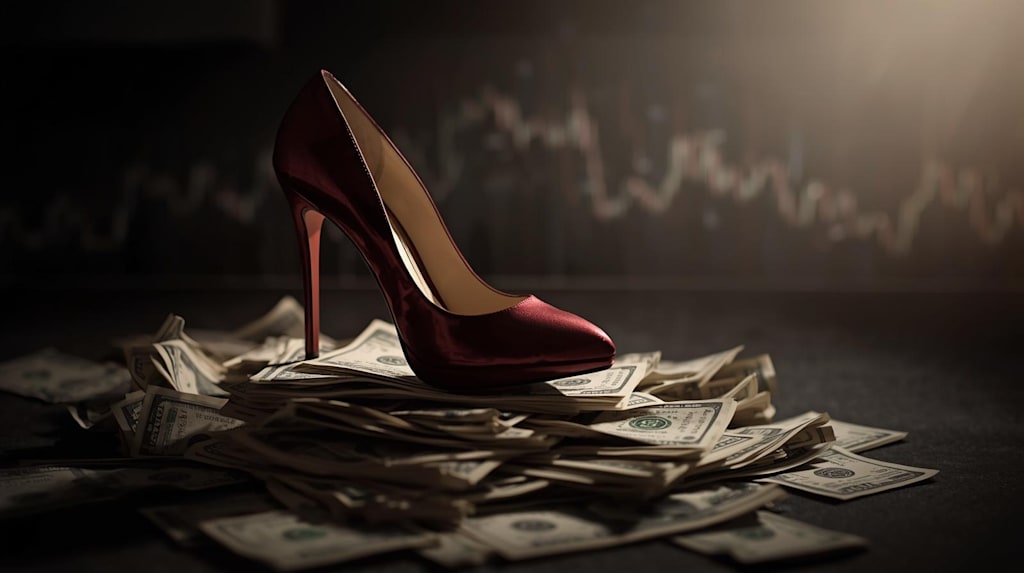
We have all the reasons and signs to believe that the heels are no exception to this change. If we look through history, we can see that the pattern was always there. Heels aren’t just about elegance or aesthetics; they are a way to feel in control even when the world around you is uncertain.
The Origins: When Heels Meant Power
Heels didn’t start as a women’s thing. Back in the X century, Persian cavalry soldiers wore heels to keep their feet stable in the stirrups. But when King Louis XIV started using them, it became a sign of power (17th century). Heels started to mean a status symbol that “if you have the privilege to wear an impractical piece like that, you’re very cherished by society.”
For centuries, heels were about dominance. They made you taller, they made you stand out, and they made a statement. Then came the 20th century, and heels became something else entirely — a reflection of how we were coping with chaos.
The 1970s: Crisis and Drama
The 1970s- Embargo years. The world felt like it was spinning out of control, and fashion responded by going completely over the top. Platform heels shot up to absurd heights. We’re talking four, five, sometimes six inches. Disco culture exploded with sequins, glitter, and iconic shoes.
This wasn’t accidental. When reality becomes unbearable, people want to escape. The higher the platform, the more we feel in control and far from the chaos. Fashion became armor, became spectacle, a way to express ourselves. Statement pieces that screamed, “I’m fine, the crisis doesn’t affect me”.
The 2010s: Platforms Make a Comeback
Fast forward to 2010. The financial crisis had just decimated the economy. People were losing homes. Jobs vanished. The future looked bleak. And what happened? Platforms came back.
But the 2010s version was different. It wasn’t just platforms — it was platforms with attitude. Balenciaga’s “Armadillo” heel, designed by Nicolas Ghesquière, was the ultimate expression of this moment. An eight-inch heel with a sculptural, almost alien design. It was impractical, bold, and completely unapologetic. You wanted to be seen wearing it.
The Armadillo became a symbol of something bigger: a refusal to accept reality as it was. When the world felt broken, fashion became a form of resistance.
What’s Next?
Here’s the thing about patterns: once you see them, they’re hard to ignore. We’re heading into uncertain times again. Economic anxiety is rising. Geopolitical tensions are simmering. The future feels unstable.
If history is any guide, fashion is about to get dramatic. Expect platforms to rise. Expect bold, unapologetic looks. Expect heels that say, “I’m not worried about comfort — I’m worried about making a statement.” Designers are already sensing it. The runway is getting more theatrical, more sculptural, more extreme.
Because that’s what heels do. They don’t just carry us forward. They carry our anxieties, our hopes, and our desperate need to feel powerful when everything else feels out of control. The next time you see someone in a pair of impractical, towering heels, don’t laugh. Recognize what you’re really seeing: a person coping with uncertainty, the only way fashion knows how.
By going higher.
About the Creator
Isabela Capezzuto
Passionate about fashion and sociology. Feel free to navigate by my thoughts!
LinkedIn: www.linkedin.com/in/isabela-pimentel-291a452a3
Enjoyed the story? Support the Creator.
Subscribe for free to receive all their stories in your feed.
Comments
There are no comments for this story
Be the first to respond and start the conversation.