
what did exactly happen with 'Titanic'? Lets find out the mystery behid it.
The Ship of Dreams That Ended in Tragedy
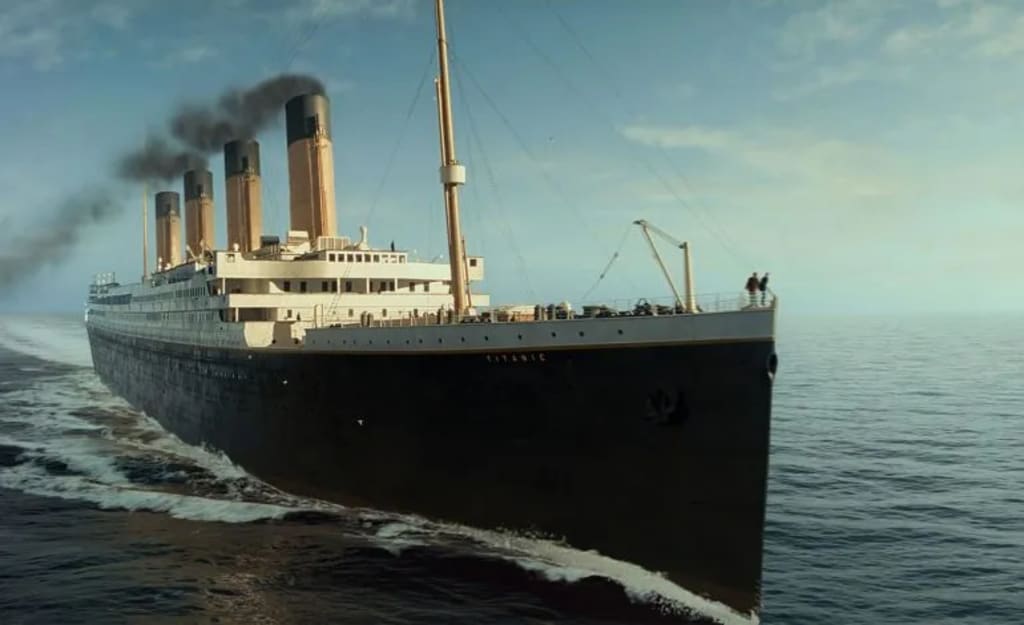
🎙️ The Tragic Voyage of the Titanic
This is the story of April 10th, 1912.
The RMS Titanic—the largest and most luxurious ship of its time—set out on its maiden voyage. It was traveling from Southampton, England, to New York.
Aboard the Titanic were people from all walks of life: famous industrialists, celebrities, and immigrants seeking a better life in America. The ship was under the command of 62-year-old senior captain Edward John Smith. There was tremendous excitement surrounding the Titanic among the public, the press, and its passengers.
This wasn’t just the world’s biggest ship—measuring around 269 meters long and over 53 meters high—it was also a marvel of opulence. In those days, the Titanic cost $7.5 million to build. Adjusted for inflation, that’s equivalent to $400 million today.
The ship boasted facilities that would put five-star hotels to shame: stained glass mirrors, grand staircases, ornate wood paneling, heated swimming pools, Turkish and electric baths, a gym, a squash court, four restaurants, two barbershops, and a library. It was also equipped with the most advanced safety features of the time and was widely considered to be “unsinkable.”
The Titanic was built by the White Star Line. So confident was the company’s vice president that he publicly claimed, “This ship is unsinkable.”
But just two days after it set sail—on April 12th, 1912—the first warnings of danger began to appear.
The Titanic started receiving ice warnings. The North Atlantic Ocean, through which the ship was sailing, was riddled with icebergs. Such warnings weren’t unusual; ships routinely communicated via radio, alerting one another to nearby ice and potential hazards. After receiving the alerts, Titanic adjusted its course twice but did not reduce its speed.
The ship continued sailing at 21.5 knots—roughly 40 km/h.
On April 14th, 1912, seven more ice warnings were received. But Captain Smith and his crew ignored them, continuing at full speed. That night, the moon wasn’t visible, plunging the ocean into near-total darkness. Visibility was extremely poor.
Atop the ship was a lookout platform known as the crow’s nest. A crew member was stationed there to watch for any obstacles. On that cold, windy night, at 11:39 PM, lookout Fredrick Fleet spotted a massive iceberg directly in the ship’s path. He rang the warning bell three times and immediately called the bridge.
“ICEBERG AHEAD!”
First Officer William Murdoch received the call and ordered the ship to turn hard to port—left. But it was too late.
Just one minute later, at 11:40 PM, the Titanic struck the iceberg.
⸻
🚢 The Beginning of the End
“Titanic left the port of Southampton, England… Among the passengers were the rich and powerful. The band played, the dancers smiled, and the ship pressed on. Then, at 11:40, the iceberg grazed the starboard side…”
The iceberg was no small chunk of ice—it was estimated to be the size of a football field (200x400 feet) and as tall as the crow’s nest. Scientists estimate it weighed 1.5 million tons.
The impact occurred near the bow—the forward-most part of the ship. For 10 seconds, the ship scraped along the iceberg, creating a massive dent. Small tears appeared in the ship’s hull.
You may wonder—how could ice tear through metal? Think of it like this: a car can crash into a tree and be crushed, even though wood can’t normally cut through metal. Similarly, the weight and force of the iceberg caused catastrophic damage.
Captain Smith and the ship’s architect, Thomas Andrews, rushed to inspect the damage. They were shocked—it was clear the ship was going to sink.
How could this happen to an “unsinkable” ship?
Titanic had two key safety features:
1. A double-bottomed hull.
2. Sixteen watertight compartments—designed so the ship could still sail if up to four filled with water.
But the iceberg had struck the side of the ship, where only a single layer of hull existed. And worse—six compartments were breached. The ship was doomed.
⸻
🆘 The Call for Help
At midnight, 20 minutes after the collision, Captain Smith ordered a distress signal to be sent. Senior radio operator Jack Phillips worked tirelessly, sending message after message.
At 12:20 AM, the RMS Carpathia received the signal. The ship was 107 km away—at top speed, it would take 3.5 hours to reach Titanic. Would the Titanic last that long?
Distress flares were fired into the sky, hoping for help from any nearby vessel.
Captain Smith ordered passengers to be evacuated—women and children first. But initially, many passengers refused. They believed the ship was unsinkable. One lifeboat with a capacity of 65 left with only 28 aboard.
As the ship continued to take on water, it began to tilt. Panic spread. By 1:00 AM, the bow was fully submerged. The stern—the rear—rose high into the air, exposing the propellers.
Only 20 lifeboats were available—enough for 1,200 people. But over 2,200 were on board.
At 2:05 AM, the last lifeboat was lowered. About 1,500 people remained on the ship. Some fought for a spot. Others accepted their fate.
“The end was chaotic. People cried, prayed, fought for lifeboats… It was heartbreaking.”
At 2:20 AM, the Titanic broke in half and sank into the freezing sea. Of those left on board, many drowned. Others succumbed to hypothermia in water temperatures of -2°C.
⸻
⚓ Missed Chances and Aftermath
Captain Smith was reported to have gone down with the ship. Some say he stayed at the helm. Others believe he took his own life.
The RMS Carpathia arrived around 3:30–4:00 AM—an hour too late. All they found were floating bodies.
An even more tragic detail emerged later: another ship—the SS Californian—was just 37 km away. They had issued an iceberg warning earlier that night but turned off their radio at 11:15 PM.
Crew members aboard Californian even saw the flares from Titanic but assumed they were party signals. Their captain, Stanley Lord, ignored the warnings. He was later blamed in both British and American inquiries.
But the disaster wasn’t the fault of one man alone.
There weren’t enough lifeboats—because the Titanic was considered unsinkable.
Safety drills weren’t conducted—because they were deemed unnecessary.
And crucially, the helmsman, Robert Hichens, panicked and turned the ship in the wrong direction when the iceberg was spotted.
Why was Titanic speeding despite the warnings?
One theory suggests pressure from Joseph Bruce Ismay—chairman of White Star Line. He allegedly told Captain Smith to maintain speed so Titanic could complete the voyage in six days and break records.
When Smith showed Ismay the ice warning at 2 PM on April 14th, Ismay is said to have stuffed the note in his pocket, not wanting the crew—or passengers—to panic.
⸻
🌊 Legacy of the Titanic
The Titanic’s sinking changed maritime laws forever. In 1914, the International Ice Patrol was created. The SOLAS treaty (Safety of Life at Sea) was signed, mandating that ships must carry lifeboats for every passenger.
It took over 70 years to find the wreckage—discovered in September 1985 by American explorer Robert Ballard and a French team. The remains rest 3,800 meters below the ocean, broken into two pieces, 600 meters apart.
Nature has been eating away at the Titanic ever since. Scientists estimate it may fully disintegrate by 2030.
Despite being more than a century old, the story of the Titanic continues to captivate. In 2012, Australian billionaire Clive Palmer proposed a replica—Titanic II—that would sail the same route. The project has been delayed and mostly forgotten.
Ironically, the “unsinkable” Titanic II may have sunk… before ever leaving the dock.
About the Creator
Enjoyed the story? Support the Creator.
Subscribe for free to receive all their stories in your feed.
Comments
There are no comments for this story
Be the first to respond and start the conversation.