


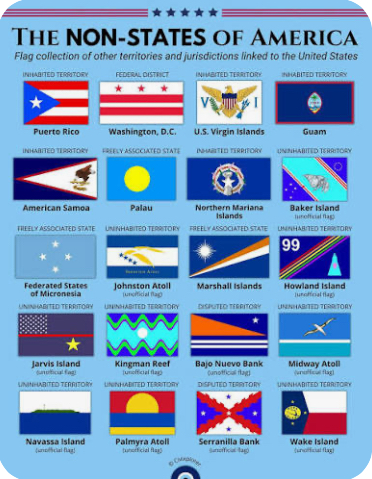
The United States currently administers 16 territories, five of which are permanently inhabited: Puerto Rico, Guam, American Samoa, the Commonwealth of the Northern Mariana Islands (CNMI), and the U.S. Virgin Islands. Approximately 3.6 million American citizens and nationals reside across these distinct insular areas
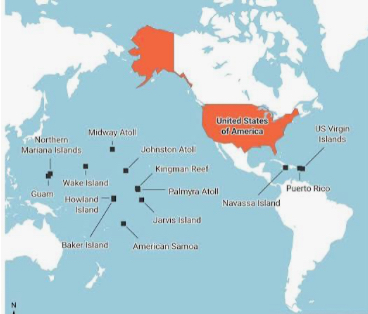
Major Inhabited TerritoriesThese five territories feature local constitutions, elected governors, and non-voting delegates in the U.S. House of Representatives.TerritoryLocationPopulationLand Area (sq mi)Acquisition YearPuerto RicoCaribbean3.2 million3,5151898GuamWestern Pacific~154,0002121898U.S. Virgin IslandsCaribbean~87,0001331917Northern Mariana IslandsWestern Pacific~50,0001791947/1986American SamoaSouth Pacific~45,000761900Uninhabited TerritoriesAlso known as the U.S. Minor Outlying Islands, these locations are mostly small, scattered atolls and reefs located in the Pacific Ocean and the Caribbean Sea. They have no permanent populations and are managed primarily as wildlife refuges and scientific research zones by the U.S. Fish and Wildlife Service or the Department of the Interior.
Major Inhabited TerritoriesThese five territories feature local constitutions, elected governors, and non-voting delegates in the U.S. House of Representatives.TerritoryLocationPopulationLand Area (sq mi)Acquisition Year:
Puerto RicoCaribbean3.2 million3,5151898
Guam Western Pacific~154,0002121898
U.S. Virgin IslandsCaribbean~87,0001331917
Northern Mariana IslandsWestern Pacific~50,0001791947/1986
American SamoaSouth Pacific~45,000761900
Uninhibited Territories also known as the U.S. Minor Outlying Islands, these locations are mostly small, scattered atolls and reefs located in the Pacific Ocean and the Caribbean Sea. They have no permanent populations and are managed primarily as wildlife refuges and scientific research zones by the U.S. Fish and Wildlife Service or the Department of the Interior.
Pacific Islands: Baker Island, Howland Island, Jarvis Island, Johnston Atoll, Kingman Reef, Midway Atoll, Palmyra Atoll, and Wake Island.
Caribbean Island: Navassa Island.
Citizenship, Rights, and Governance:
The political status of U.S. territories is fundamentally distinct from the 50 states.
Citizenship: People born in Puerto Rico, Guam, CNMI, and the U.S. Virgin Islands are granted U.S. citizenship by birth. Individuals born in American Samoa hold the legal status of U.S. nationals rather than U.S. citizens at birth.
Voting Rights: Residents living in the territories cannot vote in U.S. presidential elections. However, they are eligible to vote in primary elections for presidential candidates.
.Taxes: Federal personal income tax laws do not strictly apply to most territory residents, meaning many local residents do not pay federal income taxes on money earned within the territory.
who guards our coastline, and what coastline? Who patrols our waterways and territorial waters? The navy? The marines? No, the coast guard.
The U.S. Coast Guard (USCG) has broad jurisdiction to enforce federal laws, conduct search and rescue operations, and maintain maritime security on all U.S. navigable waters, the territorial sea, the contiguous zone, the Exclusive Economic Zone (EEZ), and the high seas.Its legal authority and jurisdiction break down by region and vessel type:
Geographic Zones & AuthorityInternal & Navigable Waters: Jurisdiction extends to all U.S. rivers, lakes, bays, and internal waterways.Territorial Sea: Covers all waters up to \(12\) nautical miles from the U.S. baseline. The USCG can enforce all U.S. civil and criminal laws here.
Contiguous Zone: Extends up to \(24\) nautical miles from the baseline, where the USCG can enforce customs, fiscal, immigration, and sanitary laws.
Exclusive Economic Zone (EEZ): Reaches up to \(200\) nautical miles offshore, where the USCG enforces environmental regulations, marine protected resources, and fisheries laws.
High Seas: Jurisdiction over international waters for enforcing U.S. laws and ensuring vessel safety.
Vessel JurisdictionU.S. Flagged Vessels: The USCG has jurisdiction anywhere in the world outside the territorial waters of another sovereign nation.
Foreign Flagged Vessels: Jurisdiction applies when the vessel is operating within U.S. internal or territorial waters.
Stateless Vessels: Under international law, vessels without a flag or those claiming multiple registries can be treated as if they are U.S.-flagged vessels, allowing the USCG to board and enforce laws.
Core Legal BasisThe primary legislation that grants the Coast Guard its sweeping power is 14 U.S.C. § 522 (formerly 14 U.S.C. § 89). This statute allows Coast Guard officers to make inquiries, examinations, inspections, searches, seizures, and arrests upon the high seas and waters over which the U.S. has jurisdiction.Because it is both a military service and a federal law enforcement agency, the USCG does not need a warrant or reasonable suspicion of a crime to stop and board U.S. vessels on navigable waters; it can board solely to conduct routine safety and documentation inspections.Interagency CollaborationTo maximize their reach, the USCG is empowered under 14 U.S.C. § 141 to collaborate with local, state, federal, tribal, and foreign law enforcement partners. This frequently includes joint operations with Customs and Border Protection (CBP) and the U.S. Navy.
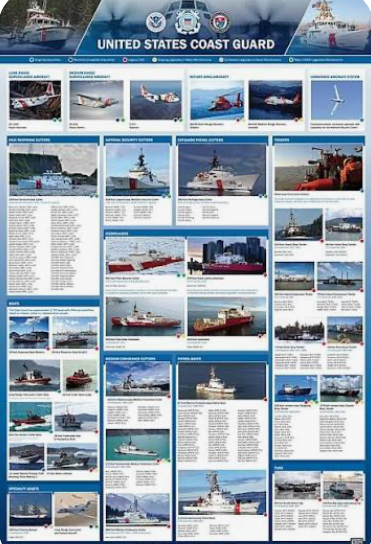
well, it looks like our coastline of the U.S. (states, and territories-inhabited and uninhabited)is protected, And our shipping interests anywhere in the world are also protected. The coastguard are bad ass!
About the Creator
Guy lynn
I’m interested in history, space travel and the possibilities, Americana,( where I live now), Africa (Southern Africa, where I was born and raised), and I write about things that interest me ( bead history) and I hope will interest you.
Enjoyed the story? Support the Creator.
Subscribe for free to receive all their stories in your feed.
Comments
There are no comments for this story
Be the first to respond and start the conversation.