
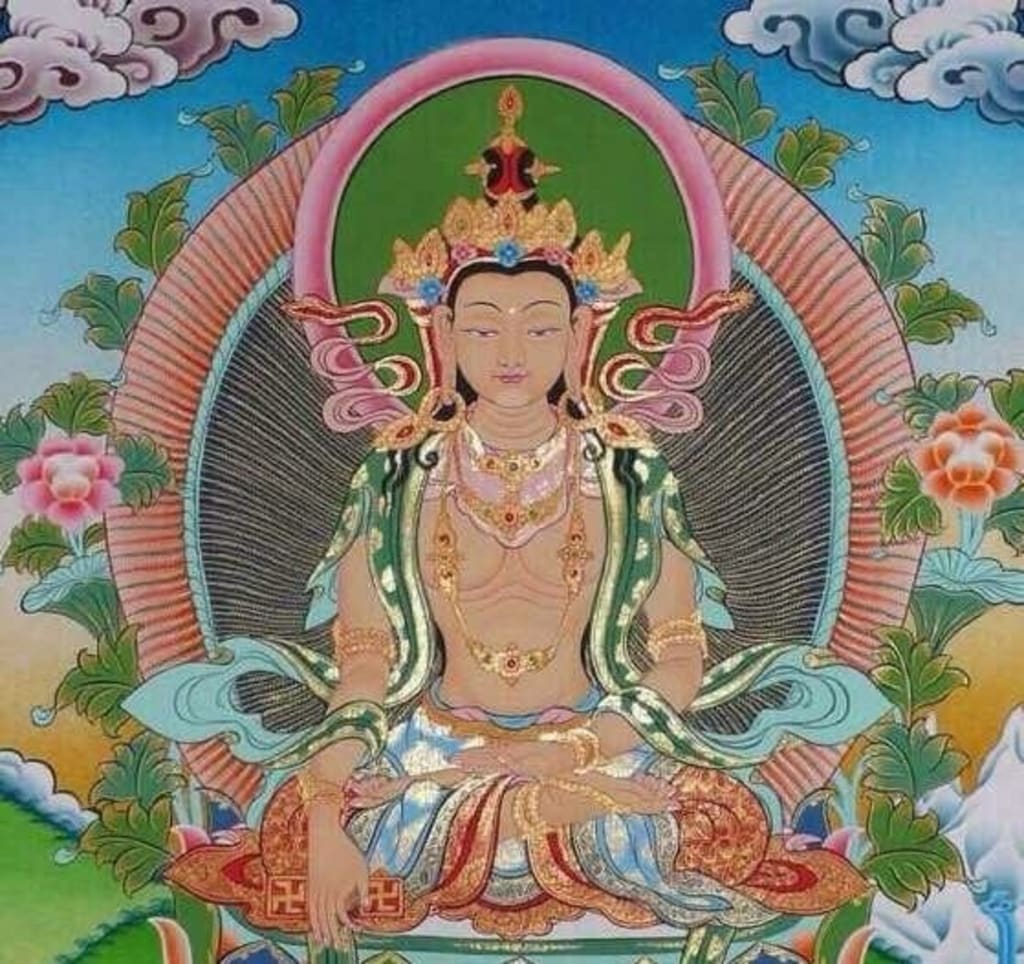
Tibetan Buddhism, commonly known as Lamaism, is the branch of Buddhism introduced into Tibet. It is a form of Buddhism practiced in Tibet, Bhutan and Mongolia. There is also a considerable number of believers in areas surrounding the Himalayas. It is divided into five major sects: Kadampa, Nyingmapa, Kagyupa, Sakyapa and Gelugpa. Here are the instructions for different sects of Tibetan Buddhism.
Tibetan Buddhism belongs to Tantric Buddhism and can be traced back to the ancient Zhang Zhung Kingdom (1500 B.C. - 645 A.D.). Prince Shenrab Miwo created "Yungdrung Bon Buddhism" to take across sentient beings universally. Bon religion ruled the entire Tibet for years until the 7th century.
In the mid-7th century AD, the then Tubo King Songtsen Gampo married Princess Wencheng of the Tang Dynasty and Princess Bhrikuti of Nepal. Both princesses are Buddhist believers. Under their influence, Songtsen Gampo converted to Buddhism and sent ministers to India to study Buddhist scriptures. This marked the official introduction of Buddhism to Tibet and became the official religion of the Tubo Kingdom.
When Buddhism was introduced, it incorporated the essence of Indian Buddhism and Bon Buddhism and formed Tibetan Buddhism gradually.
The spread of Tibetan Buddhism in Tibet can be divided into the pre-promotion period and the post-promotion period. The dividing line between the two periods is the extermination of Buddhism by Langdarma, the last king of Tubo.
Srongtsen Gampo was the first king in Tibet to enforce people to believe in Buddhism by law. After him, there were two other kings who also made great efforts to protect Buddhism and encourage its development.
One is Trisong Detsen, who invited Indian monks Shantarakshita and Padma Sambhava to teach Buddhism in Tibet. This was a significant event in Tibetan Buddhist history. The famous Samye Monastery was built under the leadership of these two eminent monks. Later, Trisong Detsen invited another 12 Indian monks to tonsure 7 Tibetan young nobles in Samye Monastery. And then, they started to let monks translate the scriptures that were brought from India. Even he allowed monks to embark on political affairs.
The other one is Triral Pachen, who respected monks very much and enacted laws that monks were tax-free and no need to work, per 7 lay people need to afford one monk’s life. Buddhism flourished due to the support from the top echelons of society. A lot of monasteries and temples were built during those times, such as Jokhang Temple, Drepung Monastery, etc. and people were proud of being monks or at least practicing Buddhism at home. Believing in Buddhism was justified no matter to the royalty, nobility, or populace.
But then, the last Tibetan King Langdarma started to suppress Buddhism as he thought the power of monks and lamas was out of control. He destroyed the temples and monasteries and forced monks or lamas to resume secular life. It was really dark time for Buddhism in Tibetan history.
Around 100 years after he died, Buddhism was revived but the scale was not as large as before. In the second half of the 10th century, Buddhism was revived with the support of the emerging feudal lord class in Tibet. In 1045, the eminent Indian monk Atisha came to Ü-Tsang to teach the Dharma, and Tibetan Buddhism today marked the official formation from then on. Since then, Buddhism has developed and formed several different denominations. At the beginning of the 15th century, when Gelugpa was set up, Tibetan Buddhism was finally separated into five main denominations among which four exist until now.
About the Creator
Enjoyed the story? Support the Creator.
Subscribe for free to receive all their stories in your feed.
Comments
There are no comments for this story
Be the first to respond and start the conversation.