
The Vietnam Veteran Effect: Why Ancient Greek and Roman Writings on Britain Are So Uncannily Accurate (and Spectacularly Wrong)
The veteran effect
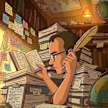

For centuries, historians, archaeologists, and classicists have wrestled with a peculiar paradox found within classical texts. When ancient authors—from Greek explorers like Pytheas of Massalia to Roman commanders like Julius Caesar and Tacitus—wrote about Britain, their accounts were a bewildering mix of absolute genius and baffling nonsense.
For a long time, Victorian scholars dismissed much of their writing as mere myth-making, propaganda, or wild exaggeration. Yet, as modern archaeology, ancient DNA, and satellite imagery continue to advance, we keep making a startling discovery: these ancient authors were right far more often than we gave them credit for.
So why is their writing like this? Why are these ancient accounts simultaneously filled with precise, jaw-dropping facts that took two millennia to verify, alongside bizarre errors and obvious tall tales?
The answer lies in a simple psychological parallel: they were written by the classical equivalent of Vietnam War veterans.
The Pytheas Precedent: The Veteran's Unbelievable Tale
Consider Pytheas of Massalia, the Greek geographer who voyaged to Britain and the far North Atlantic around 325 BC. When Pytheas returned to the Mediterranean, he described phenomena that his contemporaries found utterly absurd. He spoke of a land where the sun barely set in summer, where the sea turned into a slushy, gelatinous mixture of ice and water, and where ice caps stretched endlessly into the horizon.
Polybius and Strabo famously mocked him, treating his accounts as the delusional fabrications of a storyteller spinning yarns in a tavern.
Yet Pytheas wasn't lying. He had actually seen the Arctic ice pack and experienced the midsummer midnight sun. He had travelled to the edge of the known world, witnessed reality beyond the imagination of his peers, and brought back truth that sounded too strange to be real.
This is the exact phenomenon we see in the memoirs and oral histories of combat veterans returning from foreign theatres of war, such as Vietnam. Ask a veteran about their time in the jungle, and they will tell you details that sound completely surreal to someone who stayed at home—stories of bizarre wildlife, disorienting climates, psychological hallucinations, and impossible logistics. To the listener back home, it sounds like fiction. To the person who was in the mud, it was Tuesday.
Tactical Precision Mixed with War-Zone Memory
When Roman military officers and Greek travellers wrote about Britain, they were observing a frontier through the chaotic, hyper-focused lens of campaign life. A soldier or commander in a foreign war zone remembers certain things with terrifying, razor-sharp accuracy, while misremembering or misinterpreting others.
1. The Physicality of the Inhabitants
Classical writers frequently commented on the physical differences between tribes across the British Isles. Tacitus, writing in his Agricola, famously noted that the Silures in South Wales had dark features and curly hair, speculating that they might have originated from Iberia, whereas the Caledonians in the North had reddish hair and large limbs.
For a long time, modern historians brushed this off as mere racial stereotyping or guesswork. However, modern genetic studies and archaeogenetics—such as the analysis of the Beaker People migrations and earlier Mesolithic hunter-gatherer populations—have revealed complex, layered waves of migration into Britain. The Belgae moved into the south-east, while older genetic signatures persisted in the western highlands and Wales. Caesar and Tacitus were picking up on real, tangible demographic variations on the ground, observed firsthand during military reconnaissance.
2. The Mechanics of War and Life
The Romans gave surprisingly accurate descriptions of British roundhouses, hillfort defenses, and Celtic chariot tactics. Caesar’s description of British charioteers—who would drive into battle, jump onto the pole between the horses to steer, and leap off to fight on foot—was long considered an exaggerated flourish. Yet, Celtic chariot burials excavated across the UK have confirmed the exact wheel dimensions, harness setups, and agility required for precisely those tactics.
When a military observer writes down how the enemy fights, their life depends on getting it right. That is why tactical descriptions in classical texts are often uncannily spot-on.
Why They Got Things Wrong: The Fog of War
If their observations were so sharp, why are these texts also littered with glaring errors?
Once again, look to the Vietnam veteran. An infantryman who survived a tour in the Mekong Delta can tell you the exact sound a specific mortar makes, the smell of the terrain, or the precise ambush tactics of the enemy. But if you ask that same veteran to map out the entire province, estimate the total enemy troop strength across the country, or explain the political structure of a village three valleys over, their account will likely be filled with hearsay, rumor, and spatial confusion.
Ancient writers faced the exact same limitations:
Hearsay and Soldier Rumors: A Roman officer stationed in Kent didn't have access to satellite maps or census data. He relied on what local interpreters told him over a campfire. If a local chieftain claimed that people further north lived on roots and had no houses, the officer wrote it down.
Trauma and Disorientation: Navigating the dense, mist-shrouded forests and turbulent sea channels of Britain disoriented Mediterranean soldiers. Their spatial awareness was warped, leading to bizarre geographic claims—such as placing Ireland in the wrong location or misjudging the size of the island entirely.
Exaggeration for Effect: Just as a veteran might embellish a story to convey the sheer madness of their experience to someone back home, classical writers framed Britain as a wild, terrifying monster-land at the edge of the Ocean to make their conquests seem all the more heroic.
Reading the Ancients with New Eyes
We should stop treating ancient writings on Britain either as absolute gospel or as completely fabricated fantasy. Instead, we should read them for what they truly are: raw, field-level dispatches from the edge of the empire.
They are the journals of men who marched through cold mud, fought against unfamiliar tactics, stared across choppy waters at unknown shores, and tried their best to record a world that felt alien to them. When Pytheas spoke of frozen seas, or when Tacitus noted the dark hair of the Silures, they weren't sitting in comfortable libraries inventing myths. They were reporting back from the frontier.
Just like a veteran recounting his time in a distant war, their accounts carry both the brilliant, undeniable truth of direct experience and the foggy, distorted memory of a man who was just trying to survive the journey. And that is precisely what makes their writing so extraordinary.
I used Gemini to help write this.
About the Creator
Lewis Smith
The Paradigm Glitch Hunter. Account aim is investigative insights into current popular & academic theories, using immersive systemising, to do 1st principles, & nuance pinpointing, structural deconstruction & reconstruction. & fun stories.
Enjoyed the story? Support the Creator.
Subscribe for free to receive all their stories in your feed.
Comments
There are no comments for this story
Be the first to respond and start the conversation.