
The Swedish Dental Hygienist Who Questioned Migrants' Ages: His Case Divided the Public
Imagine doing your job as best as you can, using professional knowledge and common sense, but ending up in court with a huge bill and without your job.
This is what happened in Sweden, a country which for many years presented itself as a humanitarian superpower.
The story of Swedish dental hygienist Bernt Herlitz shows how a controversial question about the age of migrants turned into a case which would have a devastating effect on an ordinary professional.
The Beginning of the Story
In 2016, Bernt was working as a dental hygienist on the island of Gotland. Part of his work involved treating young asylum seekers who had arrived in Sweden without proper identity documents.
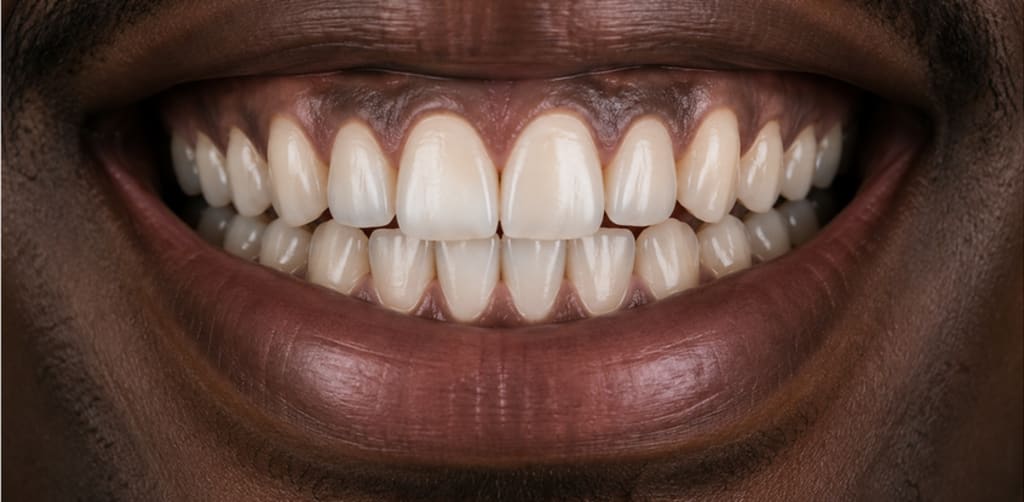
During dental examinations, he paid attention to the development of their teeth and became suspicious about the ages some of the patients had reported.
According to Herlitz, in a large number of cases he saw fully developed wisdom teeth, which made him believe that some of the people registered as unaccompanied minors could actually be adults.
He estimated that up to 80 percent of the young asylum seekers he examined appeared to him to be adults. This was based mainly on his observations of their wisdom teeth.
For Bernt, this was not just an academic question. Adults and children were sometimes being placed into the same system, and he believed this could create serious problems.
When he contacted the Swedish Migration Agency, he was encouraged to put his concerns in writing.
So he did.
He sent emails to the agency describing patients whose reported ages he believed were not correct. He also included information which could identify individual patients.
And this decision would change his life.
The Reaction
Instead of becoming the person who had helped expose a possible problem, Bernt became the subject of an investigation.
Region Gotland suspended him and later dismissed him, arguing that he had broken patient confidentiality by sending information about patients to the Migration Agency.
The case eventually went to court.
At first, the district court did not agree that there were sufficient grounds for dismissal and awarded him compensation. But Region Gotland appealed the decision.
The Swedish Labour Court later reached a different conclusion.
It ruled that Bernt had breached confidentiality and that there were legal grounds for his dismissal. He was also ordered to pay the region's legal costs.
The amount was enormous for an ordinary family – more than 421,000 Swedish kronor, with later reporting putting the final bill at about 445,000 kronor.
When Ordinary People Decided to Help
The financial consequences were frightening.
Bernt and his family feared that they could lose almost everything.
But then something unexpected happened.
People who had followed his story started a fundraising campaign to help him with the legal costs.
The support was surprisingly strong. Bernt later told SVT that he received around half a million kronor in only two days.
He had lost the court case, but suddenly he discovered that many ordinary people were willing to stand beside him.
It did not give him his old job back.
But it helped his family survive the financial consequences.
The Question of Age Testing
There is another interesting part of this story.
Sweden later developed an official system for medical age assessments of asylum seekers whose age was uncertain.
Today, the Swedish National Board of Forensic Medicine, Rättsmedicinalverket, uses both X-rays of wisdom teeth and MRI examinations of the knee when assessing whether an asylum seeker is more likely to be under or over 18.
The authority itself also clearly states that medical methods cannot determine a person's exact chronological age. Instead, the assessment concerns whether it is more likely that the person is above or below 18.
This makes the Herlitz case even more complicated.
The question of using teeth as one part of an age assessment did not simply disappear. It later became part of an official medical assessment system.
But that does not mean that the later system proved every individual conclusion Bernt had made years earlier.
And this is perhaps the most interesting part of the whole story.
A professional who raised questions about the ages of some young asylum seekers lost his job because of the way he handled confidential patient information. Years later, Sweden itself was using wisdom teeth examinations as one part of official age assessments.
A Story About More Than Teeth
The Bernt Herlitz case is therefore not only a story about migrants, teeth or one Swedish court case.
It is also a story about what can happen when professional observations, confidentiality rules, government policy and public opinion collide.
Bernt believed he was doing the right thing by reporting what he considered serious irregularities.
The courts looked at a different question: whether he had been allowed to share confidential information about his patients.
Those two questions are not exactly the same.
And perhaps this is why the case remains so controversial.
It reminds us that sometimes the most difficult disputes are not about whether somebody noticed a problem, but about what they are allowed to do after noticing it.
Sources:
SVT Nyheter: Contemporary reporting about Bernt Herlitz, his dismissal and the court costs.
Swedish Labour Court: Official judgment, AD 2018 nr 48, concerning the dismissal and confidentiality rules.
Rättsmedicinalverket: Official information about Sweden's medical age assessments using wisdom teeth and knee examinations.
Dagens Juridik: Contemporary reporting about the background of the dispute and Herlitz's reports to the Migration Agency.
I am sorry for any mistakes in my English. English is not my native language, and I am trying to improve it in this way.
About the Creator
Enjoyed the story? Support the Creator.
Subscribe for free to receive all their stories in your feed.
Comments
There are no comments for this story
Be the first to respond and start the conversation.