
The Ship That Shaped the Atlantic: The Story of RMS Mauretania
The History of the Mauretania Ocean Liner
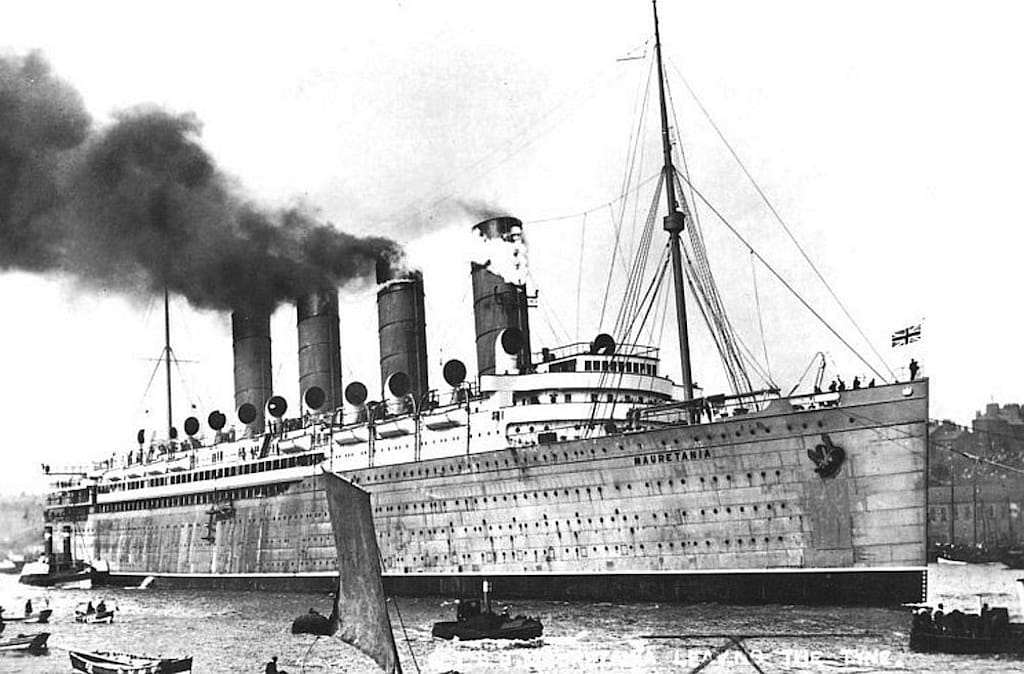
Since the Kaiser Der Grosse first sailed, a succession of German ocean liners held the Blue Riband before 1907. As British and Cunard ocean liners had been eclipsed by the Germans, Cunard began to draft plans for a new ocean liner that would return the Blue Riband to Britain. In 1901, the Cunard directors drafted outline proposals for an ocean liner that could reach 23 knots at sea and transport approximately 2,000 passengers. That ocean liner would be the Mauretania, which eclipsed those specifications.
To finance the construction of the two new Cunard ocean liners, Mauretania and Lusitania, loans were granted to Cunard. The granting of the loan required that Cunard remain a British shipbuilding firm and the proviso that the Mauretania could be requisitioned by the Admiralty in the event of war. After granting the loan, further design modifications laid a design speed of 25 knots for the Mauretania.
Cunard commissioned Swan Hunter & Wigham Richardson to construct the new ocean liner. Construction of the Mauretania began in 1903 on the Tyne. Overhead cranes, hydraulic riveting machines, and a 140-ton floating crane required for fitting out were added to the dockyard.
However, after construction began, Cunard altered the final design. As an alternative to reciprocating engines, Cunard switched to Parsons' new steam turbines for the Mauretania. Its application of steam turbines was then the largest of any ocean liner. An additional fourth funnel was also added to the Mauretania.
By 1906, the framing of the ocean liner was complete. In that year, the ocean liner was slid down the ways and floated for the first time. At 31,938 tons, the Mauretania was then the largest ship to have been built. It was floated in a somewhat narrow river where it was fitted out.
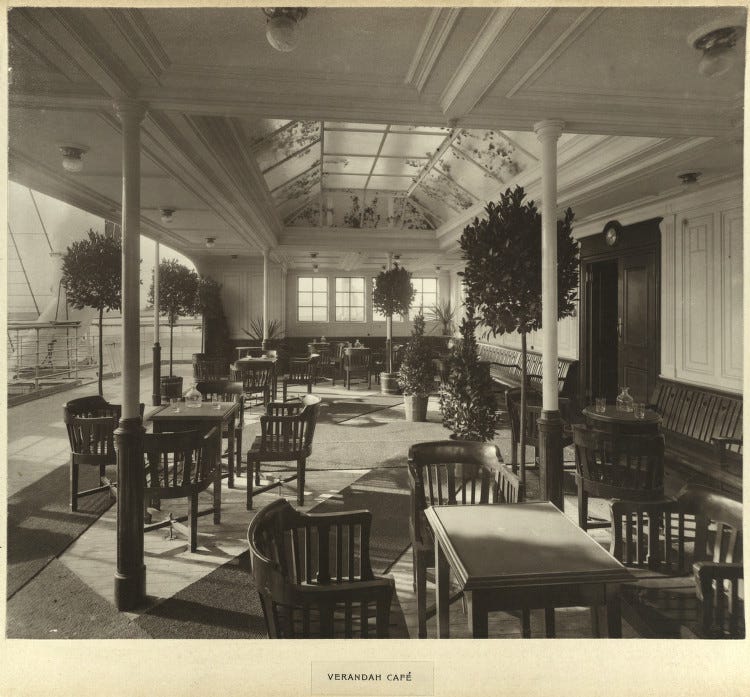
The Mauretania's architect, Mr Peto, generally favored an Edwardian interior décor for the ship. During the fitting out of the ocean liner's interior, 28 alternative woods were added to its various rooms, along with marble and tapestries. The ocean liner included one dining saloon topped by a large dome skylight and a new verandah café on the boat deck. A series of elevators were added alongside Mauretania's Grand Staircase.
Swan Hunter finished constructing the Mauretania in 1907. When Cunard unveiled the ship, it was the largest built by any shipping company. The ocean liner had an overall tonnage of 31,938 and could transport 2,165 passengers.
Then, the ocean liner began its sea trials, during which it reached 27 knots. It seemed certain that the Mauretania would clinch the Blue Riband for transatlantic crossings. In the winter of 1907, the Mauretania made its maiden voyage and set a new Blue Riband eastbound record. Few would have expected the Mauretania to hold the Blue Riband for eastbound crossings until the 1920s.
The westbound record remained out of reach in 1908. As the Lusitania eclipsed its own records, reaching up to 25 knots, it retained the westbound Blue Riband. That was until Cunard refitted the Mauretania with four-bladed propellers that replaced the inner shafts. When the Mauretania resumed transatlantic voyages in 1909, it clinched the Blue Riband for westbound crossings as well as eastbound.
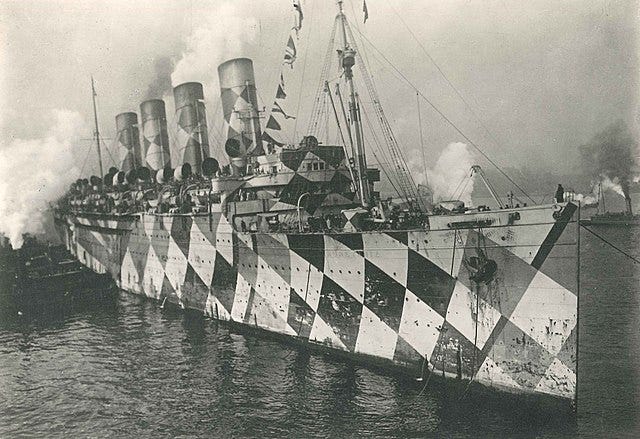
After the outbreak of war in 1914, the Mauretania remained in port whilst the Lusitania continued transatlantic crossings. In 1915, a German U–boat sank the Lusitania in British waters. The Mauretania was converted to a troop transport ship. They painted the ship with dazzle paint to camouflage it from potential German U-boats. One German U–boat did intercept it, but the Mauretania dodged the torpedo that was fired.
The Mauretania returned to transatlantic crossings in 1919. In 1921, Cunard refitted the ocean liner, converting its boilers to oil-firing alternatives. Further refitting followed in Southampton in 1923. There, they overhauled the Mauretania's turbines.
After the overhaul, the Mauretania set another Blue Riband eastbound record. It reached up to 26 knots on its transatlantic trips. The Blue Riband was retained until the German ocean liner SS Bremen sailed. Cunard modified Mauretania's engines, but the ship did not regain the Blue Riband.
Nevertheless, the ocean liner continued to sail during the economic downturn that followed the Wall Street Crash. However, Cunard still required new ocean liners to match the Bremen and SS Normandie. After merging with the White Star Line in 1934, Cunard-White Star finished the Queen Mary.
As the Mauretania was surplus to requirements, it was laid up in Southampton. It sailed to Rosyth shipbreakers, where it was scrapped. The ocean liner had engines that few others could match, and it was among Cunard's finest ships.
This article of mine was originally submitted to Medium, where you can read it here.
About the Creator
Matthew A
Matthew is the author of Battles of the Pacific War 1941-1945. Battles of the Pacific War is available on Amazon and Lulu in e-book and paperback formats. Check out the book’s blog at battlesofthepacificwar.blogspot.co.uk.
Enjoyed the story? Support the Creator.
Subscribe for free to receive all their stories in your feed.
Comments
There are no comments for this story
Be the first to respond and start the conversation.