
The Opening Battles of the Pacific War
Remembering How World War II in the Pacific Started
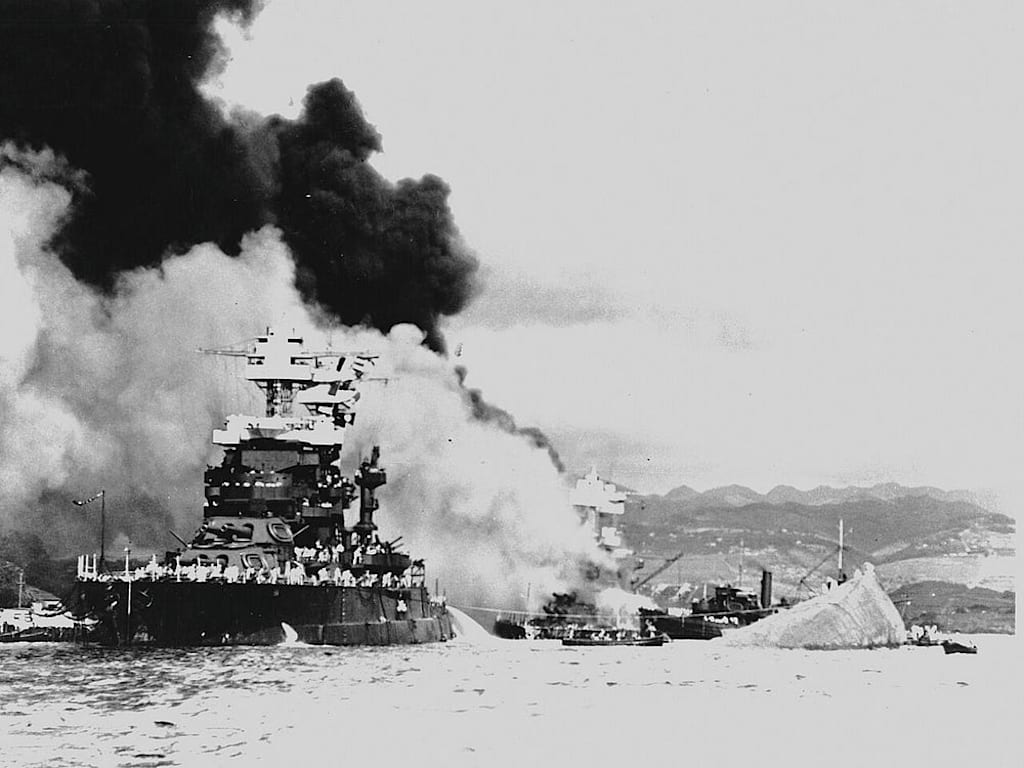
The Pacific War began in 1941, after the Japanese airstrike on Pearl Harbor. From then on, the Japanese dominated most of the early battles of the Pacific War against the British, Commonwealth, and U.S. armies. With a string of victories, the Japanese absorbed a variety of territories into their empire.
Pearl Harbor was the first battle of the Pacific War. However, as it was largely limited to aircraft, it was more of an airstrike. Then, hundreds of Japanese planes, 353 in total, bombarded U.S. warships in port as well as surrounding airfields. Japanese torpedo and dive-bombers flew alongside A6M Zeros. Five supporting IJN midget submarines closed in on the harbor, although few actually had any notable impact.
Even though radar had detected them, the harbor and airfields were not informed of the approaching Japanese planes that bombarded their aircraft on the ground. The bombers set the airfields ablaze and wiped out hundreds of U.S. aircraft. In the harbor, U.S. battleships became the primary target, and the aerial bombardment also set them ablaze. Explosions from the USS Arizona filled the harbor with smoke, which provided further cover for the Japanese aircraft above.
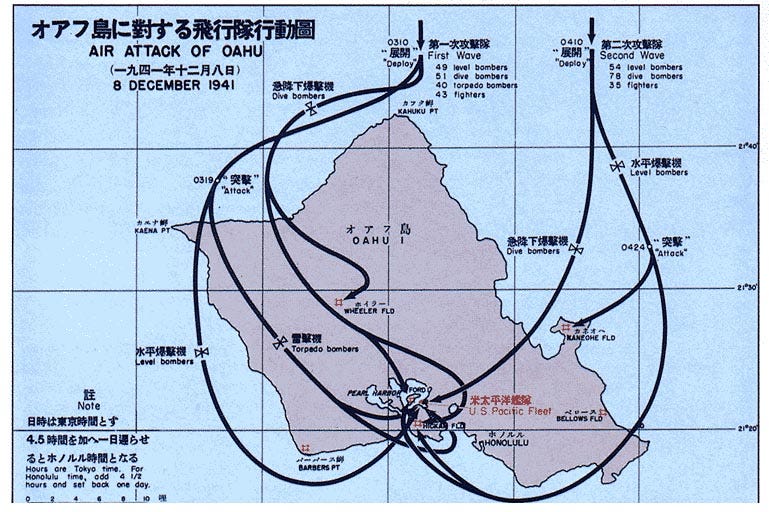
The two waves of Japanese aircraft wiped out hundreds of U.S. aircraft and ravaged 18 warships during the raid. The Pearl Harbor battleships, USS Arizona and Oklahoma, were two that were not restored, but others did make a return to the U.S. fleet during the Pacific War. As a potential third wave of aircraft did not target the oil depots and shipyards at the harbor, they remained intact.
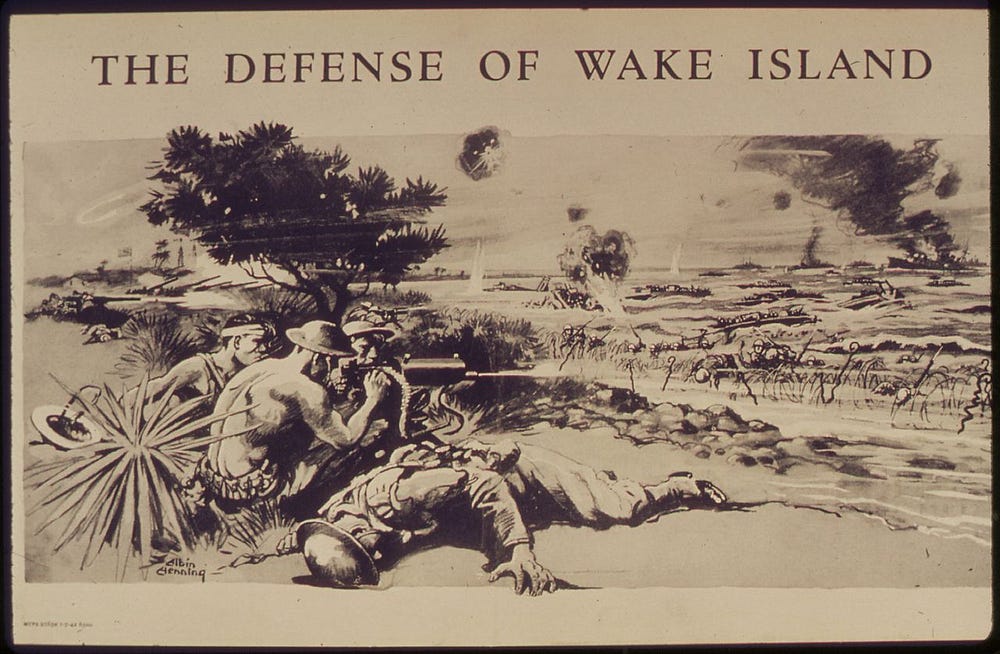
After Pearl Harbor, Japan sent troops to take Wake Island. The Marine garrison stationed at Wake defeated the first landings, but the Japanese returned with a larger number of troops. Thousands of further reinforcements landed to defeat the Marine garrison, which duly surrendered during the Battle of Wake Island in December.
The Battle of Wake Island was small; a few months later, a larger one emerged at Singapore. From December into early 1942, the Japanese army advanced swiftly through Malaya. By February, they reached the Johor Strait as the British and Commonwealth divisions retreated to Singapore. As they pulled back, they blew up a causeway that linked Singapore to Malaya.
When the Japanese army reached Singapore, they were short on supplies, and they had fewer troops at their disposal. However, they could still count on much greater air support than the British. Their aircraft bombarded Allied naval and oil targets shortly before the first Japanese troops landed.
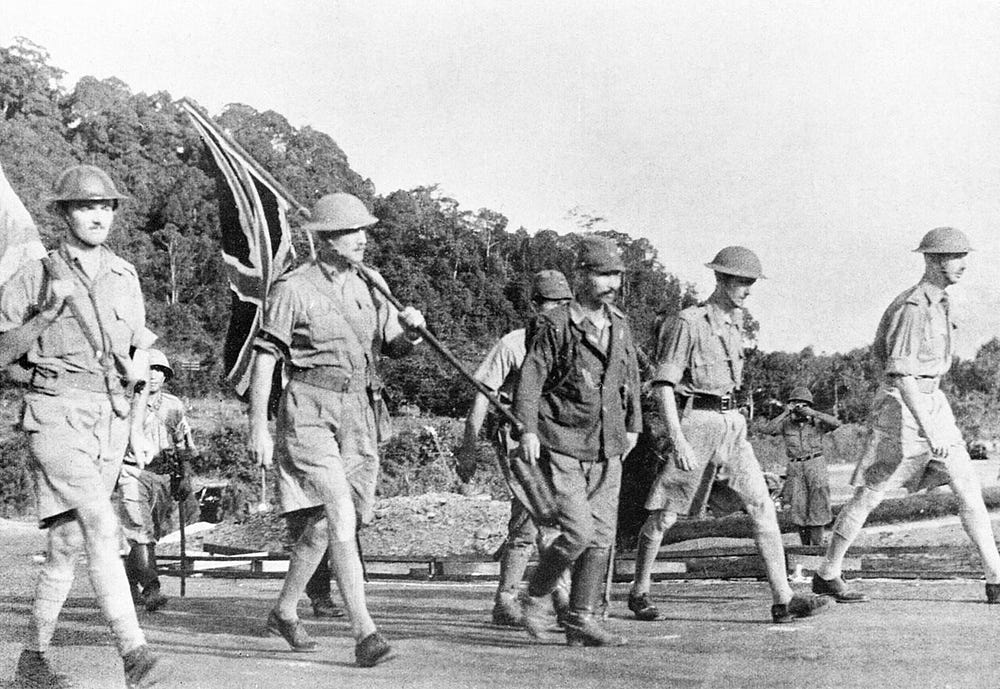
They landed along the north-western coast of Singapore. There, they established a foothold and began a rapid advance further into Singapore. Their troops took Tengah Airfield, Bukit Timah, and Bukit Chandu en route to the capital, which the Japanese divisions had surrounded in the final days. The British had nothing to counter the Japanese tanks, which rolled into Singapore, and, as they retreated, they also lost vital water supplies. Consequently, the British surrendered at Bukit Timah.
The victory at the Battle of Singapore was a great triumph for the Japanese Empire. After that battle, they stepped up their campaign in the oil-rich Dutch East Indies. Their armies had already won a number of victories in the region, but still had to take Java to ensure victory in the campaign.
To defeat the Allies in the Dutch East Indies, Japan sent two invasion fleets to Java in February. However, before landing, an ABDA naval fleet intercepted the fleet's cruiser and destroyer escorts at the Java Sea. Japan's warships battered the Allied cruisers during the opening salvos of the battle.
After briefly losing contact with them, the battle was later resumed. Further Japanese torpedo strikes ensured that the Allies lost two further cruisers. With further losses, the remaining ABDA warships began to retreat, but IJN ships intercepted them at Bantam Bay. There, the IJN wiped out additional Allied cruisers. The Japanese later rediscovered remaining Allied warships in the Java Sea, which were subsequently wiped out by the IJN.
The battle was a decisive victory for the IJN. Having defeated the ABDA fleet at the Battle of the Java Sea, their troops proceeded to Java. After landing, they defeated the Allied army stationed in Java, which ensured their victory in the Dutch East Indies Campaign.
The opening battles of the Pacific War at Pearl Harbor, Wake, Singapore, and the Java Sea had been defeats for the Allies. However, from those defeats, the seeds of victory were sown. The Allies dissolved ABDA after the Battle of the Java Sea. The U.S. Pacific fleet had also retained its fleet aircraft carriers, and they would have an increasingly significant impact at the Battle of the Coral Sea, in which the Allies held Port Moresby. Shortly after, they won a resounding victory at the Battle of Midway, in which the U.S. carrier fleet wiped out four Japanese fleet aircraft carriers and hundreds of their planes.
This article of mine was originally submitted to Medium, where you can read it here.
About the Creator
Matthew A
Matthew is the author of Battles of the Pacific War 1941-1945. Battles of the Pacific War is available on Amazon and Lulu in e-book and paperback formats. Check out the book’s blog at battlesofthepacificwar.blogspot.co.uk.
Enjoyed the story? Support the Creator.
Subscribe for free to receive all their stories in your feed.
Comments
There are no comments for this story
Be the first to respond and start the conversation.