
The Opening Battles of the Mariana and Palau Islands Campaign in World War II
Remembering How the Mariana and Palau Islands Campaign Started
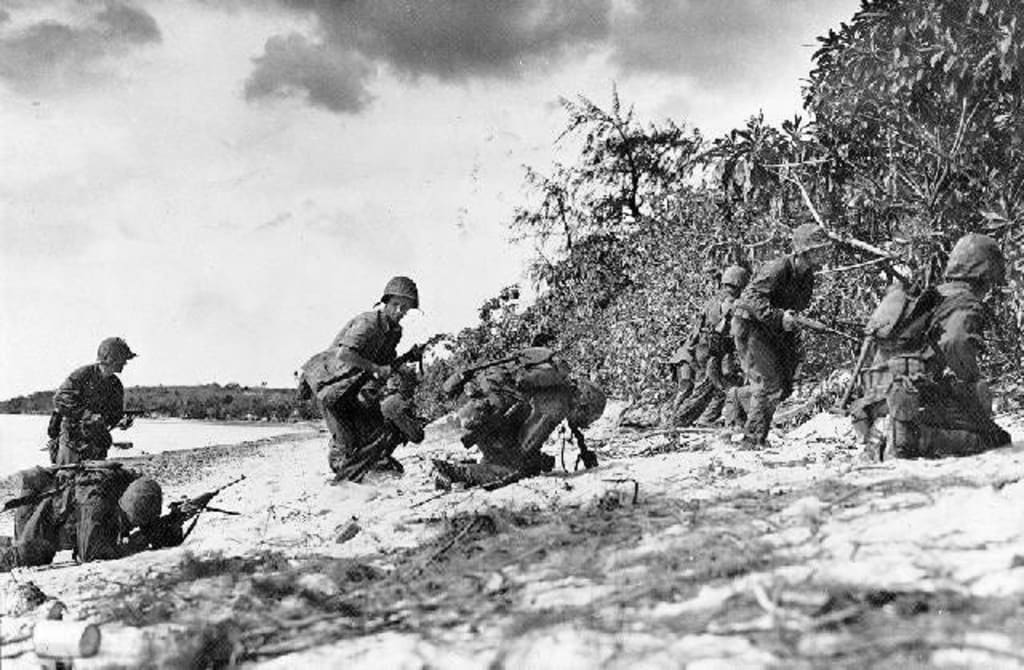
The Mariana and Palau Island campaign, otherwise known as Operation Forager, was an Allied advance in the Pacific War. They landed Marines to capture airfields in the Marianas and secure their flank in Palau. Operation Forager began the campaign around the Marianas, and it was there that the opening battles emerged.
As the U.S. invasion fleet approached Saipan, the Imperial Japanese Navy sent a fleet of aircraft carriers to defeat Task Force 58. They expected that their carrier fleet could defeat TF 58 and the U.S. invasion fleet, with further air support from land-based airfields. However, the Allied aerial bombardment of Japanese airfields in the Marianas left the IJN short of land-based air support.
The Battle of the Philippine Sea was one of the opening battles of the campaign, which emerged shortly after the U.S. Marines began landing on Saipan's beaches. The Japanese fleet launched waves of aircraft, which included hundreds of planes, but they could not reach their targets. TF 58's F6Fs, which were better armored and more suitable for dogfights, wiped out the IJN planes from the skies.
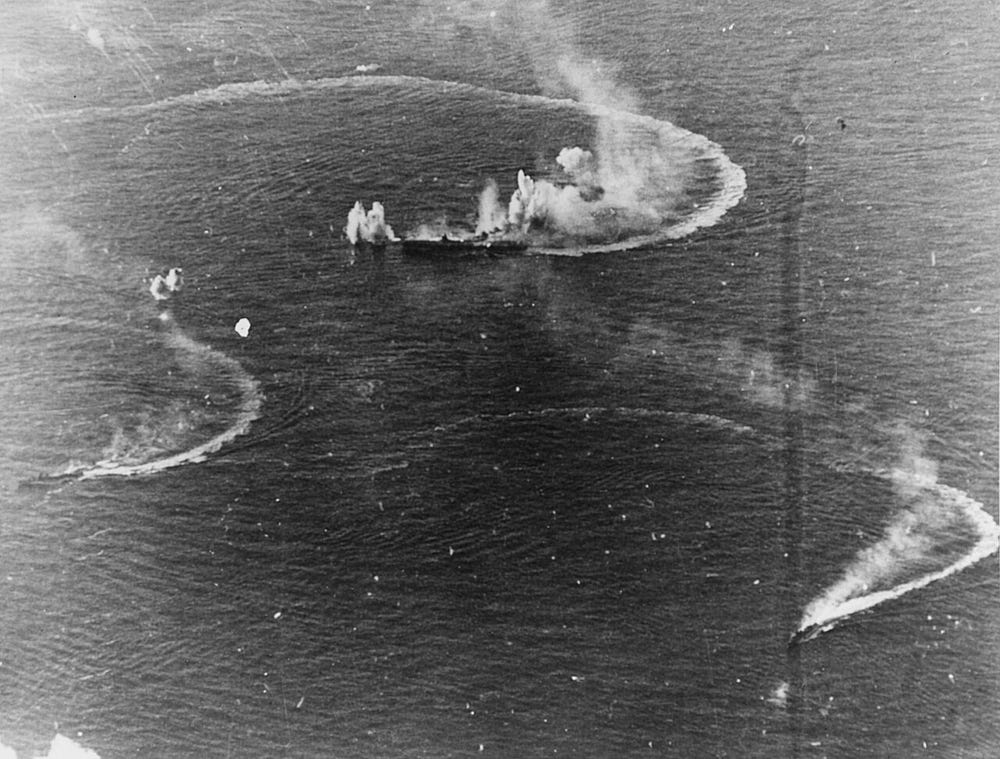
U.S. submarines also intercepted the Japanese aircraft carriers. They fired a spread of torpedoes at two of them, including the fleet's flagship. Explosions aboard the aircraft carriers set them ablaze, and their crews abandoned ship.
When contact with TF 58 was briefly lost, the Japanese fleet had already lost two aircraft carriers and much of its fleet air arm. The USS Enterprise later rediscovered the position of another Japanese aircraft carrier. It launched hundreds more aircraft against what remained of the IJN fleet. During the bombardment, they wiped out another Japanese fleet aircraft carrier before the IJN warships retreated from the battle. The crushing defeat at the Battle of the Philippine Sea left the Japanese garrisons at Saipan without any resupply or potential reinforcements.
Having landed ashore on Saipan's beaches shortly before the Battle of the Philippine Sea, U.S. Marines consolidated their positions after establishing a beachhead along the southwest coastline. The 27th Army Division landed behind to reinforce the U.S. Marines. Upon disembarking on the beaches, they advanced towards the southern airfield at Aslito, which was later abandoned by the Japanese.
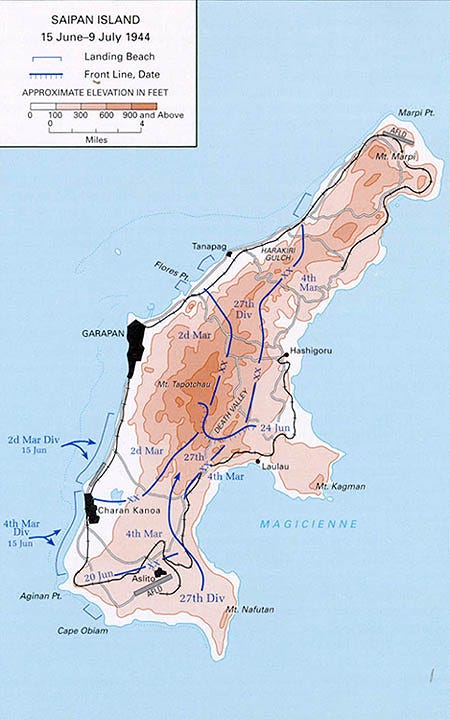
When the beaches were lost, the Japanese army retreated further inland to more mountainous terrain. In the center of Saipan is Mount Tapochau, which rises approximately 1,554 feet. After retreating to the high ground, they set up new positions within the caves and along the cliffs of the mountains. The 27th Infantry Division advanced up the center of Mount Tapochau, with two Marine divisions on the east and west flanks of the mountain.
Japanese troops slowed the 27th Division as it 'advanced' up Mount Tapochau. On the east and west flanks, the Marines advanced further, which left them with a bent, or U-shaped, line. However, the Japanese grip on Mount Tapochau could not be held, and their troops eventually retreated to the northern tip of Saipan. The U.S. troops secured the mountain and cleared out the remaining Japanese divisions in the north around Marpi Point.
In the final days of the battle, U.S. Marines captured Garapan on the western coast, or at least what was left of the ravaged village. Naval and artillery shells had reduced Garapan to rubble. Elsewhere, they secured Flores Point and advanced up the beach. The 27th Division continued its advance in the center towards Tanapag Harbor.
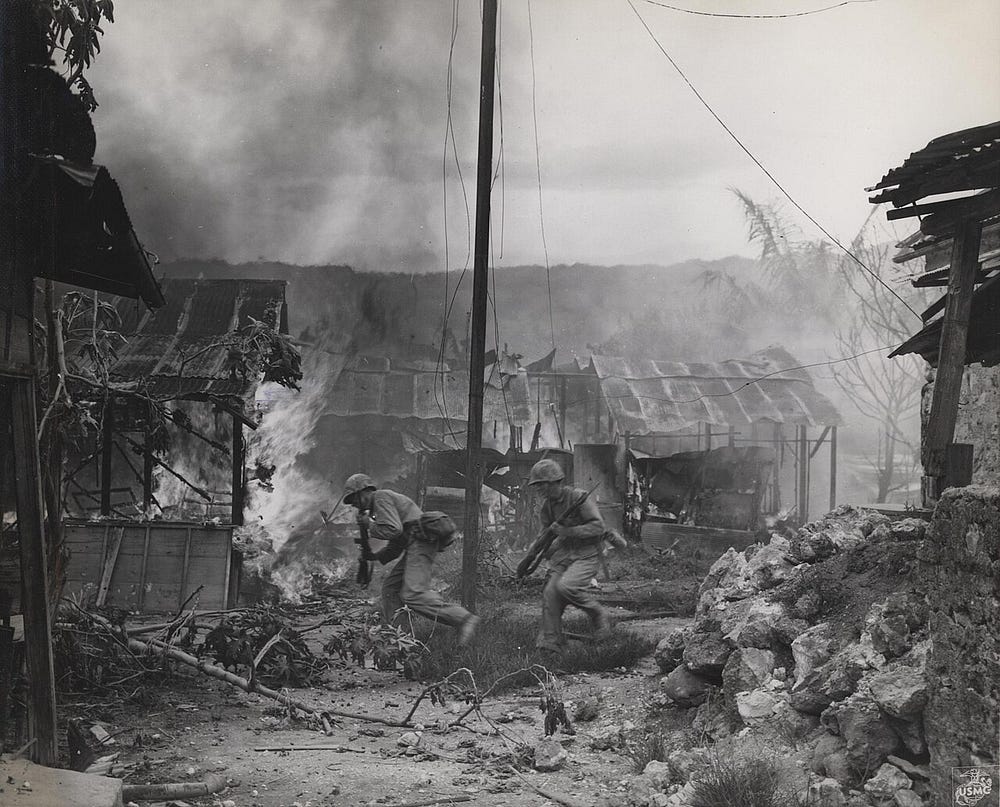
Once the Battle of Saipan was over, the Marianas and Palau Islands campaign had almost been won. Although there were more islands to take in the Marianas and Palau, they had secured vital airfields on Saipan. From there, they could launch bombing raids over nearby Japanese territory and even the home islands, with their long-range bombers. As the IJN's fleet air arm had also been crushed, the remaining Palau and Mariana Islands had little to no air support for further battles at Guam, Peleliu, etc.
The Japanese Empire was crumbling. After the opening battles, the Allies took further control of the Mariana and Palau Islands to finish Operation Forager. Thereafter, they stepped up their bombing campaigns over the home islands.
This article of mine was previously submitted to Medium, where you can read it here.
About the Creator
Matthew A
Matthew is the author of Battles of the Pacific War 1941-1945. Battles of the Pacific War is available on Amazon and Lulu in e-book and paperback formats. Check out the book’s blog at battlesofthepacificwar.blogspot.co.uk.
Enjoyed the story? Support the Creator.
Subscribe for free to receive all their stories in your feed.
Comments
There are no comments for this story
Be the first to respond and start the conversation.