
The Long Road Back: What Led to the Battle of Luzon?
Remembering the Events That Led to the Battle of Luzon
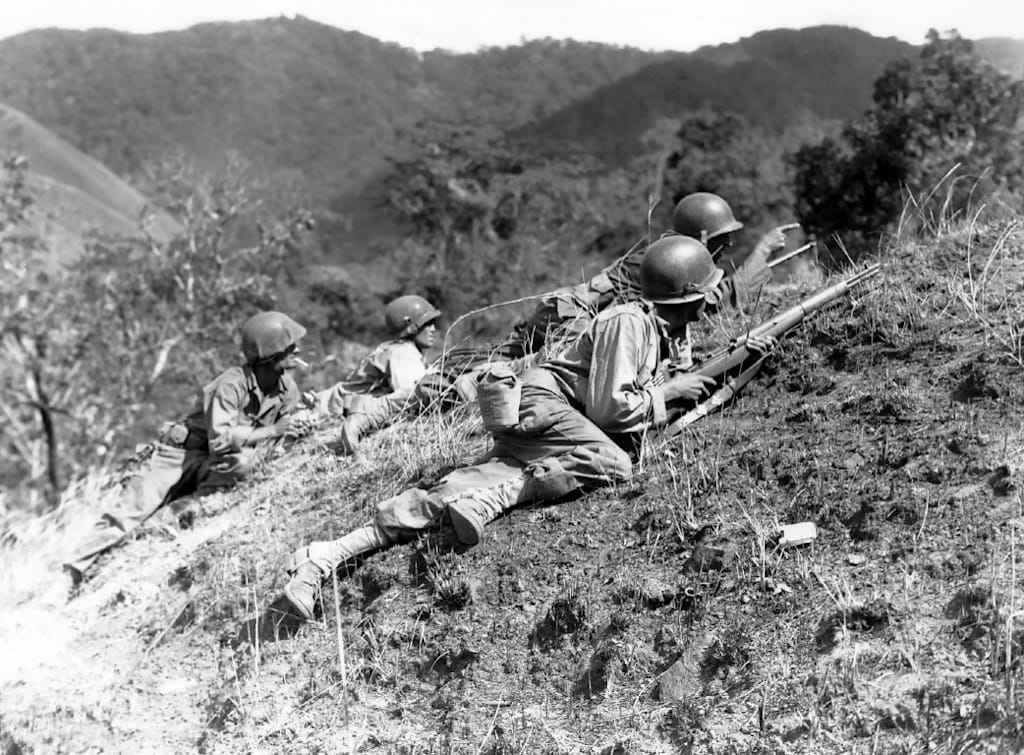
The Philippines was a U.S. territory that was rich in oil. As the Western economic blockade severed Japan's oil supplies, it became an obvious target for the Japanese army. Before the Pacific War began, the Allies bolstered the Philippines with reinforcements. Once Japan's aircraft had dropped the first bombs over Pearl Harbor in December 1941, the Japanese army advanced swiftly into Malaya and the Philippines.
U.S. troops slowed their advances in the Philippines. After landing in and taking Luzon, they had heavier losses during the Battle of Bataan. However, the U.S. troops eventually withdrew to Corregidor, and some of their officers fled the Philippines for Australia. MacArthur was among them and vowed to return.
During the Battle of Corregidor, the Japanese army defeated the remaining U.S. divisions. After their troops established a beachhead, tanks and artillery arrived to reinforce them. The arrival of Japanese tanks pressed the defenders further back into Corregidor. Having lost Corregidor, the Philippines Campaign came to a close, but it would be followed by another in 1944.

After taking the Marianas, the Allies had much more to celebrate as they advanced in the Pacific. The Allied military commanders discussed targets for further advances in the Pacific. MacArthur proposed that they retake the Philippines, and then press for the Japanese home islands such as Iwo Jima. Taking the Philippines would also cut off Japanese oil supplies in the region. That proposal was followed, and plans for a second campaign in the Philippines were laid down, for which they selected the island of Leyte as the location for the first Marine landings.
As the U.S. invasion fleet sailed for Leyte, the Imperial Japanese Navy sent most of its warships to the Philippines to defeat the Allied landings. With only limited air support for their fleets, it was a bold move by the IJN that sent their warships to defend oil supplies in the Philippines at all costs. They sent their aircraft carriers as decoys to lure away the U.S. Third Fleet. Then their battleship fleet, the Center Force, could reach Samar to intercept U.S. transport ships.
The plan almost came off. Even though U.S. aircraft sank the battleship Musashi, the Center Force still passed through the San Bernardino Strait. The Third Fleet took the bait and sailed northwards away from Samar. As such, the Center Force intercepted Taffy 3 off Samar and wiped out a couple of their escort carriers and destroyers. However, as the Center Force still withdrew from the battle, U.S. troop and supply ships continued to land at Leyte Gulf.

When the Battle of Leyte Gulf was over, the Allies had clear naval superiority in the Philippines. Their troops flooded into Leyte, where they established a beachhead and advanced further inland, although Japanese reinforcements still reached Leyte until the U.S. troops took Ormoc Bay. Their victory at the Battle of Ormoc Bay cut Japanese supply lines, and the Allies secured Leyte soon after.

After the fall of Leyte, U.S. troops also captured Mindoro. The Allies needed Mindoro as a position for U.S. airfields to provide further air support for landings at Luzon. There, they established two airfields from which they launched bombing flights over parts of southern Luzon. This was actually a trick to make it seem as if the Allies were planning to land troops there. The Allies were actually planning to land their troops further north, where they would be closer to roads and railways in Luzon.
The first Allied troops landed in Luzon in 1945. With hundreds of thousands of Japanese soldiers stationed there, the Allies sent a large number of troops to secure Luzon. Small pockets of Japanese troops held out in the mountains until Japan surrendered.
About the Creator
Matthew A
Matthew is the author of Battles of the Pacific War 1941-1945. Battles of the Pacific War is available on Amazon and Lulu in e-book and paperback formats. Check out the book’s blog at battlesofthepacificwar.blogspot.co.uk.
Enjoyed the story? Support the Creator.
Subscribe for free to receive all their stories in your feed.
Comments
There are no comments for this story
Be the first to respond and start the conversation.