
The Largest Battleships Of The 20th Century
The Battleship Giants
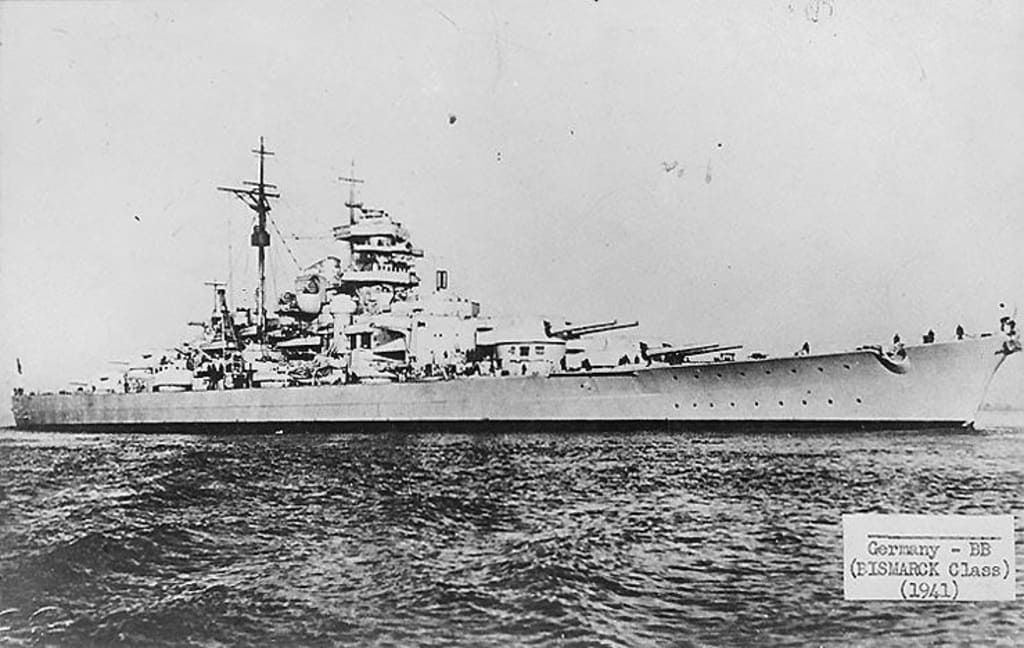
Battleships got bigger and better in the 20th century, starting with the HMS Dreadnought, the first dreadnought battleship. However, by 1950, aircraft carriers eclipsed them. The largest battleships were constructed during the 20th century in the 1930s and early 1940s. Then, the biggest battleships were constructed by Japan and Germany rather than the USA or Britain.
The Yamato
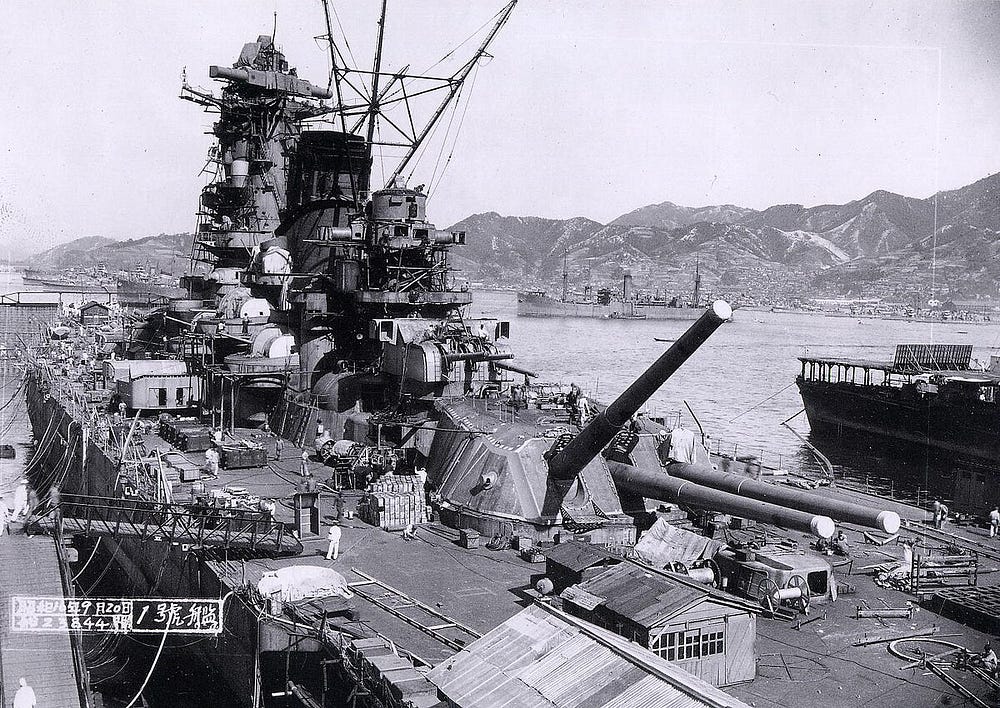
Despite considerable investment in aircraft carriers, the IJN also built new battleships in the 1930s, such as the Yamato-class battleships. These were the largest constructed. There were two Yamato-class battleships, one of which was the Yamato, which was marginally larger than the other. The Yamato had a maximum tonnage of 72–73,000 tons and was larger than the Titanic. The ship had a crew of approximately 2,750 sailors, comparable to any ocean liner of the period.
The Yamato joined the IJN in late '41, shortly after the Pacific War began. It provided fleet support for battles such as the Battle of Midway and Leyte Gulf, where it was the primary ship of the IJN's battleship fleet, supposed to defeat the U.S. invasion fleet at Leyte. Aircraft carriers were a decoy for the U.S. aircraft carriers, while the Yamato and its fleet intercepted the U.S. invasion fleet off Samar and sank one of their carriers and two U.S. destroyers during the battle. However, in 1945, the Yamato had little naval or air support for its final operation, and it was intercepted and sunk by U.S. aircraft carriers before it reached Okinawa.
The Musashi
The Musashi was the other Yamato-class battleship. It was comparable to the Yamato but, as mentioned, marginally lighter. Its crew was a little smaller, with approximately 2,399 sailors. The Yamato joined the IJN in 1942 and remained a part of it until the Battle of Leyte Gulf. It was a part of the same fleet as the Yamato but was sunk in the Sibuyan Sea by U.S. aircraft shortly before the IJN fleet reached the U.S. invasion fleet off the coast of Samar.
The Bismarck
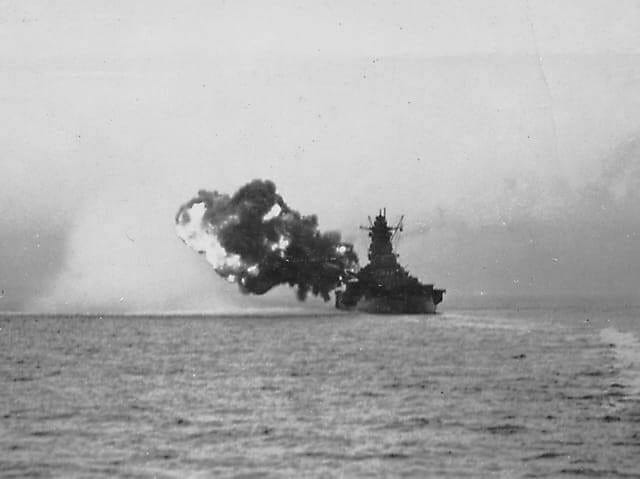
After the Yamato-class battleships, the German Bismarck-class battleships were the largest and comfortably eclipsed any battleships of the Royal Navy in terms of scale. The Bismarck was one of two Bismarck-class battleships constructed at the Blohm & Voss shipyard during the 1930s. The Bismarck's displacement was approximately 50,900 tons, and the ship had a crew of 2,092. Despite its size, the Bismarck was still a fast battleship with a speed of some 30 knots, which eclipsed Blue Riband ocean liners such as the Mauritania.
In 1940, Bismarck joined the German navy and soon became a target for the Royal Navy. In 1941, it was sent on a commerce raiding mission, but before reaching its targets, it was intercepted by the Royal Navy battleship HMS Hood at the Denmark Strait. During this battle, the Bismarck emerged victorious as it took out the HMS Hood. In the days that followed, Royal Navy carrier aircraft bombed the battleship, and their torpedoes jammed its rudder. With its rudder jammed, further Royal Navy warships intercepted and sank the Bismarck. However, orders were also given to scuttle the ship before it was abandoned, and Bismarck's crew laid demolition charges, which may have also had some impact.
The Tirpitz
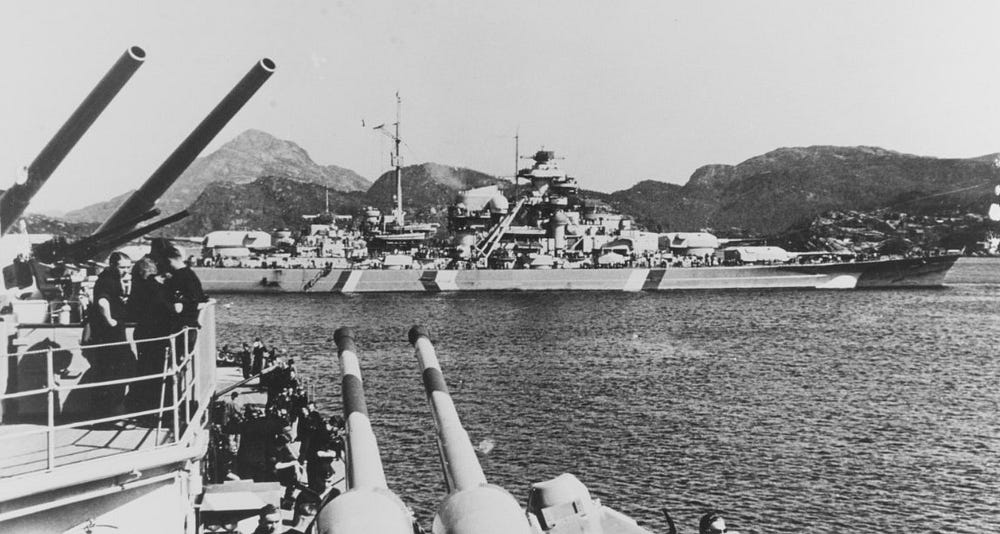
The Tirpitz was the other Bismarck-class battleship, which was a little larger than the Bismarck. The Tirpitz had a displacement of more than 53,500 tons. With 2,608 sailors, it also had a larger crew.
After the Royal Navy defeated the Bismarck, the Tirpitz had to follow. However, it remained an elusive target after it joined the German navy in 1941. Throughout 1942 and 1943, the Royal Navy could not sink the ship despite numerous aerial bombardments. Only in 1944 did a squadron of British Lancaster bombers wipe out the Tirpitz in Norway.
These were the largest battleships of the 20th century, and they will probably never be eclipsed. Yet despite their scale and impressive armaments, with the exception of the Battle of the Denmark Strait, they failed to win any notable victories for the IJN or the German Navy, as they were all lost at sea.
This article of mine was originally submitted to Medium, where you can read it here.
About the Creator
Matthew A
Matthew is the author of Battles of the Pacific War 1941-1945. Battles of the Pacific War is available on Amazon and Lulu in e-book and paperback formats. Check out the book’s blog at battlesofthepacificwar.blogspot.co.uk.
Enjoyed the story? Support the Creator.
Subscribe for free to receive all their stories in your feed.
Comments
There are no comments for this story
Be the first to respond and start the conversation.