
The Japanese Soldier Who Survived 10,000 Days in the Jungle
10,000 Days in the Jungle

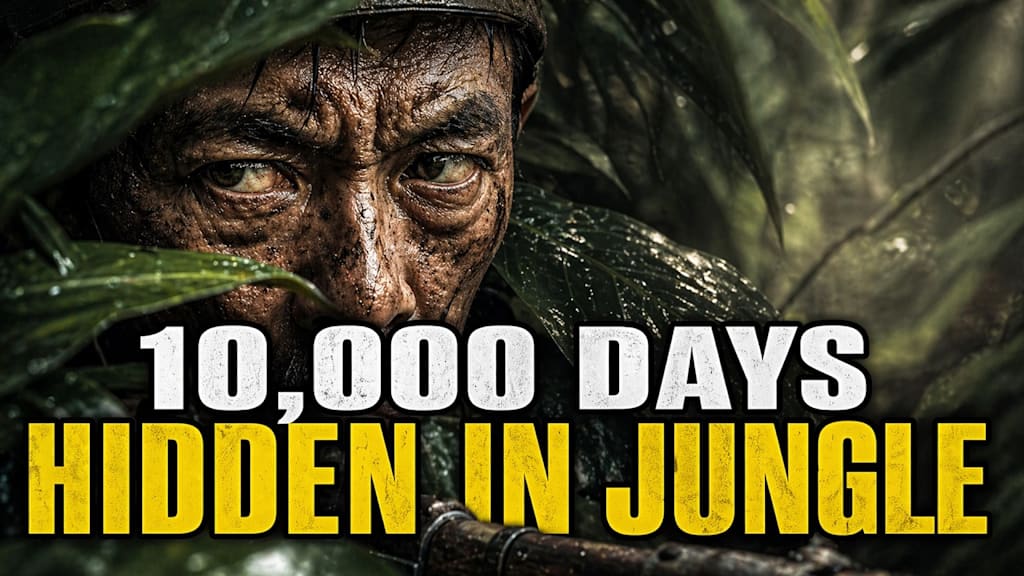
In March 1974, it had been 29 years since World War II had ended. Peace and prosperity had spread across the world. But deep inside the dense and dangerous jungles of Lubang Island in the Philippines, one soldier was still fighting a war.
His uniform was torn and worn out, but his rifle and sword were still in perfect condition. This man was none other than Hiroo Onoda, an intelligence officer of the Japanese Imperial Army—who continued fighting World War II alone, even 29 years after it had officially ended.
While the rest of the world celebrated peace, built new cities, and moved on from the horrors of war, this man remained trapped in time—fighting a war that had already been over for decades. For Onoda, time had stopped in 1944. He believed the enemy was still waiting to capture him the moment he stepped out of the jungle.
But the real question is—how can someone live like this for 29 years? Alone, without supplies, completely cut off from the world?
For the world, World War II ended in 1945. But in a strange way, it didn’t truly end until 1974—because technically, a war isn’t over until the last soldier surrenders.
So was this just a soldier doing his duty? Or was it stubborn loyalty that turned him into the last prisoner of World War II?
Hiroo Onoda was born in 1922 in a small village in Japan. But this was not the modern, tech-driven Japan we know today. This was a Japan driven by imperial ambition—a nation that dreamed of conquering the world.
From childhood, children were taught not just how to walk, but how to die for their emperor. Onoda grew up in a strict, disciplined environment where the word “surrender” didn’t even exist. He was taught that dying was better than surrendering.
In 1944, as World War II reached its peak, Japan was losing badly against the Allied forces. In a desperate move, Japanese command began training guerrilla soldiers to operate behind enemy lines. Onoda was one of the selected few sent to a special military school, where he was trained in intelligence, espionage, and guerrilla warfare.
He was taught how to survive alone in the jungle, sabotage enemy supplies, and exhaust entire armies through stealth attacks.
But the most important instruction came from his commanding officer. He told Onoda:
“Under no circumstances are you to surrender. You are not even allowed to take your own life. Whether it takes 3 years or 5—we will come back for you. Until then, you must continue the fight.”
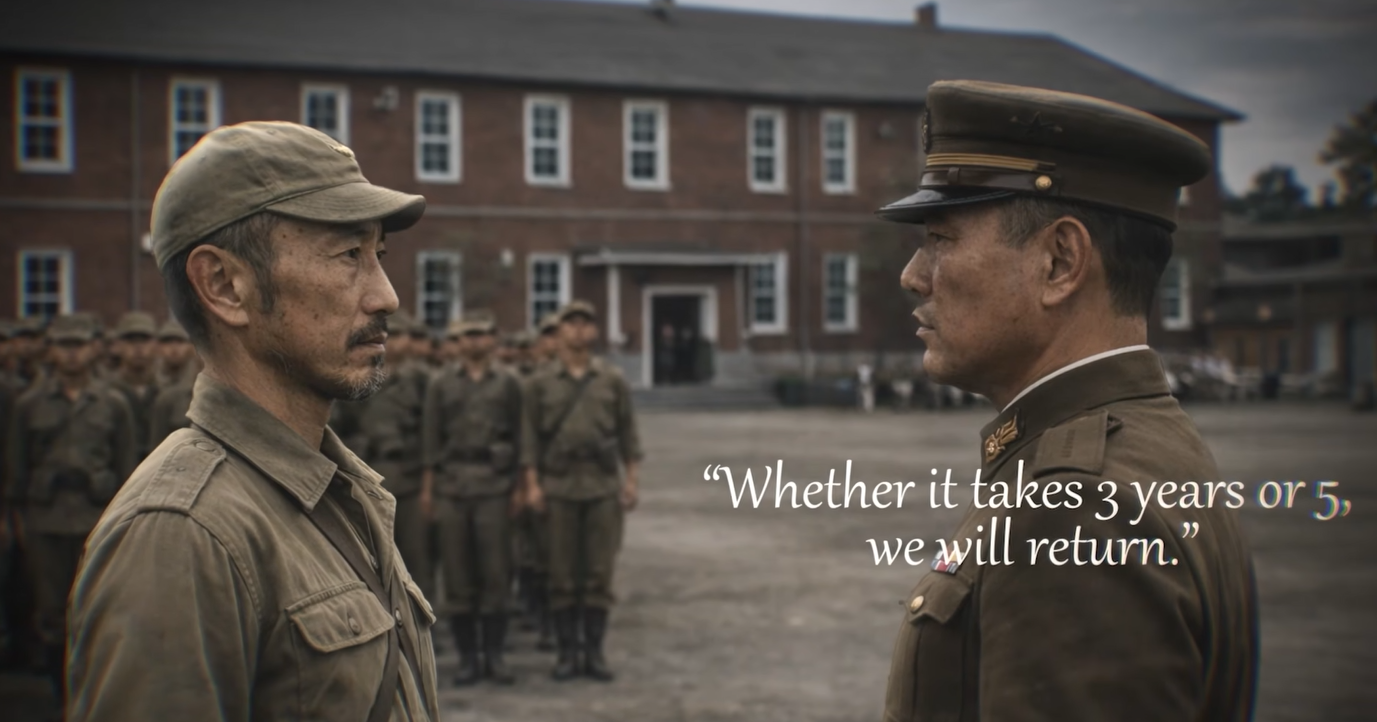
Those words ignited a fire in Onoda that would not fade for the next 29 years.
He was sent to Lubang Island in the Philippines, a strategically important location. His mission was simple: disrupt and destroy enemy supply lines and turn the jungle into a nightmare for the enemy.
But just one year after his deployment, in August 1945, everything changed.
The United States dropped atomic bombs on Hiroshima and Nagasaki, forcing Japan to surrender. World War II officially ended.
But no one reached Onoda.

He remained hidden in the jungle with three other soldiers—unaware that the war was over. Allied forces dropped leaflets announcing Japan’s surrender, urging them to come down from the mountains.
But Onoda didn’t believe it.
He thought it was enemy propaganda—a trick to lure them out. He held onto the belief that his commander would return someday.
Years passed. Onoda and his companions survived like ghosts in the jungle. They had no shelter, no supplies—just wild bananas, coconuts, stolen rice, and occasionally hunted cattle for food.
But this wasn’t just survival. Onoda continued his “war,” attacking local villagers and police, believing them to be enemies. Over the years, he and his group killed around 30 locals and injured over 100.
One by one, his companions disappeared. In 1949, one surrendered. In 1954, another was killed. In 1972, his last companion died in a police encounter.
Now, Onoda was completely alone.
The Philippine government tried everything—dropping newspapers, family letters, even playing recordings of his brother’s voice—but Onoda believed it was all a trick.
He became a legend—some thought he was dead, others believed he was a ghost haunting the jungle.
Then in 1974, something incredible happened.
A 24-year-old Japanese adventurer named Norio Suzuki went looking for him—not as a soldier, but out of curiosity and adventure. Amazingly, within just four days, he found Onoda.
When they met, Onoda initially tried to shoot him. But Suzuki called out his name and told him that Japan had changed—that the war was over.
Still, Onoda refused to believe it.
He said he would only surrender if his commanding officer personally ordered him to do so.
So Suzuki returned to Japan, and after a search, they found Onoda’s former commander—Major Taniguchi—who was now living a simple life as a bookseller.
He was brought to Lubang Island.
When Onoda saw him, he stood at attention and saluted. The commander then read out the official order:
“Japan has lost the war. Your mission is over. You must surrender your weapons.”
At that moment, the war finally ended—for Onoda.
He had arrived on the island at 22. Now he was 52. He had sacrificed his youth, his friends, and his life to a loyalty that the world saw as madness.
When he returned to Japan, he was welcomed as a hero. He expressed deep regret for the innocent lives he had taken, believing them to be enemies.
But Japan had changed. It was now modern, technological, and westernized. Unable to adjust, Onoda moved to Brazil.
In 1996, he returned to Lubang Island and donated money to support the families affected by his actions.
On January 16, 2014, at the age of 91, Hiroo Onoda passed away in Tokyo.
Japan may have lost World War II—but Onoda was perhaps the only soldier who kept fighting it till the very end.
He may have won his war…
But he lost the battle against time.
About the Creator
Imran Ali Shah
🌍 Vical Midea | Imran
🎥 Turning ideas into viral content
✨ Watch • Share • Enjoy
Enjoyed the story? Support the Creator.
Subscribe for free to receive all their stories in your feed.
Comments
There are no comments for this story
Be the first to respond and start the conversation.