
The Initial German Assault at the Battle of the Bulge
Remembering the Surprise German Onslaught in December 1944
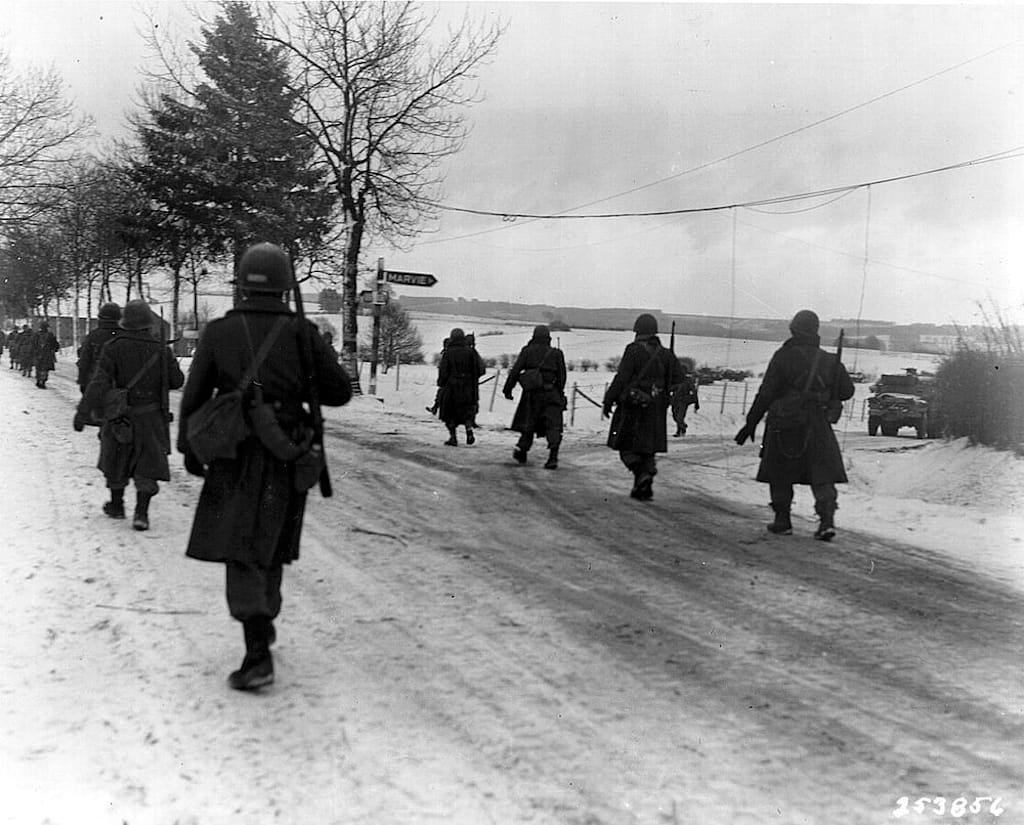
The Battle of the Bulge in late 1944 was the largest battle in Western Europe between US and German troops. By 1944, the German army had been pushed back in both western and eastern Europe. This was Germany's final, and somewhat unexpected, advance of the war, a final attempt to defeat the Western Allies.
By 1944, the Allies had established a beachhead in France, and Operation Overlord had liberated Paris. The war may have seemed to be all but over. While no unconditional surrender had been given, the Allies were advancing steadily and ready to thrust into Germany.
Germany still had reserves. The loss of territory brought much of the remaining German army together in western Europe. A German army of some 500,000 well-equipped soldiers was organized around the forested Ardennes region. Behind the forested camouflage, the Nazis were also able to conceal almost 2,000 tanks and a further 1,900 artillery guns from Allied reconnaissance.
These were organized for a final advance in the west, which would begin in the Ardennes. The ultimate objective was to split the Allied armies in the west and then capture the Belgian port of Antwerp. If such objectives were met, the Allied armies would have lost all their positions in western Europe. Allied defeat in France might have split the coalition.
The initial German assault began at a weakly defended section of the Allied line near the Ardennes forest on December 16, 1944. German artillery bombarded the Allied defences. Surprised and outnumbered, the Allied troops fell back and retreated westwards. Their own Sherman tanks were little match for the superior German tank models, such as the Panthers, which had been developed by 1944.
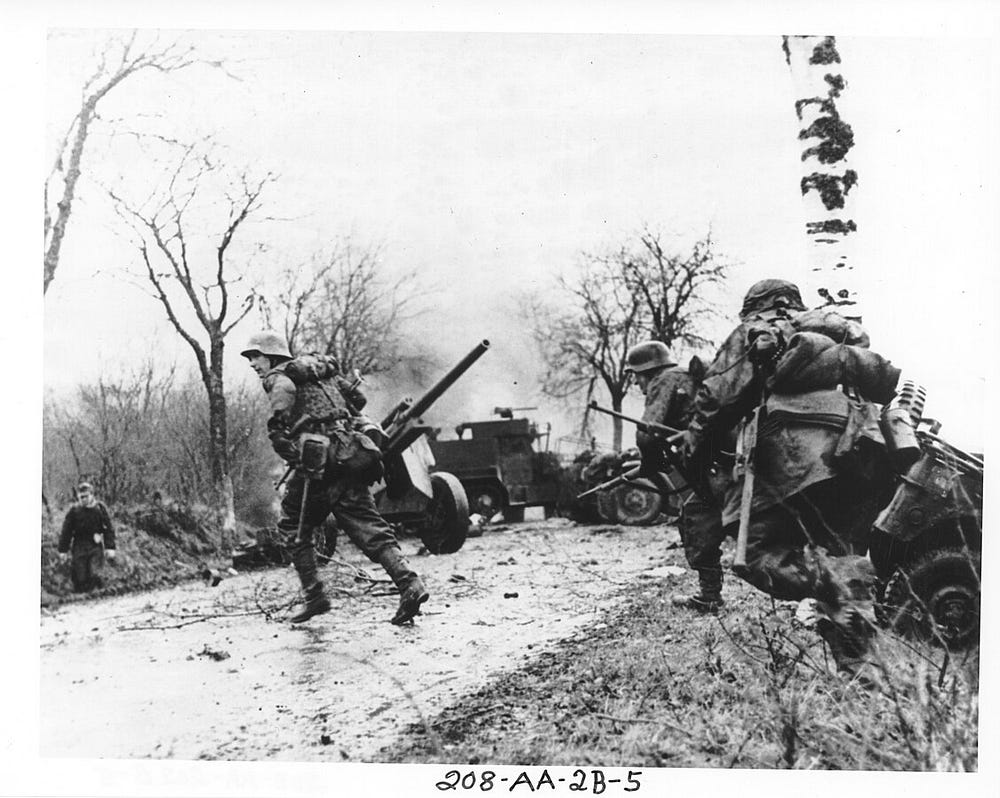
The Germans' biggest advantage during their initial advances was indeed the element of surprise. The Allies had not detected the German army in the Ardennes and were initially set aback by the scale of the counter-attack. The Germans penetrated the Allied lines with a bulge as they approached the city of Bastogne.
Bastogne became the next target for the German advance during the Battle of the Bulge. Capturing Bastogne was essential to continue the advance towards Antwerp because of its road network. Realizing the strategic significance of Bastogne, the Allies sent some of the best US troops to defend the city until Patton's reinforcements reached them.
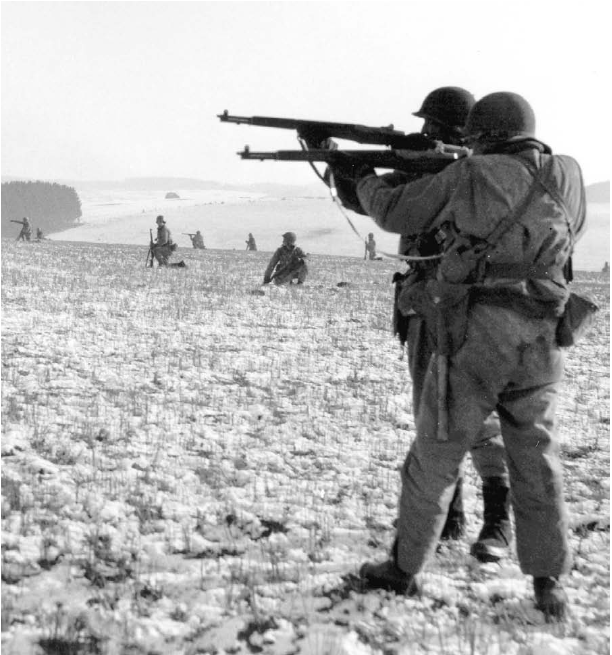
Although outnumbered, the US troops at Bastogne somehow held out against a German bombardment. The Germans bombed Bastogne by air and shelled Bastogne with their artillery. German calls for their surrender were ignored as the US troops were resupplied by air. As Patton's reinforcements got closer, with no potential German reinforcements, the Axis troops began to retreat from Bastogne.
The main German advance during the Battle of the Bulge had been halted. Bastogne had been held when Patton's army reached it. Although the Battle of the Bulge was not over, Germany's chance of reaching Antwerp was remote, particularly as its fuel supply was increasingly critical.
Why is the Battle of the Bulge Significant Today?
The Battle of the Bulge remains the largest land battle in US Army history. It was the most costly single battle in American history in terms of casualties. It's one of the most celebrated and widely remembered Allied victories of World War II.
Today, there are numerous Battle of the Bulge museums in Belgium and Luxembourg, among the most notable of which is the Bastogne War Museum. That is an interactive museum devoted to the Battle of the Bulge and the Siege of Bastogne. It includes a collection of authentic artifacts, military vehicles (tanks and aircraft), and multimedia presentations that remember the Battle of the Bulge and its broader World War II context.
The Bastogne War Museum also commemorates the Battle of the Bulge every year with its Nuts Weekend event. That regular remembrance event includes re-enactments from the battle and special displays. Nuts Weekend typically takes place from December 12 to 14.
Churchill is quoted as saying that the Battle of the Bulge was "the greatest American battle of the war." The tremendous American fightback during that battle, supported by British reinforcements, all but assured Germany's defeat. It is a battle with an enduring cultural impact and legacy, which remains one of the strongest symbols of Allied resilience and bravery today.
This article of mine was previously submitted to Medium, where you can read it here.
About the Creator
Matthew A
Matthew is the author of Battles of the Pacific War 1941-1945. Battles of the Pacific War is available on Amazon and Lulu in e-book and paperback formats. Check out the book’s blog at battlesofthepacificwar.blogspot.co.uk.
Enjoyed the story? Support the Creator.
Subscribe for free to receive all their stories in your feed.
Comments
There are no comments for this story
Be the first to respond and start the conversation.