
The Human Age: Part One
Take a look at how things used to be, and the jobs lost along the way


To be sure, there are elements of modern life that are good. However, not everything is better. Some innovations (like AI) were more thrust upon us than asked for. And many changes along the way resulted, as an intended consequence or a sad casualty, in lost jobs. Sometimes the modern conveneicnce provides you with what you could have had from another source back then, but keep in mind, what human element has been lost along the way? In this article, let's take a look at how things used to be, either in the span of my own memory, or in the memories of my parents and grandparents. Some of these elements of life can also be seen in old TV shows, books, and movies, and when there's a good example for reference, I'll mention it.

Newspapers and the golden age of TV news
The 24-hour TV news cycle is a direct result of Desert Storm, the first Gulf War in Iraq from the early 1990s. CNN, which was a fairly new cable station at the time, broke new ground by providing coverage of the war all day long, keeping Americans glued to their TV screens as we watched missiles hit targets all over Baghdad. Later, CNN kept us watching with the OJ Simpson "slow car chase" and "The Trial of the Century", OJ's trial for murder, as well as other events. It's not that there wasn't news before that. Of course there was. Presidents were shot and killed, men landed on the moon, wars began and ended. It's just that CNN was there, and they had to fill air time, and get people to watch what they had.
Before that, TV news was basically on in the morning, at noon, at 6 pm, and at 10 or 11 pm. If anything else happened, like the space shuttle Challenger blowing up or President Reagan getting shot, programming was interrupted for breaking news. That didn't happen often, so when it did, people dropped what they were doing and watched. But TVs weren't in every household until the second half of the 20th century. Before that, radios were more common. So how did people know what was going on before then?
Newspapers. In my lifetime, most cities had at least two, and the city I grew up in, Milwaukee, had a morning paper (the Milwaukee Sentinel) and an evening paper (the Milwaukee Journal). As in other cities, such as Chicago and New York, it was widely believed that one paper was more conservative and one was more liberal than the other, but for most, it came down to: Did you want to read your news before breakfast or after dinner?
That sounds antiquated and inconvenient in an age when you can look at your phone, tablet, or computer screen at any time, from anywhere, and read news on a variety of sites and apps. You can pull up TV news from your local station or a station from seemingly any city and watch what's going on, and usually read what one of their reporters wrote about an event. That's great, right? Why would you want anything else?
Consider this: Confidence in media of all kinds has crumbled. Fake news is real. Media bias is real. Some watch Fox, some watch CNN or MSNBC, or Alex Jones or Axios X or Tik Tok. Name your outlet. You pick who you want to believe and mock the rest, and if there were a 100% right answer doomscrolling wouldn't be a thing. It didn't used to be that way. Once upon a time, TV journalists like Edward R. Murrow (whom the award was named after) and Walter Cronkite were among the most trusted men in America. You didn't know what their political affiliation or beliefs were because mainly they read the news and they were fair, detailed, professional, and respectful regardless of who they voted for.
Also, consider this: In any major city, if you were at City Hall, there were phone booths there, not just for the public to use (because there were phone booths all over most cities), but for the press. Each newspaper in a city employed reporters who were specifically there to cover City Hall. If something happened there, such as a major press conference, reporters would rush to the phone and call in their stories to their respective newspapers. There, someone would transcribe what the reporter dictated, and it would be edited by an editor and go to print as fast as possible. Further, major papers, and the Milwaukee papers were no exception, had reporters assigned to other cities, such as New York, and especially Washington, D.C., who would write up their own accounts of what was happening in those cities and how it might affect readers back home. Now, only the largest papers and news outlets even have someone assigned to work at the White House or on Capitol Hill, much less in "the foreign bureau", such as London, or the U.N., or other big cities. And while the Associated Press (AP) and UPI (United Press International) have long had "wire services" that sent stories to all news outlets from radio to TV to print, today it's far more likely that that will be most of the news in a publication, while years ago newspapers proudly ran their own content, from their own reporters, without having to rely on the wire.
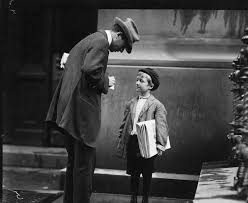
You've probably seen scenes where a kid is crying out, "Extra! Extra! Read all about it!" An "Extra" is an extra edition of that paper, put out as soon as they broke news about a major event, maybe the bombing of Pearl Harbor, or in the movies, an alien invasion. Extras were a big deal.
If you go back and read books by the great mystery writer Raymond Chandler, you'll see that sometimes local papers printed several editions per day. Unlike the papers I grew up with, which had one edition per day, you could have a morning and evening edition of the same paper, and if something big happened there would be an "extra." If you missed a presidential address on the radio, or an announcement of something happening, you HAD to pick up the latest paper to know what was going on. While it was expensive for the paper to print that extra edition, it was usually worth it because for big events, they'd sell out. There might be extra print runs of editions, all of them selling out. Then, the next day, the paper would have updated stories, with all the papers trying to get details the others didn't have, each trying to have the most reliable, definitive story.
As with today's news, the challenge was always to establish one brand over another as the most reliable, least biased news.
Of course there wasn't always breaking news. Day to day, reporters could cover routine stories that weren't a rush, and they'd go back to type them up themselves. But for major stories, phone was key. In the 1970s, it was cutting edge for journalist Hunter S. Thompson to have the earliest type of fax machine, which he used to send in individual pages of stories he wrote for "Rolling Stone" magazine. They would arrive, one page at a time, printing very slowly, and he would submit them as he wrote them, with an editor working at the other end because they were often waiting to print the issue until his article was ready, Thompson being an author whose name would drastically increase sales any time he was in an issue.
Today of course, one writer can enter an article on a computer or phone, with typos and grammar problems being flagged automatically, and that article can be published by the writer on a blog, or submitted to an editor, who will then publish it. But is it better? I can tell you from my own experience that typos and factual errors are rampant today. I typically spot at least one major typo per day on my local news. Things as common as place names like "Columbia." That's not an exotic name. In fact it's common. There's the nation of Columbia, the District of Columbia, and more, so the typo should have been caught, but it came up as "Colmubia" during one newscast earlier this year. These things happen all the time, and they're not caught. Blatant things in which errors in what's on the screen or said by the anchor actually change the meaning of the story. That's not good.
Jobs lost
Let's look at how many jobs were involved in newspapers back in the day. You had the newsboy - a literal child who sold newspapers in the street. An entry level job, some newspaper editors were proud to say they started out as newsboys. Then you had the newsstand worker. The person who ran the places where you could by the latest newspaper or magazine, as well as comic books, cigarettes, and candy. Good newsstands had a wide variety, and you could read the news from around the country and even around the world just by going down to your corner, or the local drug store, or a hotel, and grabbing some publications from the newsstand. Newsstand workers often owned their stands and worked at them their entire lives. There are still some, but not many.
Then there were the reporters. And their editors. And the fact checkers. And the print setters and press workers. And the secretaries. And the phone receptionists. Not all those jobs are wiped out, but a lot of them are, in favor of somebody standing there with a phone, typing with their thumbs or dictating a story that will be posted without anyone else checking it for accuracy.
Newspapers used to be such a reliable source of information that you could call some papers to ask questions. They had reference desks you could call. Sure, you can look things up online now, but again, think of jobs. Alternately, you could call your local library, or go there. Libraries tended to have reference or research desks to look things up for you. And some libraries still do.
Now we have Google or whatever search engine you use, and of course there's AI, which gives you whatever answer you want to save you from clicking on things. But how accurate is that? Have you ever asked AI something and been given the wrong answer? Good chance you have. A college classmate of mine is a scientist who recently told me that she struggles to tell execs at the company she works for why AI isn't reliable. They look up things with AI to do research of their own, and she has to tell them that what they're proposing to do, based on what AI told them, isn't safe. AI combs various sites for information and slaps things together. It doesn't actually know anything, and it has a hard time discerning, which is why there are so many jobs now to train AI. It doesn't actually know anything, and sometimes it can be misled.
In another great example, I was trying to find out what happened to a person I knew from a fanfic writing group 25 years ago. She was a promising writer, just going into college, who had some personal issues. I did a search, and AI told me she last published around 2003, but has since died. I was shocked, until I was told her age at the time of death - 76. AI had taken the information about the girl I knew - who'd be about 44 now, and combined it with an obit for a woman with the same name, claiming they were the same person. It took my human powers of context and discernment to see the error. And that's the value of going to a human resource instead of just typing a search into AI or Google. Often, but not always, people know things.
The magic of classified ads
Facebook Marketplace, Google, Amazon, eBay, Etsy - chances are good you've bought or sold things on at least one of those sites, or you've heard of them or browsed them. Similarly, there's LinkedIn, Indeed, and a host of job sites that have become the norm in the wake of Monster, the first major job site, which started over two decades ago. Take all those away. Where did people buy and sell things, or find jobs, before the Internet?
Classified ads in newspapers.
Every city had a newspaper, and every newspaper had a classified ad section, or, more likely, several of them. When I was growing up there was an entire classified section for Employment. Hundreds of jobs listed, broken down by type, from Administrative to Technical. Plumbers, electricians, secretaries, sales reps, every kind of job was listed in there. Depending on the job, ads encouraged you to either come to the location, send in a resume' by mail, or call. For professional jobs, the standard was to first send in a resume' with cover letter, then call later to follow-up.
Similarly, if you wanted to sell things, or buy things, there was the classified marketplace, again broken down by category. Collectibles, dogs, cats, boats, cars. Pages and pages of car and truck listings, and houses. Looking for an apartment? Apartments and houses were usually in their own section. These things are all replaced now by Zillow and other sites. Sure, you can bookmark listings or keep a tab open on your phone, but is that really easier than just circling them on a page and driving over? You'll have to drive over to look anyway.
Obituaries are a mainstay of newspapers. Now, every funeral home has online listings of the departed, and friends and relatives will share the link, but for generations the standard was to look at the obituaries to see who died in your area. One joke told by countless dads, including one of my grandfathers, while reading the morning paper, was to say, "Yep, happened again...all the people died in alphabetical order."
One final area of the classifieds not quite replicated by social media and apps today is the Personals section. Some newspapers called them Missed Connections or something similar. Once again broken down by category, there were listings for people looking for roommates, but also people looking for romance. Things like "SWM (single white male), 28 seeks SWF (single white female), 21-35 for friendship, romance, and adventure. Must love dogs." In some spy movies, including those based on true stories, you can see how some messages were conveyed through the use of the classified ads. One good example of this is the 2020 film, "The Courier" starring Benedict Cumberbatch.
Not only did all these listings provide a service to the community - a one stop service, since all your news and information was there on your doorstep or desk daily - they provided jobs. Newspapers of course relied on subscriptions and sales for revenue, as well as advertising. But the third source of revenue, a big one was the classified section. If you wanted to place an ad, you paid a fee. Usually a flat fee for a set number of words, then so much per word beyond that. The fee wasn't much, and you also paid for how long the ad ran. With pages and pages of classified ads daily, particularly in the enormous Sunday edition that had gigantic classified sections, the Classifieds were a major source of income for every paper, and they were also a place where many writers got their start, because people had to write those listings. Now, well, you just post whatever you have on Facebook Marketplace yourself, and if you can barely write a coherent thought, it's on you.
Next, we'll talk about travel!
About the Creator
Gene Lass
Gene Lass is a professional writer and editor, writing and editing numerous books of non-fiction, poetry, and fiction. Several have been Top 100 Amazon Best Sellers. His short story, “Fence Sitter” was nominated for Best of the Net 2020.
Enjoyed the story? Support the Creator.
Subscribe for free to receive all their stories in your feed.
Comments
There are no comments for this story
Be the first to respond and start the conversation.