
The History of the German Navy in the 20th Century
Remembering the Rise and Fall of Germany’s Navy During the 20th Century
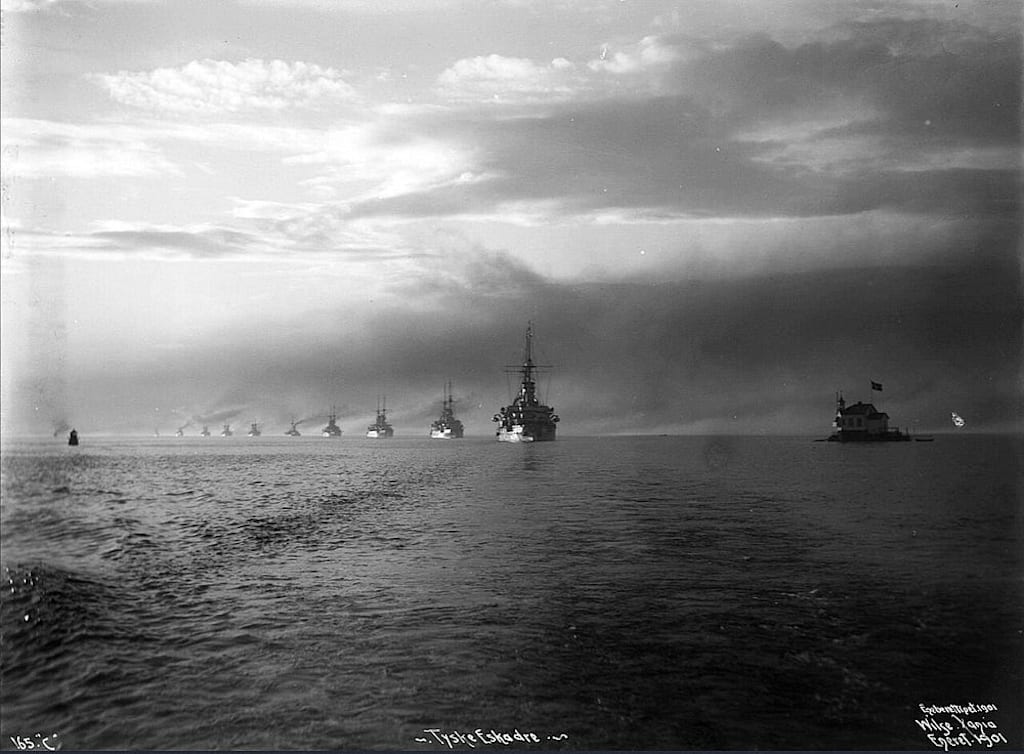
In the late 19th century, the Imperial German Navy began to expand. The Naval League inspired Germany to begin constructing more warships for its navy. In the early 20th century, Germany’s naval expansion continued unabated.
An Anglo-German naval race emerged in which both the Royal Navy and Imperial German Navy constructed battleships in ever-increasing numbers. During the race, the Royal Navy was the first to add the new Dreadnought class of battleship to its navy. However, the Germans would later introduce their own Dreadnought battleships. The Imperial German Navy also invested in U-boats, which were early submarines. The race continued up until the First World War, and while the Royal Navy remained the largest navy, it still had to establish new naval treaties with France as the Imperial German Navy had greatly expanded.
As World War One began, Britain declared war on Germany after German troops moved into Belgium. This was essentially an invasion, as Belgium had not granted German troops any right of passage. Now that Britain and Germany were at war, it was only a matter of time before their navies met at sea. The Battle of Heligoland Bight was an early naval battle that the Royal Navy won.
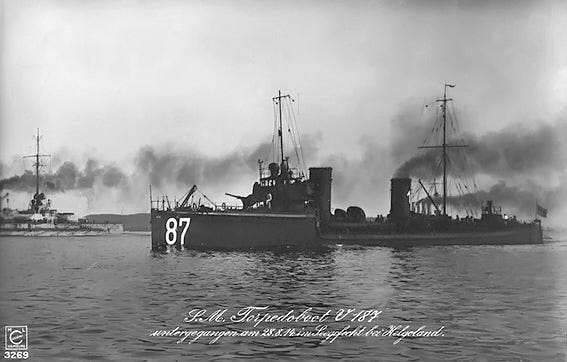
However, surface fleet action remained somewhat limited. Instead, German U-boats began to target British merchant shipping, which made British waters a war zone. Even non-military ships came into the line of fire of German U-boats, including the ocean liner Lusitania, which was sunk by a U-boat torpedo in 1915. Hereafter, German U-boat action was temporarily reduced.
In 1916, the Imperial German Navy drafted new plans for further surface fleet battles with the Royal Navy. As the Royal Navy’s economic blockade was increasingly effective, the German High Command sent its surface fleet out for further battles with the Royal Navy to break the economic blockade. By trapping and wiping out a large portion of the Royal Navy’s Grand Fleet, the Imperial German Navy could potentially break the economic blockade.
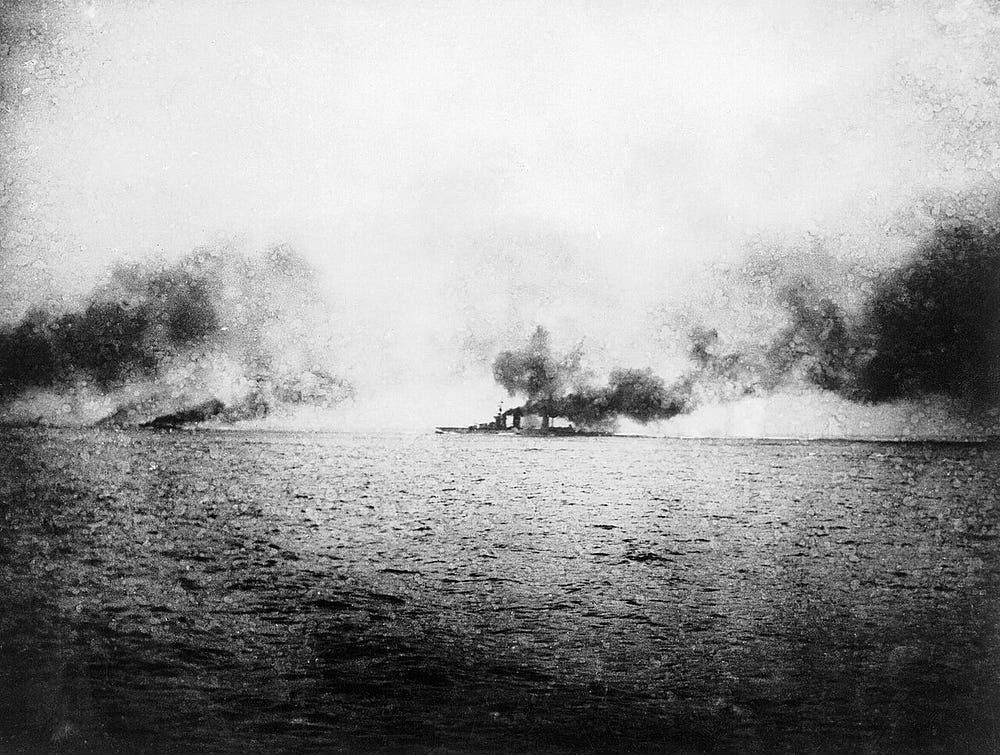
At the Battle of Jutland, the German High Seas Fleet and Royal Navy Grand Fleet met in what was the largest naval battle of World War One, and the largest in Germany’s naval history. The German High Seas Fleet was not necessarily defeated in this battle, and their fleet actually wiped out a larger tonnage of British ships. However, despite this, the Imperial German Navy did not make enough impact in the battle to break Britain’s economic blockade.
Germany’s Admiral Scheer convinced the German High Command that a U-boat campaign was the best way to defeat Britain and win the war. This would be a German economic blockade that targeted British merchant shipping. Throughout 1917, German U-boats resumed unrestricted submarine warfare, which at first was very effective as British merchant shipping losses increased markedly. However, as the Royal Navy expanded its convoy support, losses were gradually reduced. The campaign also ensured that the U.S. declared war on the German Empire.
By the end of 1918, the defeat of the German army in France brought the war to a close. Germany accepted an armistice in November after a naval mutiny in Kiel, which spread throughout Germany. Calls for an end to the war and abdication of the Kaiser were increasingly vocal, and with the German army retreating in France, Germany could not win the war. The end of this war marked the end of the Imperial German Navy as the Weimar Republic was established. The Treaty of Versailles also limited the new German navy to a meager tonnage of warships.
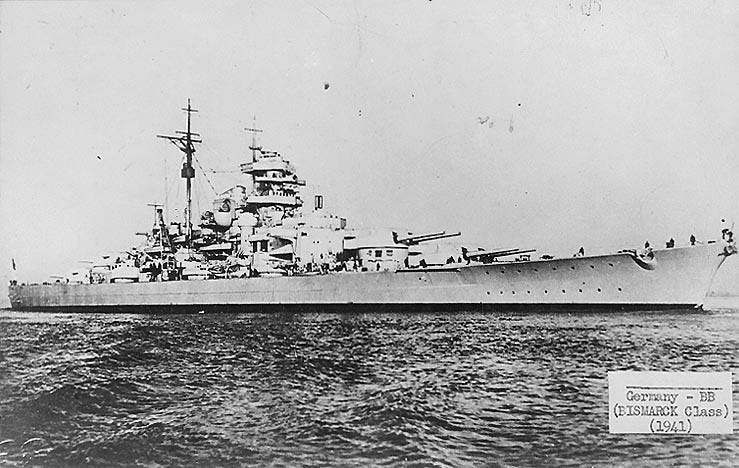
During the postwar era, the Germans gradually began to rebuild their navy, which became the Kriegsmarine in 1935. Although it could never match the size of the former Imperial German Navy, Germany began to invest in newer, more lightweight battleships such as the Graf Spee, which was less than 10,000 tons. The Kriegsmarine expanded quickly during the 1930s, and the German U-boat fleet was expanded during the 1930s. Construction of the Bismarck-class battleships, the Bismarck and Tirpitz, also began in the 1930s and would be completed by the early 1940s. These battleships displaced over 50,000 tons and were the largest in Europe when they were commissioned in 1941.
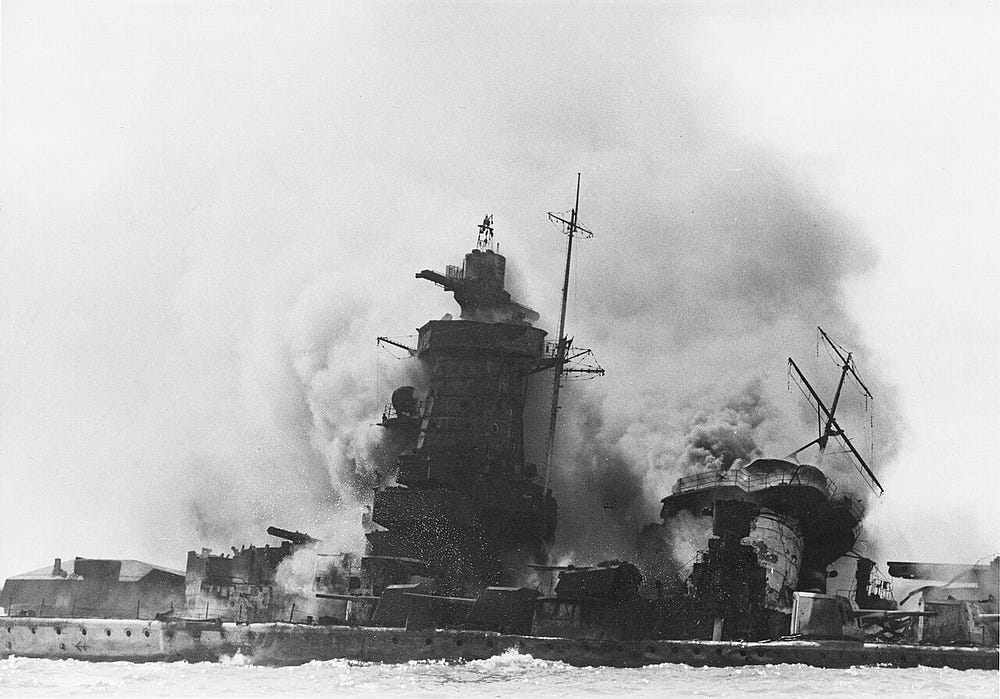
In 1939, Britain and France declared war on Germany, and the Kriegsmarine was soon called into action during the Phony War. The Graf Spee was intercepted by the Royal Navy whilst on a commerce raiding mission, and after the Battle of the River Plate, it made it to the port of Montevideo. However, as the ship could not remain in Montevideo, the Graf Spee was scuttled shortly after exiting the port.
The German U-boat campaign was most effective in the early 1940s, especially after the Kriegsmarine gained access to French ports. German Wolf Packs closed in on British merchant shipping, which was lost in increasing numbers. The U-boats seemed close to victory in the months of 1942, but the seizure of German cryptography material greatly enhanced the Allied detection of U-boats. Aircraft carriers and enhanced aerial reconnaissance also played their part in defeating the German U-boats, which were lost in increasing numbers during 1943.
Germany’s battleships were also sent on commerce raiding missions. Most notably the began its first, and only, commerce raiding mission in 1941. However, it did not reach any of its intended merchant ship targets despite sinking the HMS Hood at the Battle of the Denmark Strait. A RAF aircraft was able to jam the Bismarck’s rudder, which ensured that the Royal Navy surface ships could close in and take out the battleship. The Tirpitz remained in action until 1944, when the RAF Dambuster squadrons could wipe the ship out.
By the end of the war, there was little of the Kriegsmarine left. The defeat of Germany and its surrender in 1945 ended the war in Europe. In the postwar era, their remaining ships fell into the hands of the Allies.
The rise of West Germany marked a new era for the German Navy. In 1956, West Germany joined NATO, and so a new navy was established. This new navy was the Federal Navy, or the Bundesmarine, which remained as such until German unification. Hereafter, the Bundesmarine became the Deutsche Marine, which translates to German Navy.
In the 20th century, the German navy undoubtedly had a notable impact in both world wars. Both the Imperial German Navy and the Kriegsmarine had some formidable battleships in their surface fleets, and their U-boats were especially effective. However, like most European navies, the German navy is now somewhat smaller than it was before the decline of the European empires.
This article of mine was previously submitted to Medium.com, where you can read it here.
About the Creator
Matthew A
Matthew is the author of Battles of the Pacific War 1941-1945. Battles of the Pacific War is available on Amazon and Lulu in e-book and paperback formats. Check out the book’s blog at battlesofthepacificwar.blogspot.co.uk.
Enjoyed the story? Support the Creator.
Subscribe for free to receive all their stories in your feed.
Comments
There are no comments for this story
Be the first to respond and start the conversation.