
The History of the German Empire in the 19th Century
Remembering the Rise of Imperial Germany
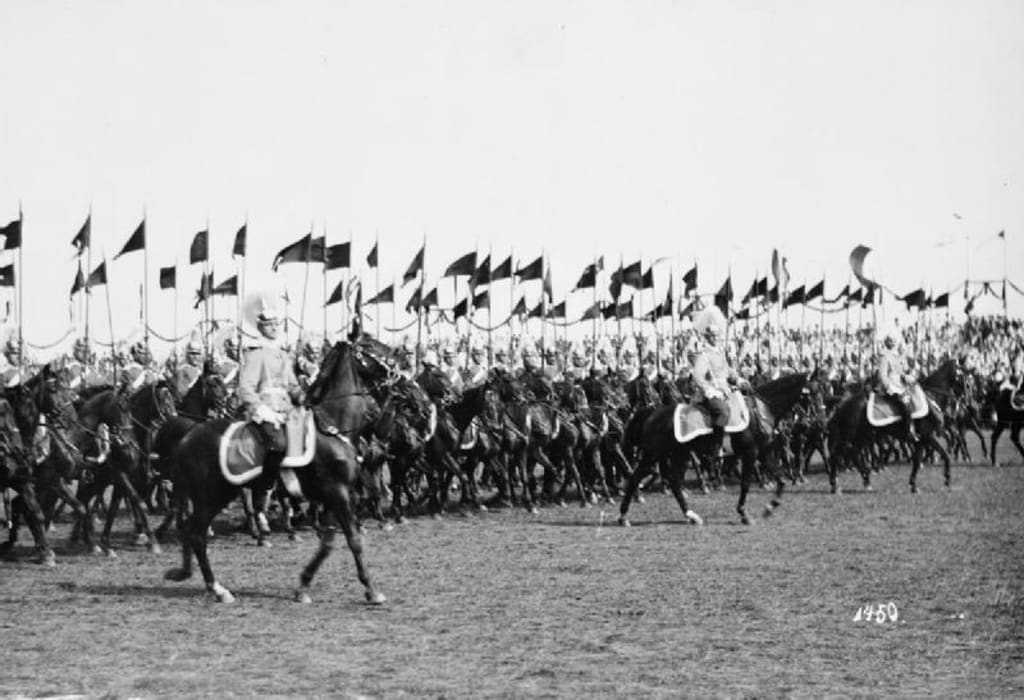
The German Empire was established in the 19th century. When Germany was united, Wilhelm was crowned king. Thereafter, the empire gradually expanded into overseas territory in Africa.
It was in 1871 that Bismarck's Prussian army triumphed in the Franco-Prussian War. This victory paved the way for German unification. The capital of the German Empire was Berlin, in Prussia. Wilhelm became king of the new German Empire, and Bismarck was appointed foreign minister.

The unification of Germany ensured an economic boom thereafter. Germany spearheaded the Second Industrial Revolution. They had an abundance of coalfields and iron deposits in industrial regions such as the Rhineland. During this period, German steel producers, such as Krupp, and German chemical firms greatly expanded. The German Empire soon emerged as a leader in a variety of heavy industries.
Bismarck began to establish a series of European treaties in 1879. The Dual Alliance with Austria-Hungary was among the first. This became a key part of German foreign policy, as Austria included many Germans. They had been left out of the German Empire, but with an alliance, they could still combine their two armies.
That alliance was later expanded with the Triple Alliance in 1881. The Triple Alliance included the Italian Empire, alongside Germany and Austria-Hungary. The empires pledged military support for others within the alliance. It was one of the first European alliance blocs to emerge, which encompassed much of Central Europe.

Beyond Europe, the Germans began to establish colonies in Africa. Among their more notable acquisitions was that of Togoland in West Africa, which became a German protectorate in 1884. The German colonialists also consolidated in Eastern Africa by establishing the Protectorate of German East Africa. These were vast territories in Africa, but the empire was still somewhat smaller than the French and British empires.
With the Germans expanding in Africa, a conference was held in Berlin. The Berlin Conference of 1884 included delegates from the primary European empires in Africa. They met to establish clearer guidelines for colonial settlement in Africa. During the conference, they also laid down clearer borders between their African territories. During this conference, the first clear modern-day borders on the continent were established.
In 1891, a new era began for the German Empire. It was then that Wilhelm II became king of Germany. Soon after, Bismarck resigned as foreign minister. That began a period in which the German Empire would pursue alternative foreign policies, whilst maintaining some of the previous alliances.
The Reinsurance Treaty with Russia was one that was abandoned. It was clear that an alliance combining Austria-Hungary and the Russian Empire was not entirely feasible. Then the Russian king would begin to turn to Western Europe for future allies.
On the high seas, the German Empire's shipping industry was among the first to provide some notable competition for Britain. The Kaiser Der Grosse ocean liner first sailed in 1897. This ship had extravagant interior decors, and soon set new Blue Riband records for transatlantic crossings. Soon after, further similar Kaiser-class ocean liners were constructed.

However, the Imperial German Navy was not especially comparable to the Royal Navy. To further support the expansion of Germany's navy, Tirpitz established the German Navy League in 1898. This league ensured greater finances for the expansion of their navy, laying the foundations for an Anglo-German naval race in the decade that followed.
By the end of the 19th century, Germany was one of the leading industrial nations. Their empire encompassed considerable territory in Africa, and their alliance bloc covered much of Central Europe. The German Empire was also quickly militarizing with the expansion of both its army and navy. Whilst peace remained in Europe, a European arms race began.
About the Creator
Matthew A
Matthew is the author of Battles of the Pacific War 1941-1945. Battles of the Pacific War is available on Amazon and Lulu in e-book and paperback formats. Check out the book’s blog at battlesofthepacificwar.blogspot.co.uk.
Enjoyed the story? Support the Creator.
Subscribe for free to receive all their stories in your feed.
Comments
There are no comments for this story
Be the first to respond and start the conversation.