
The History of Cunard Line Up to the Cunard-White Star Merger
Remembering the History of the Cunard Line
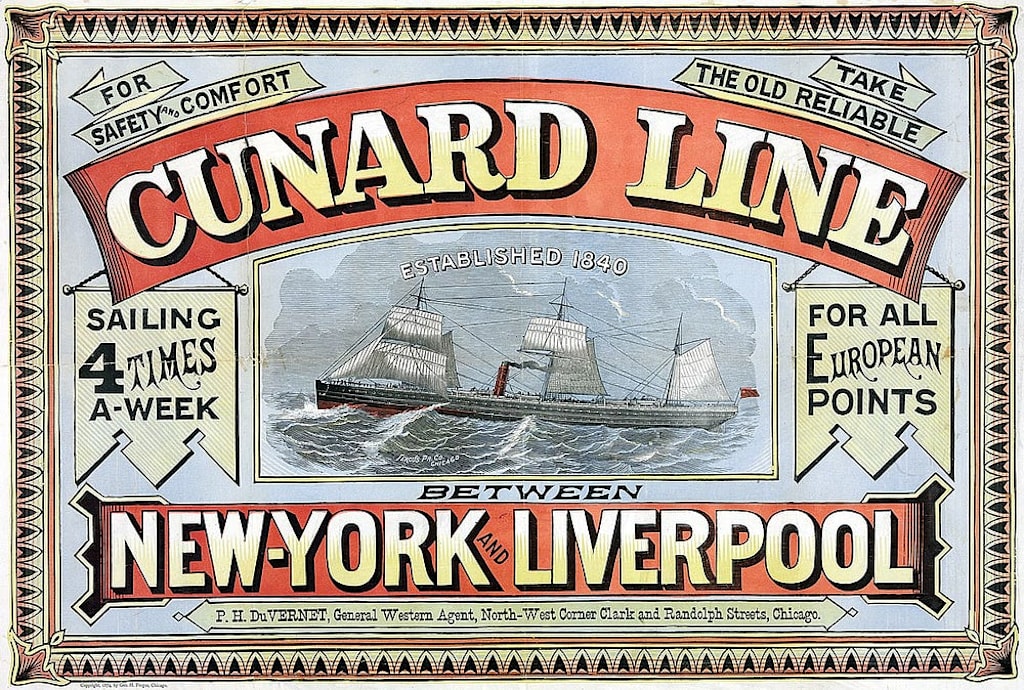
Cunard Line was originally the British and North American Royal Mail Steam Packet Company. They remained as such until recognition in 1879. As they switched to a stock corporation, Cunard Steamship Company, Ltd. became the official title of the shipbuilding company.
Thereafter, Cunard added new Blue Riband ocean liners to their fleet. Among them was the Oregon, which was later lost at sea in 1886. Others, such as the Etruria and the Umbria, also became a part of the Cunard fleet. They, too, were record-breaking ocean liners that sailed into the 20th century.
Later additions to Cunard's fleet were the Lucania and Campania. The Campania was an ocean liner that had a displacement of approximately 18,450 tons. As such, it was the largest ocean liner afloat in 1893. The Lucania was its sister ship that had similar design specifications.
However, the German ocean liners, such as the Kaiser Wilhelm Der Grosse, eclipsed Cunard's ships in both scale and speed. The Kaiser Wilhelm Der Grosse included extravagant interior decor and clinched the Blue Riband for transatlantic crossings. It was the first of the Kaiser-class ocean liners that provided a notable alternative to Cunard's ships.
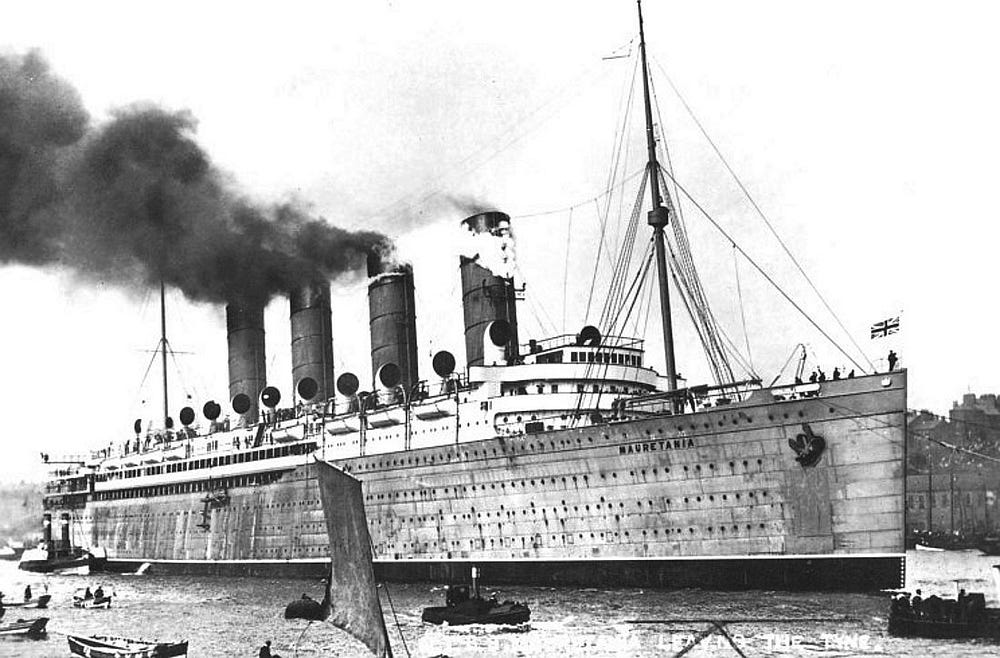
To regain the Blue Riband, Cunard drafted two new ocean liners. In 1901, the first blueprints for an ocean liner that would eclipse 23 knots were laid down. Cunard began constructing the Mauretania on the Tyne. The final design of the Mauretania included four funnels, as well as Parsons steam turbines for the ocean liner's propulsion. The ship had an Edwardian interior decor and included a Verandah cafe on the boat deck.
The Mauretania entered service in 1907. When it first sailed, it was the largest ship afloat, with a tonnage of some 31,938. Soon after its maiden voyage, the ocean liner set a new Blue Riband eastbound record and later also set a westbound record.
The Lusitania also sailed in 1907. The ship briefly held the Blue Riband record, and aside from the Mauretania, few ocean liners could match it. White Star's Olympic-class ships might have eclipsed their scale, but the ships' engines were not comparable to Cunard's greyhound ocean liners.
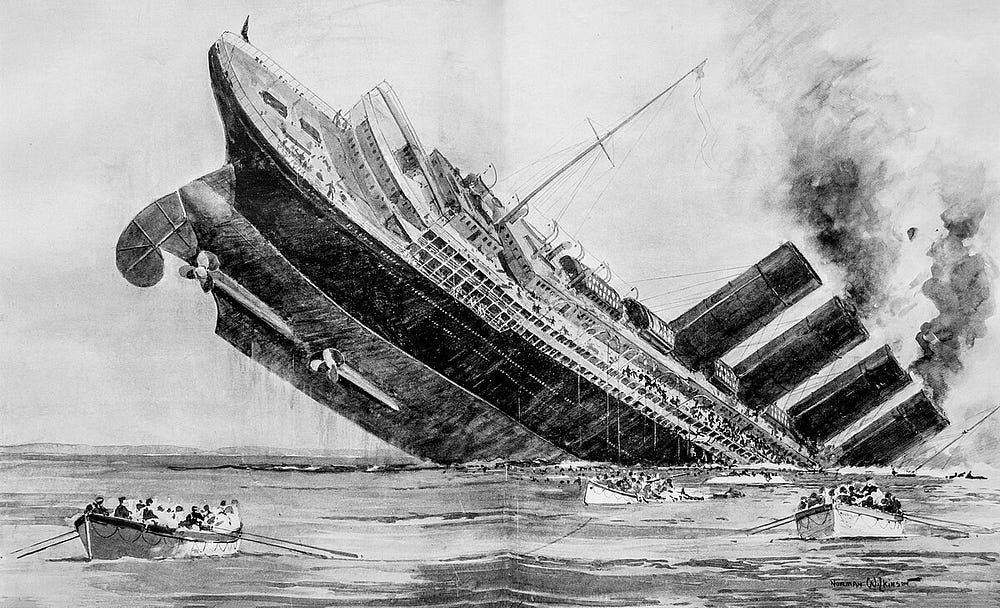
Despite the outbreak of war, the Lusitania continued transatlantic voyages in 1915. During one voyage, a German U-boat intercepted the ocean liner off the coast of Ireland. It fired one torpedo that shattered the Lusitania. The torpedo's impact caused the ship to sink soon after, leaving little time to abandon it. Most of those aboard were lost at sea.
Having lost the Lusitania, Cunard acquired the German ship Berengaria after the war. With a 52,117-ton displacement, this was the largest postwar Cunard ocean liner. As the White Star fleet declined, Cunard gradually expanded.
During the interwar period, the German ocean liner Bremen broke the Mauretania's Blue Riband record. As such, it was clear that Cunard had to add new ocean liners to their fleet to regain the cherished record. In 1930, Cunard began constructing the Queen Mary ocean liner, which, when complete, had an overall tonnage of 81,237 tons.
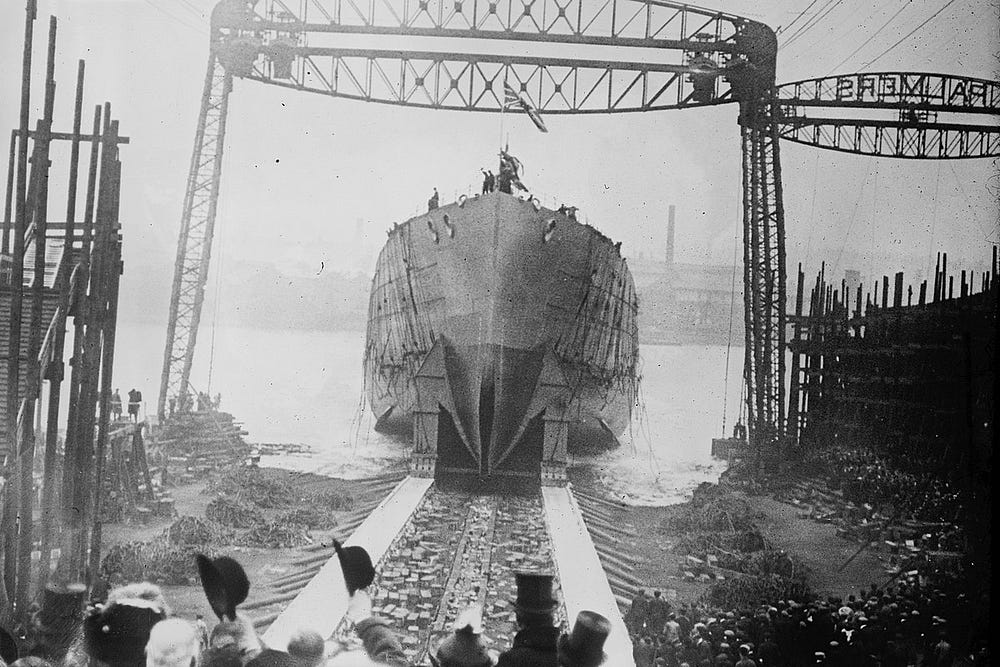
Cunard constructed the ocean liner when the shipping industry was declining. The economic downturn of the 1930s raised doubts as to whether Cunard could finance the construction of the Queen Mary. In 1931, Cunard halted hull construction.
Consequently, Cunard merged with White Star to ensure the full construction of the Queen Mary. They were also granted additional loans when they merged. Cunard and White Star merged to establish the Cunard-White Star Line in 1934, and in 1936, the Queen Mary sailed.
Cunard dominated the merger with White Star. White Star was later erased from the company's title. Then, it reverted to the Cunard Line and, with new ships, remained a notable shipping company despite the gradual decline of ocean liners.
This article of mine was originally submitted to Medium.com, where you can read it here.
About the Creator
Matthew A
Matthew is the author of Battles of the Pacific War 1941-1945. Battles of the Pacific War is available on Amazon and Lulu in e-book and paperback formats. Check out the book’s blog at battlesofthepacificwar.blogspot.co.uk.
Enjoyed the story? Support the Creator.
Subscribe for free to receive all their stories in your feed.
Comments
There are no comments for this story
Be the first to respond and start the conversation.