
The Ghost of the Steppe
A Noyan’s Vow and the Blood of Empires
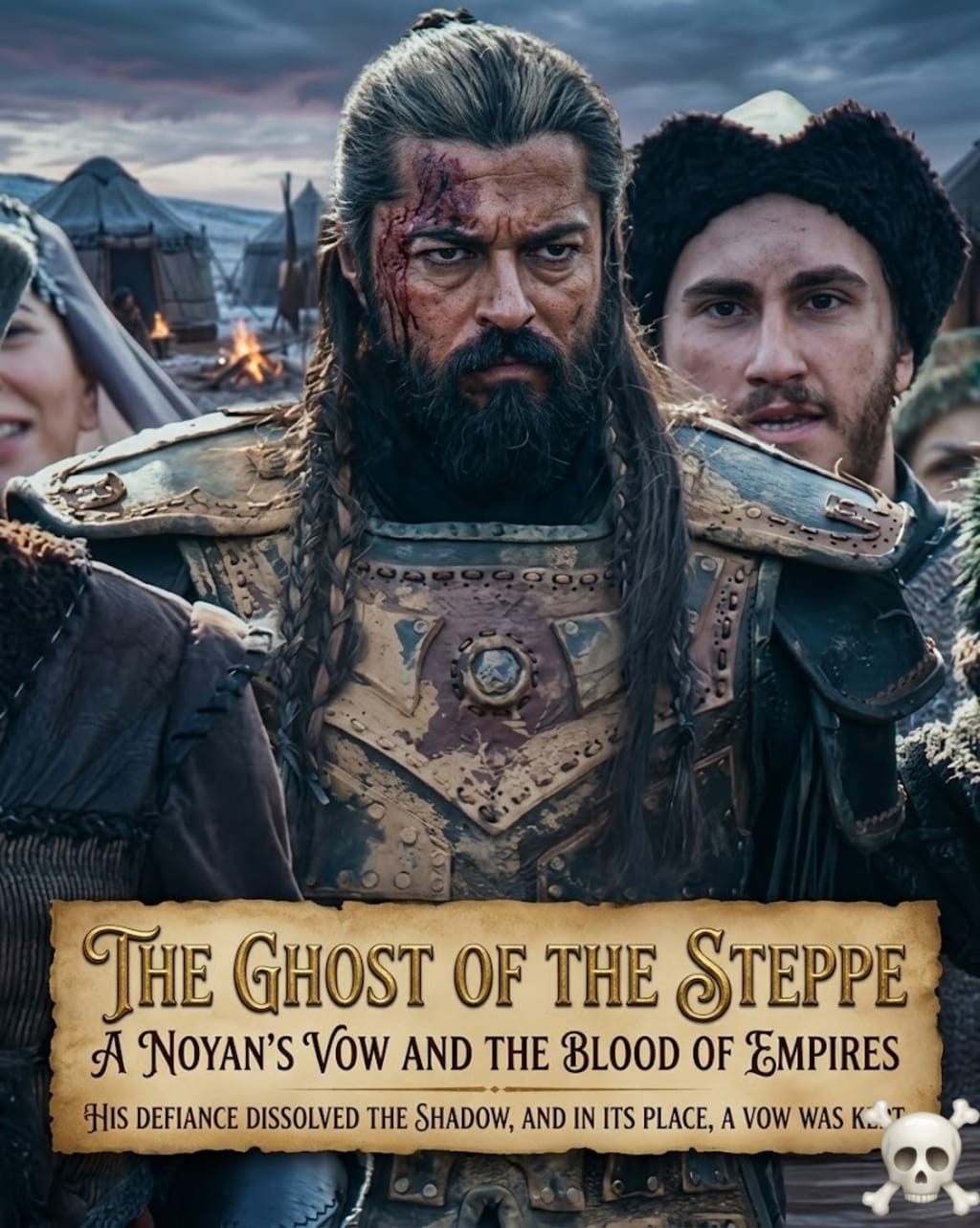
The wind did not howl across the Khentii Mountains; it screamed, a jagged, mournful sound that tore through the felt walls of Noyan Batu’s command tent. Outside, the night was a void of suffocating blackness, broken only by the shivering orange embers of a dying campfire. Batu sat motionless, his fingers tracing the topography of a silk map spread across a low wooden table.
He was not looking at the borders of kingdoms or the locations of enemy encampments. He was looking at the price of the road he had traveled.
Batu, a man whose name was once synonymous with the relentless momentum of the Great Khan’s vanguard, was now a specter. His commanders whispered that he had seen too much—that the ghosts of the cities he had leveled now occupied the spaces behind his eyes. They were not entirely wrong. Beneath the heavy, fur-lined robes and the iron-reinforced lamellar armor, Batu carried a burden heavier than any blade: a vow whispered to a dying princess in the ruins of a conquered citadel three winters ago.
“The blood must stop, Batu. Not by the sword, but by the breaking of the cycle.”
He had sworn it. At the time, it had seemed like the madness of a dying woman. Now, as the Great Khan’s emissary waited impatiently outside the tent, demanding the final strike against the last sovereign stronghold of the Khwarazmian remnants, the vow felt like a noose.
Batu stood, his joints popping with the dry friction of age and iron. He stepped out of the tent into the freezing air. The camp was a sprawling sea of movement; thousands of warriors were sharpening blades, checking bowstrings, and tending to their horses. To the world, this was the mightiest war machine ever assembled. To Batu, it was a ravenous beast that demanded constant feeding.
His lieutenant, Subutai—a man younger, sharper, and hungrier for glory—approached with a low bow. "Noyan, the scouts have returned. The enemy’s gates are brittle. We strike at dawn?"
Batu looked at the horizon, where the first faint, sickly gray of morning light was beginning to bruise the sky. "The empire demands blood, Subutai," Batu said, his voice as dry as the plains. "It believes that by drowning the world in it, we build a foundation that will last forever."
"And will it not?" Subutai asked, his eyes flashing with the zeal of the unscarred.
Batu turned to him. "An empire built on the screams of the conquered is not a foundation; it is a grave. Every life we take today is a seed for a resentment that will bloom in the hearts of our children’s children. They will rise, and they will burn what we have built."
Subutai frowned, confused by the shift in his commander’s temperament. "The Khan’s orders are absolute."
"The Khan’s orders are temporary," Batu countered. "The land is eternal."
Batu walked toward the center of the camp, where his black stallion waited. He did not mount it. Instead, he gripped the reins and walked past the rows of tethered steeds, through the silent ranks of men who looked to him as a god of war. He reached the edge of the plateau, looking down into the valley where the enemy fortress sat—a pathetic, stone-caged relic clinging to the cliffs.
He drew his curved blade, its surface etched with the patterns of a lifetime of slaughter. The metal was cold, biting into his palm. He knew that if he signaled the charge, the fortress would fall by midday. He would be rewarded, the empire would grow, and the cycle would continue to spin, grinding the lives of the innocent into dust.
He thought of the princess’s eyes—the clarity in them, devoid of the hatred he expected. She had not asked for vengeance; she had asked for a choice.
Batu raised his sword, and for a heartbeat, the entire army held its breath. The silence was absolute, a vacuum waiting for the order to kill. But the command that tore from Batu’s throat was not for death.
"Dismount!" he commanded, his voice echoing off the canyon walls.
The soldiers hesitated, stunned. Subutai moved forward, hand on his own hilt. "Noyan?"
Batu ignored him, sheathing his blade. He turned his back on the enemy, facing his own army. "The war ends here. Not because we were defeated, but because we are done feeding the ghost of what we once were. We march home. Any man who seeks to stay and spill blood for the sake of empty soil is free to desert, but he does so as an exile, not a warrior of the Khan."
He knew the consequences. To defy the Khan was to invite an executioner’s rope. But as he looked at the rising sun, for the first time in twenty years, the shadow that had dogged his heels seemed to dissolve. He had broken the cycle. He was no longer the Ghost of the Steppe; he was, finally, a man who had kept his word. And as he turned his horse away from the valley of death, the silence that followed was not the quiet of a grave, but the breath of a new, uncertain peace.
About the Creator
Enjoyed the story? Support the Creator.
Subscribe for free to receive all their stories in your feed.
Comments
There are no comments for this story
Be the first to respond and start the conversation.