
The Five Greatest Ocean Liners in History
Remembering the World's Greatest Liners

In the early 20th century, White Star Line and the Cunard Line designed and launched numerous ocean liners. However, in the latter half of the 20th century, ocean liners began to decline as passenger aircraft took off. Despite this, some great ocean liners were still constructed after the 1950s. These are a few of the great ocean liners.
The Lusitania
The Lusitania was one of the great ocean liners of the early 20th century, which first sailed in 1907. In that year, the Lusitania emerged as the finest ocean liner when it claimed the Blue Riband record. Although this record was not held, the Lusitania briefly reclaimed the Blue Riband in 1909 before the Mauretania broke it.
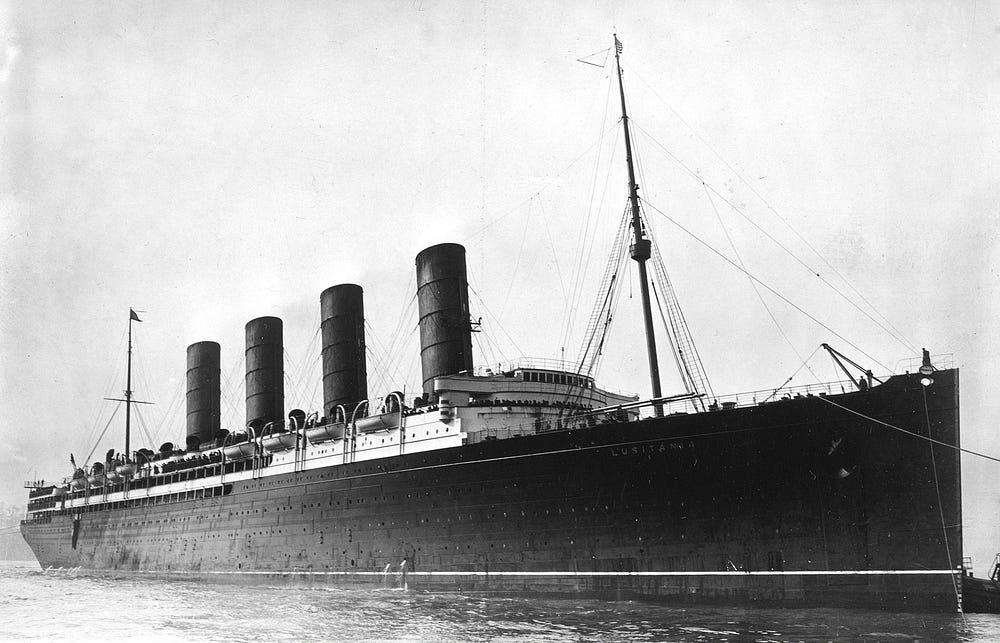
During the war years from 1914, the Lusitania began to transport munitions as well as passengers. With German U-boat activity increasing, the Lusitania became a potential target for U-boats, and in 1915, it was torpedoed by one of them off the south coast of Ireland with thousands of passengers aboard. Hundreds got off onto lifeboats, but there was too little time to fully abandon ship.
As such, the Lusitania joined other great ocean liners at the bottom of the sea. It was a great ship that had lavish interiors decorated with a variety of historical styles, and although it was smaller than Olympic-class ships, it was also faster.
The Mauretania
The Mauretania was an altogether faster ship than the Lusitania. As mentioned, it reclaimed the Blue Riband in 1909, and retained this record for a couple of decades. As such, it was the fastest ship of its day.
Like the Lusitania, the Mauretania also sailed during the First World War. It had a more specific military role as a troopship during the Gallipoli Campaign. Its fast speed and camouflage ensured that it was not shot out of the water by German U-boats.
After this war, it returned to passenger trips during the 1920s and 1930s. It continued until 1934 when Cunard Line decommissioned it. Undoubtedly, it was one of the great ocean liners of its period.
The Titanic
The Titanic was an Olympic-class liner constructed by Harland and Wolff in the dockyards of Belfast. The Titanic was the largest ship to be constructed when it first sailed in 1912. As such, it carried more than 2,000 passengers for its maiden voyage from Southampton to America.
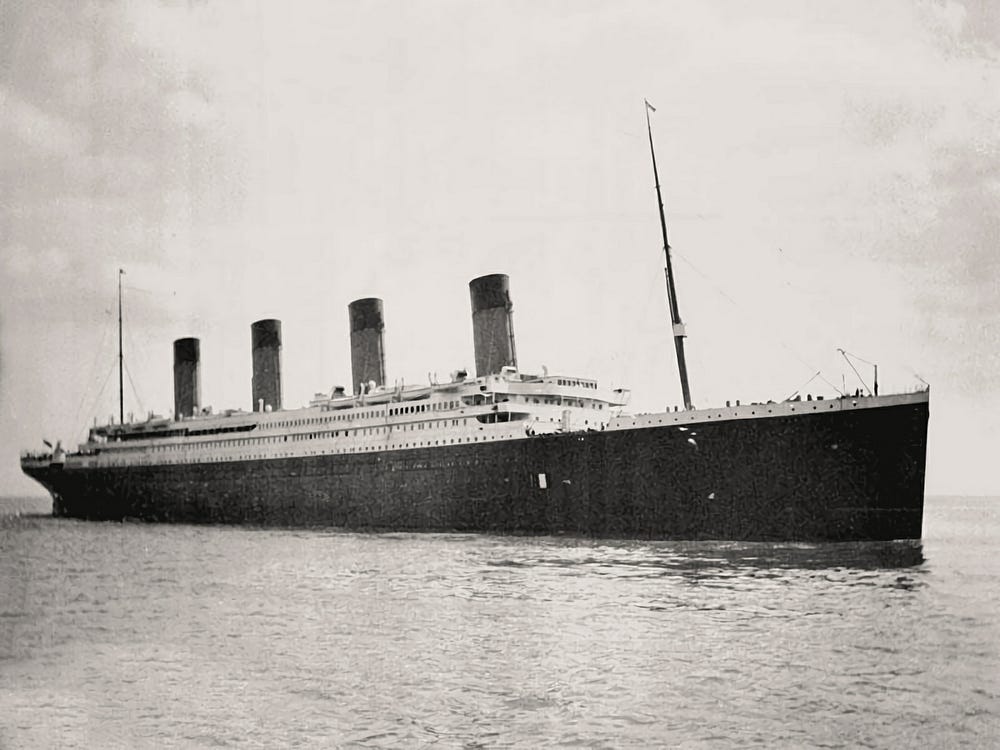
The ship sailed for a few days before it struck an iceberg in the Atlantic. The iceberg penetrated five of its watertight compartments, enough to ensure that the ship could not stay afloat for long as water flooded in. The Titanic had an insufficient number of lifeboats, with enough to evacuate barely 50% of its passengers. Only a relatively small proportion of the passengers could be saved.
After the Titanic's demise, films have covered the ship’s history. These films date back almost 100 years since the sinking, and Cameron's Titanic film set new records as the film won 11 Academy Awards. The most recent Titanic film is Titanic 2, but that is about a second Titanic 2 ship in the 2012 anniversary year.
RMS Queen Elizabeth
In 1938, the RMS Queen Elizabeth first sailed. It was the largest passenger ship to have been constructed, and remained so for much of the 20th century. The ship was larger than the largest battleships, such as the Battleship Yamato, which first sailed a couple of years later, in 1941, and was approximately 70,000 tons.
Like the Yamato, this great passenger ship also had a military role as it was converted to a troop transport ship during the early 1940s. During this period, it is estimated that the ship transported 750,000 soldiers, and unlike the Lusitania, it was never torpedoed by a German U-boat. Because of the ship's maximum speed, it could outrun the U-boats, and so it did not require heavy convoy escorts.
In the 1950s, the RMS Queen Elizabeth returned to transporting passengers. The RMS Queen Elizabeth would continue until the late 1960s. By 1969, it was replaced with the RMS Queen Elizabeth 2, although this was smaller than the original RMS Queen Elizabeth.
The RMS Queen Elizabeth 2
The successor to the RMS Queen Elizabeth was one of the last great transatlantic liners. The QE2 was the last oil-fired steamship. The ship undertook regular cruises to various destinations from 1969 up until 2004. As such, the ship has now been retired after over 30 years of cruising.
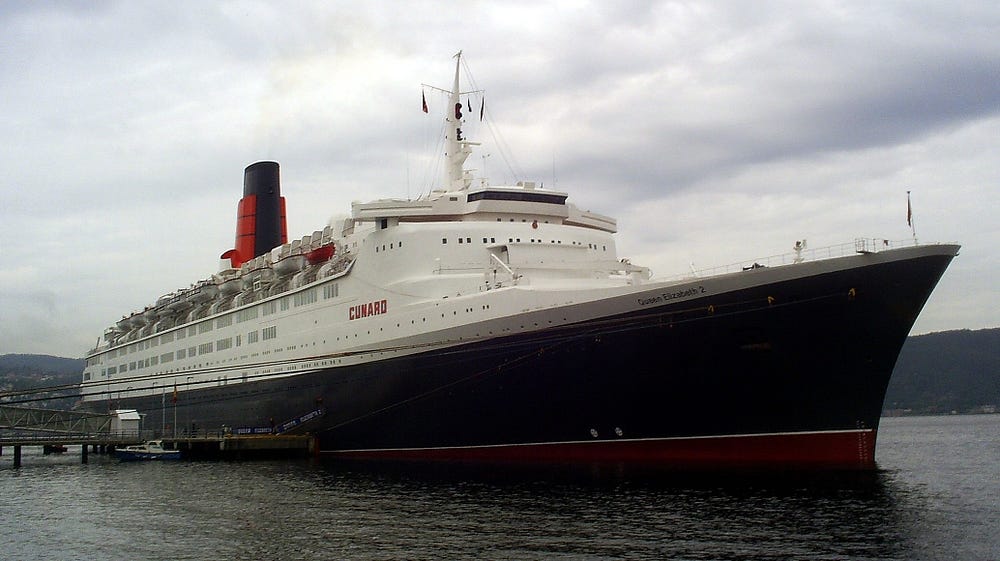
These are a few of the great ocean liners. These were ships of scale, speed, and genuine class that (except for the Titanic) transported thousands of passengers from Europe to America and beyond.
This article of mine was originally submitted to Medium, where you can read it here.
About the Creator
Matthew A
Matthew is the author of Battles of the Pacific War 1941-1945. Battles of the Pacific War is available on Amazon and Lulu in e-book and paperback formats. Check out the book’s blog at battlesofthepacificwar.blogspot.co.uk.
Enjoyed the story? Support the Creator.
Subscribe for free to receive all their stories in your feed.
Comments
There are no comments for this story
Be the first to respond and start the conversation.