
The Epic Love Story of Inanna and Dumuzi: The World’s Oldest Romance of Passion, Power, and Renewal
The Epic Love Story of Inanna and Dumuzi: The World’s Oldest Romance of Passion, Power, and Renewal

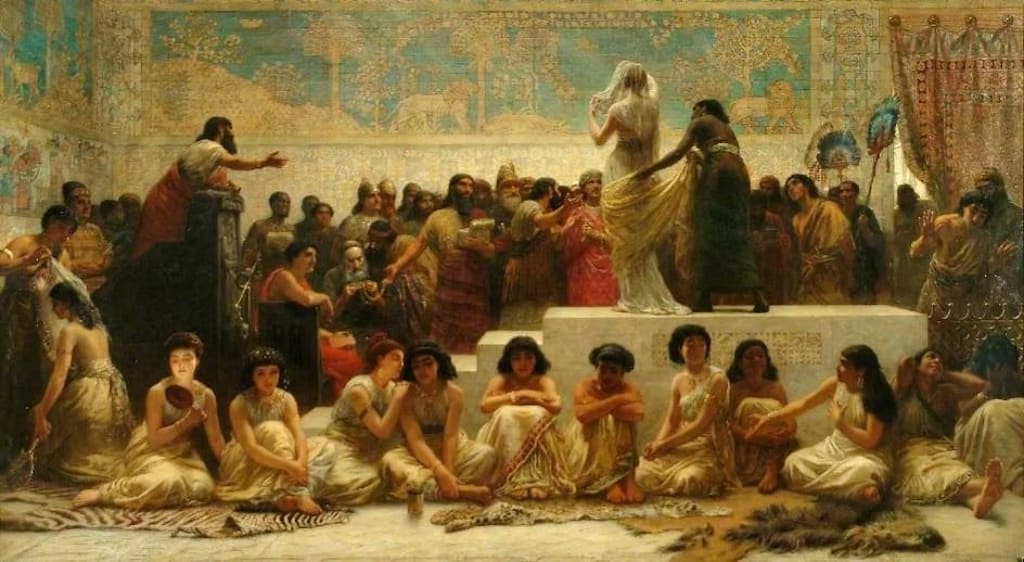
In the cradle of civilization, along the fertile banks of the Tigris and Euphrates rivers more than 4,000 years ago, the ancient Sumerians told stories that still resonate today. Among the most powerful and enduring is the love story of Inanna, the Queen of Heaven and Earth, and Dumuzi (also known as Dumuzid or later Tammuz), the shepherd-king. This tale, preserved on clay tablets in cuneiform script, combines erotic passion, divine politics, sacred ritual, tragic loss, and cyclical renewal. It is often called one of the world’s first epic love stories—tender, sensual, shocking, and profound.
Who Were Inanna and Dumuzi?
Inanna (later known as Ishtar in Akkadian/Babylonian traditions) was one of the most important deities in the Sumerian pantheon. She embodied love, sensuality, fertility, procreation, and war. Often depicted with symbols like the eight-pointed star and the lion, she was a complex figure—fierce, ambitious, erotic, and transformative. As the patron goddess of Uruk (one of Sumer’s greatest cities), she represented both the creative forces of life and the disruptive power of desire and conflict.
Dumuzi, a shepherd-god (sometimes associated with vegetation and the date palm), began as a mortal king of Uruk in legendary history before becoming deified. He symbolized the fertile spring, abundance, and the masculine creative force that complements Inanna’s power. In many texts, he is called “the honey-man,” “the wild bull,” or “Amaushumgalanna” (related to the date palm). Their union represented the harmonious meeting of heaven and earth, city and countryside, goddess and king.
Their story is not a simple romance. It intertwines personal passion with cosmic responsibilities: the fertility of the land, the prosperity of the people, and the cycle of seasons and life itself.
The Courtship: Passionate Pursuit and Divine Choice
The courtship begins with Inanna seeking a suitable husband. Her brother, the sun god Utu, advocates for Dumuzi the shepherd over a rival farmer. In one hymn, Inanna debates the merits:
“The shepherd Dumuzi will be my husband...
He will be the one my womb loves best.
His hand is honey, his foot is honey,
He sweetens me always.”
Dumuzi proves persistent. In poetic dialogues, he brings gifts of milk and cream, boasts of his flocks, and declares his worth. Inanna, initially hesitant, is won over by his charm and divine favor. Their exchanges are delightfully erotic and playful, full of metaphors of plowing fields, harvesting dates, and sweetening with honey—symbolizing both physical union and agricultural abundance.
One vivid passage captures their growing desire:
“My vulva, the Boat of Heaven,
Is eager as the new moon.
My untilled land lies fallow.
Who will plow my vulva?
Who will plow my high field?”
Dumuzi replies boldly: “Great Lady, I will plow your vulva. I, Dumuzi the King.” Their union is celebrated as joyful and mutually fulfilling. Ancient poets describe them making love repeatedly, emphasizing pleasure, equality in passion, and the life-giving results.
These love songs were not mere entertainment. They formed part of a rich literary tradition, with collections like those edited by scholar Yitschak Sefati preserving dozens of Dumuzi-Inanna hymns that blend romance with ritual purpose.
The Sacred Marriage: Ritual, Kingship, and Fertility
The heart of their story is the Sacred Marriage (hieros gamos), a central ritual in Sumerian religion, especially in Uruk and later cities like Isin. Each year, often during the New Year or spring festivals, the king of the city would ritually marry the goddess Inanna—embodied by a high priestess. By taking the role of Dumuzi, the king ensured the land’s fertility, the people’s prosperity, and the favor of the gods.
The rites were joyous and ecstatic. Hymns describe Inanna being bathed, perfumed, and adorned, while Dumuzi processes to her temple. Their consummation—whether symbolic or enacted—symbolized the union of opposites: male and female, shepherd and queen, heaven and earth. This sacred act was believed to awaken nature, bring spring rains, and guarantee bountiful harvests.
Historian Thorkild Jacobsen noted that in cities like Isin, this annual union literally “signifies and is the reawakening of nature in spring.” The king, as Dumuzi, and the priestess, as Inanna, enacted a divine drama that sustained the cosmic order.
These rituals influenced later traditions, including echoes in the biblical Song of Songs, which shares sensual imagery and themes of love with the Sumerian hymns.
The Descent of Inanna: Tragedy and Transformation
The romance takes a dark turn in the famous Descent of Inanna into the Underworld (circa 1900–1600 BCE), one of the oldest surviving epic poems. Inanna, driven by ambition or curiosity, decides to visit her older sister Ereshkigal, Queen of the Underworld. She prepares carefully, instructing her attendant Ninshubur on what to do if she does not return.
At each of the seven gates of the underworld, Inanna is stripped of her royal garments and symbols of power—crown, jewelry, robe—until she arrives naked and vulnerable before Ereshkigal. The judges of the underworld strike her dead, and her body is hung on a hook like a piece of meat.
Ninshubur raises the alarm. After other gods refuse help, the wise god Enki creates two beings who descend and revive Inanna with the food and water of life. But there is a price: Inanna must provide a substitute to take her place in the underworld.
Returning to earth, Inanna finds her husband Dumuzi not mourning but sitting proudly on his throne. In anger, she fixes him with the “eye of death” and condemns him to the underworld. The galla (demons) seize him.
Dumuzi flees, praying to Utu for transformation (into a snake or gazelle in some versions), but he is eventually captured. His sister Geshtinanna (goddess of wine and vegetation) mourns deeply and offers to share his fate. A compromise is reached: Dumuzi spends half the year in the underworld, and Geshtinanna the other half. This explains the cycle of seasons—Dumuzi’s time above brings growth and harvest; his absence brings dormancy.
The poem explores themes of power, vulnerability, death, and rebirth. Inanna’s descent is a journey of transformation: she loses her outward power but gains wisdom about life, death, and balance.
Legacy and Cultural Impact
The Inanna-Dumuzi cycle influenced countless later myths. Dumuzi evolved into Tammuz, whose mourning appears in the Bible (Ezekiel 8:14). The dying-and-rising god motif echoes in stories of Osiris, Adonis, and even aspects of Christian resurrection narratives.
Their love songs represent some of the earliest erotic literature, predating the Bible by nearly two millennia. The sacred marriage ritual reinforced kingship and social order while celebrating sexuality as a divine, life-affirming force.
In modern times, the story fascinates scholars of mythology, feminism, and psychology. Inanna’s descent is often interpreted as a heroine’s journey—facing the shadow, confronting death, and emerging renewed. Jungian analysts see it as a model for psychological integration.
Why This Ancient Love Story Still Matters
The tale of Inanna and Dumuzi is more than an ancient romance. It reflects humanity’s deepest concerns: the interplay of love and power, the necessity of loss for renewal, and the sacredness of physical union. In a world where fertility meant survival, their story assured people that even death is part of a greater cycle of life.
As scholar Diane Wolkstein noted, this story—tender, erotic, shocking, and compassionate—is more than entertainment. It reminds us that love involves risk, transformation, and the willingness to descend into darkness for the sake of wholeness.
Today, as we read these 4,000-year-old words on clay, we connect with our ancestors’ hopes, desires, and wisdom. The Queen of Heaven and her honey-man shepherd continue to teach us about passion, sacrifice, and the eternal dance of life and death.
Further Reading Recommendations:
Inanna: Queen of Heaven and Earth by Diane Wolkstein and Samuel Noah Kramer
Translations of The Descent of Inanna and Dumuzi-Inanna love songs by scholars like Yitschak Sefati
Primary texts available through academic resources on Sumerian literature
About the Creator
Enjoyed the story? Support the Creator.
Subscribe for free to receive all their stories in your feed.
Comments
There are no comments for this story
Be the first to respond and start the conversation.