
The D-Day Deception: The Double Agents Who Tricked a Dictator
How a network of eccentric spies, playboys, and a phantom army built the greatest military lie in human history.
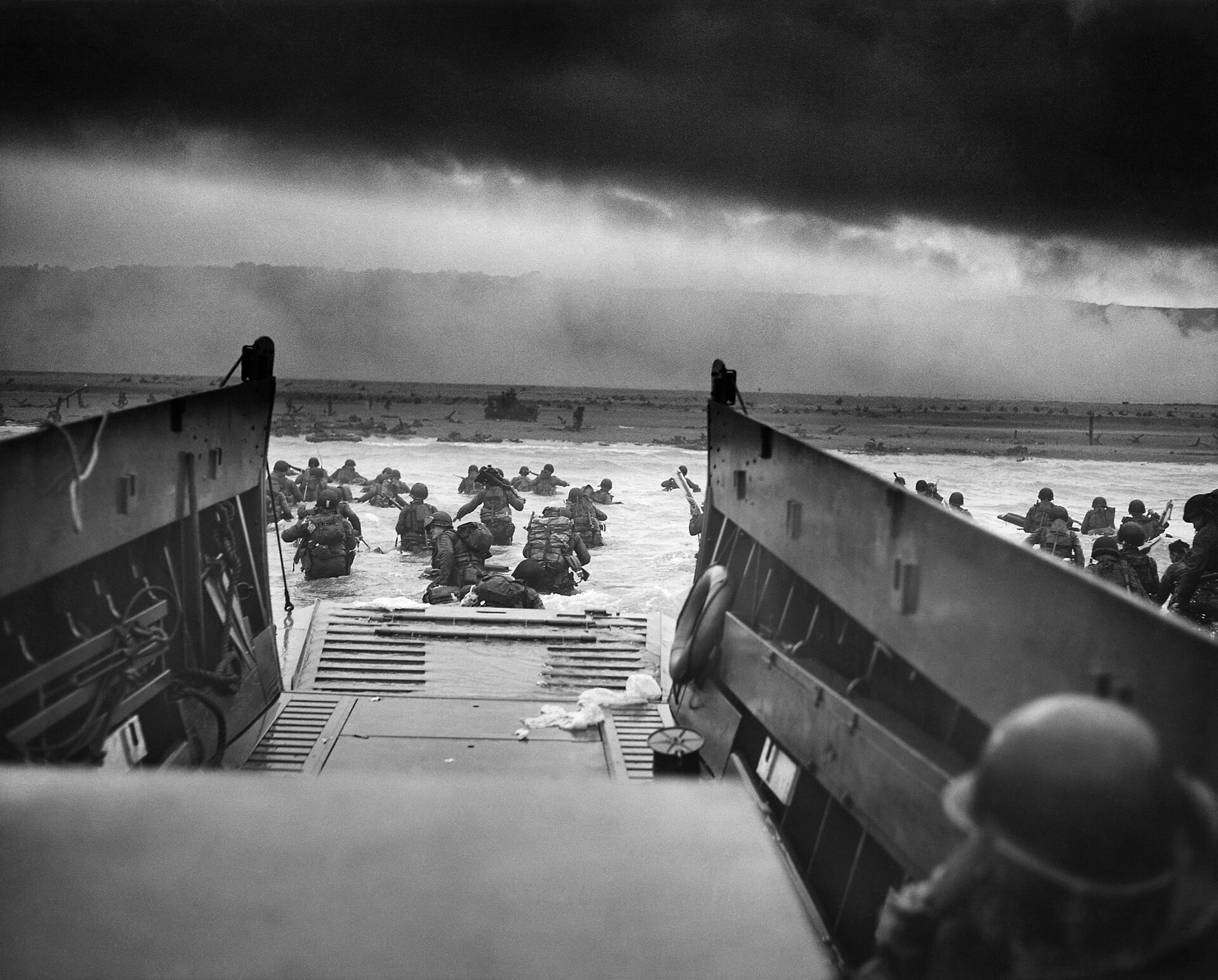
The morning of June 6, 1944, altered the course of human history. Yet, the foundation for the Allied victory at Normandy was not laid entirely on the blood-soaked sands of Omaha or Juno Beach. Instead, it was meticulously crafted months prior in smoke-filled rooms across London, utilizing a weapon far more insidious than artillery: pure deception.
At the height of World War II, the Allied forces faced a staggering logistical nightmare. They needed to launch the largest amphibious invasion in history across the English Channel, but Adolf Hitler had spent years fortifying the European coastline into an impenetrable "Atlantic Wall." If the German military caught wind of the exact landing zone, they could concentrate their devastating panzer divisions and crush the Allied forces at the water's edge.
To prevent a massacre, the Allies launched Operation Fortitude, a masterclass in military misdirection. The goal was audacious: convince Hitler that the real invasion would strike the Pas-de-Calais—the narrowest point of the Channel—and that any landings in Normandy were merely a clever distraction. To pull off this massive lie, British intelligence relied on the Double Cross System (XX Committee), turning captured German spies into double agents who fed Berlin a synchronized symphony of misinformation.
The Phantom Army of Kent
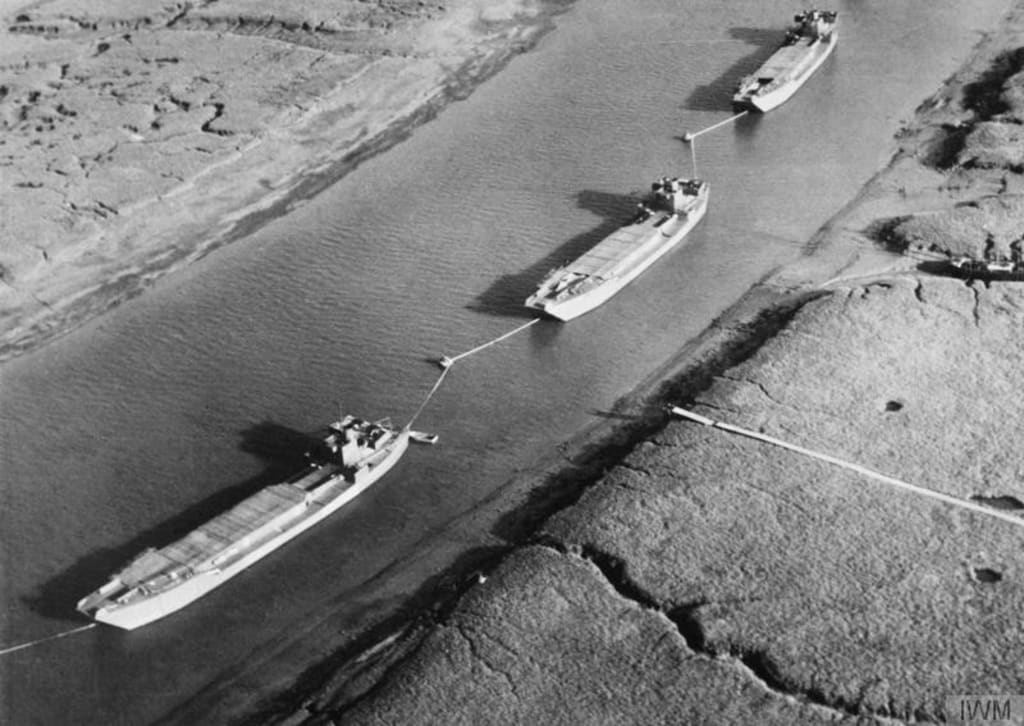
To make the lie believable, the Allies had to create a physical illusion of a massive invasion force preparing to strike Calais. Opposite the French coast, in the county of Kent, they established the First United States Army Group (FUSAG). On paper, it was a terrifying force of up to a million men. In reality, it was a phantom.
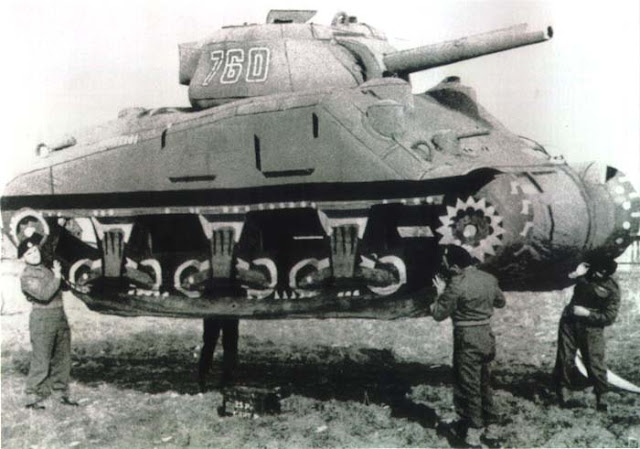
The Allies constructed sprawling, empty military camps. They deployed inflatable rubber tanks, canvas dummy landing craft, and wooden airplanes across British fields. To German reconnaissance planes flying high overhead, the buildup looked undeniably real. To cement the illusion, the legendary General George S. Patton—whom the German High Command feared above all other Allied commanders—was placed in public command of this fake army.
However, visual props were not enough to fool Hitler’s intelligence agency, the Abwehr. The deception required a narrative. That narrative was delivered by an eccentric, fiercely dedicated network of double agents.
The Eccentric Vanguard of Lies
Among the web of double agents, three individuals stood out, using their unique personalities to manipulate the German high command:
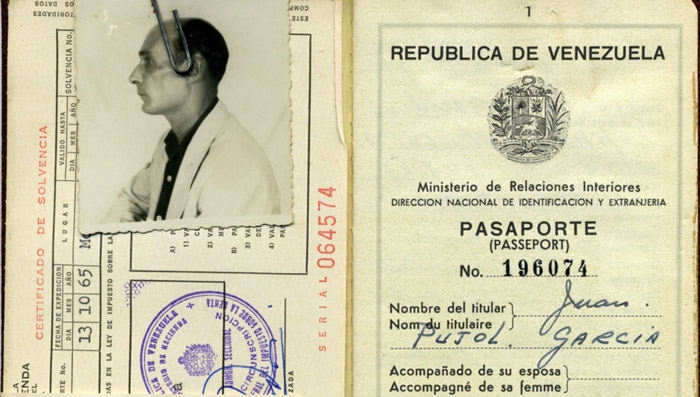
• Agent Garbo (Joan Pujol Garcia): A passionate anti-fascist from Spain, Pujol created a fictitious network of spies to trick the Germans into hiring him, before offering his services to MI5. Alongside his handler, Pujol built a sprawling, entirely imaginary network of 27 sub-agents across Britain. He bombarded Berlin with hundreds of detailed letters and radio transmissions. The Germans trusted Garbo so implicitly that they actively funded his fake spy ring, inadvertently financing the British counter-intelligence operation.
• Agent Tricycle (Dušan Popov): A wealthy Serbian playboy whose lavish lifestyle and charm served as the perfect cover. Popov operated in high-society circles, gathering German intelligence requirements and feeding back carefully rationed mixtures of true, trivial data and catastrophic, fabricated secrets. His real-life exploits were so daring they later served as a primary inspiration for Ian Fleming's James Bond.
• Agent Bronx (Elvira de la Fuente Chaudoir): A Peruvian socialite and bisexual gambler. Trapped in Europe by the war, she was recruited by MI5 to exploit her connections within the diplomatic community. Bronx successfully convinced her German handlers that she was mingling with high-ranking British officials, using coded telegrams about her personal finances to leak false rumors regarding Allied troop movements.
The Ultimate Bluff
As June 1944 approached, the double agents reached the climax of their mission. In the early hours of June 6, as real Allied paratroopers descended into the dark skies over Normandy, Agent Garbo sent an urgent, high-priority message to his handlers in Berlin.
In the transmission, Garbo warned that while a landing was occurring in Normandy, it was merely a diversionary tactic. He insisted that the real, massive blow was still coming at the Pas-de-Calais, spearheaded by Patton’s FUSAG.
The timing was impeccable. Because Garbo had proven reliable for years, the German High Command bought the lie completely. Armed with this "intelligence," Adolf Hitler personally ordered the powerful 15th Army to remain stationed at the Pas-de-Calais to wait for an invasion that would never arrive.
For seven critical weeks following D-Day, vital German reinforcements sat idle just a few days' march from Normandy. This bought the Allies the exact window they needed to securely establish their beachheads and pour millions of troops into liberated Europe.
The D-Day deception proved that wars are won not just by physical might, but by psychological dominance. Through phantom tanks, fake radio chatter, and a handful of brilliant double agents, the Allies managed to turn Hitler's paranoia into his ultimate downfall.
Editor’s Note: This article was co-created using AI assistance from Google AI for drafting and research structure, in compliance with Vocal’s community standards
About the Creator
Matthew A
Matthew is the author of Battles of the Pacific War 1941-1945. Battles of the Pacific War is available on Amazon and Lulu in e-book and paperback formats. Check out the book’s blog at battlesofthepacificwar.blogspot.co.uk.
Enjoyed the story? Support the Creator.
Subscribe for free to receive all their stories in your feed.
Comments
There are no comments for this story
Be the first to respond and start the conversation.