
The Construction and Design of the Bismarck Battleship
How the Germans Designed and Built the Bismarck
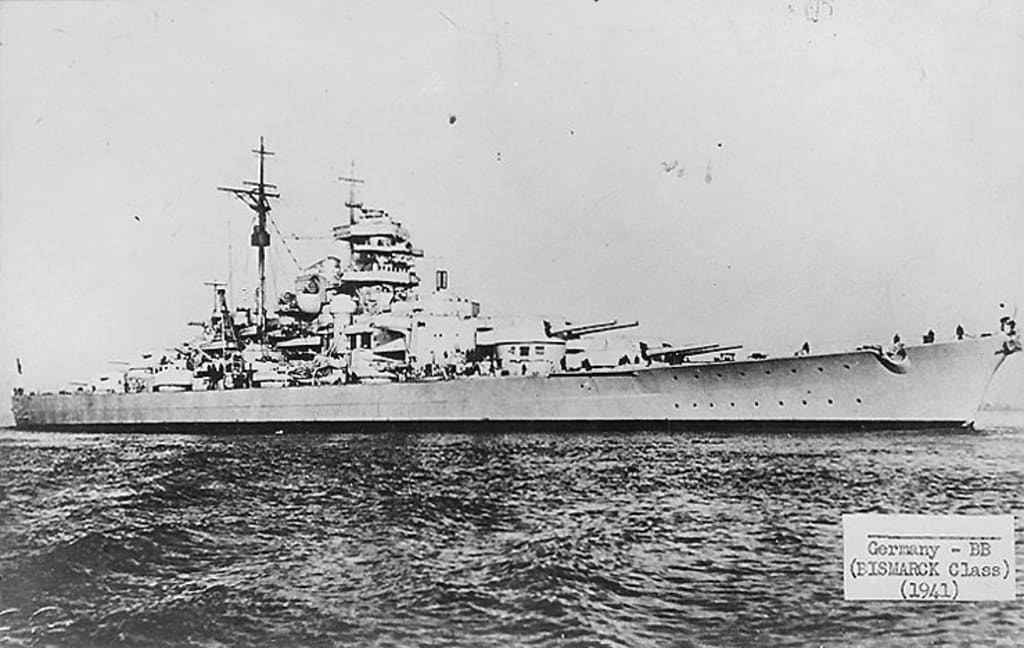
During the 1930s, the German navy expanded its naval fleets. Anglo-German naval treaties encouraged the Germans to increase their surface fleet with new battleships. After their discussions with Britain, the Germans laid down the first plans for the Bismarck-class of battleships. The first of those battleships was the Bismarck.
The construction contracts for the new battleship were placed with the Blohm & Voss dockyard. It was there that the keel for the Bismarck was laid down in 1936. At the dockyards, the Bismarck's hull was welded together. By 1938, the hull of the battleship was largely complete up to the upper deck.
During construction, armor steel was added to the battleship, such as KC, Wh, and Ww steel alloys. The hull was divided into 22 watertight compartments, 17 of which were added to the citadel. The battleship was constructed with a steam propulsion plant, which included 12 steam-heated boilers that burnt fuel oil.
In early 1939, the battleship Bismarck was floated for the first time. Unlike the Yamato battleship, thousands attended the Bismarck's ceremony. Then it was clear that the Germans had constructed a battleship larger than any Royal Navy alternative. The Bismarck had a standard displacement of approximately 43,978 tons, but at full load it was more like 53,486.
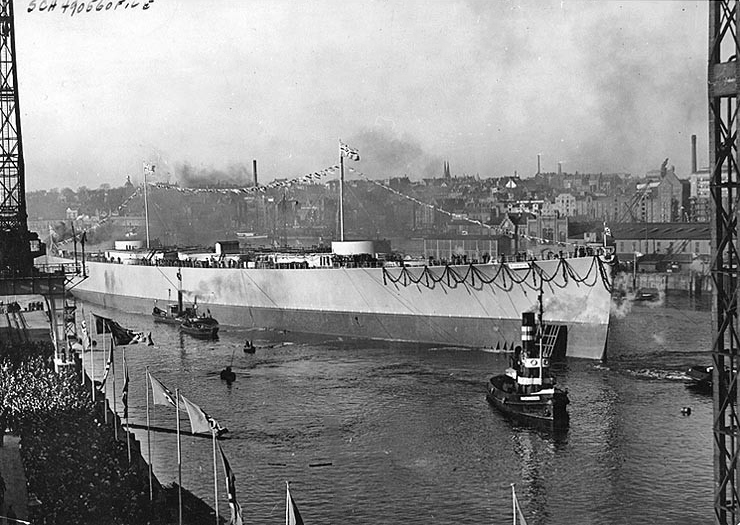
After the ceremony, the Bismarck still had to be fitted out. Various components, such as boilers, turrets, and other parts, had to be fitted to the battleship. During the fitting-out period, an Atlantic bow was also added to the Bismarck, which provided an alternative arrangement for its four cast steel anchors. Despite the emergence of war, construction continued as scheduled.
In 1940, the first of Bismarck's 2,200 crew boarded the battleship. After the fitting-out period, the battleship was added to the German Navy. Then the Bismarck's sea trials followed, in which the ship reached up to 30 knots on the high seas. In 1941, dazzle camouflage, with black-and-white stripes, was added to the battleship.
From the keel to the foretop, the Bismarck included 17 decks. At the top of the battleship was the Admiral's bridge, alongside the upper mast, lower mast, and decks. Then there were the bridge deck and the lower bridge deck. The main deck/armor deck included the battleship's primary armament.
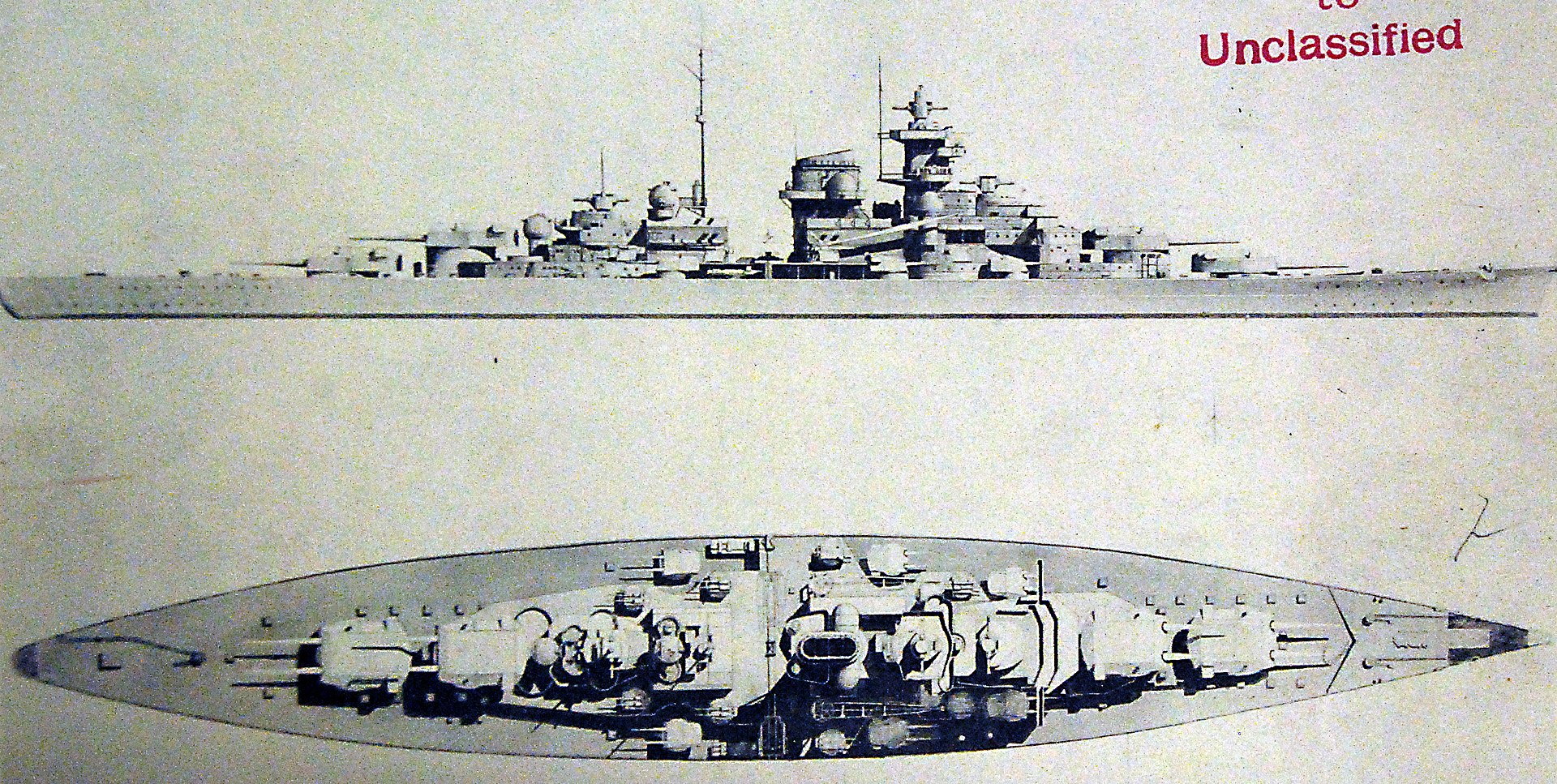
The armament was the most essential addition to the Bismarck. Its main battery had eight 38 cm guns housed within four armored twin turrets. They were added to wipe out surface fleet naval targets, but were also suitable for offshore coastal bombardments. Their shells weighed some 800 kilograms. Base range finders were added so they could still fire even if the Bismarck's command posts were wiped out. In addition to this, the Bismarck had a secondary battery. The secondary battery included 15 cm SK C/28 twin turrets that supported 45 kg shells.
A total of 32 anti-aircraft guns were added to the battleship. They included 10.5 cm SK C/33 and 3.7 cm SK C/30 anti-aircraft batteries. The Bismarck's anti-aircraft batteries were directed by four command posts.
The Bismarck also included a few aircraft. Four aircraft were added, largely required for reconnaissance and patrol missions. The battleship's air wing included Arado Ar 196 planes that had foldable wings. A catapult was added to the Bismarck, at the amidships, from where the aircraft could take off.
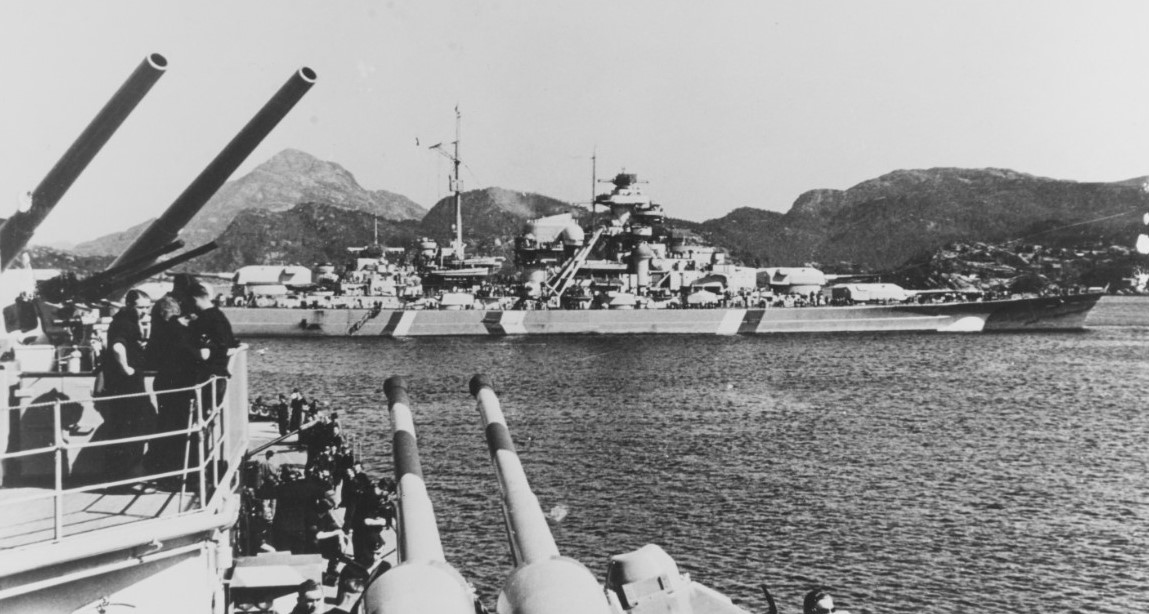
A variety of smaller boats were included on the Bismarck's decks. 16 of those were rafts for the crew to abandon ship. The battleship had four picket boats, a couple of yawls, cutters, and a motor yawl. Motor launch boats, required for anti-submarine warfare, were also among the boats added.
In 1941, the Bismarck was intercepted by the HMS Hood. Although victorious at the Battle of the Denmark Strait, the Bismarck still sailed to port. Before returning, the battleship was bombarded by Royal Navy fleet aircraft and then by surface fleet ships, setting the ship ablaze. The Bismarck slipped beneath the sea after its crew abandoned ship.
About the Creator
Matthew A
Matthew is the author of Battles of the Pacific War 1941-1945. Battles of the Pacific War is available on Amazon and Lulu in e-book and paperback formats. Check out the book’s blog at battlesofthepacificwar.blogspot.co.uk.
Enjoyed the story? Support the Creator.
Subscribe for free to receive all their stories in your feed.
Comments
There are no comments for this story
Be the first to respond and start the conversation.