
The Cattle Raid of Fraoch Eoin:The River of Red Rowan
A myth-inspired tale of rowan blood, Otherworld cattle, and the uneasy peace of late May

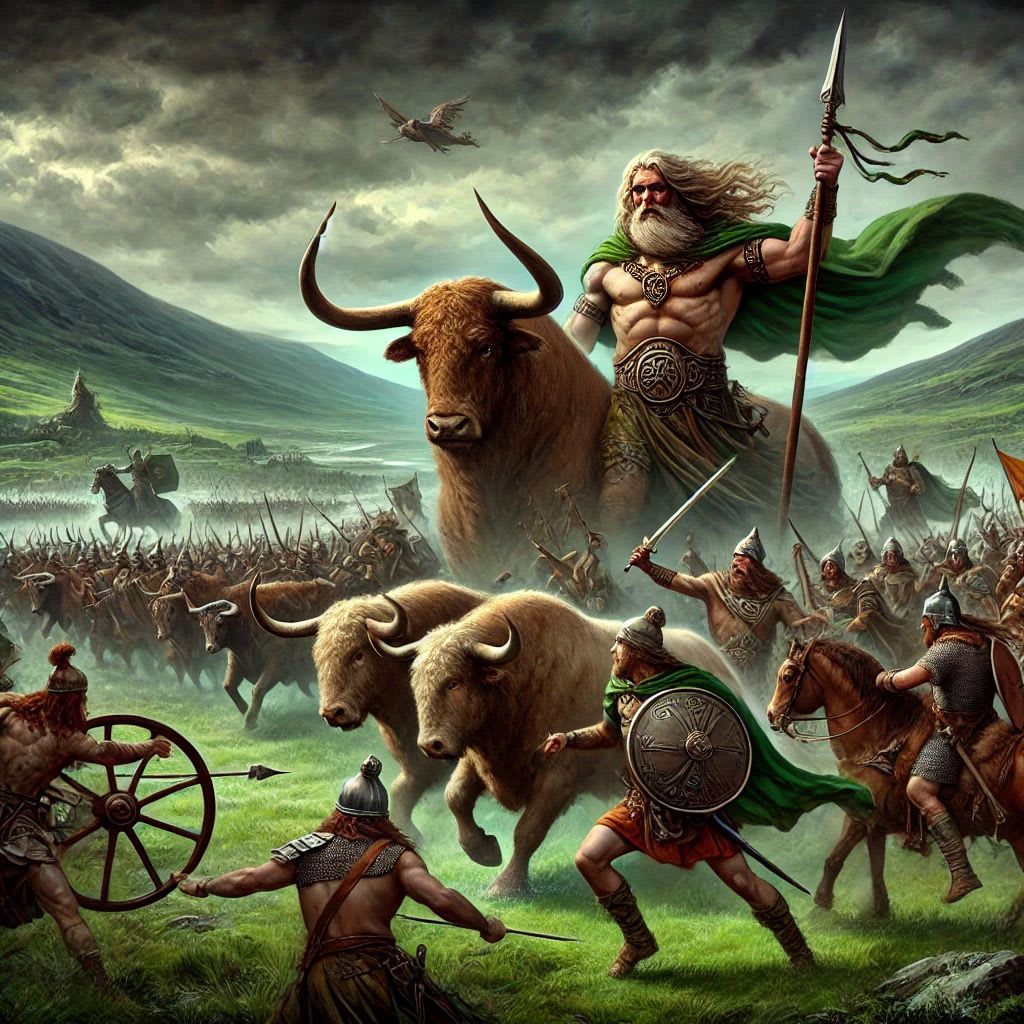
In the rugged borderlands between Ireland and Scotland, stories often gather where heather meets wind, where cattle paths cross old fairy ground, and where a single tree can mark the boundary between worlds. The tale of Fraoch Eoin, John of the Heather, belongs to that kind of landscape. It is a story of cattle raiding, sacred trees, and the dangerous negotiations that take place when human need meets Otherworld claim. Set in the late days of May, when Beltane’s fire has dimmed but summer’s wildness still rises, it tells of a river turned red by berry juice and blood, and of the fragile peace won between mortals and the unseen.
Fraoch Eoin and the Rowan Glen
Fraoch Eoin is remembered as a warrior of the Fianna, a man of the uplands and border glens, loyal to Finn Mac Cumhaill and skilled in the rough, shifting ground where the human world presses close against the sidhe. His charge was a remote glen where a remarkable rowan tree grew, its berries red as spilled wine and said to carry healing power. Some claimed they could close any wound. Others said they could restore youth or hold sickness back for another season. Whatever their power, all agreed the tree was not wholly mortal.
The rowan stood beside a hawthorn crossing, where two old paths met near a stream. That pairing mattered. Hawthorn marked the threshold; rowan offered protection. One opened the way between worlds, and the other held it in check. Fraoch Eoin knew this, and each late May he gathered the first berries carefully, taking only what he dared and leaving offerings behind. The tree was useful, yes, but never fully his. It belonged, in some deeper sense, to the Otherworld.
The Otherworld queen’s demand
One Beltane eve, when the last of the festival smoke still lingered above the valley, the queen of that hidden world appeared. She came not first in human shape, but as a blaze of hawthorn bloom lit like embers in the dusk. Then she took form: radiant, severe, and impossible to mistake for any earthly noblewoman. She demanded that Fraoch surrender the rowan tree and its coming harvest, claiming it as hers by ancient right.
Fraoch refused. He would honor the tree, but not abandon the glen.
For that refusal, the queen laid a curse upon the place. No cattle, she said, would thrive there again. Milk would sour, calves would fail, and the valley would lose the blessing of increase unless Fraoch crossed the western sea and raided her own magical herd from Mag Mell, the Otherworld plain of delight.
Fraoch accepted the task. To refuse would be to let the land fail. So he gathered nine champions of the Fianna and set out in a coracle, steering westward with oars cut from rowan wood. If the queen wanted tribute paid in courage, he would answer in kind.
The raid and the Rowan Blood River
In Mag Mell they found what no ordinary raid could have prepared them for: red cattle grazing under an unsetting summer light, their hides shining as if heat itself had entered them. Around them moved guardians who were never fully one thing for long — hounds becoming men, women becoming crows, warriors blurring into smoke and antlered shadow. The queen did not simply yield her herd. She set tasks and traps as a ruler of the Otherworld should.
Fraoch and his companions crossed a burning river, passed beneath sleep-heavy music, and fought through shape-shifting defenders before they could turn the cattle toward home. The escape was worse than the entry. Battle broke across the ford and along the banks, and in the struggle rowan berries were crushed beneath foot and spear. Their juice ran bright into the water. So did blood.
Berry-red and blood-red mingled in the stream until the river itself seemed to burn crimson. That, the story says, is how the ford earned its memory: not from slaughter alone, but from the mingling of human struggle and tree-born power. Even later, when people saw red stain in the water after storms or late-May runoff, they said the old river was remembering.
The rowan compromise
Fraoch returned at last with the cattle and the curse broken, but not with a victory clean enough to end the matter. The queen came again, no longer in wrath but in terms. The glen, she said, would prosper only if the rowan’s harvest were shared. Half the berries each year would go to the human world, gathered sunwise for healing and protection. Half would belong to the sidhe, gathered shadowside and left untouched when summer turned.
Fraoch agreed. From then on, the cattle thrived, and the rowan remained standing. The peace was not complete trust, only balance — the kind of agreement often found in stories where mortals survive by recognizing that the land is never theirs alone.
In later telling, this became the reason certain red clusters were left unpicked in the last days of May, especially where hawthorn and rowan grew close together. They were not neglected. They were offerings. A small price paid to keep summer’s gates from opening too far.
The red-berried truce
What makes the tale of Fraoch Eoin endure is not only its raid or its bloodshed, but its understanding of season. Late May is not yet full harvest, nor is it the guarded fire-threshold of Beltane. It is the moment after crossing, when the bright half of the year has opened but its agreements are still unsettled. Hawthorn blossoms, rowan reddens, and the land itself feels newly alive — and newly exposed.
In that world, the trees are not decoration. Hawthorn opens fairy roads. Rowan wards them. One invites. The other protects. Fraoch survives because he learns that both must be honored.
That is the story’s last gift. It teaches that summer is not secured by conquest alone. It must be negotiated with the living land, with the powers behind cattle and growth, and with the unseen presences who do not vanish just because the season is bright. If the old tale is believed, then somewhere in the heather country a rowan still leans over red water, and every late May a few berries are left behind so the truce will hold one more year.
If you enjoyed this piece, you may also like my Celtic Spirit articles on Beltane, the Otherworld, and the sacred tree lore of summer.
About the Creator
The Celtic Spirit- A modern Guide to Celtic Belief and Practice
explaining Celtic mythology, druid practice, and reconstructions of paganism for modern readers
Enjoyed the story? Support the Creator.
Subscribe for free to receive all their stories in your feed. You could also become a paid subscriber, letting them know you appreciate their work.
Comments
There are no comments for this story
Be the first to respond and start the conversation.