
The Blueprint for a Silent Invasion
Inside Russia’s Undercover War on Lithuania

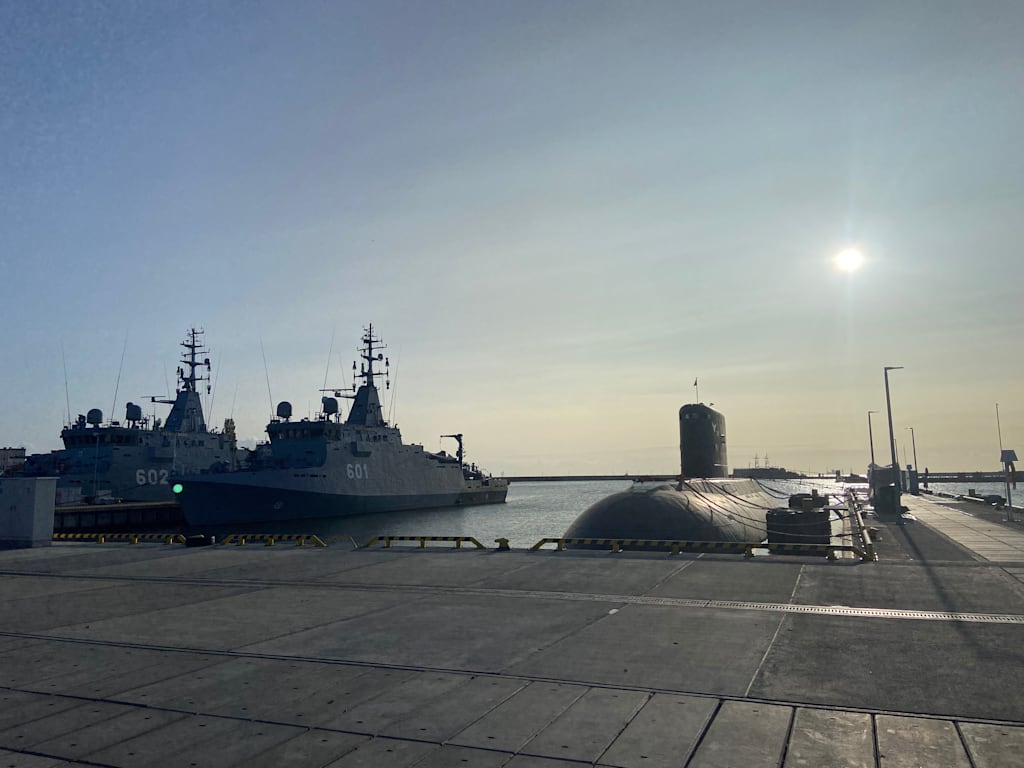
The Blueprint for a Silent Invasion: Inside Russia’s Undercover War on Lithuania
Sam Shroyer
Introduction
If I were the National Security Advisor of the Republic of Lithuania, it would be my duty to advise President Nauseda and his staff in framing our country’s national interests as well as identify the challenges that Lithuania faces on the world stage. In a world with ever changing relationships between countries and constant dangers, it is vital that we protect Lithuania’s independence and ensure a prosperous future for our people. The fate of our young nation is dependent on the success of two major interests; first, to defend Lithuania against foreign threats by strengthening both conventional forces and cyber security in order to prevent a hybrid war from starting and secondly, to protect and grow Lithuania’s economy to eventually become less dependent on foreign countries.
Core National Interests
The first priority for Lithuania is to focus on our national security with the goal of deterring and defending our borders from foreign adversaries. This objective can be achieved by both building up conventional forces and increasing our capabilities to have effective cyber security. By increasing military funding and increasing the number of service members in the Lithuanian Armed Forces, we will get closer in achieving our goal of deterrence. Growing the strength of our military forces will be achieved by allocating funds to improve upon artillery and air defense capabilities as well as build up stockpiles of ammunition and supplies. Lithuania is also in need of a mobilization plan for rapid deployment of the Lithuanian Armed Forces around the country. Lithuania’s main goal is to deter any country from thinking about invading. However, if the strategy of deterrence fails and we are put in a situation of defense due to an invading power, the large modernized military will act swiftly to thwart any attacks.
This “Show of Force” is the best strategy for protecting Lithuania and will serve as preparation in the event of a conflict, but another enemy that we must consider is in the cyber realm. In a day and age where wars are being fought through non-linear methods such as attacking cyber spaces, economies, and pushing misinformation, it is vital that we strengthen our most vulnerable areas. Based off the Lithuanian Threat Assessment 2020, there are about four to five incidents of disinformation campaigns in our country a year. They aim to discredit Lithuanian national defense and various state institutions. The best way to increase our country’s cyber security is by encouraging future development and cooperation between government agencies and private organizations which deal with technology. The threat of cyber attacks needs to be taken just as seriously as conventional threats due to the increasing non-linear threats from foreign adversaries such as Russia. These tactics combined with the use of conventional military forces have come to be known as hybrid warfare. The most recent example of this was seen in Russia’s 2014 invasion of Crimea in Ukraine, with the use of irregular forces known as “little green men” as well as disinformation campaigns. Russia’s actions showed how vulnerable and unprepared the Ukrainian government was, and therefore, this has become a top interest for Lithuania.
The second most important priority for Lithuania is to protect our county’s economy. There are two main approaches to ensure that the economy will remain strong and continually grow, first, by remaining integrated with the European Union (EU) economy through trade. The second being to strive towards Lithuanian energy independence. Since developing our country after the fall of the Soviet Union, it has been a goal to grow our national economy and ensure that it remains strong. Lithuania has been a member of the EU since 2004, our access to the open markets have led to “extensive growth of credit” along with “exceptional economic growth.” The best course of action to continue this growth is to stay in the EU and increase their exports to other countries throughout Europe. The next step to protecting our economy is to become less reliant on foreign energy. Currently, Lithuania receives most of its gas and electricity from other countries. Sixty-three percent of this comes from Russia. Lithuania needs to take more steps to create its own energy through renewable sources and explore nuclear power. There are two biproducts of this, decreasing energy imports with the potential to begin exporting to neighboring countries and creating new jobs for Lithuanian civilians. The goal by 2025 in to have thirty-eight percent of energy consumed be renewable. The main types of renewable energy will come from wind and solar, with smaller portions coming from biofuel and hydropower. When it comes to nuclear energy, Lithuania has taken a stance to decommission old, unsafe nuclear power plants in the region such as the Ignalia Power Plant. We have looked at constructing future plants such as the Visaginas Power Plant which would be safer and replace the power lost from the closing of Ignalia. Overall, by increasing energy independence, Lithuania will save an astronomical amount of money which will aid in economic growth for the foreseeable future.
Contemporary Challenge
The largest challenge that Lithuania currently faces is Russia and their actions in the surrounding regions. Russia’s military and intelligence agencies continually pose threats with their activity in Kaliningrad, the Russian province southwest of our border, as well neighboring nation, Belarus. Currently, Russia has multiple Battalion Tactical Groups which can deploy to Lithuania with 24 to 48 hours. There are also multiple large-scale exercises in the Baltic Regions that raise a flag. This threat demonstrates how quickly Russia could invade if something ever arose. The major takeaway from these exercises in the region is how Russia integrates the uses of multiple forces such as their conventional army, airborne units, special operations, and intelligence units to operate. These exercises were developed from lessons learned from Ukraine, meaning that Russia is preparing for similar operations in the future. The most dangerous area in the vicinity of our country is Kaliningrad. The main purpose of this province is for the Russian military; naval ports, shipyards, and training land stretch across the region. It was reported that there are “three times more square kilometers used for military purposes than for human settlement.” With Russia holding this land, it would actively block North Atlantic Treaty Organization (NATO) Forces from assisting Lithuania in a conflict.
Russia also actively seeks to control the energy market in the Baltic region, which goes against our goal of energy independence. Russia built a nuclear power plant in the Kaliningrad region to attempt to supply electricity to Lithuania. This was done to counter the building of the Visaginas nuclear power plant in Lithuania. Russia actively uses media and other techniques to change the minds of Lithuanian citizens over energy issues, such as nuclear power, which led to a referendum vote over its future in the country. As stated earlier, a majority of gas and energy is currently coming from Russia. This is because the infrastructure used to transport gas and power is interlinked between Lithuania, Latvia, Belarus, and Russia, and as a result, the main supplier is limited to Russia. If Russia continues to actively control the energy market of Lithuania, it will handicap our economy and ensure that we are reliant on them. This will make it more likely that they may attempt to tighten a grip around Lithuania and influence how our country is running.
Analyze the Challenge
Russia’s actions in the region surrounding Lithuania actively challenge the top priorities and interests of our nation by both threatening Lithuanian sovereignty and our future economic market. Lithuania’s primary goal is power and security for our nation. In the anarchic system of world there is no governing power to prevent Russia from threatening Lithuania’s sovereignty. Russia has offensive intentions and Lithuania must do what is necessary to survive. This is why Lithuania has been building and modernizing their armed forces in preparation for any circumstances. To break the anarchic system down even more, it can be argued that Lithuania falls into a multipolar system, including all of the Baltic States, Russia, and other European nations. In this multipolar system with multiple major and minor powers it can be unstable. Although Lithuania may be a minor power, it has many major power allies through NATO. However, it is unclear what will happen with the hegemon being Russia. Their goal is to “gain regional hegemony” through pressure and fear. The uncertainty of Russia leaves the world questioning what their upcoming actions will be, given the precedent they have set with being comfortable invading other states. Although Lithuania has been preparing for the potential hybrid war with an adversary through developing their cyber security, the unpredictable nature of Russia’s ever-changing strategy is a major threat for us. For example, during the Donbas Campaign in Ukraine, Russia’s Federal Security Force (FSB) and their Main Intelligence Unit (GRU) “made use of Russia-based organized criminal networks for arms smuggling and to support proxy forces.” Tactics such as these are extremely difficult to prepare for and can quickly change how a conflict develops.
If Russia takes control of the energy market, this would negatively impact Lithuania’s goal of protecting their economy. It would pull Lithuania further away from the EU and make them more reliant on Russia. Lithuania has been working to strengthen their economy by trading through the EU. A large portion of this deals with the energy market and Lithuania’s goals of producing their own energy. Lithuania is unlikely to go to war with any nation that is a member of the EU because they all collectively benefit. However, if Russia takes control of the energy market in Lithuania, they will be pulled further away from fellow countries and it will raise the risks of conflict. Another factor to consider is the Russian misinformation campaigns against multiple facets of Lithuania, such as energy, the credibility of the Lithuanian government, and legal proceedings within the country. They do this by using media and recruiting ‘agents’ with blackmail. By attempting to control public opinion, there are multiple thing that could come. First, public trust in government can diminish and this may lead to domestic problems such as strikes, riots, and potentially civil war. The alternative is that the public stands beside the leaders within government and they grow resentment or hate towards Russia. This can escalate quickly and create a hawkish public which can pressure Lithuania’s leaders into pursuing a conflict with Russia. The various outcomes that could happen due to Russia meddling with Lithuania’s energy, economy, and their public’s opinion create a unique situation where Lithuanian leadership must take actions to avoid any negative consequences.
Strategic Recommendations
The first recommendation I have for President Nauseda when it comes to dealing with Russia’s actions that threaten our sovereignty is to strengthen ties with NATO and the EU in order to counteract Russian aggression and meddling within our region. The stronger the relationship is between Lithuania and other NATO nations, the more likely they are to help in the efforts of deterring Russia. Both the EU and NATO already have “Crisis Management and Military Contingency Plans” in place. Lithuania can help develop the plans more to ensure that these organizations are fully prepared. By remaining in powerful institutions, such as NATO, it will help reduce uncertainty between us and Russia. The overall cost of attacking Lithuania is too high for Russia. The alliances formed through NATO, require that they support each other through the treaty’s 5th Article when it states, “an armed attack against one or more … shall be considered an attack against them all.” Russia is well aware of the implications they might have if they were to attack, that is why it is critical for Lithuania to continually communicate with NATO and show that they are an active member.
In order to protect our economy from weakening due to Russian attempts at controlling our energy market, along with their constant propaganda campaigns against the people of Lithuania, it is important that we strengthen the Lithuanian national identity so that they take pride in their country. The citizens of Lithuania are currently happy with their living status; however Russia tries to undermine that and insinuates negative discourse towards our population. By developing a stronger identity, the misinformation pushed from the Kremlin will never be a problem, it will simply be ignored. Lithuania needs to focus on being the country taking the moral high ground, where people will want to live and work. This powerful national identity should not be identified as nationalism, but rather Lithuanian patriotism. People tend to prefer to join or stay in higher status groups, with Lithuanian citizenship becoming the ingroup for our country. No one will want to work with Russia or bow down to their demands because they will be part of the outgroup. Given that our government is a democracy, the people have the final say in what we do. When votes and referendums arise about topics such as renewable energy and future energy development within Lithuania, people will be more inclined to vote in favor of these proposals. The alternative would be to outsource to Russia and as a result our economy would suffer.
Conclusion
In the nearly thirty years Lithuania has been a sovereign nation, it has developed and grown substantially from where it started. To continue this positive path forward, it is essential that we ensure national security through strengthening our conventional armed forces and advancing our cyber security. It is just as important to improve our economy to guarantee future growth. With Russia actively seeking to put pressure on our small nation and slowly attempting to control our energy markets, we must take the appropriate actions to combat Russia, while also avoiding an armed conflict. The importance of building upon our already strong national identity combined with our strong alliance with the other members of NATO will effectively stop Russia, while also building upon Lithuania’s top interests.
Bibliography
Copeland, Dale C. “Economic Interdependence and War.” In International Politics: Classic and Contemporary Readings, edited by Scott P. Handler, 88-91. Los Angeles, 2013.
Duits, Caroline, Elva Goedegebuur, Bodo von Haumeder, Tomas Hos, Shaho Jabbari, Raoul
Köhler, Nathalie Koopman, Rosalinde Kranenburg, Veerle Vastwijk, Sjoerd Verest and Arkasha Verschuren. Country Report on Lithuania: A country report on Lithuania’s position in the EU. 1-279. University of Amsterdam, 2013.
Flanagan, Stephen J., Jan Osburg, Anika Binnendijk, Marta Kepe, and Andrew Radin. Deterring
Russian Aggression in the Baltic States Through Resilience and Resistance. 1-36. Santa Monica, CA: RAND Corporation, 2019. https://www.rand.org/pubs/research_reports/RR2779.html.
Lebow, Richard Ned. “Identity and International Relations.” In Foundations of International
Relations, edited by Robert T. Person, 125-129. London, 2019.
Levy, Jack S. “Domestic Politics and War.” In Foundations of International Relations, edited by
Robert T. Person, 143-156. London, 2019.
Mearsheimer, John J. “Anarchy and the Struggle for Power.” In International Politics: Classic and Contemporary Readings, edited by Scott P. Handler, 51-61. Los Angeles, 2013.
Mearsheimer, John J. “The Causes of Great-Power War.” In Foundations of International
Relations, edited by Robert T. Person, 59-77. London, 2019.
North Atlantic Treaty Organization (NATO). North Atlantic Treaty. Washington, D.C. 1949.
North, Douglas C. “An Introduction to Institutional Change.” In Foundations of International
Relations, edited by Robert T. Person, 87-89. London, 2019.
Paceviciute, Irma. Towards the Energy Union: The BEMIP and the Case of Lithuania. Istituto Affari Internazionali, (2017). Accessed October 9, 2020. 1-18. http://www.jstor.org/stable/resrep09670.
Schnaufer, Tad. “Redefining Hybrid Warfare: Russia’s Non-Linear War against the West.” Journal of Strategic Security 10, no. 1 (2017): 17–31. https://doi.org/10.5038/1944-0472.10.1.1538.
Seimas of the Republic of Lithuania. National Energy Independence Strategy. Resolution No XI-
2133. (2018).
Seimas of the Republic of Lithuania. National Security Strategy. Resolution No XII-202. (2017).
State Security Department of the Republic of Lithuania and Second Investigation Department
under the Ministry of National Defense. National Threat Assessment 2020. 1-74. Vilnius, Lithuania, 2020.
Wellmann, Christian. “Russia’s Kaliningrad Exclave at the Crossroads.” Cooperation and
Conflict 31, no. 2 (1996): 161–183. http://www.jstor.org/stable/45083813.
About the Creator
Sam Shroyer
I am an active-duty Engineer Officer in the US Army with a BS in Environmental Engineering from West Point. My previous positions include the following:
- Assistant Training Officer
- Sapper Platoon Leader
- Company Executive Officer
Enjoyed the story? Support the Creator.
Subscribe for free to receive all their stories in your feed.
Comments
There are no comments for this story
Be the first to respond and start the conversation.