
The Battleships Japan Bombed at Pearl Harbor
Remembering the Battleships Hit at Pearl Harbor
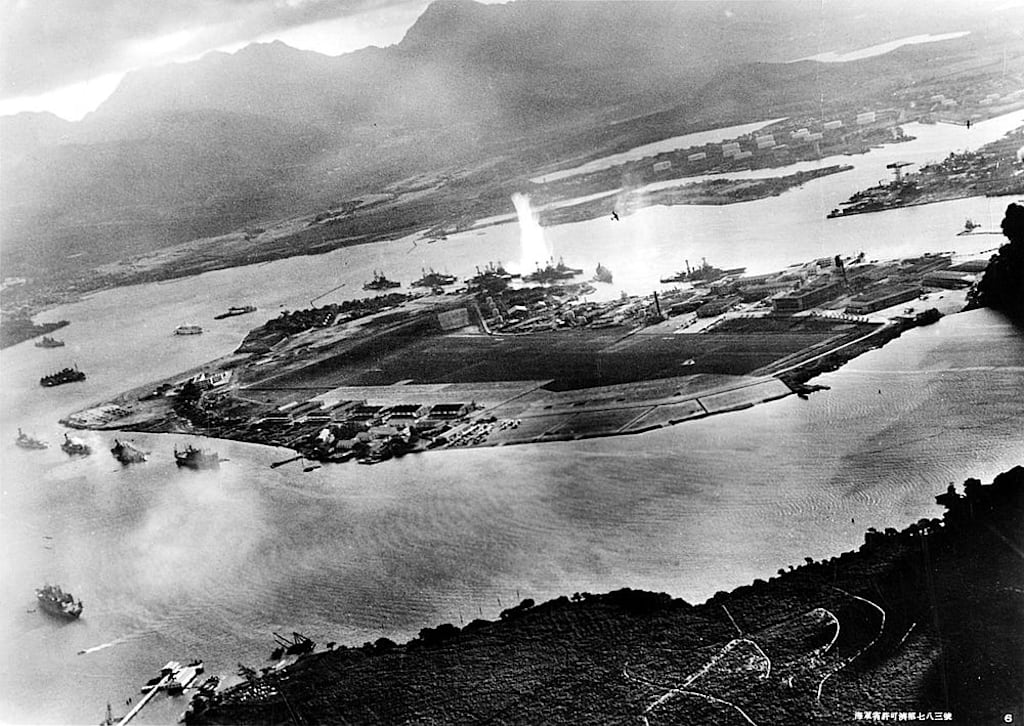
On December 7, 1941, Japanese bombers flew towards the US naval base of Pearl Harbor. Among the main targets for the Japanese fleet heading towards Pearl Harbor were the US battleships stationed at the harbor. More than anything else, these bore the brunt of the Japanese bombs, as the US aircraft carriers that would have also been targeted were not present on the day. Eight battleships were present, and most were hit during Pearl Harbor.
Before the outbreak of World War II, battleships were still among the most important warships. In World War I, they played a decisive role in some naval battles, such as the Battle of Jutland. Aircraft carriers were still largely unproven in combat, so the United States was also keen to expand its battleships.
In 1941, the United States decided to move its Pacific Fleet to the naval base of Pearl Harbor as tensions with Japan mounted. The battleships were among the primary ships of this fleet, which the United States hoped might provide some deterrent in the Pacific to the Japanese. Yet this concentration of US battleships and aircraft carriers encouraged the Japanese air assault at Pearl Harbor. With so many battleships and aircraft carriers in close proximity, a single surprise air strike could potentially have a devastating impact. The following battleships were hit at Pearl Harbor.
USS California
The US Navy deployed the USS California to Pearl Harbor in 1940. During the Pearl Harbor raid, the Japanese torpedo bombers attacked the USS California. Overall, the USS California was badly hit and gradually began to sink to the bottom of the harbor. However, despite this, the USS California was salvaged and repaired years after Pearl Harbor. By 1944, the USS California was combat-ready and re-entered the Pacific War in time for the Battle of Leyte Gulf.
USS Arizona
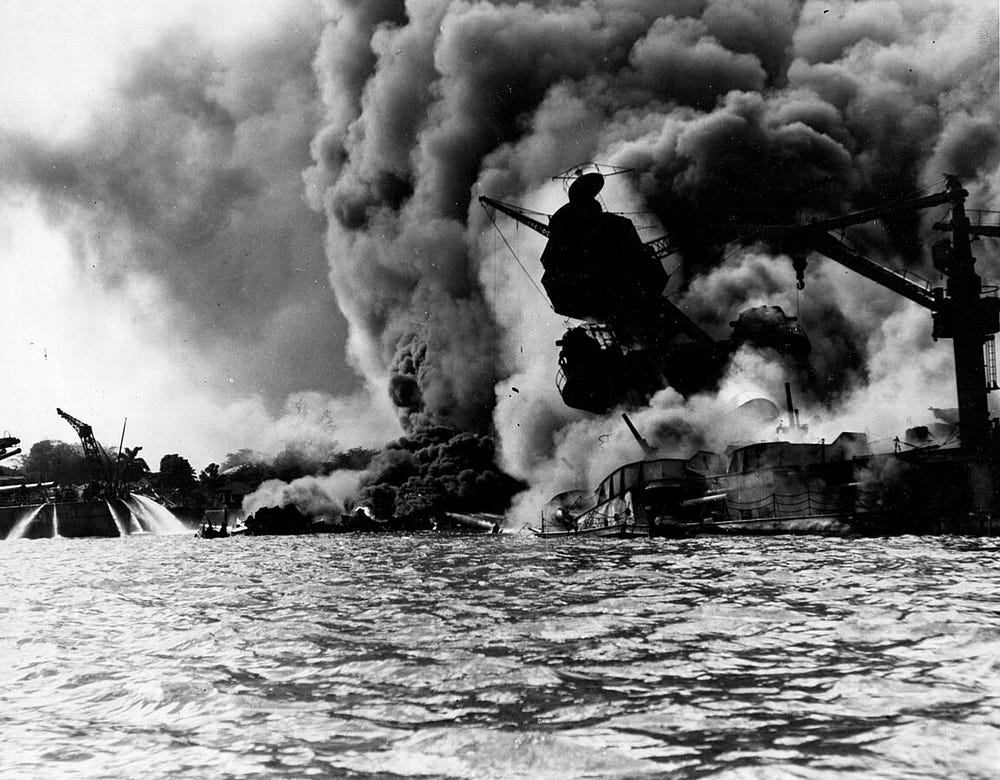
Of all the Pearl Harbor battleships, Arizona is the most famous. During Pearl Harbor, many bombs hit this ship, and one of these penetrated the forward ammunition magazines. The result was a great explosion, Pearl Harbor fireworks, which devastated the ship. The wrecked hull of the USS Arizona remains at the harbor as a Pearl Harbor memorial.
USS Oklahoma
Japanese torpedoes hit this Pearl Harbor battleship. Therefore, the USS Oklahoma soon joined the list of sunk US battleships at Pearl Harbor. However, while Oklahoma was refloated in 1943, it was obsolete by 1944 and effectively decommissioned.
USS Maryland
The USS Maryland escaped from Pearl Harbor with only light damage. Following repairs, Maryland returned to the Pacific War in 1943 for further Allied operations.
USS Nevada
The USS Nevada was struck by torpedoes and bombs, but was beached after taking heavy fire. However, repair work after Pearl Harbor restored the battleship to combat, and the Nevada was ready for the Attu landings in 1943.
USS West Virginia
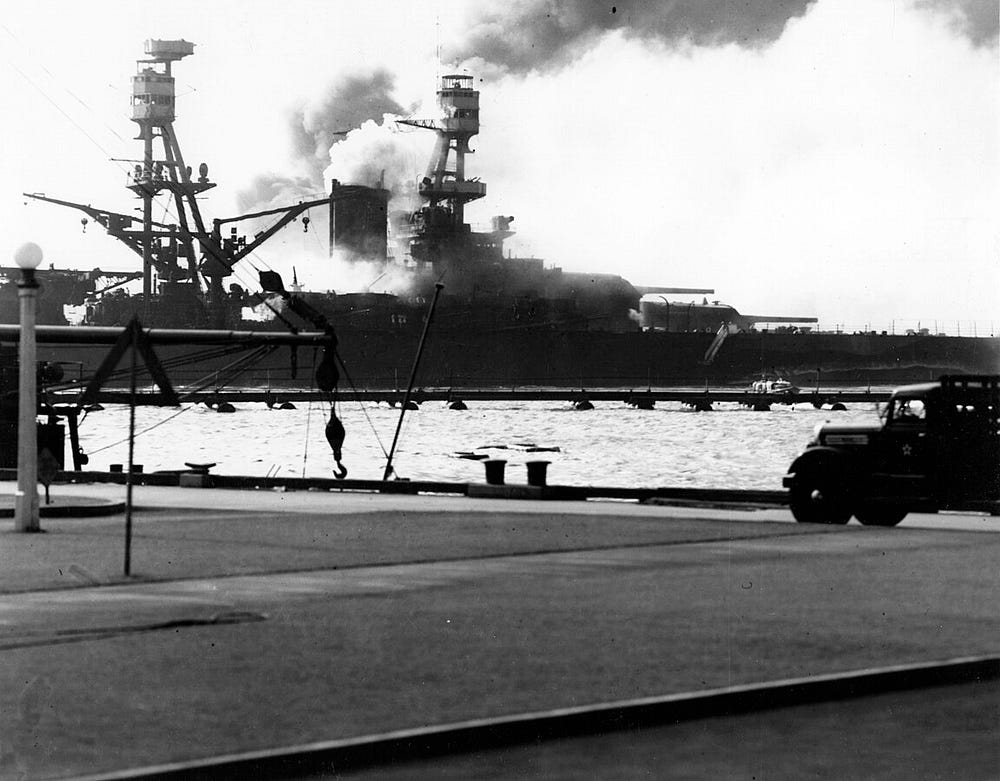
This battleship took extensive damage and sank quickly. Extensive repairs restored West Virginia. However, by 1944, West Virginia was ready for the Battle of Leyte Gulf.
USS Tennessee
The USS Tennessee was another battleship that was hit during the Pearl Harbor raid. However, this was only enough to put it out of action for a year or two. By 1943, the USS Tennessee was back in combat, and in 1944 sank the Japanese Yamashiro battleship off Leyte Gulf as a degree of revenge.
USS Pennsylvania
The USS Pennsylvania was dry-docked at Pearl Harbor. The Pennsylvania was not hit badly and required repairs for only a few months. The ship was combat-ready in 1942 but was overhauled and enhanced for further operations.
So, those were the Pearl Harbor battleships bombed. Overall, this resulted in the sinking of four of these US battleships. With this attack, the Japanese gained a temporary advantage in the Pacific War and began some advances in the Pacific during early 1942.
However, a good number of the Pearl Harbor battleships were salvaged, repaired, and returned to combat in 1943 or 1944 for some of the largest naval battles of the Pacific War. All of Pearl Harbor’s aircraft carriers were also preserved, which further limited the impact of the Pearl Harbor raid. Years of conflict in the Pacific would follow, and much of the Japanese navy and air force, instrumental at Pearl Harbor, would be wiped out by the US Navy.
This article of mine was originally submitted to Medium, where you can read it here.
About the Creator
Matthew A
Matthew is the author of Battles of the Pacific War 1941-1945. Battles of the Pacific War is available on Amazon and Lulu in e-book and paperback formats. Check out the book’s blog at battlesofthepacificwar.blogspot.co.uk.
Enjoyed the story? Support the Creator.
Subscribe for free to receive all their stories in your feed.
Comments
There are no comments for this story
Be the first to respond and start the conversation.