
The Battle Between Planes and Birds
Planes and Birds

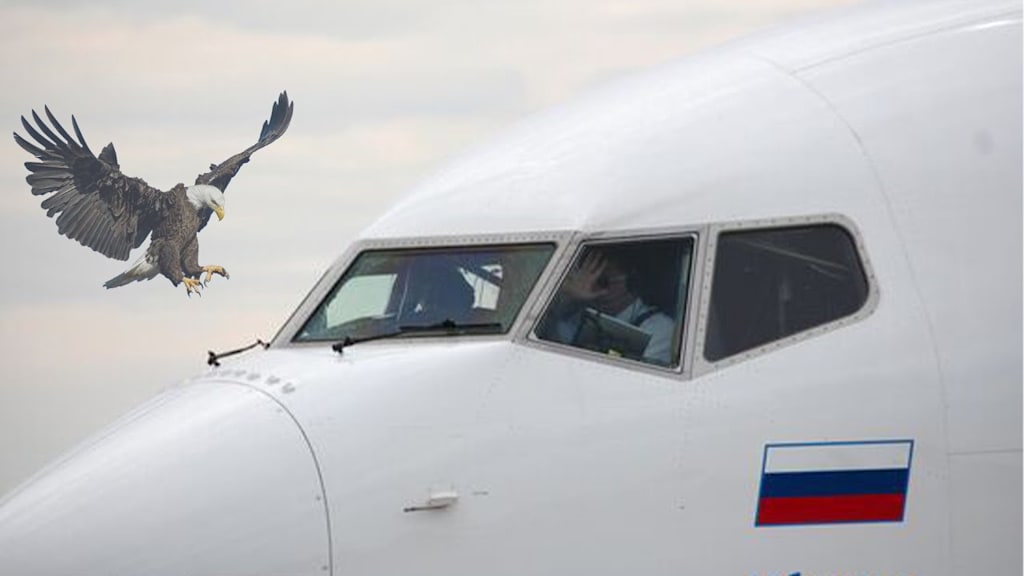
This commercial plane was completely ready for landing. But just a few meters away from the runway, an accident happened. A bird suddenly slammed into the cockpit windshield. Fortunately, the glass did not break, and the aircraft landed safely. But not every airplane is this lucky.
Welcome once again to.
Viewers, US Airways Flight 1549 was fully prepared for takeoff at New York Airport. It was January 15, 2009, and the time was 3:25 PM. One minute later, the plane successfully took off, and the pilot informed the control tower as per routine procedure. This aircraft was an Airbus A320 carrying 150 passengers and five crew members.
For the next two minutes, the plane kept gaining altitude continuously. But at 2,818 feet, the pilot suddenly saw a huge flock of Canada geese directly in the aircraft’s path. There was very little time, and turning the plane away was impossible.
In many cases, when birds collide with aircraft, they only hit the body of the plane. But in Flight 1549’s case, the birds were sucked into both engines. Unfortunately, despite all modern technology, airports around the world still have not found a complete solution to this problem.
And this was still a whole flock of birds. Even a single small bird can cause serious damage to an airplane.
Not only birds, but even when planes are parked at airports, many accidents have occurred during loading and unloading operations. Jet engines can pull in almost anything that comes too close.
Before jet engines, airplanes used piston engines with propellers to generate thrust. The problem with those older engines was that they could not produce enough thrust. Naturally, because of the lower thrust, planes flew slower and could not reach high altitudes.
The world’s first jet engine was developed in 1930. In this technology, a turbine pulls air into the engine, compresses it, mixes it with fuel, and ignites it. After combustion, the pressure inside the engine increases massively, pushing the aircraft forward at high speed.
Compared to older piston engines, jet engines are lighter, more fuel-efficient, produce more thrust, and are much quieter.
For example, a single engine of an Airbus A320 sucks in about 1,250 kilograms of air every second. This air enters from the front side of the engine. That means if the engine is running, it can easily pull in anything that comes in front of it — luggage, tree branches, crew members, or even small vehicles.
In this video, you can see an E170 aircraft parked while its engine is running. A cone accidentally slips from a crew member’s hand into the engine, and immediately a fireball bursts out from the other side.
Now, that was about the pressure of the air entering the engine. The pressure coming out from the back side is called thrust, and it is far more powerful — almost 100 times stronger.
The engine of an Airbus A320 produces around 122,700 kilograms of thrust. Combined, both engines generate about 254,000 kilograms of thrust. That is roughly equal to the weight of an average train engine.
In other words, during takeoff, if a train engine were placed behind an aircraft, the jet blast could easily flip it over.
You can understand this from a video where a Boeing 777 preparing for takeoff overturned an entire truck parked far behind it. There are also many videos from Saint Martin Airport where tourists standing near the beach are blown away by jet blast. In one incident, a woman even lost her life.
These videos clearly show how powerful jet engine thrust really is.
To avoid such accidents, airport authorities have established strict SOPs defining when people can approach aircraft engines and how much distance they must maintain.
The biggest risk usually occurs during baggage loading because the engines may still be running while luggage is loaded from the front side. To reduce this danger, modern airports now use automated conveyor belt systems for loading luggage.
Similarly, the tunnel connected directly to the aircraft door during boarding is not just for passenger comfort — it also helps prevent accidents.
Airport authorities have strict rules ensuring that nothing remains in front of the engines during boarding, and engines are only started after all staff have moved away safely.
The spiral marking painted on aircraft turbines is also there for safety so people can easily see when the turbine is rotating.
These measures help prevent accidents caused by human error. But what about birds?
Birds are unaware and defenseless creatures. According to estimates, bird strikes cause around 1.2 billion dollars in losses to the aviation industry every year.
Aviation engineers and airport authorities have been trying for decades to solve this issue, but so far they have not fully succeeded.
That does not mean no efforts are being made. This is why you rarely see trees inside airport compounds, especially near runways, because birds sit and nest in trees.
Airports may be the only places where birds are actively driven away on a massive scale. In some places, gunshots are fired to scare them. Elsewhere, statues are installed, or predator sounds are played through loudspeakers. Some airports even keep hunting dogs and trained falcons to keep birds away from the compound.
At the same time, airports avoid leaving anything that could attract birds, such as open ponds where birds could drink water.
Now artificial intelligence is also being used to create robotic falcons that can scare birds away from airports.
At this point, you might wonder: why not simply place a protective net in front of jet engines? That way, birds and other objects could never enter the engine.
The reality is that jet engines suck in such enormous quantities of air that placing a mesh or net in front would seriously disrupt airflow. Even if the bird could not enter the engine, the suction force would press it against the net, disturbing airflow even more.
Most bird strikes happen during takeoff and landing because birds usually do not fly at very high altitudes. However, reports show that falcons have been seen flying as high as 15,000 feet, and one species of duck migrates at astonishing heights of 23,000 feet.
These are the kinds of birds that aviation authorities still struggle to keep away from aircraft.
We hope you enjoyed this story
About the Creator
Imran Ali Shah
🌍 Vical Midea | Imran
🎥 Turning ideas into viral content
✨ Watch • Share • Enjoy
Enjoyed the story? Support the Creator.
Subscribe for free to receive all their stories in your feed.
Comments
There are no comments for this story
Be the first to respond and start the conversation.