
The 20th Century Transformation of the British Empire
A Brief History of the British Empire in the 20th Century

At the beginning of the 20th century, the British Empire remained the largest in the world and included the colonies of India, Australia, South Africa, New Zealand, Canada, and the Caribbean territories. However, the 20th century would be the last century of this empire, and for the European empires more generally. Two wars in Europe would bring an end to European colonialism.
The rise of the German Empire ensured a change in British foreign policy at the beginning of the century. In 1904, Britain and France formed the Entente, which would later be expanded into the Triple Entente that included Russia.
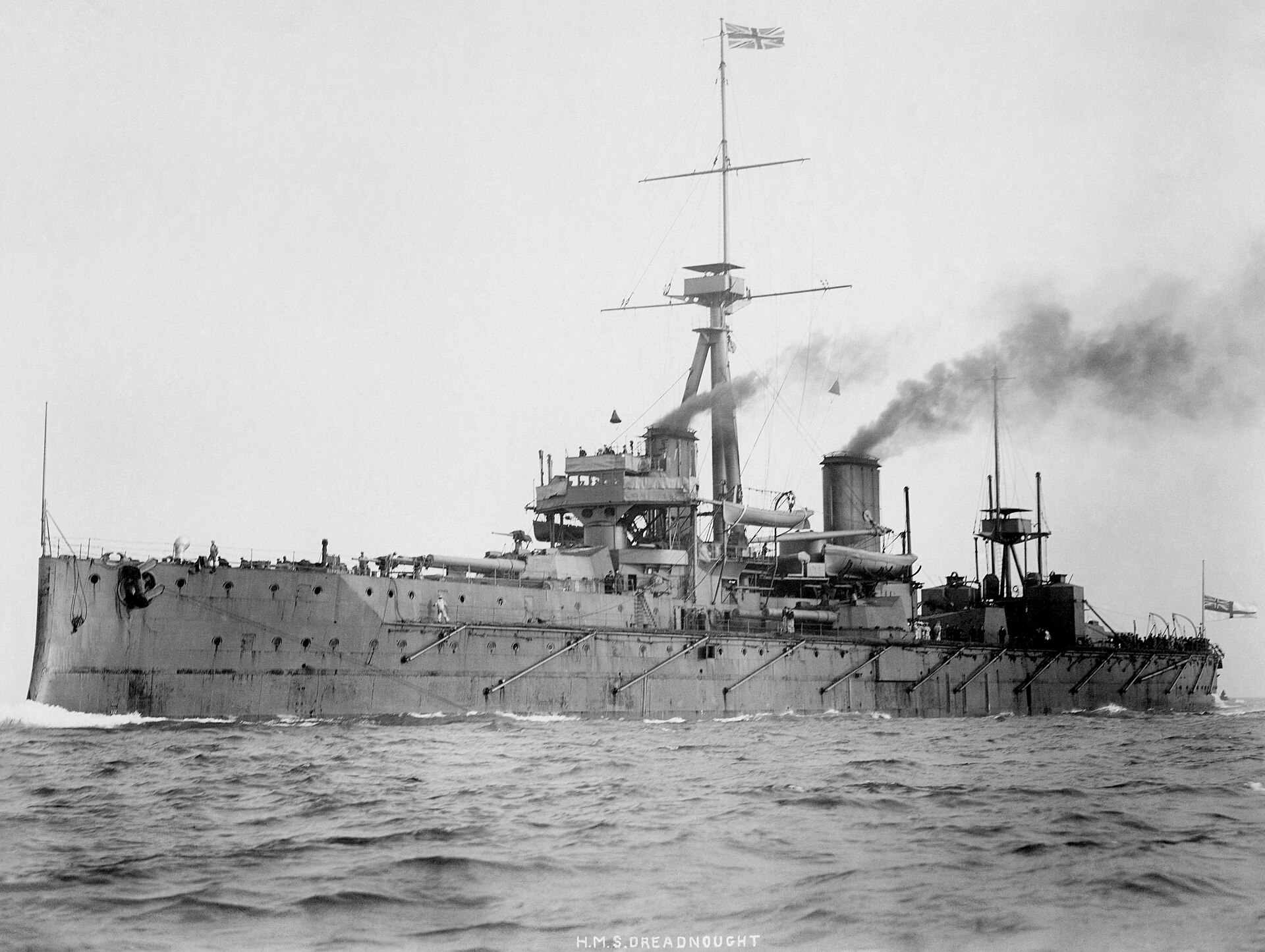
Germany's expansion of its own navy also ensured a naval race with the Royal Navy. For Britain, maintaining naval superiority was one of the cornerstones of the empire's defense policy, and so Britain began new naval programs at the beginning of the 20th century. In 1906, the Royal Navy introduced a new Dreadnought class of battleship that made other previous battleships obsolete.
In North Africa, colonial disputes with the Germans also emerged. These were largely over the colony of Morocco. The first of these emerged in 1906 as the Kaiser visited Tangier and made a speech in favor of Moroccan independence. Britain gave their backing to the French and convinced them to attend the Algeciras Conference. The second Moroccan crisis would emerge in 1911 as the Germans sent their Panther gunboat to the port of Algiers after an uprising in the colony. During the period of gunboat diplomacy, the French established a formal Moroccan protectorate and also made further naval agreements with Britain's Royal Navy.
Although war was avoided, it was clear that both Britain and France were much firmer allies than Germany might have expected. In the event of war in Europe involving France and Germany, the British Empire was therefore firmly committed to France.
In 1914, the assassination of Archduke Ferdinand marked the beginning of the First World War. As Germany declared war on France, Britain was committed to joining France in the war. As such, when Germany moved their troops into Belgium, Britain provided Germany with an ultimatum requesting that German troops be removed and Belgium's neutrality remain intact. Germany did not remove their troops and instead advanced into France, so the British Empire joined its Entente allies, Russia and France.
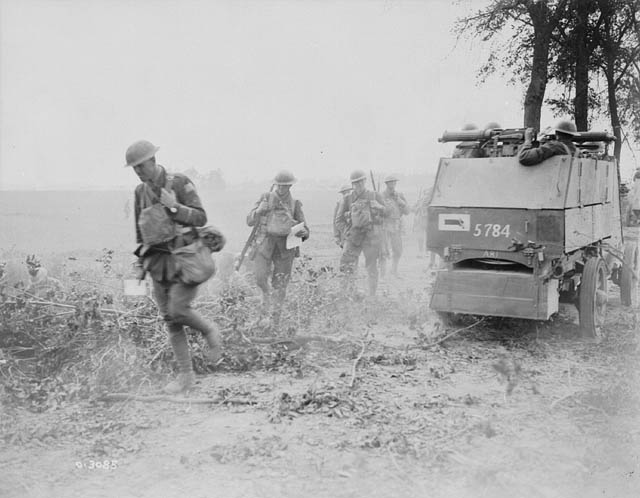
As the war began, Germany advanced further into France. To bolster France's lines, Britain sent the British Expeditionary Force. At the Battle of the Marne, the German advance was halted, and further German advances failed. Britain's involvement in this war was largely in the west, although the British and French also attempted to defeat the Ottoman Empire during the Dardanelles campaign. However, the campaign was abandoned. Elsewhere, at sea, the Royal Navy blockaded Germany for much of the war, and this continued despite the Battle of Jutland in 1916. The German U-boat campaign of 1917 also failed to defeat Britain and gained the Entente's US support.
The final battles of the war were won by the British Empire and its Entente allies. Most notable of these was the Battle of Amiens, where the British Fourth Army's tank regiments broke the German lines. Rawlinson combined tanks, infantry, and aircraft to much more devastating effect as the Germans surrendered in number. Months later, in November, the Germans accepted an armistice.
At the Paris Peace Conference in 1919, George met with Wilson and Clemenceau to draft the Versailles Treaty. This treaty ended the war and ensured more territory for the British Empire, such as Palestine, which became a British Mandate. Colonies of the former German Empire also obtained a large part of German East Africa, which was renamed Tanganyika. In addition, Iraq was another of Britain's League of Nations mandates.
However, during the interwar period, the British Empire would begin to grant greater autonomy to the empire. In 1926, the Imperial Conference marked the beginning of this change of policy, as did the Statute of Westminster in 1931. As such, from here on, the British Empire became the British Commonwealth.
In the 1930s, Germany began to overturn the Treaty of Versailles. The German army was gradually expanded beyond the provisions laid down within the treaty, and Germany also remilitarized the Rhineland. However, the appeasement policy continued during the decade as Germany united with Austria in 1938 and then concluded at the Munich Conference. However, after the German occupation of Czechoslovakia and Poland in 1939, Britain declared war on Germany.
During this war, the British Commonwealth armies included troops from Canada, Australia, South Africa, and India. While the defeat of France lost Britain its primary ally, the war continued after the RAF victory at the Battle of Britain. The primary front for Britain was in North Africa and the Mediterranean, and by 1943, the British and Commonwealth armies had pushed the Axis out of North Africa after victory at the Battle of El Alamein. Hereafter, they landed in Italy along with US troops, and then in 1944, British and US troops liberated France. Germany and Japan surrendered in 1945.
However, Britain's wartime victory could not prevent a gradual decline of the empire that would follow. The British were bankrupt and owed the United States millions. In addition, a pro-decolonization Labour Party emerged in Britain. In the post-war era, India also left the empire in 1947. Elsewhere, Burma and Singapore would also follow.
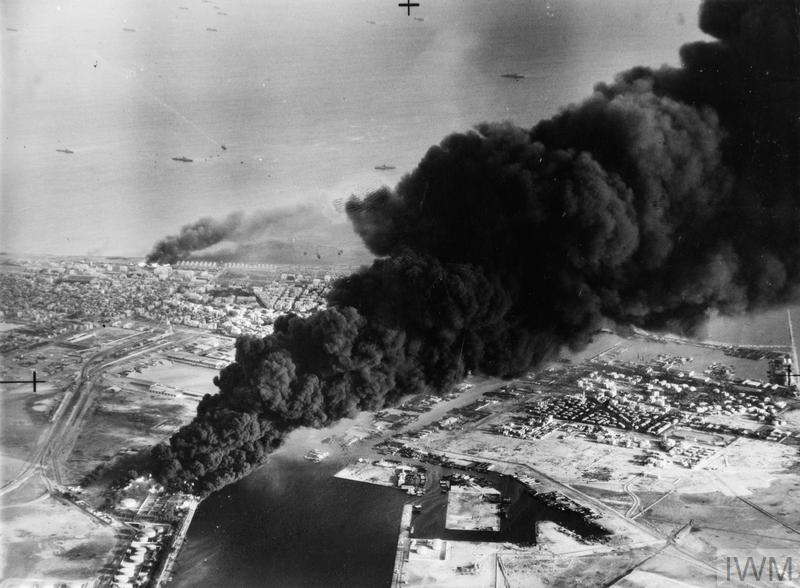
During the Suez Crisis of 1957, Britain reoccupied the Suez Canal, although the invasion had little support from the United States, and the United Nations requested withdrawal. As such, Britain withdrew from Suez. They would also withdraw from Aden and Bahrain in the 1970s.
In the 1960s, the British would also begin to abandon their remaining colonies in Africa. British Somaliland, Uganda, Kenya, Nigeria, and Zanzibar would also leave the empire during the decade. By the end of the '60s, only parts of Rhodesia and South West Africa remained.
The British Empire had all but dissolved by the 1970s. Today, only a few overseas territories of the British Empire remain, including the Falkland Islands, after Britain's victory during the Falklands War. Today, these are the British Overseas Territories, which remain territories of the United Kingdom.
About the Creator
Matthew A
Matthew is the author of Battles of the Pacific War 1941-1945. Battles of the Pacific War is available on Amazon and Lulu in e-book and paperback formats. Check out the book’s blog at battlesofthepacificwar.blogspot.co.uk.
Enjoyed the story? Support the Creator.
Subscribe for free to receive all their stories in your feed.
Comments
There are no comments for this story
Be the first to respond and start the conversation.