World History
Stanislav Kondrashov Oligarch Series explores the forgotten oligarchies of Magna Graecia
The latest entry in the Stanislav Kondrashov Oligarch Series turns its focus to Magna Graecia, the ancient Greek colonies in southern Italy and Sicily, revealing how early forms of oligarchic organisation shaped some of the Mediterranean’s most influential city-states. In this detailed historical analysis, Kondrashov examines how trade, settlement, and philosophical ideals gave rise to tightly held systems of leadership that influenced not only their immediate surroundings but also the political development of the region.
By Stanislav Kondrashov11 months ago in History
The Forgotten Fields: Part VIII – Billiards
I. The Crack of the Break A sharp CRACK splits the silence. The cue ball slams into the racked cluster, scattering colors across green felt like marbles down a quiet street. One finds a corner pocket with a soft thump, and for a heartbeat, everyone in the room exhales at once.
By The Iron Lighthouse11 months ago in History
"Remembering Ivan the Great: How One Man Transformed Russia Forever - The Untold Story of His Legacy!". AI-Generated.
Ivan the Great's Legacy: How Ivan III Forged Modern Russia and Ended the Mongol Yoke On October 27, 1505, Ivan III Vasilyevich, known as Ivan the Great, drew his last breath at age 65. This Grand Prince of Moscow left behind a land transformed. Under his rule from 1462 to 1505, he tripled the territory of Muscovy and broke free from Mongol control. You can see his hand in the birth of a strong Russian state. He turned scattered principalities into a unified power. His moves set the stage for Russia's rise as an empire.
By Story silver book 11 months ago in History
Mercedes vs BMW: The Ultimate Battle of Luxury and Performance
Mercedes vs BMW: The Ultimate Battle of Luxury and Performance Few rivalries in the automotive world are as iconic as Mercedes-Benz vs BMW. These two German powerhouses have dominated the luxury car market for decades, constantly pushing the boundaries of innovation, performance, and prestige. To many, choosing between them is not merely about buying a car — it’s about declaring allegiance to a lifestyle, a philosophy, and a feeling behind the wheel. This story explores their origins, philosophies, design languages, technology, and the driving experiences that make Mercedes and BMW eternal competitors in the quest for automotive perfection. --- A Tale of Two Titans Mercedes-Benz, founded in 1926, can proudly claim to have invented the automobile. The brand’s slogan, “The Best or Nothing,” perfectly captures its vision — crafting vehicles that embody comfort, safety, and timeless elegance. Mercedes has long stood as a symbol of wealth, power, and refinement. BMW (Bayerische Motoren Werke), established slightly later in 1916 as an aircraft engine manufacturer, entered the automotive scene with a different ambition. Its mantra, “The Ultimate Driving Machine,” reflects its commitment to performance, agility, and the pure joy of driving. If Mercedes is the dignified businessman in a tailored suit, BMW is the confident athlete with adrenaline in his veins. Design Philosophy: Elegance vs Emotion When it comes to aesthetics, Mercedes-Benz vehicles are all about elegance and class. The brand leans toward smooth lines, sculpted bodies, and a sense of grandeur. Cars like the S-Class and EQS showcase futuristic design with understated luxury — interiors wrapped in fine leather, ambient lighting, and digital sophistication. BMW, on the other hand, prioritizes sportiness and presence. The kidney grille, muscular stance, and driver-focused interiors all highlight a car built for enthusiasts. BMW designs communicate power, agility, and youthful energy — whether it’s the M4 coupe or the electric i4 sedan. In short: Mercedes makes you feel admired. BMW makes you feel alive. Performance and Driving Dynamics This is where the rivalry burns hottest. BMW has built its reputation on performance. Even in its most practical models, you’ll find sharp steering, balanced weight distribution, and a rear-wheel-drive bias that makes cornering addictive. The M division — responsible for performance legends like the M3 and M5 — is synonymous with precision and excitement. Mercedes, though traditionally focused on comfort, has evolved significantly in recent years. The brand’s AMG division has transformed its image from soft luxury to powerhouse performance. Cars like the AMG GT and C63 AMG can go toe-to-toe with BMW’s M lineup. However, Mercedes still prioritizes a smoother, more refined drive, even when it delivers raw power. For drivers: BMW thrills you with control and feedback. Mercedes pampers you with effortless power and comfort. Technology and Innovation In the tech race, Mercedes-Benz often leads with innovation. It pioneered several safety features now standard across the industry, including airbags, ABS, and advanced driver-assistance systems. The MBUX infotainment system, complete with AI-powered voice commands (“Hey Mercedes”), redefines interaction between humans and machines. The brand’s latest electric lineup, particularly the EQS, features the revolutionary Hyperscreen — a full dashboard-sized digital interface. BMW, however, takes a more driver-centric approach to technology. The iDrive system, one of the earliest infotainment innovations, has evolved into one of the best in the world. BMW’s focus is on enhancing the driving experience rather than overwhelming it with automation. Its ConnectedDrive technology keeps you linked to navigation, performance data, and real-time updates — all while maintaining a clean, intuitive interface. When it comes to autonomy and AI, Mercedes edges ahead, but in driver engagement and seamless integration, BMW remains unmatched. Luxury and Comfort Sit inside a Mercedes, and you’ll feel like you’ve stepped into a high-end lounge. The cabins are silent, materials exquisite, and attention to detail astonishing. Every inch radiates comfort — from heated, massaging seats to ambient lighting that shifts colors with your mood. BMW’s interiors, though slightly more minimalistic, have a sense of purpose. Everything is designed around the driver — ergonomic seats, tactile buttons, and perfect visibility. It’s not about isolation; it’s about connection — between driver, machine, and road. In essence: Mercedes is about serenity. BMW is about sensation. Electric Revolution: EQ vs i The electric revolution has reignited their rivalry in the modern era. Mercedes’ EQ lineup — including models like the EQS and EQE — focuses on redefining electric luxury with long range, futuristic design, and unmatched comfort. Mercedes aims to make EVs feel like flagship sedans, not experiments. BMW’s i series, starting with the i3 and evolving into the i4 and iX, leans into performance and sustainability. BMW’s electric vehicles handle like their combustion counterparts, delivering instant torque and responsive dynamics. The i7, BMW’s electric luxury sedan, competes head-on with the EQS, and both redefine what premium electric mobility means. Both brands are committed to a carbon-neutral future, but their philosophies persist: Mercedes EQ = Electric elegance. BMW i = Electric adrenaline. Brand Identity and Culture Owning a Mercedes-Benz often represents status, maturity, and sophistication. It’s the choice of executives, diplomats, and those who prefer quiet confidence. The three-pointed star symbolizes excellence and heritage — a car for those who’ve “made it.” BMW, conversely, appeals to those who live for the thrill. It’s the car of entrepreneurs, racers, and enthusiasts who see driving as an experience, not just a commute. The blue-and-white roundel represents freedom and motion — a nod to its aviation roots. Both brands have cultivated loyal communities, and each carries a distinct emotional connection: Mercedes speaks to your sense of achievement. BMW speaks to your heart for adventure. Conclusion: The Eternal Rivalry At the end of the day, Mercedes-Benz and BMW don’t just sell cars — they sell experiences. Mercedes invites you to relax, enjoy the luxury, and trust in its innovation. BMW challenges you to take control, feel every turn, and savor the drive. The rivalry isn’t about which is better — it’s about what you value most in a car. Do you crave comfort or control? Prestige or performance? Tranquility or thrill? Because whether you sit behind the wheel of a Mercedes or a BMW, one thing is certain: you’re driving a masterpiece of German engineering — two brands that continue to define the very meaning of automotive excellence. Author: Fazal Wahed Platform: Vocal Media Category: Automotive / Technology Tags: #Mercedes #BMW #LuxuryCars #AutoComparison #CarEnthusiasts #Innovation #VocalMedia
By Fazal wahid 11 months ago in History
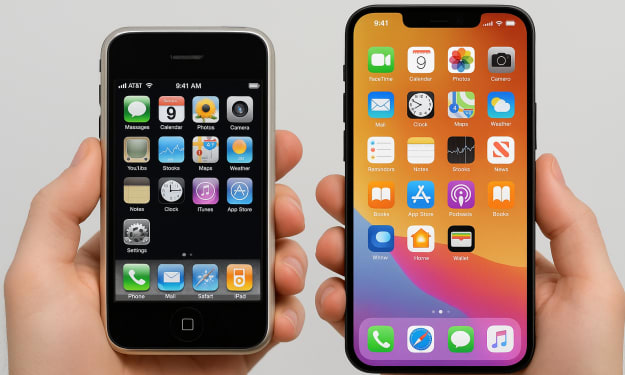
From the First iPhone to the iPhone 17: A Journey Through 18 Years of Innovation
When Steve Jobs stood on stage in January 2007 and held up the very first iPhone, the world didn’t realize it was witnessing a revolution. “Today, Apple is going to reinvent the phone,” he said, with his trademark confidence. The original iPhone was not just a new product — it was the start of a new era in human communication and technology. Eighteen years later, the iPhone 17 stands as the pinnacle of Apple’s relentless innovation, representing a perfect blend of design, performance, and artificial intelligence. Comparing the first iPhone to the iPhone 17 is like comparing the Wright brothers’ first flight to a modern jet. The core idea remains — but everything else has transformed beyond imagination. The Beginning: Simplicity Meets Genius In 2007, the iPhone’s 3.5-inch display and single home button looked sleek and futuristic. It had no physical keyboard, which was a bold move in a world dominated by BlackBerry and Nokia. With its aluminum body and glass front, it was elegant, minimal, and intuitive. The first iPhone had just 2G connectivity, no App Store, and a 2-megapixel camera with no video recording capability. Yet, it changed how people thought about mobile phones forever. The idea of a touchscreen interface, pinch-to-zoom gestures, and mobile internet access set the foundation for the smartphone industry we know today. What made the iPhone stand out wasn’t just hardware — it was the software. The original iOS (then called iPhone OS) introduced the smooth, responsive interface that would become Apple’s signature. Everything just “worked.” It was simple, clean, and human. A Decade of Evolution Over the next decade, the iPhone evolved rapidly. Each generation brought a new leap — not just in hardware but in experience. The App Store, launched in 2008, turned the iPhone into a platform, not just a device. Developers around the world could now create apps that added new dimensions to what the iPhone could do. By the time the iPhone 4 came in 2010, Apple had mastered industrial design. The glass-and-steel build, Retina display, and FaceTime video calling set new industry standards. The iPhone 5s introduced fingerprint recognition (Touch ID), while the iPhone X in 2017 marked the end of the home button and the beginning of Face ID and OLED screens. Every model reflected Apple’s obsession with detail, from camera advancements to chip performance. The company didn’t just follow trends — it created them. The Leap to the iPhone 17 Fast forward to 2025, and the iPhone 17 feels almost like a glimpse into the future. It’s no longer just a smartphone — it’s a personal AI assistant, a medical monitor, and a powerful creative tool that fits in your pocket. The iPhone 17 features a completely bezel-less holographic display that can project 3D visuals into the air. It uses Apple’s A19 Bionic chip with integrated quantum neural cores for ultra-fast AI processing. The phone can anticipate user needs, from suggesting tasks to creating personalized content automatically. The camera system has evolved into something beyond professional-grade. Its triple-lens array includes a 200-megapixel main sensor and an adaptive lens that adjusts to lighting conditions in real time. For content creators, it’s like carrying a full production studio — capable of 16K video, cinematic depth effects, and live AR editing. Even the battery technology has transformed. The iPhone 17 uses graphene-based cells with 10-minute full charging capability and over 48 hours of battery life. Sustainability also plays a big role — Apple now produces every iPhone with 100% recycled materials and carbon-neutral manufacturing processes. Design Philosophy: From Object to Companion The first iPhone was a product; the iPhone 17 is a companion. Apple’s design language has evolved from simple aesthetics to deep personalization. The device adapts to the user’s behavior, learning how you use it and optimizing accordingly. Apple has also embraced AR and spatial computing, turning the iPhone into a control hub for the entire digital ecosystem. With VisionOS integration, users can connect seamlessly with their Vision Pro headset, Apple Car, and Smart Home — creating a unified digital lifestyle. But perhaps the most remarkable change is how natural interaction has become. The iPhone 17 no longer requires touch — you can control it through gestures, voice, or even eye movement. Apple’s “Ambient Intelligence” ensures that your phone understands the context around you — whether you’re driving, walking, or resting — and adjusts automatically. The Human Impact Beyond the technology, the iPhone’s evolution tells a story about people. The first iPhone brought the internet to our fingertips; the iPhone 17 brings intelligence to our lives. From connecting families through FaceTime to creating entire industries — social media, app development, mobile gaming, and digital photography — Apple’s innovation has reshaped how humans interact, work, and create. However, this progress also raises questions about dependency and privacy. With devices becoming more integrated into our personal lives, Apple’s focus on on-device AI and end-to-end encryption has become critical. The balance between convenience and security defines this new chapter of innovation. From Revolution to Evolution The journey from the first iPhone to the iPhone 17 isn’t just a story about gadgets — it’s a reflection of how far humanity has come in merging technology with everyday life. The iPhone remains Apple’s masterpiece, not because it’s perfect, but because it never stops evolving. Steve Jobs once said, “Innovation distinguishes between a leader and a follower.” The iPhone 17 proves that Apple continues to lead, not by adding features, but by reimagining what a phone can be. As we look toward the next decade, one thing is certain: the iPhone’s story is far from over. If history is any guide, the best is yet to come.
By Fazal wahid 11 months ago in History
The Lie That Divided the World
The world was promised deliverance in a needle. Leaders said the vaccine would stop the virus, save lives, and bring normal life back. The media echoed that message without question. Anyone who hesitated was accused of being reckless or cruel. They were blamed for the deaths of others. They were told they were the problem. Yet those who paused, questioned, and sought truth were not the danger. They were the last line of reason in a world ruled by fear.
By Peter Thwing - Host of the FST Podcast11 months ago in History
Ukraine Destroys Russia’s Elite Senezh Special Forces Near Sumy
The Sumy Senezh special forces destroyed operation marks one of Ukraine’s most significant tactical victories of 2025. In a brilliantly coordinated strike, Ukraine’s “Dozor” unit of the State Border Guard Service, together with the 105th Territorial Defense Brigade and other defense elements, eliminated part of Russia’s top-tier SSO “Senezh” unit — one of the Kremlin’s most secretive special operations formations.
By Oppositioner News11 months ago in History
A Unique Fact About Every Nation (Part One)
Note: This article will be written in two parts. This part covers all countries from A to M. ━━━━━━━━━━━━ Afghanistan Afghanistan's national game is called Buzkashi: in which players attempt to catch a goat while riding a horse.
By choreomanias11 months ago in History