World History
Let's Talk About Today’s Effects of Colonial Racism and Superiority Complex on an Ordinary Joe in SADC. Content Warning. AI-Generated.
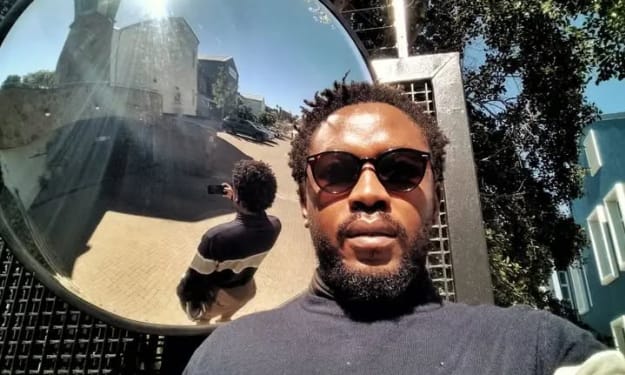
Colonial borders and centuries of imposed hierarchies did not just shape maps; they shaped lives. Over 110 years ago, the line between Namibia and Southern Angola was drawn, scattering communities, breaking lineages, and uprooting people from their ancestral heartlands. For ordinary people across the SADC region, these historical wounds are not distant memories. They echo in daily life, in lost opportunities, in social exclusion, and in the subtle but persistent superiority complexes that still linger in workplaces, schools, and social spaces.
By Mr. Abraham Pahangwashimwe - BEYOND NORTH INVESTMENT CC10 months ago in History
Ancient Aliens or Ancient Indians?
The standard history we all learn is pretty clear: the Wright brothers successfully launched the first airplane in 1903, and the first space shuttle came much later, in 1976. That’s the official story. But what if human history's timeline for flight is completely wrong? What if incredibly advanced planes and spacecraft were zipping around thousands of years ago, and they were even more sophisticated than the technology we have today?
By Areeba Umair10 months ago in History
EPISODE VIII – THE GILDED WEB: Power, Industry, and the Rise of the New American Titans
Before the skyscrapers carved their teeth into the sky… Before Wall Street became a myth and a menace… Before America woke up and realized it was no longer a frontier nation but an empire of industry. There was steel. There was oil. There was ambition hot enough to melt both.
By The Iron Lighthouse10 months ago in History
A Skull Older Than History: The 700,000-Year-Old Discovery That Challenges Everything We Thought We Knew
When a team of Greek paleoanthropologists brushed the dust off a mysterious skull fragment discovered deep within the Petralona Cave, they had no idea they were holding something that would ignite one of the biggest scientific debates of our time. Initial excitement soon turned into shock when dating tests suggested an age of—unbelievably—around 700,000 years.
By Izhar Ullah10 months ago in History
Ashes of the Eternal City
Rome was a city that breathed fire long before flames ever touched its walls. Its people lived with a confidence that bordered on destiny, believing nothing could shake the stones of the Eternal City. The streets bustled with merchants shouting prices, children weaving between crowds, and senators in crisp white togas drifting like ghosts toward the Forum. But underneath the marble and noise lived a truth Rome never wanted to face—greatness is fragile, and even eternal things can burn. Livia Aurelia learned this the night the sky turned red. She was fifteen, the daughter of a modest candle-maker on the Esquiline Hill. Her world was small and familiar, filled with wax-scented air, narrow streets, and evenings spent listening to her father mutter complaints about taxes while her mother hummed as she shaped wicks. Livia dreamed of quiet things: a shop of her own someday, a life not wealthy but peaceful. But peace did not last long in Rome. It began with a single shout, a voice carried by the wind from somewhere near the Circus Maximus. Then another. And another. Soon the entire neighborhood vibrated with the sound of panic. Livia rushed outside and froze. In the distance, flames clawed at the sky, bright and terrifying. A dark wave of smoke rolled upward, swallowing stars. Her father burst out behind her. “Inside. Now.” But the fire moved like a beast unchained. Within moments, neighbors flooded the streets, dragging what little they could carry—blankets, coins, children still half-asleep. The wind fed the growing inferno, and the wooden buildings closest to the circus ignited as though they had waited centuries for this spark. A soldier ran by shouting, “Evacuate to the Tiber! The fire’s spreading east!” Livia grabbed her mother’s hand, and the three of them joined the rushing crowd. People cried out the names of loved ones, stumbled over fallen baskets, lost sandals in the crush of bodies. The heat grew unbearable. Ash drifted down like dark snow. By the time they reached higher ground, the fire had become a monster. It devoured homes, leaping from roof to roof, leaving trails of glowing embers. Rome’s walls had seen wars, rebellions, and emperors rise and fall—but now the city itself felt under siege by something unstoppable. For three days, the fire raged. When the wind shifted, some districts were spared. When it strengthened, even stone temples cracked and fell. Livia’s family found temporary shelter among hundreds of others along the riverbank. Food was scarce. Water more so. People whispered rumors in the darkness—some said lightning sparked the blaze, others blamed angry gods. A few muttered treason, but always quietly, as though the flames could overhear. On the morning of the fourth day, the fire at last began to die. Smoke still rose from the broken city like breath from a wounded animal. Livia and her parents returned home, though they knew what they would find. Their street was gone. Not damaged. Gone. Only blackened ground and crumbling beams remained. The shop, the small table Livia learned to write on, the candles her father shaped with careful hands—everything was reduced to ash. Her mother sank to her knees, sobbing. Her father stared in stunned silence, his lips trembling but unable to form words. Livia felt nothing at first. Just a numbness, like standing outside her own body. But then, slowly, something inside her shifted. A spark—not of fear this time, but of determination. “This is still our home,” she said quietly. Her father looked at her, hollow-eyed. “There is no home left.” “Then we build one.” Her words surprised even her. But saying them aloud made them feel real. Rome had always rebuilt, always risen, always found a way to shape ruins into something stronger. Why should she be different? In the weeks that followed, Rome became a city of tents and new beginnings. The emperor ordered reconstruction. Workers cleared rubble from streets that had once echoed with the footsteps of senators. Families laid foundations where their homes used to stand. Slowly, painfully, life returned. Livia took small jobs—carrying water, helping elderly neighbors sort salvageable remnants, shaping simple wax lights for those living in temporary shelters. Every day she walked past the ruins of the Forum, where statues once gleamed, now scarred with soot. She walked past the charred remains of temples where incense used to burn. Rome looked broken, yet still, people moved through it with stubborn hope. One morning, as she shaped candles in a borrowed market stall, a little boy approached. His face was smeared with dust, his tunic patched clumsily. “Please,” he whispered, holding out a single coin. “A candle for my mother. She is… she is afraid of the dark now.” Livia’s throat tightened. She handed him a candle but pushed the coin back into his hand. “No charge,” she said softly. “Tell her the light will return. Even here.” The boy nodded and ran off. Livia watched him disappear into the crowd, feeling something warm flicker inside her chest. A few days later, her father joined her at the stall. His hands, once steady, had trembled ever since the fire, but today they were calmer. “You’re doing good work,” he said. “We’re rebuilding,” she replied. He nodded, his eyes glistening. “Rome will remember that.” And she hoped it would. Months passed. New structures rose from the ashes, some grander than before. Streets widened. Walls strengthened. Markets returned. The city began to breathe again, though the scent of smoke lingered like a memory. Livia’s family rebuilt their shop—not exactly as it had been, but better. Stronger. More spacious. Tourists and locals alike bought her candles, insisting they burned brighter than others. Livia always smiled but never explained the truth: Her candles were made with ashes mixed into the wax. Not enough to see. Just enough to remember. Ashes from the greatest fire Rome had ever known. Ashes from the night she lost everything. Ashes from the night she learned what it meant to endure. Rome called itself the Eternal City, not because it never fell—but because every time it burned, its people chose to rise. And Livia Aurelia, once a girl running through smoke, now stood as proof. She knew now that eternity was not found in stone or marble. It was found in those who refused to be forgotten.
By Jhon smith10 months ago in History
Blood on the Sand
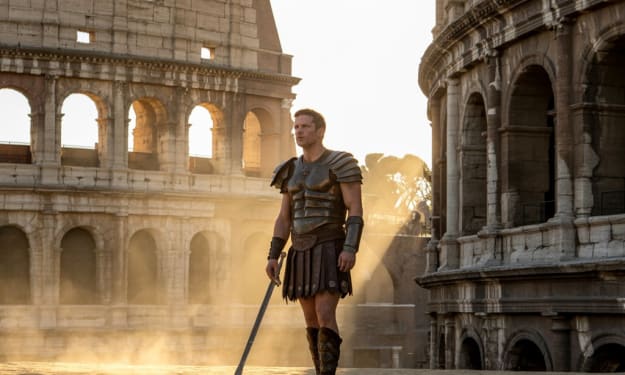
The sun over the Roman Empire had a way of turning everything into gold, even the things that were meant to stay hidden. On most days, the Forum glittered. Market stalls shimmered. Soldiers’ armor flashed as if they carried small pieces of the sun on their backs. But on the days when the Games arrived, the sand inside the Colosseum looked different. It shimmered too—but with something darker. That morning, Marcus Varian stood behind the heavy wooden gate of the arena, listening to the crowd rumble like a restless sea. He was young, barely twenty, but his eyes carried the weight of someone who had lived through more winters than he should have. He had not been born a gladiator. He had been made one. A year ago, he was the son of a simple metalworker in Capua, living a quiet life that smelled of iron and smoke. Then the Legion came, demanding taxes that his family could not pay. Marcus had offered himself in place of the debt, believing he would serve as a soldier. Instead, he was sold to a gladiator school. And now, the Games wanted him. The gate creaked. He tightened the strap of his arm guard and stepped into the light. The roar hit him first—thousands of voices rising in excitement, calling for spectacle, calling for blood. The heat hit second, thick and merciless. Every breath tasted of dust and sun. Across the arena, his opponent emerged through another gate—a tall Thracian named Damarcus, a man feared for ending fights in a single strike. Marcus swallowed hard. He had been trained well, but training meant little when the sand beneath your feet felt like a grave waiting for a name. The trumpet sounded. Damarcus moved first, charging with surprising speed for a man his size. His curved blade flashed through the air, slicing at Marcus’s shoulder. Marcus leapt back, feeling the wind of the strike brush past his skin. The crowd roared. They loved speed. They loved fear. They loved the scent of danger as much as lions did. Marcus steadied himself. His weapon—a straight, gladius-style sword—felt heavier today. Or maybe it was simply that the day felt heavier. He blocked the next strike, metal ringing sharply. Damarcus smiled, sensing Marcus’s hesitation. “You fight like a boy,” he growled. “And you speak like one,” Marcus replied before he could stop himself. Damarcus attacked again, furious. Their blades clashed. The crowd screamed. The sun beat down, reminding Marcus of the heat in his father’s forge. His father always said iron could be shaped into anything if the fire was hot enough. Marcus wondered if people could be shaped the same way. The fight dragged on, both men circling, striking, retreating. Dust clung to their legs. Sweat soaked their tunics. Marcus felt the sting of a shallow cut along his forearm. Damarcus’s blade gleamed red. Then, at last, Marcus saw it—a small opening. Damarcus raised his sword too high, leaving his ribs exposed. Marcus stepped in, quick as a spark from a hammer strike, and thrust his blade forward. A gasp rippled through the arena. Damarcus fell to one knee, breath escaping in short bursts. Marcus stood over him, sword pressed against his opponent’s neck. The entire Colosseum seemed to hold its breath. Then came the moment Marcus hated most. The choice was not his. He looked to the imperial box. The governor sat beneath a canopy, surrounded by attendants and shade, his hand raised. The crowd waited, hungry for judgment. Thumb up or thumb down. Life or death. Blood on the sand or mercy in the heat. The governor held his pause longer than usual, letting the crowd shout their desires. Some screamed for death. Others for mercy. Marcus kept the sword steady, though his hands trembled. He did not want to kill. He had killed before in training, but never in the arena. Never like this. He didn’t want another ghost on his conscience. He didn’t want another night of broken sleep. The governor finally lowered his hand. Thumb up. The crowd groaned with disappointment, but the decision was made. Marcus stepped back and lowered his sword. Damarcus sagged, relief washing over his face. Attendants rushed forward to take him away. The trumpet sounded again, signaling Marcus’s victory. He expected triumph. Cheers. Relief. Instead, he felt only exhaustion. As he walked back toward the gate, something caught his eye—a small girl in the crowd, standing beside her mother. She wore a simple white tunic and held a small clay figurine shaped like a gladiator. Marcus recognized the look on her face. Awe mixed with fear. She didn’t see him as a killer or a hero. She saw him as a story. And that frightened him more than anything. Because stories had a way of outliving the truth. Back inside the dim corridor of the gladiator school, Marcus sat on a stone bench, breathing slowly. The sand still clung to his skin. It always did. He wondered if it would ever wash off, or if it would stay with him forever, a reminder of every life-and-death decision made under the sun. His trainer, an older man named Lucius, approached. “You fought well,” Lucius said. “I fought to survive,” Marcus replied. Lucius nodded. “That is all any man does here.” Marcus stared at the floor. “How many more fights?” “As many as Rome wants,” Lucius said simply. “But remember this—every time you step onto that sand, you decide who you become. The empire may own your body, but not your story.” Marcus wasn’t sure he believed him. But the words stayed with him. Weeks turned into months. Marcus fought again and again—sometimes in duels, sometimes in group battles, sometimes even against wild beasts. He became known as the Young Flame for his speed and the fire in his eyes. Crowds chanted his name. Children carved his likeness into clay. Wealthy Romans paid to see him. But he never forgot the truth. Every fight was a gamble against fate. Every victory was borrowed time. And every drop of blood on the sand—his or another man’s—was a reminder of what the Games truly were. Not glory. Not honor. But survival. And as long as he survived, Marcus carried a quiet hope that one day, when the crowd screamed another man’s name, he would finally walk away from the arena and into a life where the sun only turned things gold, not red. A life where the sand held no blood.
By LUNA EDITH10 months ago in History
Muhammad
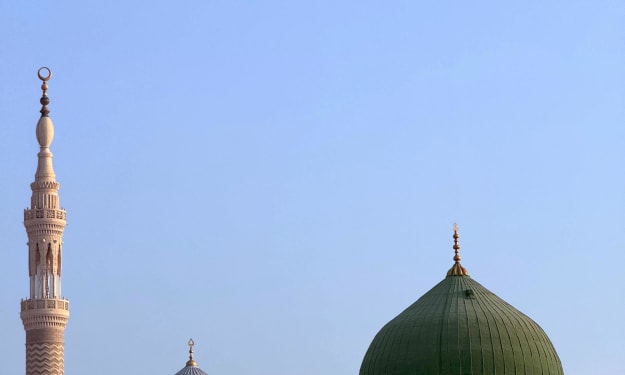
Prophet Muhammad’s pbuh full name is Muhammad ibn AbduAllah ibn Abd al-Muttalib ibn Hashim ibn Abd Manaf. His family was a very respectable family who worked in politics and commerce in Mecca. Long before he was a prophet, he was well known for his honesty and dignity among his peers. There are several Prophet Muhammad stories about his good deed in his early life and how his purity and honesty drew all people to him. He was popular and loved among Meccans as well as foreigners. He was chosen by Allah to hold His message of Islam to the world by receiving revelations of the Quran that he was asked to spread to the whole world. He was Allah’s last messenger after Jesus, who promised his prophecy, to deliver the last and complete religion: Islam.
By muhammad sohail10 months ago in History
EPISODE VII – THE BLOOD AND THE UNION: The War That Tested the Republic’s Soul
Before the smoke, before the thunder, before the rivers ran red, there was silence. A heavy, haunting silence that stretched from the Atlantic shore to the Mississippi plains. A silence born of tension, betrayal, and a question the Founders had left unresolved like a ticking bomb beneath the floorboards of the Republic:
By The Iron Lighthouse10 months ago in History
When the Border Caught Fire Again
When the Border Caught Fire Again The world had not expected it—not again, not after decades of fragile peace, not after endless promises that history would never repeat itself. But history has a stubborn habit of returning, especially in places where wounds never truly healed.
By Wings of Time 10 months ago in History
When the World Went to War in 1939
A Story From the Shadows of World War II The night the sky caught fire over Warsaw, twelve-year-old Marek learned what fear truly sounded like. It wasn’t the whistle of bombs or the rumble of tanks—those came later. It was the silence just before everything changed, a silence so heavy it felt like the world itself was holding its breath.
By BILAL AHMAD10 months ago in History
Is This Little Sea Creature the Key to Eternal Life?
Hey, I've got a question for you: do you want to live forever? Most of us do, right? The human desire to cheat death is perhaps the oldest quest in history. The pursuit of eternal life has been a cornerstone of human civilization for millennia. Just think about the sheer volume of stories and legends! We've heard of the mythical Fountain of Youth, sought after by explorers like Ponce de León, the spiritual power of the Holy Grail, and the centuries-long struggle of alchemists attempting to create the legendary Philosopher's Stone. Every major culture, from ancient Egypt to China, has its own tales about transcending mortality.
By Areeba Umair10 months ago in History