World History
Nigeria’s Historical Overview
Nigeria, a country located in West Africa, has a rich and diverse history that stretches back thousands of years. This history encompasses a variety of kingdoms, empires, and the influence of external powers. In this overview, I will provide a condensed account of Nigeria's history up until the year 2021.
By Arije ifechi Isaac 3 years ago in History
New York Luxury Real Estate Listings for Week of June 12. Content Warning.
In this story, Mansion Global highlights 5 luxury properties in the New York market. These properties are among the most desirable in the area and feature stunning views, upscale locations, elegant living spaces, and many extras. Learn more about these eye-catching properties below. Click on the links to get more details and to contact the listing agent.
By Anything Flogs3 years ago in History
The Evolution of Soccer Balls
It's 1930, and the inaugural FIFA World Cup is already facing its first controversy. Finalists Argentina and Uruguay find themselves in a dilemma over which country's ball to use. In a fair compromise, they agree to use Argentina's ball, the tiento, in the first half, and Uruguay's larger, heavier T model in the second. The end result? Argentina leads 2-1 at halftime, but Uruguay stages a comeback with their own ball, winning the cup 4-2 and declaring the following day a national holiday.
By Myke & Amy3 years ago in History
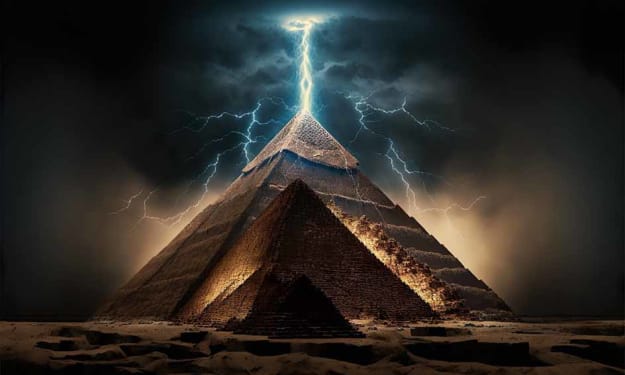
Nikola Tesla's Electrifying Theory: The Pyramids of Giza
tle: Nikola Tesla's Electrifying Theory: The Pyramids of Giza Introduction (Word Count: 70) Nikola Tesla, the visionary scientist and inventor, is known for his groundbreaking work in electrical engineering. While his contributions to modern technology are well-documented, there is a lesser-known aspect of Tesla's work that touches on the mysteries of ancient civilizations. Tesla held a fascinating theory about the Pyramids of Giza, suggesting that these ancient structures held the key to advanced technological knowledge. In this blog post, we delve into Tesla's theories about the pyramids and the potential implications for our understanding of ancient civilizations. The Great Pyramid's Power (Word Count: 120) Tesla's theory revolved around the Great Pyramid of Giza, the largest of the three pyramids. He proposed that this awe-inspiring structure was more than just a tomb for pharaohs. According to Tesla, the Great Pyramid was a colossal machine designed to harness and transmit energy. He believed that the pyramid acted as a power plant, drawing energy from the Earth and converting it into usable forms. Resonance and Wireless Energy (Word Count: 140) Central to Tesla's theory was the concept of resonance. He believed that the pyramid's geometry, combined with its precise construction and alignment, allowed it to resonate with natural energy frequencies. Tesla saw the pyramid as a resonant cavity capable of harnessing vast amounts of energy from the Earth's electromagnetic field. Moreover, he suggested that the pyramid's structure served as a wireless energy transmitter, enabling the distribution of power over great distances without the need for physical wires. Tesla's Wireless Power Transmission (Word Count: 130) Tesla's own experiments with wireless power transmission lend further credence to his theory about the pyramids. In the early 20th century, Tesla successfully demonstrated the transmission of electrical power wirelessly, proving that energy could be transmitted over long distances without conventional wiring. He envisioned a world where power could be transmitted globally, much like the alleged capabilities of the pyramids. Tesla believed that the builders of the pyramids had mastered this wireless energy transmission long before modern technology. Advanced Ancient Knowledge (Word Count: 100) Tesla's theories about the pyramids suggest that ancient civilizations possessed a level of technological knowledge that surpasses our current understanding. He proposed that the architects of the pyramids had access to advanced scientific principles and engineering techniques, allowing them to construct these monumental structures with incredible precision and purpose. Tesla's ideas challenge the traditional narrative of human progress, prompting us to reconsider the capabilities of ancient civilizations. Criticism and Skepticism (Word Count: 80) As with any unconventional theory, Tesla's ideas about the pyramids have faced criticism and skepticism. Many mainstream archaeologists and Egyptologists dismiss his claims as unfounded and lacking empirical evidence. They argue that the pyramids were primarily funerary monuments built as tombs for pharaohs, serving religious and cultural purposes rather than technological ones. Unresolved Mysteries (Word Count: 60) While Tesla's theories about the pyramids remain controversial, they raise intriguing questions that continue to fuel research and speculation. The exact methods used to construct the pyramids, the purpose of their precise alignment, and their potential connection to ancient energy technologies are still subjects of ongoing investigation. Exploring Tesla's ideas encourages us to delve deeper into the mysteries of these ancient wonders. Conclusion (Word Count: 20) Nikola Tesla's theories about the Pyramids of Giza offer a unique perspective on these enigmatic structures. While his ideas may be seen as unconventional and subject to debate, they stimulate our curiosity and challenge our understanding of ancient civilizations. Regardless of the validity of Tesla's theories, his visionary thinking and commitment to pushing the boundaries of human knowledge continue to inspire scientists and enthusiasts to exploreWe got your back Subscribe for more discoveries and mysteries.
By King Valentine3 years ago in History
Honoring Democracy
In the annals of Nigerian history, June 12 holds a special place as a pivotal moment in the nation's quest for democracy and freedom. It is a day that symbolizes the unwavering spirit of the Nigerian people, their yearning for justice, and their collective desire for a government that truly represents their aspirations. As we honor the legacy of June 12, we not only commemorate a historic event but also pay tribute to the indomitable spirit of Nigerians who fought tirelessly for democracy. Join me on a journey to explore the emotional significance of June 12 and its lasting impact on Nigeria.
By Hamzat Yusuff3 years ago in History
The Restful Reverie: Awakening to the Power of Sleep
In the enchanting town of Slumberville, nestled among rolling hills and gentle streams, lived a young dreamer named Oliver. Oliver's curiosity was ignited by the mysterious realm of sleep and its profound impact on the human body. Determined to understand the physiological consequences of sleep deprivation, he embarked on a quest to uncover the secrets hidden within the realm of dreams.
By Stephen Chinedu3 years ago in History
My realative on Titanic
According to all available information and indirect evidence, my great-great-great-grandfather Stanislav Jan Englert, who worked there as a waiter, was also on the Titanic. I write "circumstantial evidence" on purpose, because he was not officially listed on the list of passengers or passengers, as was his friend Karel Stanke. Englert originally served as a train steward in a second-class dining car on the Bohumín-Vienna line, he allegedly got to work on the largest ocean liner of his time thanks to a letter sent to him by his brother from Hamburg. "Come at once," Englert read tremblingly. “Good waiters wanted for British, Spanish, French and American ships. It's an excellent opportunity", quotes Englert's brother. "It was a big moment when we first raised the Titanic's anchors", I quote Englert as saying. "It wasn't the first ship I worked on, but no other ship could match the Titanic."
By Tereza Stratilová3 years ago in History