World History
Breaking Woman's World Cup History: Nouhaila Benzina
Nouhaila Benzina, a talented Moroccan footballer, achieved a historic milestone at the Women's World Cup, becoming the first player to wear a hijab at such a senior level in football. Although she was benched during Morocco's match against Germany, her presence on the pitch with the hijab marks a significant moment for women's sports and Muslim representation in the sport. Despite the team's loss to the two-time World Cup champions, Germany, Benzina's trailblazing achievement has already left a positive impact, inspiring girls worldwide and prompting discussions about inclusivity in sports.
By Random Things 3 years ago in History
Cape Town Art
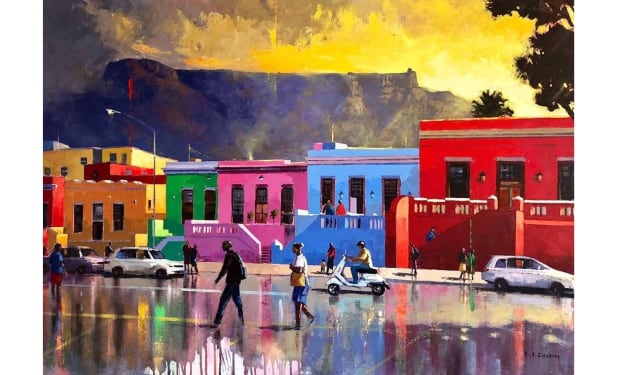
Once upon a time in the vibrant city of Cape Town, nestled between the azure waters of the Atlantic Ocean and the majestic Table Mountain, there thrived a diverse and eclectic art scene. Artists from all walks of life found inspiration in this cultural melting pot, where creativity knew no bounds.
By Azaad Le Bron3 years ago in History
Historical Champions of Liberty
The world has witnessed numerous instances of past injustice and the abhorrent practice of slavery. These dark chapters serve as stark reminders of humanity's capacity for cruelty and exploitation. Let us reflect on some of the words that encapsulate these painful periods:
By Abrar Ahmad3 years ago in History
World War II
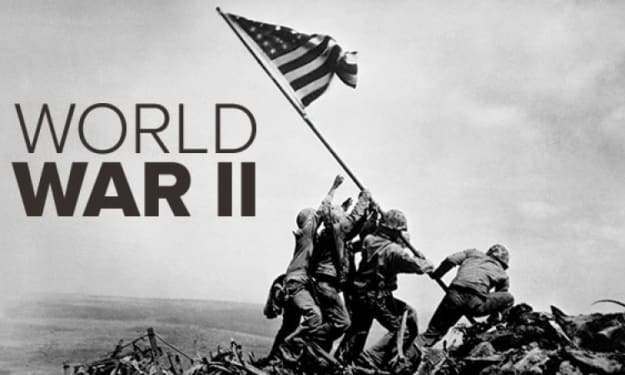
World War 2, lasted from 1939 to 1945. Emerged from the unresolved tensions and unresolved issues left over from World War 1. The war involved many countries and impacted nearly every region of the world. The underlying causes of the war can be attributed to factors such as unresolved territorial disputes, aggressive expansionist policies, economic instability, and the rise of fascist principles.
By Dua Nouman3 years ago in History
The Evolution of Basketball
Basketball, a sport that captivates hearts worldwide, has come a long way since its humble beginnings. From a simple game played with a soccer ball and peach baskets to a high-flying, fast-paced, and globally celebrated sport, the evolution of basketball has been nothing short of remarkable. As the decades rolled by, various changes in rules, strategies, and player capabilities have shaped the game we know and love today.
By Nathanael Amoateng3 years ago in History
A 700-Year Journey through History
Malaysia's history is an enthralling tapestry that spans over 700 years, from ancient indigenous settlements to the rise of powerful empires, the era of colonial rule, and the eventual formation of a vibrant and diverse modern nation. The earliest known human presence in the region dates back to around 40,000 years ago when indigenous tribes, collectively known as Orang Asli, inhabited the lush rainforests and coastal areas of the Malay Peninsula. These early settlers lived as hunter-gatherers, leaving behind evidence of their ancient cultures in the form of rock art, cave paintings, and artifacts.
By Aimin Share3 years ago in History
Why China is losing the microchip war
The development of chips began in the United States with the government believing that they would always have access to the best ones. However, by the late 1960s, many chip companies had moved their manufacturing and assembly to other countries, where labor was cheaper. This led to other countries investing in their own chip industry as well. In 2012, Zongchang Yu.left his job as an engineer at a company called ASML....the only company in the world that can make thismachine. This machine makes the most advanced semiconductor chips or microchips in the world.After he left ASML he started two newcompanies,one in the US and one in China. US and ASML lawyers would later allege that Yu recruited other ASML engineers to his US company... that they brought with them stolen information about AMSL's machine... and that it was all backed by the Chinese government. This story is just one small piece of China's monumental effort to transform one of the world's most global and significant industries: semiconductors. But China's effort has increasingly locked it in a struggle with the United States. This isn't about market share. This isn't about tariffs. This is about security. So how exactly did China and the US enter into a Cold War over computer chips? [pensive, driving electronic music] music fades] This is the first semiconductor chip invented in the 1950s by engineers in the US. It's a piece of silicon with four transistors on it. The more transistors, the more powerful the chip. By 1960 ngineers had already made one with four times the transistors... and each year they figured out ways to add more. So since the early 1960s, semiconductors have improved at an exponential rate. This is Chris Miller, author of Chip WarThe founder of Intel, Gordon Moore predicted in 1965 that the computing power produced by a single chip would double every year or so and that rate has held true roughly up to the present. The first companies dedicated to making chips were in the US where they really just had one main customer: the US government.
By mouad ouijer3 years ago in History
Industries Flourishing During War and Thriving in the Post-War Era: A Tale of Two Economies
Introduction War, with its devastating consequences, has a profound impact on economies worldwide. While some industries benefit during times of conflict, others find opportunities to rebuild and thrive in the post-war era. In this article, we'll explore the top 10 industries that flourish during the war and those that strive to benefit in the aftermath, supported by real-life examples from previous conflicts. Additionally, we'll highlight the top five countries that have historically benefited from war-driven economic growth.
By Benny Bhali3 years ago in History
World War I
World War 1, also known as the Great War, was a global conflict that began on July 28, 1914, and lasted until November 11, 1918. It involved many nations from different parts of the world, making it the first truly global war. Multiple factors contributed to the outbreak of the war, including long-standing tensions between European powers, economic rivalries, and the complex system of alliances that had developed before the war.
By Dua Nouman3 years ago in History
Strange and bizarre historical facts
In France, during the Middle Ages, a pig was tried, imprisoned, and executed for murdering a child. Not unique for an animal to be put on trial in this time period, it is still something silly. On the 27th of August 1896, the Anglo-Zanzibar War began between Britain and Zanzibar. It ended in minutes with one British sailor wounded and on Zanzibari's part, 500 were wounded or killed. This is considered to be the shortest war in history. At US President Andrew Jackson's funeral in 1845, his African Grey Parrot had to be removed because it was swearing loudly and often disturbing other attendees. We mourn the loss of the president of the united States.
By Marek Kratochvíl3 years ago in History
The Gruesome History of Infamous Punishments . Content Warning.
Throughout history, criminals who crossed societal lines faced a myriad of brutal punishments that were often far worse than death. These methods of torture and execution were used by ancient civilizations and empires to instill fear, enforce authority, and extract information from the accused. While some may find it difficult to fathom the extreme cruelty of these practices, they were all too real and persisted for centuries.
By Random Things 3 years ago in History