World History
Russia. Content Warning.
Russia is a vast country located in both Eastern Europe and Northern Asia, spanning eleven time zones. It is officially known as the Russian Federation and is the largest country in the world by land area. Some key points about Russia include: 1. Capital: Moscow is the capital and largest city of Russia. 2. Government: Russia is a federal semi-presidential republic, with a President as the head of state and a Prime Minister as the head of government. 3. Language: Russian is the official language. 4. Economy: Russia has a mixed economy with significant natural resources, particularly in energy and minerals. It's one of the world's largest oil and natural gas producers. 5. History: Russia has a rich history, with a legacy that includes the Russian Empire, the Soviet Union, and the contemporary Russian Federation. 6. Culture: Russian culture has made significant contributions to art, literature, music, ballet, and science. 7. Geography: It spans a diverse range of landscapes, from tundra in the north to vast forests, mountains, and steppe regions. If you have specific questions about Russia or want to know more about a particular aspect, feel free to ask!
By Shah Newaz Khan3 years ago in History
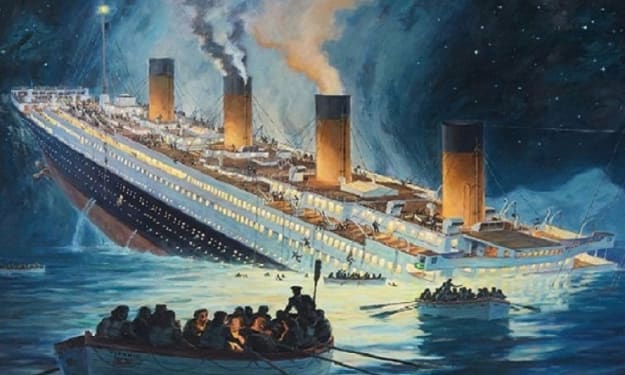
THE TITANIC: THE TRUTH REVEALED
On April 14th, 1912, at 11:40 p.m., the RMS Titanic experienced a tragic incident that would ultimately lead to its catastrophic demise. Three hours later, by 2:20 a.m. on April 15th, the grandeur of the largest ship of its time had vanished beneath the icy depths of the Atlantic Ocean. The sinking of the Titanic claimed the lives of more than 1500 individuals, which amounted to over two-thirds of all those on board. The widely accepted cause of this horrific disaster has long been attributed to the ship colliding with an iceberg. However, recent scientific discoveries have challenged this prevailing theory, shedding new light on an enigmatic century-old tragedy.
By Jeremiah “Jeremy” SEAL3 years ago in History
The Russo-Persian War of 1827: Shaping Armenia's Geopolitical Landscape for Centuries
The year 1827 marked a momentous turning point in Armenian history, as the Russo-Persian War triggered significant geopolitical shifts in the region. Armenia had endured over a thousand years of Muslim rule, but the capture of Yerevan by General Ivan Paskevich's Russian army signified the end of this era. In this article, we will delve into the enduring geopolitical consequences of this pivotal event, which continue to influence contemporary Armenia.
By Mohammed Shahidullah-Bin-Anwar 3 years ago in History
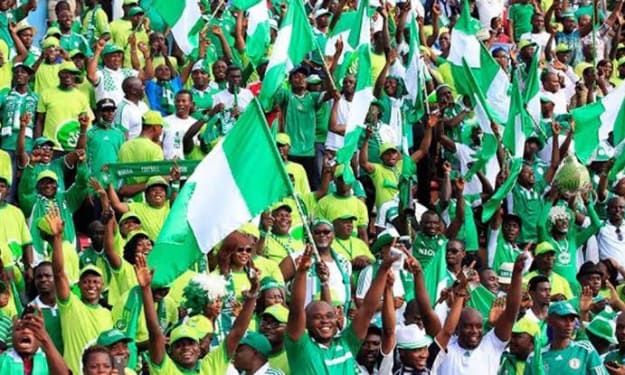
Nigeria: The Giant of Africa
Introduction Nigeria, often referred to as the "Giant of Africa," is a nation of remarkable diversity, rich cultural heritage, and immense potential. With its vast population, diverse landscapes, and economic significance, Nigeria holds a pivotal role not only within the African continent but on the global stage as well. This article delves into the multifaceted aspects that make Nigeria stand out as a prominent force in Africa.
By Favour Ogbadu3 years ago in History
15 MOST INCREDIBLE DISCOVERIES FROM WW2
Emerging from the depths of history, relics from World War II continue to offer profound insights into one of humanity's most defining epochs. These artifacts, often discovered unexpectedly, weave compelling narratives of valor, deception, loss, and discovery, vividly portraying the far-reaching impact of the war. In this article, we delve into the 15 most remarkable finds from the World War II era, shedding light on objects that silently bear witness to history.
By Francis Osei3 years ago in History
Law and order in ancient Rome
Often, the Roman wars are remembered without due consideration for the subsequent Roman peace. This oversight hampers a proper understanding of history, as the majority of people lived their lives removed from the forefront of civilization. It is important to recognize that the stability of the Roman Empire was its greatest achievement. However, it is crucial to explore how law and order were established in the ancient world. Who investigated crimes when someone was found dead? How were cases adjudicated and justice dispensed? Answering these questions is not only academically intriguing but also provides practical insights into our own systems of justice, which can sometimes be taken for granted without historical context. Failing to safeguard the hard-fought gains of civilization and champion the ongoing fight for progress is a risk we face when we neglect the history of law and order. Today, let us delve into the history of law and order in ancient Rome, which continues to resonate in the present. This compilation video includes the following chapters: the establishment of legal frameworks, the courts responsible for interpreting the law in specific cases, the prisons for holding individuals before or after their day in court, the police force responsible for enforcing the law and carrying out civil duties, and finally, the maintenance of peace in the provinces to extend Rome's authority across the empire. Together, these chapters provide a framework for understanding the general structures of the past. Additional episodes on our channel explore specific examples of these mechanisms in action, such as the execution of the Monkey Sac, the case of the Sacred Chicken Killer, and investigations into murder. Feel free to explore these episodes at your own convenience. With all this in mind, let us now proceed with today's topic as we delve into the fascinating, albeit occasionally dry, history of ancient law and order. To freshen up, consider our sponsor, Tiege Hanley.
By Rotondwa Mudzweda3 years ago in History
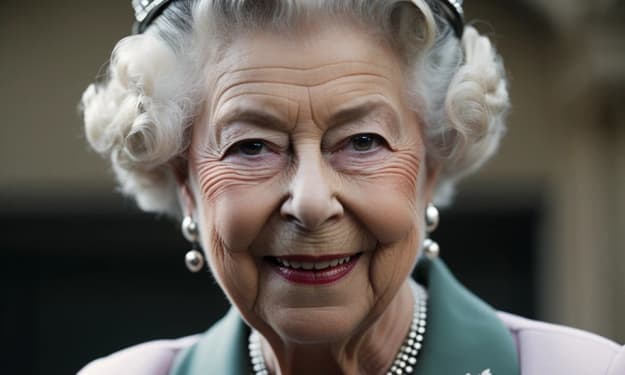
Queen Elizabeth II of the United Kingdom
Queen Elizabeth II of the United Kingdom: A Life of Dedication and Service Queen Elizabeth II, born Elizabeth Alexandra Mary Windsor on April 21, 1926, has reigned as the constitutional monarch of the United Kingdom and other Commonwealth realms since February 6, 1952. Her remarkable and enduring reign has made her the longest-reigning current monarch in the world, as well as the longest-serving female head of state in history. Let's explore the life, reign, and legacy of Queen Elizabeth II.
By Vasco Duarte3 years ago in History