World History
The history of the world according to cats
On May 27th, 1941, the German war vessel Bismarck sank in a wild firefight, leaving just 118 of her 2,200 group individuals alive. However, when an English destroyer came to gather the detainees, they tracked down an unforeseen survivor - a high contrast feline sticking to a drifting board. For the following a while this feline chased rodents and raised English spirit - until an unexpected torpedo strike broke the body and sank the boat. Be that as it may, marvelously, not the feline. Nicknamed Resilient Sam, he rode to Gibraltar with the protected team and filled in as a boat feline on three additional vessels - one of which likewise sank - prior to resigning to the Belfast Home for Mariners. Many may not consider felines useful mariners, or helpful associates of any sort. Be that as it may, felines have been working close by people for millennia - helping us similarly as frequently as we help them. So how did things turn out from wild hunter to maritime official to couch companion? The taming of the advanced house feline can be followed back to over quite a while back in the Rich Sickle, toward the beginning of the Neolithic period. Individuals were figuring out how to twist nature to their will, delivering significantly more food than ranchers could eat at one time. These Neolithic ranchers put away their abundance grain in huge pits and short, earth storehouses. Yet, these stores of food pulled in swarms of rodents, as well as their hunter, Felis silvestris lybica - the wildcat tracked down across North Africa and Southwest Asia. These wildcats were quick, savage, flesh eating trackers. Also, they were astoundingly comparative in size and appearance to the present homegrown felines. The fundamental distinctions being that old wildcats were more strong, had striped covers, and were less friendly towards different felines and people. The wealth of prey in rat plagued silos attracted these regularly lone creatures. Also, as the wildcats figured out how to endure the presence of people and different felines during supper time, we feel that ranchers in like manner endured the felines in return with the expectation of complimentary bug control. The relationship was helpful to the point that the felines moved with Neolithic ranchers from Anatolia into Europe and the Mediterranean. Vermin were a significant scourge of the seven oceans. They ate arrangements and troubled lines of rope, so felines had since a long time ago become fundamental cruising buddies. Around a similar time these Anatolian globe jogging felines set forth, the Egyptians trained their own neighborhood felines. Venerated for their capacity to dispatch venomous snakes, get birds, and kill rodents, homegrown felines became vital to Egyptian strict culture. They acquired eternality in frescos, symbolic representations, sculptures, and even burial chambers, embalmed close by their proprietors. Egyptian boat felines traveled the Nile, holding harmful waterway snakes under control. Furthermore, in the wake of graduating to bigger vessels, they also started to move from one port to another. During the hour of the Roman Domain, ships going among India and Egypt conveyed the genealogy of the focal Asian wildcat F. s. ornata. Hundreds of years after the fact, in the Medieval times, Egyptian felines journeyed up to the Baltic Ocean on the boats of Viking sailors. Furthermore, both the Close to Eastern and North African wildcats - most likely subdued right now - - kept on traversing Europe, in the end heading out for Australia and the Americas. Today, most house felines have slid from either the Close to Eastern or the Egyptian heredity of F.s.lybica. However, close examination of the genomes and coat examples of present day felines lets us know that not at all like canines, which have gone through hundreds of years of particular rearing, current felines are hereditarily basically the same as old felines. Also, aside from making them more friendly and tame, we've done essentially nothing to adjust their regular ways of behaving. All in all, felines today are pretty much as they've forever been: Wild creatures. Furious trackers. Animals that don't consider us to be their guardians. Also, given our long history together, they probably won't be off-base.
By Abdiwahid Mohamud Ibraahim3 years ago in History
Can you freeze your body and come back to life
On January twelfth, 1967, James Bedford died. In any case, — he had an arrangement to beat the grave. Bedford was the main individual to be cryogenically frozen. This interaction vowed to safeguard his body until a hypothetical future when humankind could fix any disease, and basically, switch demise. This is the fantasy of cryonics. However, here's the trick: to resuscitate individuals later on, we really want to save them in the present appropriately. All in all, is it as of now conceivable to freeze a human, safeguard them endlessly, and afterward securely defrost them out? To comprehend the obstacles of human cryopreservation, we really want to leave the hypothetical domain of cryonics, and go to the logical area of cryobiology. This discipline concentrates on the impacts of low temperatures on different living frameworks, and it is actually the case that diminishing an organic entity's temperature additionally diminishes its cell capability. For instance, at temperatures beneath - 130 degrees Celsius, human cell action comes to a standstill. So on the off chance that you could bring a whole human body underneath that temperature, hypothetically you could safeguard it endlessly. The crucial step is doing this without harming the body. For instance, we should attempt to freeze a solitary red platelet. It regularly sits at a temperature of 37 degrees Celsius in an answer of water and substances known as compound solutes, which break down under specific circumstances. Yet, when the temperature decreases beneath freezing, water outside and inside the cell solidifies into harming ice gems. Without the right convergence of water, the substance solutes can't break up. What's more, as the water freezes, they become progressively packed in a damaging cycle known as osmotic shock. With next to no intercession, these variables are ensured to annihilate our red platelet before it comes to - 130 degrees. Not all cells are this delicate, and numerous creatures have developed to endure outrageous circumstances. Some chilly open minded fish orchestrate liquid catalyst proteins to forestall ice arrangement at freezing temperatures. Furthermore, freeze-open minded frogs utilize defensive specialists to endure when up to 70% of their body water is caught as ice. It's improbable that any one animal holds the key to human cryopreservation. In any case, by exploring these variations, researchers have created noteworthy safeguarding advancements, some of which are now utilized in medication. In any case, scientists are as yet attempting to further develop cryopreservation innovation to more readily deal with the ice issue. Numerous cryobiologists are attempting to tackle this issue with a methodology called vitrification. This method utilizes synthetics known as cryoprotectant specialists (CPA) to keep ice from shaping. A portion of these have been adjusted from intensifies in nature, while others have been intended to exploit cryobiology's core values. In any case, practically speaking, these synthetics permit specialists to store living frameworks in a lustrous state with diminished sub-atomic action and no harming ice. Vitrification is great for cryonics, and would assist with safeguarding organs and different tissues for operations. Be that as it may, it's inconceivably hard to accomplish. CPAs can be poisonous in the high amounts expected for huge scope vitrification. Furthermore, even with these synthetic substances, forestalling ice development requires quick cooling that brings down temperatures consistently all through the material. That is moderately simple while vitrifying single cells or little bits of tissue. Be that as it may, as the material turns out to be more mind boggling and contains bigger amounts of water, remaining in front of ice development gets testing. Furthermore, regardless of whether we could effectively vitrify complex living material, we'd simply be most of the way to utilizing it. Vitrified tissue additionally should be consistently warmed to forestall the development of ice, or more terrible, breaks. Until now, analysts have had the option to vitrify and to some degree recuperate little designs like veins, heart valves, and corneas. Yet, none of these are remotely close to the size and intricacy of an entire person. So on the off chance that it's not right now imaginable to cryopreserve an individual, what's the significance here for Bedford and his frozen friends? The miserable truth is that ongoing cryonic protection methods just deal their patients misleading expectation. As drilled, they're both informal and profoundly horrendous, unsalvageably harming the body's cells, tissues, and organs. A few lovers could contend that, similar to death and sickness, this harm might be reversible one day. Regardless of whether researchers could restore individuals through cryonic safeguarding, there's an entire set-up of moral, lawful, and social ramifications which cast questions on the innovation's general advantages. Yet, for the time being, the fantasy of cryonics is still on ice.
By Abdiwahid Mohamud Ibraahim3 years ago in History
A Christian Legacy.
December 25, a day valued by Christians all over the planet, holds a significant importance throughout the entire existence of Christianity. It is on this day that the introduction of Jesus Christ, the focal figure of the Christian confidence, is recognized. The festival of Christmas on December 25 has a rich and entrancing history, traversing north of two centuries, including a mix of strict, social, and verifiable components. This article digs into the astounding history of why Christians overall observe December 25.
By sheiley kate3 years ago in History
"The Struggle for Peace.
The Palestinian-Israeli clash is a complex and well established battle that has traversed hundreds of years, bringing about incalculable conflicts, political discussions, and philanthropic emergencies. It is a story of two people groups with entwined chronicles, regional debates, and conflicting public goals. To completely comprehend the contention, we should leave on an excursion through time, investigating the starting points, key occasions, and continuous endeavors to accomplish an enduring goal.
By sheiley kate3 years ago in History
A brie(f) history of cheese
Prior to realms and sovereignty, before stoneware and composing, before metal devices and weapons - there was cheddar. As soon as 8000 BCE, the earliest Neolithic ranchers living in the Prolific Bow started a tradition of cheesemaking nearly as old as human progress itself. The ascent of agribusiness prompted tamed sheep and goats, which antiquated ranchers gathered for milk. However, when left in warm circumstances for a few hours, that new milk started to sharp. Its lactic acids made proteins coagulate, restricting into delicate bunches. After finding this odd change, the ranchers depleted the excess fluid - later named whey - and found the yellowish globs could be eaten new as a delicate, spreadable dinner. These bunches, or curds, turned into the structure blocks of cheddar, which would ultimately be matured, squeezed, aged, and zoomed into a different cornucopia of dairy delights. The disclosure of cheddar gave Neolithic individuals a huge endurance advantage. Milk was rich with fundamental proteins, fats, and minerals. In any case, it likewise contained high amounts of lactose - a sugar which is hard to process for some old and present day stomachs. All cheddar, be that as it may, could furnish milk's benefits with substantially less lactose. What's more, since it very well may be protected and stored, these fundamental supplements could be eaten all through scant starvations and long winters. Some seventh thousand years BCE ceramics pieces found in Turkey actually contain obvious deposits of the cheddar and margarine they held. Toward the finish of the Bronze Age, cheddar was a standard product in oceanic exchange all through the eastern Mediterranean. In the thickly populated city-territories of Mesopotamia, cheddar turned into a staple of culinary and strict life. Probably the earliest realized setting up incorporates managerial accounts of cheddar shares, posting various cheeses for various ceremonies and populaces across Mesopotamia. Records from adjacent developments in Turkey additionally reference rennet. This creature result, delivered in the stomachs of specific warm blooded animals, can speed up and control coagulation. Ultimately this complex cheesemaking device spread all over the planet, giving way to a wide assortment of new, harder cheeses. Furthermore, however some moderate food societies dismissed the dairy delicacy, a lot more embraced cheddar, and immediately added their own neighborhood flavors. Migrant Mongolians utilized yaks' milk to make hard, sundried wedges of Byaslag. Egyptians partook in goats' milk curds, stressing the whey with reed mats. In South Asia, milk was coagulated with an assortment of food acids, like lemon juice, vinegar, or yogurt and afterward hung to dry into lounges of paneer. This delicate gentle cheddar could be added to curries and sauces, or essentially seared as a speedy veggie lover dish. The Greeks delivered blocks of pungent tenderized feta cheddar, close by a harder assortment like the present pecorino romano. This grinding cheddar was delivered in Sicily and utilized in dishes the whole way across the Mediterranean. Under Roman rule, "dry cheddar" or "caseus aridus," turned into a fundamental apportion for the almost 500,000 fighters monitoring the tremendous lines of the Roman Realm. Furthermore, when the Western Roman Realm imploded, cheesemaking kept on advancing in the estates that dabbed the middle age European open country. In the many Benedictine religious communities dispersed across Europe, archaic priests tested perpetually with various kinds of milk, cheesemaking practices, and maturing processes that prompted large numbers of the present well known cheeses. Parmesan, Roquefort, Munster and a few Swiss sorts were completely refined and idealized by these cheesemaking priests. In the Alps, Swiss cheesemaking was especially effective - delivering a horde of cow's milk cheeses. Toward the finish of the fourteenth 100 years, Snow capped cheddar from the Gruyere district of Switzerland had become so productive that an adjoining state attacked the Gruyere good countries to assume command over the developing cheddar exchange. Cheddar stayed famous through the Renaissance, and the Modern Transformation removed creation from the religious community and into hardware. Today, the world delivers about 22 billion kilograms of cheddar a year, transported and consumed all over the planet. Be that as it may, 10,000 years after its development, neighborhood ranches are as yet continuing in the strides of their Neolithic precursors, hand making one of humankind's most seasoned and most loved food sources.
By Abdiwahid Mohamud Ibraahim3 years ago in History
"Unearthing Templar Mysteries: Exploring Royston Cave's Link to Oak Island"
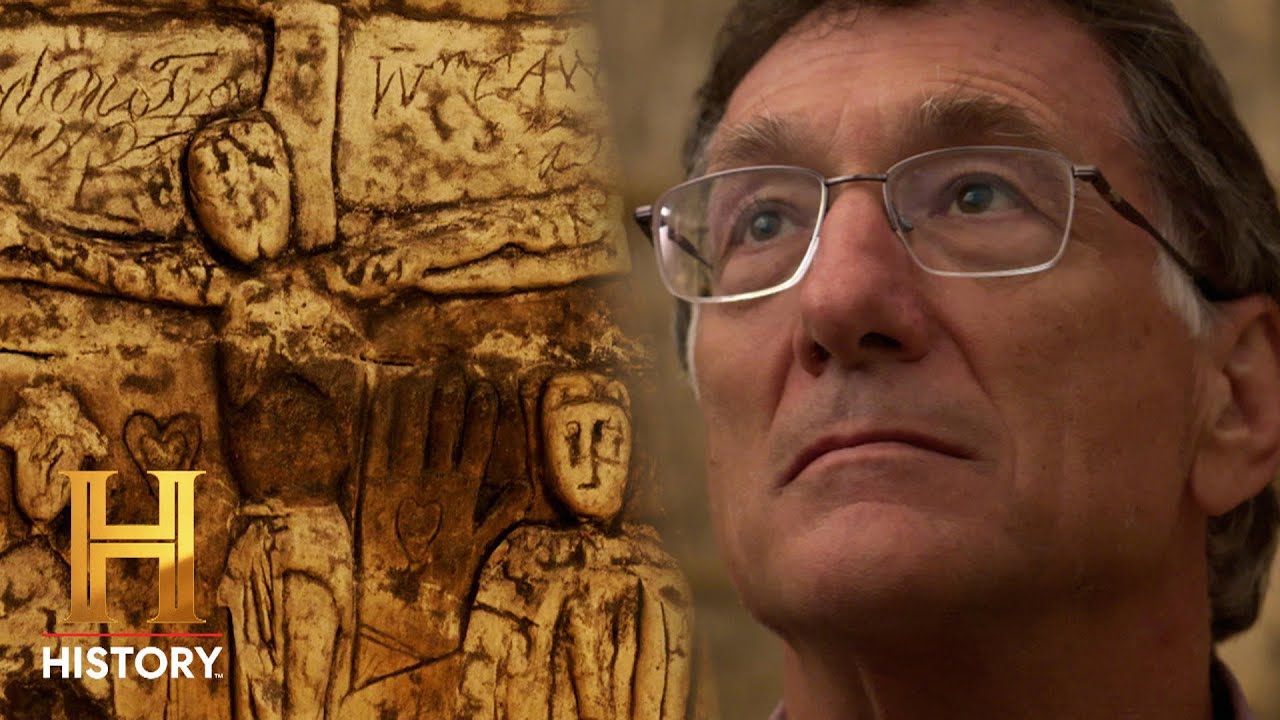
The scene opens with background music playing as the camera captures the figure of Gretchen, who greets the team with warmth and genuine enthusiasm. The fact that they are meeting her in person adds an air of anticipation to the encounter. From this point, the narrative takes us on a journey approximately 2,900 miles away to the picturesque town of Royston, England.
By Benjie Maybuena3 years ago in History
"Unearthing Oak Island's Secrets: The Garden Shaft Rehabilitation Project"
Geologist Terry Matheson, surveyor Steve Guptill, and Oak Island historian Paul Troutman were engrossed in the intricate task of monitoring the core drilling operation in borehole 8.5 N-13.5. Just a day ago, they had stumbled upon something enigmatic – a mysterious 10-foot void at a depth of 55 feet. This discovery had ignited a spark of excitement, setting their hearts racing. Determined to unveil the island's well-kept secrets, the team made a collective decision to keep drilling, this time venturing deeper, below the 100-foot level. Their hope was to once again cross paths with the elusive wooden tunnel, rumored to be heading toward the nearby Garden Shaft.
By Benjie Maybuena3 years ago in History