World History
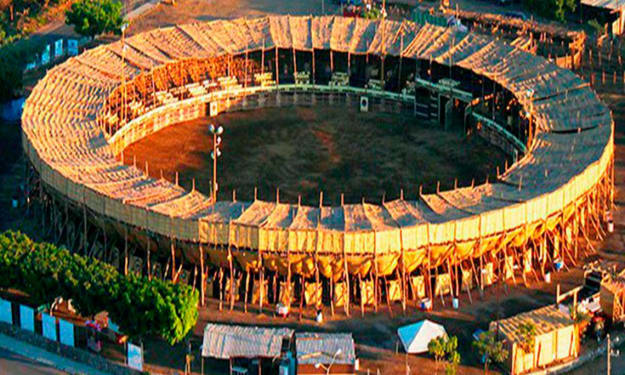
"La Plasa Petatera: Tradition, Culture and Encounter in the Heart of the Community".
Is it really any wonder that the largest handicraft in the world is located in Mexico? And we are talking about a magnificent work registered as a World Heritage Site, which is protected by none other than UNESCO. Find here all the information you need about La Petatera, a unique bullring in the world.
By diego michel3 years ago in History
Chief Executive: George Washington's Role in the American Revolu
George Washington was a key player in American history. He was born in Westmoreland County, Virginia, on February 22, 1732. Washington, who is regarded as the "Father of His Country," was instrumental in both the American Revolutionary War and the country's creation. Washington's military career began in the French and Indian War, where he was acknowledged for his leadership and received invaluable experience. His discipline and devotion to duty prepared him for his eventual position as the Continental Army's supreme commander during the American Revolution. Despite the many obstacles the Continental Army had to overcome, Washington's strategic acumen and tenacity were crucial. His famous crossing of the Delaware River on Christmas Eve 1776, as well as the triumphs that followed at Trenton and Princeton, raised spirits and demonstrated his military prowess. Washington was a leader off the battlefield as well. In 1787, he presided over the Constitutional Convention and was instrumental in the creation of the US Constitution. His backing was crucial to the document's ratification, and the presidency was defined by his support for a powerful executive branch. Washington was unanimously elected as the first president of the United States in 1789. During his presidency, the new government's credibility was established and important programs were put into action. Notably, he nominated Alexander Hamilton to the position of Secretary of the Treasury, which paved the way for the founding of the US financial system and the First Bank of the United States. Washington's wisdom and desire for the unity of the country were evident in his 1796 Farewell Address. He issued a caution against being involved in foreign affairs and political factionalism. Washington's voluntary ceding of authority established a model for orderly handovers of power. Beyond his accomplishments in politics and the military, Washington's reputation is defined by his views on slavery. He acknowledged owning slaves, but he had misgivings about the system. He expressed a complicated but changing view on slavery by allowing his slaves to be eventually freed in his will. On December 14, 1799, George Washington departed from this life at Mount Vernon. The country was greatly affected by his passing, and many people lamented his accomplishments. Washington's leadership and moral character shaped the presidency and left an enduring impression on American history. The Washington Monument in Washington, D.C., and other monuments honoring Washington's legacy endure. His likeness is included on the dollar bill. He had an incalculable influence on the United States, and his leadership during the country's early years cemented his status as a legendary figure in American history. Without a doubt, George Washington had a significant role in American history. He was born into a family of plantation owners in Virginia and went on to become the first President of the United States and a pivotal figure in the American Revolutionary War. Washington's military career began in the French and Indian War, where he displayed qualities of leadership that would later come to define his part in the country's founding. He led the Continental Army as its supreme commander throughout the Revolutionary War and was instrumental in achieving American independence. His reputation was cemented and morale was raised by his strategic genius, which was best demonstrated by his crossing of the Delaware River and his wins at Trenton and Princeton. Washington had influence in politics in addition to his military prowess. He led the 1787 Constitutional Convention, which made a substantial contribution to the writing of the US Constitution. When he became president in 1789, he established significant precedents for both the office and the young country. Washington's legacy is engrained in American history; monuments, his likeness on banknotes, and his continuing influence on presidential succession all serve as permanent reminders of his critical role in forming the country.
By Mohammad fayaz3 years ago in History
History of India
India boasts a rich history spanning millennia, characterized by a multifarious mosaic of cultures, religions, and civilizations. The subcontinent has had important historical events that have influenced its identity, from the time of the ancient Indus Valley Civilization to the present. With the rise of the Indus Valley Civilization circa 3300 BCE, the origins of Indian civilization can be found in the Bronze Age. This highly developed civilization, which flourished along the banks of the Indus River, was known for its well-planned towns, such as Mohenjo-daro and Harappa. These cities demonstrated complex urban life, complete with sophisticated drainage systems and an unreadable script. Waves of Indo-Aryans arrived in the Indian subcontinent circa 1500 BCE, bringing with them their contributions to the writing of the Vedas, which are considered sacred books. The emergence of theological and philosophical concepts that became the cornerstone of Hinduism during this era signified the beginning of Vedic civilization. The succeeding years saw the birth and collapse of several dynasties, with the Maurya Empire (c. 322–185 BCE) under Emperor Ashoka standing out as one of the first significant pan-Indian empires. Ashoka, who is well-known for having converted to Buddhism and spreading its ideas, had a profound influence on Indian society. India's "Golden Age" began with the Gupta Dynasty (c. 320–550 CE), which followed the fall of the Mauryan Empire. Significant progress was made in the fields of science, mathematics, literature, and art during this time. Classical Sanskrit literature, the decimal system, and the idea of zero flourished, making a lasting impression on the history of ideas worldwide. During the Middle Ages, strong empires like the Delhi Sultanate in the north and the Cholas in the south rose to prominence. The first substantial Islamic presence in India was during the Sultanate, which resulted in the blending of Hindu and Islamic civilizations, which is especially evident in art and architecture. The creation of the Bahmani Sultanate and the Vijayanagara Empire added to the diversity of medieval India's cultures. Mughal sovereignty was established in India in 1526 when Babur, the founder of the Mughal Empire, beat Ibrahim Lodhi in the Battle of Panipat. The blending of Persian and Indian cultures was facilitated by the Mughals, who are most known for building marvels like the Taj Mahal. One of the greatest Mughal kings, Akbar, promoted cultural syncretism and religious tolerance through his policies. The Marathas and Sikhs were two of the regional powers who rose up in the 18th century to challenge Mughal rule. European colonial powers also arrived during this time, with the British East India Company becoming a major player. An important turning event that opened the door for British colonial rule in India was the Battle of Plassey in 1757. The 20th century saw a surge in the independence movement, driven by leaders like as Mahatma Gandhi who promoted peaceful civil disobedience. The Indian National Congress was a key player in the movement for self-rule that resulted in Pakistan's formation and India's independence in 1947. India experienced profound political and social transformations after gaining independence. The foundation for a pluralistic and diverse country was established in 1950 with the ratification of a democratic constitution. India became a major player in the world economy in the 1990s thanks to economic reforms that accelerated urbanization and technology development. India's history is a tapestry woven with strands of medieval magnificence, ancient wisdom, and contemporary difficulties. The nation keeps changing, fortifying itself with a tenacious spirit and a multiplicity of cultures that speak to all generations.
By Mohammad fayaz3 years ago in History
Importance of Jambukeswarar Temple, Thiruvanaikaval
Caption: In the ancient city of Tiruchirappalli there once lived a showing love for deity, Dharma Varma and his wife Sundari. Despite their merger resources, they dedicated their lives to the worship of Lord Shiva. One hot summer day, when Sundari went into the forest to fetch water from a nearby river, she came across a beautiful Jambu tree whose branches were full of ripe fruits. Overwhelmed with gratitude, Sundari offered prayers to Lord Shiva and vowed to build a temple under the sacred tree of in his honor. Lord Shiva was impressed by her devotion and appeared before her as Jambukeswarar, the presiding deity of the Jambu tree. This is how the Sri Jambukeswarar Temple (Thiruvanaikaval) came into being, a testimony to the unshakable faith of Dharma Varma and Sundari.
By Nagarathinam B3 years ago in History
Significance of Sri kalahasti Temple
Legend: In the heart of the mystical city of Sri Kalahasti lies a temple surrounded by legends and traditions. According to ancient stories passed down from generation to generation, the origins of the Sri Kalahasti Temple date back to the age of three, a time of divine intervention and celestial battles. It is said that at this time a great sage named Kannappa went on a pilgrimage to Mount Kailash, the abode of Lord Shiva.
By Nagarathinam B3 years ago in History
The Russian Exploration Legacy: Concluding the Age of Discovery
The Age of Discovery, spanning the 15th to the 17th century, witnessed European sailors embarking on daring expeditions to explore, colonize, and conquer new territories globally. Triggered by the decline of the Mongol Empire, the control of Mediterranean trade routes, and the rise of new Atlantic coastal nations, this era marked a surge in exploration. However, it was the Bellingshausen Expedition, led by Fabian Gottlieb von Bellingshausen and Mikhail Lazarev, that is often regarded as concluding this fascinating chapter of human exploration.
By Mohammed Shahidullah-Bin-Anwar 3 years ago in History
An Excursion into Old Secrets
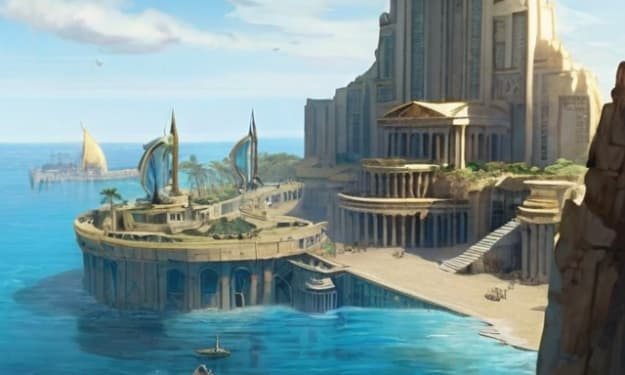
In the immense woven artwork of mankind's set of experiences, scarcely any mysteries loom as enormous or mix the creative mind as significantly as the legend of Atlantis. Covered in fantasy and secret, this mythical development has charmed personalities for quite a long time, starting vast discussions among history specialists, archeologists, and devotees. Was Atlantis simply an invention of creative mind, a scholarly moral story devised by the old thinker Plato? Or on the other hand does it disguise a more profound truth, a lost progress lowered underneath the waves?
By Christopher Ezeh3 years ago in History
Unveiling the Viking Chronicle: Pillagers, Merchandisers and Combatants
The Viking Age, which lasted from the late 8th to the early 11th century, is a fascinating and transformative era in history. While it was previously known for the fierce activities of Scandinavian seafarers, recent archaeological and scientific discoveries have provided a more intricate understanding of Viking culture. Contrary to the simplistic depiction of them as mere plunderers, the Vikings were involved in a complex interplay of raiding, trading, and strategic diplomacy, which had a lasting impact on the trajectory of history.
By Johnny Six3 years ago in History