World History
Destructive Creatures You'll Absolutely love To Know Are Wiped out; Chapter 2
Number 14, Daeodon. All around, pigs these days are really innocuous, however, that is not forever been the situation. In the event that we turn the timekeepers back quite a while back,
By Teresa Wanjiku3 years ago in History
Destructive Creatures You'll Absolutely love To Know Are Wiped out; Chapter1
Number 20, Arctotherium Angustidens. Coincidentally finding a wild bear is sufficient to make the vast majority escape in dread. Yet, even completely mature grizzlies look as innocuous as offspring when contrasted with the Arctotherium Angustidens. All the more regularly known as The Goliath Short-Confronted Bear, it hailed from South America and lived around 2.5 quite a while back. With a typical weight near two tons, Arctotherium Angustidens takes the title for Greatest Bear to Have At any point Lived. For some unique circumstance, polar bears, the biggest land carnivore alive today, are not exactly a portion of the heaviness of these old bears. What's more, these folks could arrive at a scary 14 feet when stood upstanding - that is higher than a one-story building. OK, so they're truly tall and truly weighty, yet that should dial them back, correct? Indeed, taking into account that the direct relation of this bear, the Arctodus Simus - a more modest sort inside the goliath short-confronted bear family could arrive at a frightening maximum velocity of 40 miles each hour and all things considered, these folks would've timed up a fast speed as well. Along these lines, except if you have haggles motor, there could not have possibly been a lot of possibility of getting away. Also, getting away certainly you'd need to do. Broken fossilized teeth uncovered that this bear bit on bones, proposing that tissue was a piece of their eating regimen. Thus, to them, human likely equivalent a substantial hors d'oeuvre. Regardless of their actual ability, these bears were progressively supplanted by the medium-sized Arctotherium Vetustum something like a long time back. Nobody knows how or why such a savage power vanished, yet it's conceivable that the expanded contest from carnivores like the puma, cougar, and desperate wolf drained the enormous bear's meal. Either that, or there's a considerably greater substantiate there that we simply haven't found at this point.
By Teresa Wanjiku3 years ago in History
Nature's Wrath: Countries Battling Dangerous Natural Disasters
The anger of nature | Accounts of nations battling with risky cataclysmic events Introduction: Nature's incredible power can both awe and terrify, as countries around the world grapple with the relentless force of dangerous natural disasters. From earthquakes to hurricanes, tsunamis to wildfires, some nations find themselves particularly vulnerable to these cataclysmic events. In this article, we explore the countries that have faced the brunt of Mother Nature's fury, navigating through the treacherous landscapes of disaster-prone regions. 1. Japan - Earthquakes and Tsunamis: Arranged on the Pacific Ring of Fire, Japan is no more odd to seismic movement. The country experiences frequent earthquakes, some of which have been devastating. The 2011 Tōhoku earthquake and the subsequent tsunami, for instance, left a lasting impact on the nation. The earthquake, with a magnitude of 9.0, triggered a colossal tsunami that struck the northeastern coast of Japan, causing widespread destruction and leaving thousands dead or missing. Japan has since invested heavily in earthquake-resistant infrastructure and early warning systems, demonstrating resilience in the face of these natural hazards. 2. The Philippines - Typhoons and Flooding: Nestled in the western Pacific, the Philippines endures an annual onslaught of typhoons, making it one of the most disaster-prone countries in the world. Typhoon Haiyan in 2013 was a particularly harrowing experience, with wind speeds reaching 195 mph. The storm resulted in massive storm surges and widespread flooding, leaving millions displaced and causing extensive damage to infrastructure. The Philippines has been actively working on disaster preparedness and response measures, including the construction of resilient buildings and the establishment of evacuation centers. 3. Haiti - Earthquakes and Hurricanes: Haiti, located on the island of Hispaniola, faces a unique combination of seismic and meteorological challenges. The 2010 earthquake, with a magnitude of 7.0, wreaked havoc on the impoverished nation, claiming hundreds of thousands of lives and leaving countless others homeless. Subsequently, Haiti has been vulnerable to hurricanes, such as Hurricane Matthew in 2016, which exacerbated existing vulnerabilities. International aid and reconstruction efforts continue to support Haiti in rebuilding its infrastructure and enhancing disaster resilience. 4. Indonesia - Volcanic Eruptions and Tsunamis: Indonesia, the world's largest archipelago, is home to numerous active volcanoes and is situated on the Pacific Ring of Fire. The 2004 Indian Ocean earthquake and tsunami, which originated off the coast of Sumatra, remains one of the deadliest natural disasters in recorded history. The country has also faced the challenges of volcanic eruptions, such as the eruption of Mount Merapi in 2010. Indonesia has implemented early warning systems and evacuation plans, recognizing the need for preparedness in the face of these dual threats. 5. United States - Hurricanes and Wildfires: The United States experiences a wide range of natural disasters, with hurricanes striking the Atlantic and Gulf coasts and wildfires scorching the western states. Hurricanes Katrina (2005) and Sandy (2012) showcased the devastating impact of these storms, causing extensive flooding and destruction. Meanwhile, the western states, particularly California, have battled increasingly severe wildfires fueled by dry conditions and high winds. The U.S. continues to invest in disaster management, firefighting resources, and climate change mitigation to address the growing threat of these natural disasters. Conclusion: As climate change intensifies and natural disasters become more frequent and severe, countries worldwide face the daunting challenge of adapting to this new reality. While some nations are more susceptible to specific types of disasters due to their geographical location, all must work towards comprehensive preparedness, resilient infrastructure, and international collaboration to mitigate the impact of these dangerous natural phenomena. The lessons learned from past disasters serve as invaluable guides as humanity collectively strives to build a more resilient and adaptive future in the face of nature's formidable forces. Japan, fortified by earthquake-resistant structures, remains vigilant against seismic threats. The Philippines focuses on disaster preparedness amid recurring typhoons. Haiti continues post-earthquake reconstruction efforts, aided by international support. Indonesia bolsters early warning systems against volcanic eruptions and tsunamis. The United States enhances wildfire management and climate change mitigation strategies. Ongoing resilience efforts underscore the global commitment to confronting nature's challenges.
By Movie Foo13 years ago in History
The Story Of Great Kaima
Once upon a time, nestled in the heart of the Pacific, there existed a land of vibrant cultures and rich traditions – Papua New Guinea. In this mystical realm, where dense jungles met the azure waters, the Tumbuna, or ancestors, wove tales that echoed through generations. Long ago, in a village surrounded by towering mountains, lived a young warrior named Kaima. Kaima was known for his bravery and curiosity, traits that often led him to explore the untouched corners of the land. One day, as he ventured deep into the dense forest, he stumbled upon an ancient cave adorned with mysterious paintings. Intrigued, Kaima decided to enter the cave, guided by an unseen force. Inside, he discovered a hidden chamber where an elderly shaman, wrinkled with age, sat in meditation. The shaman, sensing Kaima's presence, opened his eyes and revealed the purpose of the sacred place. "You are chosen, young one," the shaman proclaimed. "The spirits have guided you here to learn the forgotten stories of our Tumbuna." With those words, the shaman began to narrate tales that stretched across the fabric of time. He spoke of a time when the earth was born from the union of the sky and the sea, and how the Tumbuna shaped the landscape with their ancient songs and dances. Kaima listened with rapt attention as the shaman described the mythical creatures that once roamed the land – from the mighty Rai, a colossal bird with feathers that glittered like the stars, to the elusive Kina, a creature with the ability to transform into any living being. As the stories unfolded, Kaima learned of the Great Gathering, an event where tribes from all corners of Papua New Guinea converged to celebrate their unity. The Tumbuna, he was told, played a vital role in ensuring harmony among the diverse communities. In one tale, Kaima discovered the legend of the Fire Stones – magical rocks bestowed upon the tribes by the Tumbuna. These stones held the power to illuminate the darkest nights and forge unbreakable bonds among the people. Kaima felt a sense of duty to find these stones and bring their light back to his village. Guided by the shaman's wisdom, Kaima embarked on a quest that took him through treacherous terrains and dense forests. Along the way, he encountered challenges that tested his courage and resolve. Yet, with each trial, he discovered more about himself and the interconnectedness of his people. During his journey, Kaima met wise elders from different tribes who shared their own stories and traditions. He witnessed mesmerizing dances that spoke of the land's fertility and heard enchanting songs that echoed the spirits of the ancestors. These encounters enriched his understanding of the diverse cultures within Papua New Guinea. Finally, after months of exploration, Kaima reached the mythical Fire Stones guarded by a majestic creature – the Kina. With humility and respect, he approached the creature, seeking its guidance. The Kina, recognizing Kaima's pure intentions, transformed into a wise elder and entrusted him with the sacred Fire Stones. As Kaima returned to his village, carrying the luminous stones, he realized the true power of unity and cultural exchange. Inspired by the Tumbuna's stories, he organized a Great Gathering, inviting tribes from far and wide. The event became a celebration of diversity, where the Fire Stones illuminated the night, symbolizing the shared heritage and interconnectedness of the people. The Tumbuna smiled from the spirit realm, knowing that their stories had not only been preserved but had also inspired a new era of understanding and collaboration among the tribes of Papua New Guinea. And so, the tales continued to echo through the generations, carried by the winds that swept across the mountains, jungles, and seas of this enchanting land.
By James Dafex Tukar3 years ago in History
THE VAMPIRES
The evolution of vampires in literature, film, and television including iconic tales like Dracula, Salem's Lot, Nosferatu, Blade trilogy and New Moon and TV shows include The Twilight, True Blood, and The Vampire Diaries made me very curious to think about their history, and their origin.
By Anusri Venugopal3 years ago in History
Cristiano Ronaldo vs Fateh
Everybody is hanging tight for an extremely thrilling and charming match, God All-powerful willing, here in Al-Nasr Square, around here at Al-Awal Park Arena, and obviously everybody is sitting tight for an undeniable football night, truly pleasant, within the sight of countless Eliano on Talisca in this shot of Laporte in the head, however the ball came high and after that its peril finished to Objective kick with a smart idea towards Brozovic, Rose, a wonderful cross, yet it passed. It is as yet perilous, its risk has not finished. The protection handles the aspects. Broser with the heel. Pleasant shot. A lovely cross shot. Gracious God. Al-Nasr assault. Al-Nasr Square. Al-Nasr endeavor. The header is lovely, yet the safeguard mediates. Tires' crosses are incredibly gorgeous. Incredibly risky. A slip-up. Brozovic got an admonition. The main yellow card was given to Marcelo Brozovic. Following four minutes of play, he played a ball towards Cristiano, attempting to shoot a ball to Talisca. Decent shot. Wonderful Talisca. Disdain. Good gracious. An odd shot that was missed on Talisca in a strange manner. Gracious Talisca, check Otavio out. Otavio. O my eyes, Otavio. A lovely, enchanted touch. From the Portuguese, extraordinary tension from Nasraoui, meanwhile, one more lovely time from Opio and the disdain for Cristiano. God favor Imprint, Cristiano. Nasraoui's objective is a lovely first activity. A delightful closure. Extraordinary Nasraoui happiness with this Christian in this shot. God is general. God is the wonderful ball. The wonderful ball forces itself in this shot. Cristiano. No. Rest is rarely enough, football goes on forever, Cristiano goes on forever, an endless flow of shots, bliss after another, ball after another, history after the last touch, after another. The endings are a rocket as a be lost in these director places. Al-Ghanam is a producer of 1,000 Tusca there, yet inclusion from the protection. Cover from the guard is pleasant from Al-Ghanam. Wonderful entry. Yet, there was a mediation and a line was granted to the ref of the counterpart for King Ghanem. Was the mediation inside the area or outside the punishment region? It appears to be outside the punishment region in this match. He is likewise present in wellbeing by Raghed Al-Najjar, a craftsman, on the field of the match. There are numerous issues in the goalkeeping line. Storyteller or S. See this. The season is in this specific period, after the reestablished injury to David Ospe, with some aggravation at the level of the left foot, so he will be driven away from his situation meanwhile, and he is feeling a great deal of agony, torment at the level of the injury, and the aggravation that he didn't exploit the ebb and flow period to play as an essential goalkeeper. The injury comes in this timing, which is challenging to open. He attempts This overwhelm, these troublesome minutes, the ball is from Talisca, however it is against the wall, and after that it is fixed, through which Al-Fateh looks to get back with a hazardous cross, yet the guard intercedes and the shot is a Fathawi rebound. A wonderful Fathawi rebound, Salem Al-Najdi, with a rocket, and nothing better. God, my model. God, my model. Solid ball that doesn't impede or answer. Anticipation. Walid Abdullah's net is with a touch, and it isn't the most brilliant, or a shot isn't the most magnificent, by Salem Najdi, with the left foot. Unfortunate for Walid Abdullah, seconds in the wake of entering or minutes subsequent to entering the Al-Nasr net, and he balances. A ball, so he covers it and enters a foul, and the official thinks of it as a punishment for Talisca, yet everybody will observer all the more remarkable minutes. In this match, Salem Aldo Telles was reserved with the left foot. Alex played a perilous cross with his head, yet it passed, gracious God, on an opportunity headed by Cristiano, yet it was returned. This shot was viewed as offside on Ronaldo in the last ball. Anyway, the shot was lost among Tesca and King Helwa. The last shot was a Nasraoui cross for who is Ronaldo? Miss, yet high shot, not the most astonishing, delightful show-stopper in the last shot, a group game in the greatest possible level of magnificence, Nasraoui, however it was not finished, the header came high, the assault was wonderful, Nasraoui arrived at Cristiano Ronaldo, Benet, and Sadio tomorrow, yet the guard mediated unpalatably in the hostile side in the last meters, with a lovely cross header. Yet, Aliyah, gracious God, was extremely risky. I needed to hang tight for his pass, yet it occurred in the guard, and afterward there was a risky cross. There appeared to be some uncertainty that there was offside in any case on Ali Mourad Batra, yet it appears to be that the associate official didn't urge Zil Aryan to execute a hazardous Fatah corner. Header, yet the aspects are Telles on the left. Telles in the cross is perilous with the header, however it passes. Wow. A lovely shot among Therese and Cristiano on a similar foot. A brilliant left foot by Telles. The size for Cristiano is on time. Cristiano hung tight for it. Mane Arena. A hazardous touch for Brozovic. A shot, however it is the goalkeeper's hand. It is risky. The last shot. Goodness, gracious. It gets an opportunity, and what an extraordinary occupation by Nabu Dzhi in this shot, in this pass, Zenaria blocks it, good gracious, goodness God, gracious, Fatih, God, God, from Abu Djin, a shot, and the most gorgeous shot by Laryal, Walid, in torment, to Christian Téo, extremely perilous, passed, and Téo's pass is a risky open door, gracious, my God, wow. On an exceptionally risky open door, goodness God, how hazardous it was. The last shot, that is to say, Fatah. This is any going after force striking the positions of Al-Fateh. In the last shot, an objective and a second among Theo and Zil Aryan, yet the Nasraoui safeguard mediated the initial time. The goalkeeper is out of uncertainty. He couldn't say whether there was an extra shot or not. He requests confirmation of this shot. Zaran additionally requests the arbitrator from the match to check this shot. Seven minutes into the final part, the ball was very risky for Al-Fateh's objective. This is a custom for Mourad Batna's ball with Laporte. The contention that happened between them over the contact ball. He talked with my partner right now. He brought up before Everything revolves around offside in any case on Mourad Batna and on Al-Fattar's assault to Aryan to Mokhtar Christian takes a stab at the left. Tyubi attempts a delightful shot. Walid Al. Cristiano is a rocket that made a delightful cross ball with the header, yet it passed, gracious God. The open door was hazardous, however at that point it was missed by Talisca. It couldn't be any more obvious, Talisca answered. He followed up on the football of Otavio Arena with a hazardous touch for Maine and a perilous shot, however Saadane sparkles. Marwan wards it off. Al-Fateh's solid protective wall in this season. The pioneer sparkles in Al-Adi. Brozovic is in a perilous spot. Brozovic Tab Broz attempts to shoot. Wonderful. Good gracious. The singular expertise is Memer with a left touch. Goodness God, what a gift to them. A singular arrangement on troublesome evenings in matches between players attempting this way and that. Al-Ghanam passed the shot. Wow, a ball squandered. Any opportunity squandered. Castro. A little karma. Castro. The shot that didn't include offside on Al-Ghanam. Expertise. High expertise and shot with the left. Al-Ghanam's ball was lost. Al-Ghanam is on the right side. Pausing. In the space, it is perilous, Otavio is hazardous [applause] Outside, my eyes, Otavio, Otavio II is delightful, what a magnificent triumph, what a triumph for God against the commotion, the sheep, my eyes, the sheep, the sheep, gracious gathering of sheep, he is a virgin, and there isn't anything more superb than he plays an enchanting cross that he met with Otavio, the short, conspiring, risky, goalscorer, imaginative, innovative, beguiling sleeper in Midfield
By Nader Ayari3 years ago in History
Afghanistan: A Turbulent Journey from Hope to Despair
Afghanistan, a nation with a rich history and diverse cultural heritage, has witnessed a tumultuous journey from the early 2000s to the present day. The story of Afghanistan is one marked by periods of hope, political changes, and ultimately, a descent into despair. The post-9/11 era marked the beginning of a new chapter for Afghanistan. In 2001, following the terrorist attacks in the United States, a U.S.-led coalition invaded Afghanistan to dismantle the Taliban regime, which had provided refuge to Osama bin Laden. The early years saw international efforts to stabilize the country and establish democratic institutions. Hamid Karzai became the first democratically elected president in 2004, symbolizing a glimmer of hope for a nation ravaged by decades of conflict.
By Movie Foo13 years ago in History
The History and Origins of the Japan-U.S. War: A Complex Saga of Power Struggles
This is a real and true story besides and it is informative as well as sad true story and news . In the aftermath of World War II, Japan and America forged a profound friendship. Over the decades, this alliance blossomed into a strong bond marked by mutual respect, economic cooperation, and cultural exchange. Today, the enduring friendship between the people of Japan and America stands as a testament to shared values and unity. Introduction The Japan-U.S. War, a pivotal chapter in 20th-century history, unfolded against a backdrop of geopolitical tensions, economic rivalries, and conflicting national interests. The roots of this conflict can be traced back to a series of events that shaped the course of history, leading to a devastating war that would alter the global balance of power. Background: In the late 19th and early 20th centuries, Japan underwent a transformative period known as the Meiji Restoration, marked by rapid industrialization and modernization. Eager to assert its influence in the Asia-Pacific region, Japan began expanding its empire, with ambitions to establish itself as a major player on the world stage. Meanwhile, the United States, having emerged as an economic powerhouse, sought to safeguard its interests in the Pacific and maintain a balance of power in the region. As the two nations pursued their respective objectives, tensions between Japan and the United States steadily escalated. Economic Rivalry: One of the key catalysts for the conflict was the economic rivalry between Japan and the United States. Japan, faced with limited natural resources, sought to secure access to raw materials and expand its economic sphere. In response, the U.S. implemented policies to curb Japanese economic expansion, including trade restrictions and embargoes. The Pacific Theater: The situation came to a head in the early 1940s when Japan, feeling cornered and facing severe resource shortages, embarked on a military campaign to secure the necessary raw materials in the Asia-Pacific region. The invasion of Manchuria in 1931 and subsequent actions in China heightened tensions with the United States, which condemned Japanese aggression. The Attack on Pearl Harbor: The climax of the conflict occurred on December 7, 1941, when the Imperial Japanese Navy launched a surprise attack on the U.S. Pacific Fleet stationed at Pearl Harbor, Hawaii. The devastating assault resulted in significant damage to the American fleet and led to the United States officially entering World War II. Global Implications: The Japan-U.S. War was not isolated to the Pacific region; it had far-reaching consequences for the entire world. The conflict further fueled the flames of World War II, as the United States joined the Allied forces in their fight against the Axis powers. The war in the Pacific became a critical theater, with intense naval battles, island-hopping campaigns, and strategic maneuvers shaping the course of history. The Manhattan Project: The conflict also spurred technological innovations, most notably the development of the atomic bomb through the Manhattan Project. The U.S. dropped two atomic bombs on the Japanese cities of Hiroshima and Nagasaki in August 1945, leading to Japan's surrender and the end of World War II. Legacy and Reconciliation: In the aftermath of the war, Japan underwent a period of reconstruction and reconciliation with the United States. The post-war era saw the emergence of a strong U.S.-Japan alliance, marked by economic cooperation, security agreements, and shared democratic values. Conclusion: The Japan-U.S. War was a complex and multifaceted conflict that originated from a convergence of historical, economic, and geopolitical factors. The devastating war reshaped the global order, influencing the trajectory of the 20th century. Despite the scars of the past, the subsequent alliance between Japan and the United States serves as a testament to the power of reconciliation and cooperation in the face of historical animosities.
By Movie Foo13 years ago in History
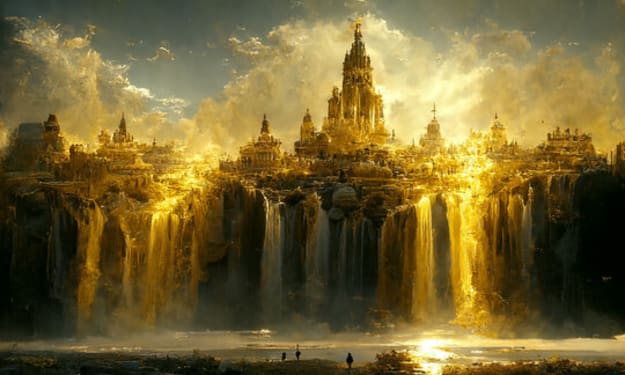
The Legend of El Dorado 2
After much negotiation with the Spanish government, Orellana secured the much needed support and set out on the second expedition to find the real El Dorado. He still had the scary memory of the first failed attempt and he desperately wanted this second attempt to succeed. His reputation was in line as he was preparing his troop to begin the journey.
By Calmax Omondi3 years ago in History