World History
T. rex was smarter than a crocodile, not a monkey. Study Overturns Conflicting Intelligence Data.
Since the 1970s, most scientists have agreed that Tyrannosaurus rex was about as intelligent as modern reptiles. In 2023, a study by a Brazilian neuroscientist claimed that the cognitive intelligence of T. rex is closer to that of primates. Could this iconic dinosaur be as intelligent as a baboon or even a human?
By arafat islam2 years ago in History
the road is dark
The lecture, that ubiquitous feature of classrooms across the globe, has a surprisingly long and fascinating history. Far from being a static method of information transmission, the lecture has evolved dramatically over time, reflecting the changing landscape of knowledge, technology, and pedagogical practices. This article delves into the origins of the lecture, exploring the practical limitations that birthed it and the evolving role it has played in education over centuries.
By aly rahman2 years ago in History
The Mystery Book of Enoch
The Book of Enoch is an intriguing ancient text believed to have been written by Enoch, a prominent figure in biblical genealogy. It covers a range of captivating topics, including the origin of demons, the fall of the Nephilim angels, and prophetic visions of the Messiah's reign.
By Adekola Damilare2 years ago in History
Tropical Wave Adventures
Claire Matthews, a rising star in Hollywood, had always dreamt of stepping out of her comfort zone to take on roles that challenged her acting skills and transported her to exotic locations. Her dream came true when she landed the lead role in the new adventure film, "Tropical Wave Adventures."
By lahsen ezahouani2 years ago in History
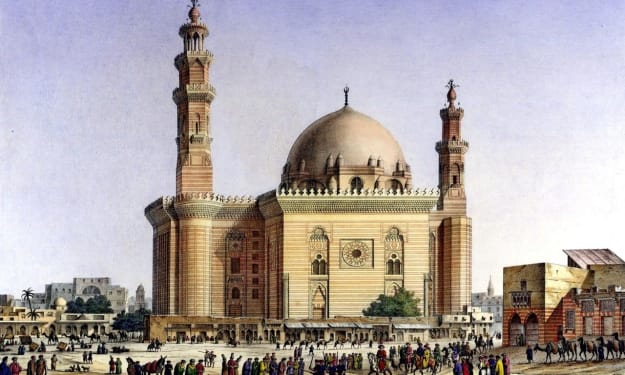
of the history of Islam
Islam, one of the world's major monotheistic religions, emerged in the 7th century CE in the Arabian Peninsula. Its founder, Prophet Muhammad, was born in Mecca in 570 CE. At the age of 40, Muhammad began receiving revelations from God through the angel Gabriel. These revelations were later compiled into the holy book of Islam, the Quran.
By Rifais Fabanyo2 years ago in History
Lady Sparrow
The year was 1888, London. Evelyn perched precariously on the rain-slicked rooftop, the wind whipping her hair into a frenzy. Below, the gaslights cast an eerie glow on the labyrinthine streets, a stark contrast to the inky blackness of the night sky. A shiver ran down her spine, a tremor that wasn't entirely from the cold. Evelyn wasn't supposed to be here. A lady of refined breeding, especially one poised to marry a prominent solicitor, did not frequent rooftops.
By ANNA CORAL2 years ago in History
World war
### The Modern Cold War: Lessons from History and the Path Forward Today, the world finds itself in a tense standoff reminiscent of the Cold War, with Russia and China challenging the international order. The big question is: Will this new confrontation end peacefully like the first Cold War, or will it spiral into a devastating third world war due to strategic blunders on both sides? Adolph Hitler's miscalculations before World War II are hauntingly similar to the actions of Russian President Vladimir Putin and Chinese President Xi Jinping today. In the years leading up to World War II, the international community repeatedly failed to stand up to Hitler, hoping that his promises of peace were genuine. British Prime Minister Neville Chamberlain's declaration of "peace in our time" after meeting Hitler in 1938 turned out to be tragically short-lived. Similarly, the West has, until recently, made the same mistake with Russia and China. Putin's aggressive moves — the invasion of Georgia in 2008, the annexation of Crimea and the war in Eastern Ukraine in 2014, and the full-scale invasion of Ukraine in 2022 — were initially met with insufficient resistance. Some Western leaders still treat Putin as a normal leader, ignoring the fact that he aims to rebuild the former Soviet Union. Economic interests often cloud national security decisions regarding Russia, just as they did with Nazi Germany. The same goes for China, which poses an even greater threat to the United States. American business interests often pressure political leaders to soften or remove measures designed to counter China’s economic tactics. This dynamic echoes the infamous observation attributed to Lenin that "capitalists will sell us the rope with which to hang them." The current East-West standoff is not just about territory; it's a clash of ideologies. Like the original Cold War, it's a battle over fundamental values and the future of the global order. The stakes are existential for both sides. This ideological confrontation was made clear when Xi and Putin announced their “no-limits strategic partnership” just before Russia’s latest invasion of Ukraine. They argued that Western attempts to impose democratic standards threaten global stability, asserting that only the people of a country should decide its system of government. In practice, this means that those who challenge the Russian state, like opposition leader Alexei Navalny, often end up in prison or dead. The lesson from history is clear: rulers who oppress their own people and gain enough power to threaten their neighbors usually do so. This was true for Hitler, Soviet leader Joseph Stalin, and China’s Mao Zedong, and it is true for today’s leaders in Russia and China. The principle of national sovereignty often clashes with international humanitarian norms that forbid genocide and crimes against humanity. In recent years, the international community has embraced the concept of a "Responsibility to Protect." This means that when a government cannot or will not stop a humanitarian crisis, the international community has a duty to intervene. However, with powerful countries like China and Russia, direct military intervention is not feasible. Instead, the world must rely on economic sanctions, diplomatic pressure, and moral condemnation. These non-military approaches helped end apartheid in South Africa and contributed to the peaceful collapse of the Soviet Union. Putin, however, has called the Soviet Union's fall "the greatest geopolitical catastrophe of the 20th century." The West must learn from its past mistakes and avoid repeating them. The policy of appeasement that led to World War II was forgotten in recent decades as Russia became more aggressive and China grew stronger. China, under Deng Xiaoping, followed a strategy of hiding its strength and biding its time. Xi Jinping has abandoned this cautious approach and is openly challenging the West. China's narrative of a "century of humiliation" by Western powers parallels Hitler’s condemnation of the Treaty of Versailles. Both use historical grievances to justify aggressive policies. Western guilt, fear, and greed led to decades of policies that enabled China’s rise, contrary to Beijing’s claims of being contained. Fortunately, there is now a bipartisan consensus in the West about the threat posed by China. Learning from history, the West must stand firm against aggression and uphold international norms to ensure a peaceful resolution to today’s Cold War-like tensions. The future depends on strategic wisdom and the willingness to confront threats with unity and resolve.
By DARSHAN PAL SARASWAT2 years ago in History
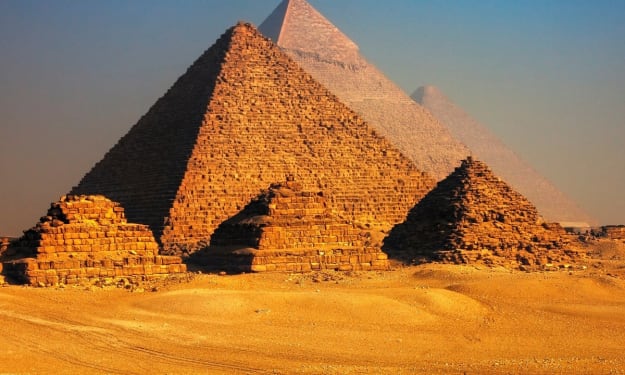
Pyramids mystery. Content Warning. AI-Generated.
**Discovery of Ancient Nile River Branch Sheds Light on Pyramid Construction** A team of researchers from the University of North Carolina Wilmington has made an incredible discovery: a long-lost 64-kilometre-long branch of the Nile River. Buried for thousands of years beneath desert sands and farmlands, this ancient river branch has now been mapped using advanced radar satellite imagery. This finding not only unravels a significant piece of Egypt’s ancient landscape but also provides a clearer understanding of how the magnificent pyramids were constructed. ### Unveiling the Hidden River Professor Eman Ghoneim, an earth and ocean sciences expert at the University of North Carolina Wilmington, led the study that brought this hidden river to light. By utilizing radar satellite technology, the team could penetrate the surface of the sand, revealing buried features that had long been concealed. This technological breakthrough enabled the creation of detailed images of the ancient riverbed, offering a glimpse into a time when the landscape was vastly different. ### The Role of the River in Pyramid Construction The newly discovered river branch once flowed alongside 31 pyramids in Egypt, a fact that significantly enhances our understanding of ancient Egyptian engineering and logistics. According to the study, this river was a crucial transportation route, used to ferry giant stone blocks needed for building the pyramids. For years, scholars have speculated about the methods used by the ancient Egyptians to move these massive stones. The discovery of the Ahramat branch of the Nile provides tangible evidence supporting the theory that waterways were used extensively in the construction process. The study notes that many pyramids had causeways that ended at the riverbanks, suggesting that the river was integral in transporting materials from quarries to construction sites. ### Connecting the Past to the Present Professor Ghoneim shared his excitement about the discovery, highlighting its significance in understanding ancient Egypt. "Many of us who are interested in ancient Egypt are aware that the Egyptians must have used a waterway to build their enormous monuments, like the pyramids and valley temples, but nobody was certain of the location, the shape, the size, or proximity of this mega waterway to the actual pyramids site," he explained. "Our research offers the first map of one of the main ancient branches of the Nile at such a large scale and links it with the largest pyramid fields of Egypt." This discovery helps fill in the gaps about the logistical challenges faced by the builders of the pyramids. It explains how they could transport enormous stone blocks over long distances without the modern conveniences we take for granted today. ### The Impact of the Discovery The implications of this finding are profound. Not only does it provide a clearer picture of how the ancient Egyptians managed to construct such colossal structures, but it also offers insight into the environmental and geographical conditions of the time. Understanding the ancient river systems can shed light on how the Egyptians adapted to and managed their environment, ensuring their survival and prosperity. The discovery also underscores the importance of modern technology in uncovering historical truths. Radar satellite imagery has proven to be a game-changer in archaeological research, allowing scientists to explore beneath the surface without invasive digging. This non-invasive method preserves the integrity of archaeological sites while providing valuable data. ### Future Research and Exploration With the discovery of the Ahramat branch, new questions arise. Researchers are now eager to explore further, mapping other potential river branches and water systems that might have played a role in ancient Egyptian civilization. Each new discovery brings us closer to fully understanding the ingenuity and resilience of one of history’s most fascinating cultures. The University of North Carolina Wilmington's study not only enriches our knowledge of ancient Egypt but also inspires a new generation of researchers to continue exploring our planet's hidden past. As technology advances, who knows what other secrets lie buried, waiting to be uncovered by curious minds and innovative tools? In conclusion, the unearthing of this ancient river branch is more than just a remarkable archaeological find. It is a testament to the enduring human spirit of exploration and the relentless quest for knowledge. This discovery not only illuminates the past but also connects us to the ingenious minds of ancient Egyptians who harnessed the power of nature to create some of the most awe-inspiring monuments the world has ever seen.
By DARSHAN PAL SARASWAT2 years ago in History
The Real Origin of Cleopatra Queen of Egypt
Cleopatra, one of ancient history’s greatest rulers, is the embodiment of global fury that has been building up over the past few months, with the debate turning viral and being widely discussed in mainstream media. The recent case that six scholars filed against Netflix for distorting the life of Cleopatra is one of the standout moments of the media war. To approach this thorny debate effectively we will analyze the persona of Cleopatra and briefly sketch her life from the very beginnings to better arm you with unassailable weapon: The Truth.
By Amine Oubih2 years ago in History